Product Manager (Sportswear) Job Description
Managing technical sports apparel — performance fabrics, athlete insight and season calendars built around sport
A product manager for sportswear builds clothing that has to perform. The customer is not simply dressing but running, training, climbing, cycling or playing — often in weather, always in motion — so the sportswear product manager's range decisions are technical before they are fashionable: which sports and activities to serve, which performance problems each garment must solve, and which fabrics, constructions and features solve them at a price the market will pay. The role sits between athletes and engineers on one side and sales channels and sports retailers on the other.
More Miscellaneous Job Descriptions by Letter:
Building a Performance Range
Range building starts with the sport, not the garment. A running line, a training line and an outdoor line make different promises — lightness and ventilation, stretch and durability, weather protection and layering — and the product manager defines each line's activity, intensity level and price architecture before a single style is briefed. Athlete and participant insight drives the briefs: wear-testing feedback, coaching and team input, event and club research, and returns data that reveals where last season's garments chafed, soaked through, overheated or wore out.
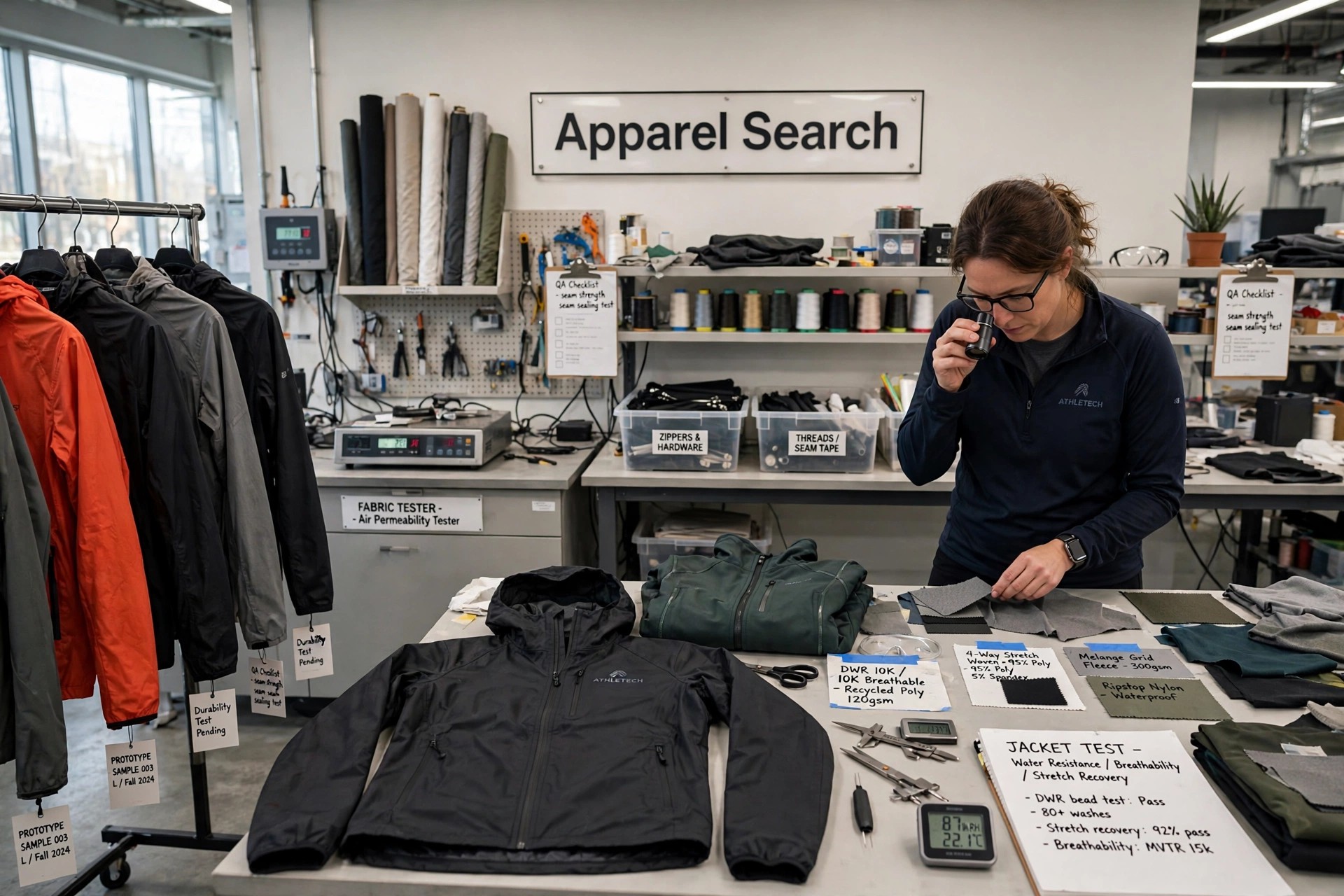
The briefs themselves are specifications. For each style the product manager sets the performance targets — moisture management, thermal range, water resistance, stretch and recovery, weight, packability — and works with fabric developers and garment technologists to choose materials and constructions that meet them: membrane laminates, brushed fleeces, compression knits, bonded seams, ventilation mapping and reflective detailing. Samples are tested on bodies in motion, in labs and in the field, and the product manager decides which test results change the product and which are noise.
Sporting Calendars, Launches and Channels
Sportswear sells on sporting time. Launches align to marathon seasons, ski seasons, back-to-school training, league calendars and the event moments when participation spikes — and to the training cycles in between, when committed athletes replace kit. The product manager builds the range calendar backwards from those moments, coordinating limited editions, team and club business, and colour stories with the marketing campaigns and athlete stories that will carry the launch. A technically perfect jacket delivered after the season's weather has passed is a commercial failure wearing good fabric.
Channels add their own demands. Specialist sports retailers expect credible technical stories and trained staff materials; team and federation business runs on contracts, customisation and delivery certainty; direct e-commerce needs fit, fabric and feature information detailed enough to sell performance without a fitting room. The product manager prepares each channel's version of the range, watches sell-through by sport and activity rather than by style alone, and feeds what the market proved back into the next technical brief — closing the loop between the athlete's experience and the business's numbers.
Skills and Abilities the Role Requires
Technical fabric and construction knowledge is this specialism's licence to operate: fibre and knit science, membranes and coatings, seam and fit engineering for movement, and the test standards performance claims must survive. Product managers in sportswear are usually participants themselves — runners, riders, skiers, players — because first-hand use detects problems no spreadsheet reports: a zip that fails with gloves on, a pocket a phone escapes from at kilometre nine. That credibility also matters in rooms full of athletes and coaches, who grant honest feedback to managers they believe understand the activity.
Commercial range skills match the technical ones: line planning, costing performance features against price points, forecasting volumes for specialist channels, and defending the margin that technical fabrics squeeze. Communication runs from lab reports to athlete briefings to retailer presentations, so the product manager translates in both directions — turning a tester's complaint about a clammy back panel into a ventilation specification, and a membrane's laboratory rating into a benefit a shop assistant can say in one sentence.
Qualifications, Training and Career Path
Routes in combine product and sport: degrees in sportswear or performance apparel design, sports product management, textile technology or fashion business, followed by assistant roles in product development, merchandising or category teams at sports brands and retailers. Employers prize combined evidence — range or development experience plus genuine participation and product-testing experience in the sports the brand serves. Technical training continues in post: fabric technology, fit-for-performance methods and the testing standards of each sport's governing expectations.
Careers progress to senior product manager for a whole sport category — running, outdoor, training, team sports — and to head of product roles where the manager owns several sports' roadmaps and the athlete-insight programme behind them. Specialists also move into innovation and advanced-development teams, technical marketing, or sports retail buying, carrying the rare combination of laboratory credibility and range commercial judgement that defines this corner of the industry.
Common Questions
What does a sportswear product manager do?
They build technical sports apparel ranges: defining which sports and activities each line serves, specifying performance fabrics, features and test targets, working with athletes and testers, aligning launches to sporting seasons, and managing each line's results across specialist, team and online channels.
How is sportswear product management different from general clothing product management?
The decisions are performance-led. Garments must meet measurable targets — moisture management, protection, stretch, weight — tested in labs and in play, and the calendar follows sporting seasons and events rather than fashion seasons alone.
Do sportswear product managers need to play the sports they serve?
It is strongly expected. First-hand participation detects fit and feature problems testing can miss, and gives the manager credibility with athletes, coaches and specialist retailers whose feedback improves the range.