Security Job Description — Clothing Stores
The uniformed officer on the shop floor — visible deterrence, safe doors and fitting rooms, and calm support when something goes wrong
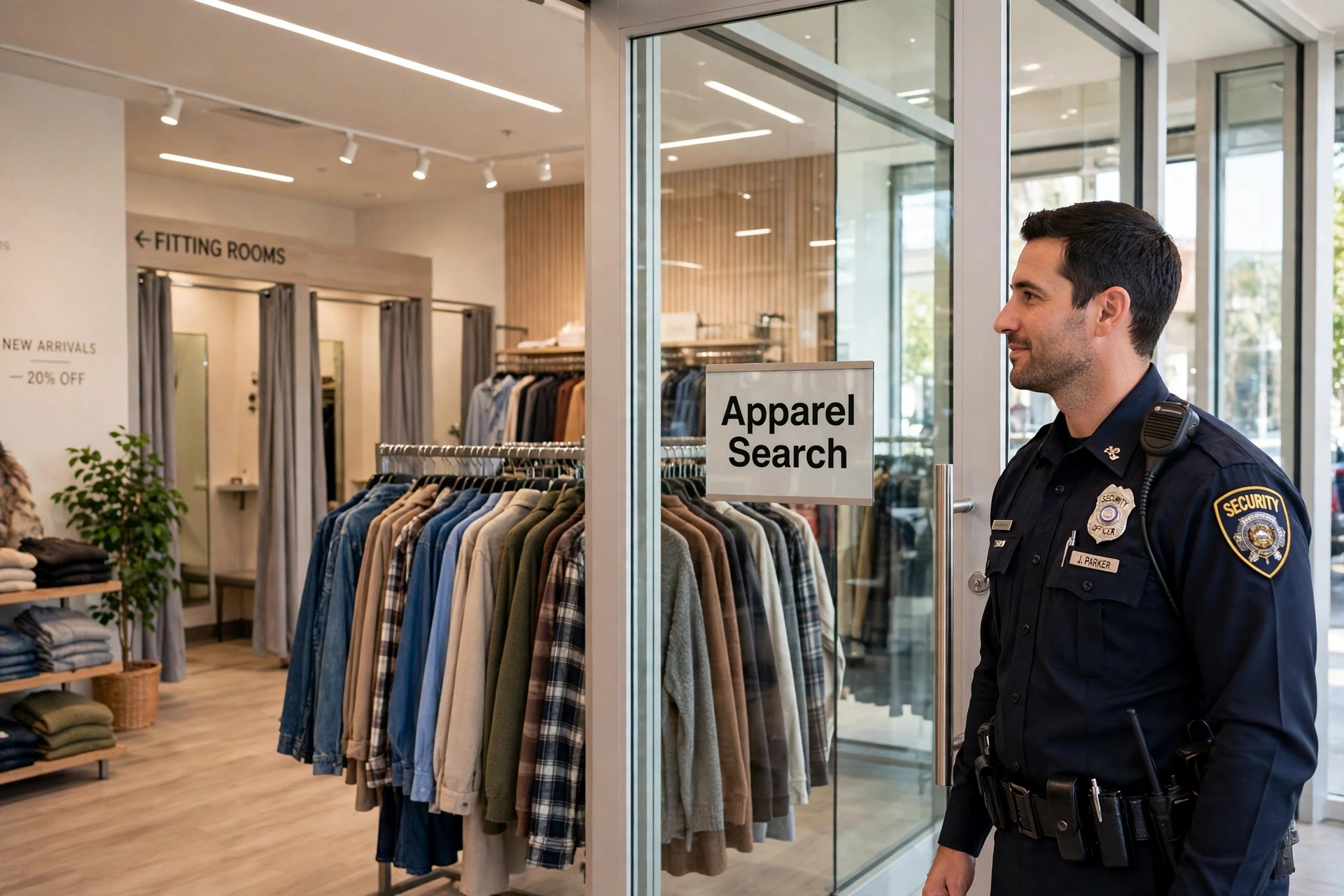
Security in a clothing store is, first of all, a presence. The officer works in uniform, in plain sight — at the entrance, on the sales floor, near fitting rooms and high-value departments — so that honest customers feel looked after and dishonest ones know they are watched. It is the front-door end of retail security: deterrence by visibility, greeting and observing everyone who comes in, and responding first when an alarm sounds, an argument starts or a suspected theft unfolds. It is a people-facing uniformed post, quite different from back-office investigation work.
More Miscellaneous Job Descriptions by Letter:
What a Store Security Officer Does
The shift is built around patrol and position. Officers open with the store team, checking doors, exits, fire routes and alarm points before trading, then take up the positions the day demands: the main entrance, where a greeting doubles as observation; regular floor walks covering fitting rooms, stairwells, stockroom doors and quiet corners; and the till and refund points when queues and disputes build. Between patrols the officer monitors what the store's systems show — door alarms, security-tag alerts at the exits and camera views — and answers every alert in person rather than from a desk.
Clothing creates its own security workload. Garments are light, valuable and easy to conceal, fitting rooms are the one place merchandise goes unwatched, and returns desks attract fraud as reliably as exits attract theft. The officer therefore checks fitting-room counts and abandoned items with the sales team, watches for tag switching and booster bags, verifies that tagged goods leaving the store have genuinely been detagged at a till, and keeps delivery doors and stockroom entrances closed to everyone but authorised staff. Most losses in a well-run store are prevented by exactly this: routine done visibly and consistently.
Incidents, Apprehension Support and Safety
When prevention fails, the officer is the store's first responder. Suspected shoplifting is handled strictly within the law and company policy: continuous observation, a manager informed, an approach made only when the evidence and the policy both support it, and police called where the situation requires them. The officer's job in an apprehension is support and safety — containing the situation calmly, protecting staff and bystanders, preserving the merchandise and any evidence, and giving police a clear, factual account afterwards. Chasing, grabbing and improvising beyond policy are failures of the role, however well intentioned.
Safety duties run wider than theft. The officer responds to accidents, medical incidents and alarms, helps manage evacuations, deals with abusive or intoxicated visitors firmly and politely, and escorts staff carrying cash or working late. Every incident ends in a written report — times, people, actions, outcome — made while memory is fresh. Those reports feed the store's records, insurance claims and police statements, and officers whose reports are accurate are trusted far beyond those whose paperwork is sloppy.
Skills and Abilities the Role Requires
Observation is the core skill: noticing the customer who entered empty-handed and is leaving bulkier, the pair working a rail together, the same face returning to the fitting rooms with armfuls of sizes that do not match. It is paired with composure. Security officers are sworn at, filmed, argued with and occasionally threatened, and the officer who stays courteous and procedural under provocation protects the store's reputation as surely as its stock. Fitness matters — the hours are spent standing and walking — but voice and judgement do most of the work.
Reliability and integrity are non-negotiable. Officers hold keys, alarm codes and knowledge of a store's blind spots, work around cash and desirable goods, and are often alone with stock before opening and after closing. Employers vet accordingly, and any dishonesty ends a security career outright. Communication completes the profile: clear radio and phone manner, firm-but-polite challenge phrases practised in advance, and written English good enough for reports that may be read in court.
Qualifications, Training and Career Path
Entry usually requires a secondary-school education, the legal right to work, a clean background check and, in many jurisdictions, a security guard licence or registration, which the employer or the officer obtains before or shortly after starting. Prior experience in retail, the police or military services, or other uniformed work is welcomed but rarely required; stores and contractors train new officers in patrol routines, alarm systems, incident reporting and the legal limits of the role. First aid certification is commonly provided and always valued.
Careers grow by trust and scope: from officer to senior officer and shift supervisor, to store security lead covering a flagship, and onward to area security roles supervising officers across several stores. Some officers move sideways into stock investigation, distribution-centre security or control-room work, and others carry their store experience to the retailers and contractors who supply security services. The role suits steady, observant people who like working among the public — and who understand that in this job a quiet shift is a successful one.
Common Questions
What does a security officer in a clothing store actually do all day?
Patrol and presence: staffing the entrance, walking the floor and fitting-room areas, answering door and tag alarms, keeping stockroom and delivery doors secure, helping staff with difficult situations, and writing an accurate report of every incident.
How is this role different from loss prevention?
Emphasis and visibility. The store security officer is the uniformed, front-of-store role built on deterrence, patrol and first response. Loss prevention work leans toward the investigative side — shrinkage analysis, surveillance evidence and internal investigations — usually in plain clothes or from an office.
Do store security officers need a licence?
In many places, yes: a security guard licence or registration, plus a background check, is required before or shortly after starting. Employers and contractors also train officers in their own systems, reporting and the legal limits of the role.
More to Explore
- Fashion Employment Agencies
- Employment Search Engines
- Fashion Job Description Directory
- Fashion Directory
- Fashion Industry News
- Fashion Schools and Education
- Fashion Careers
- Apparel Industry Links
- Retail Store Security
- Security Tags
- Holograms and Anti-Counterfeiting
- Clothing Retailers
- Clothing Industry Software
- Clothing Technology and Innovation
- Clothing Industry Portal