Replenishment Job Description
Keeping selling stores supplied — the in-season discipline of triggers, cover, automatic replenishment and stock flow for clothing
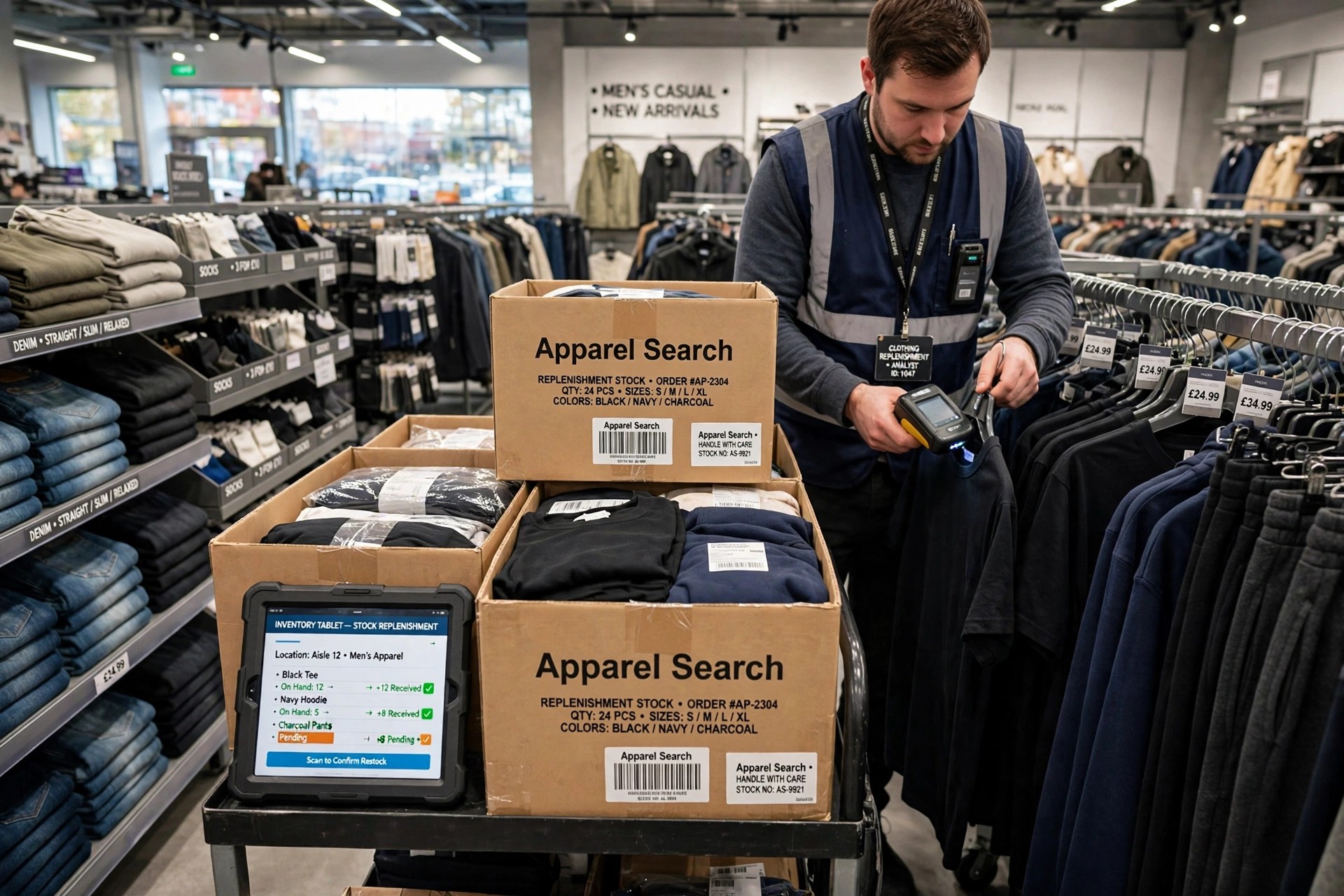
Replenishment is the in-season engine that keeps clothing available where it is selling. After allocation has given each store its opening quantities, trade immediately begins to unbalance them: bestsellers sell down in days, slow lines sit, and sizes break unevenly across the estate. Replenishment — carried out by replenishment analysts and assistants, often inside the allocation team — is the discipline that corrects that imbalance continuously, releasing stock from central warehouses and reserves to the stores and channels demonstrating demand, at the depth their sales justify, before gaps on the rail turn into lost sales. In businesses with automatic replenishment systems, the role is less about placing every order by hand and more about setting, tuning and policing the rules the system runs on.
More Planning Job Descriptions by Letter:
How Replenishment Works: Levels, Triggers and Cover
The mechanics begin with stock targets. For continuing and replenishable lines — basics, core sizes, never-out-of-stock programmes and the season's proven sellers — replenishment staff set minimum and maximum stock levels by store, built from rate of sale, lead time from the warehouse, delivery frequency and the display quantity a fixture needs to look credible. When a store's stock falls to its trigger point, the system or the analyst raises a replenishment quantity calculated to restore cover — enough weeks of stock at the current selling rate — without overfilling a store whose space and customer demand are finite. Fashion's twist is that most lines are not continuing: seasonal styles have a fixed total quantity, so replenishment there means rationing a finite central reserve among competing stores, which is a judgement, not a formula.
The weekly rhythm is evidence work. Replenishment analysts read sell-through, rate of sale, weeks of cover and size availability by store and style, and act on what the numbers distinguish: a store selling out because it is under-stocked needs more; a store selling out of one size because its size curve was wrong needs a corrected profile, not just more units; a line whose rate of sale is collapsing needs its replenishment stopped, however healthy its cover formula looks, so the remaining stock stays where it can still sell. They also manage the exceptions the systems cannot: launch stock for promotions and events, weather-driven surges, new-store openings, and the end-of-life consolidation of remnants into the few stores that can clear them at full price.
Working with Warehouses, Stores and Planners
Replenishment sits between three partners. With the warehouse and distribution operation, the analyst agrees pick, pack and delivery calendars, flags volume surges before they arrive, and resolves the daily friction of shortages, mis-picks and late deliveries that would otherwise empty rails. With store teams, the relationship is communication: stores report the gaps they see, challenge quantities that do not match their floor, and feed back the local knowledge — a roadworks-hit high street, a local event, a competitor closing — that no sales file contains. The analyst who listens sells more than the one who only reads screens.
With planners and allocators, replenishment is the continuation of one stock conversation. Allocators hand over the initial distribution and the reserve; replenishment manages both through the season and returns the evidence — which stores, sizes and lines consistently outrun their supply — that improves the next season's grading, size curves and buy depth. When demand outruns total supply, the analyst's allocation of scarcity is a commercial decision with winners and losers among stores, and it has to be explainable: by rate of sale, cover and fairness rules agreed with the planning team, not by which store manager telephoned first.
Skills and Abilities the Role Requires
Replenishment is systems-and-spreadsheets work at pace: large style-store data sets, replenishment and inventory systems, and the accuracy to keep thousands of stock positions right while the season moves. Analytical judgement matters more than arithmetic alone — reading whether a sales spike is a trend, an event or a data error, and setting triggers and levels that balance availability against the cost of overstock. The cost balance is real on both sides: every point of availability gained by holding more stock is paid for in working capital and end-of-season markdown, and the skilled analyst can show that trade-off in numbers.
Operational temperament completes the profile: calm prioritisation when every store wants the same scarce line, clear communication with warehouses and store teams whose day the analyst's decisions shape, and persistence with the unglamorous detail — a wrong size profile or a missed delivery slot — that decides whether the system's elegance reaches the shop floor. Seasonal peaks concentrate the pressure, because the highest-selling weeks are exactly when replenishment matters most and fails fastest.
Qualifications, Training and Career Path
Replenishment analysts commonly enter from allocation or merchandising assistant roles, from warehouse and distribution positions with stock responsibility, or from store roles where they managed stock and availability. Employers train new analysts on their replenishment systems, cover and trigger logic, and warehouse calendars; they screen for spreadsheet confidence, comfort with sales and stock data, and evidence of methodical follow-through. Product and store knowledge both help, because replenishment decisions are about physical garments arriving on physical rails, not only about rows in a system.
The career path runs upward through the planning function: senior replenishment or allocation analyst, then merchandise planner, where the focus widens from distributing stock to building the buy, and onward to planning management and the senior planning and allocation roles described in this category. Analysts also move into supply-chain and distribution planning, e-commerce availability and trading roles, carrying a store-level understanding of stock flow that is valued across retail head offices. It is one of the fastest educations in how a fashion business actually moves product.
Common Questions
What does replenishment mean in clothing retail?
Replenishment is the in-season process of keeping stores and channels supplied: monitoring sales and stock cover, and releasing further quantities from central stock to the locations selling them, so proven lines stay available in the right sizes without overstocking the places where they are not selling.
How is replenishment different from allocation?
Allocation makes the first distribution — the opening quantities each store receives. Replenishment is everything after: the continuous, evidence-based correction of that distribution through the season, using triggers, cover targets and the central reserve, plus the rationing of scarce stock among competing stores.
What skills does a replenishment analyst need?
Fluency with replenishment systems and spreadsheets, the ability to read rate of sale, sell-through and weeks of cover, judgement in balancing availability against overstock cost, and clear communication with warehouse, store and planning colleagues under seasonal pressure.
More to Explore
- Fashion Employment Agencies
- Employment Search Engines
- Fashion Job Description Directory
- Fashion Directory
- Fashion Industry News
- Fashion Schools and Education
- Fashion Careers
- Apparel Industry Links
- Clothing Retailers
- Apparel Wholesalers
- Apparel Manufacturers
- Clothing Merchandising
- Retail Math
- Apparel Industry Calculators
- Retail Planners Job Description
References & Further Reading
More Job Description Categories
- Buying Job Descriptions
- Design Job Descriptions
- Marketing & PR Job Descriptions
- Miscellaneous Job Descriptions
- Planning & Allocation Job Descriptions (current)
- Production & Sourcing Job Descriptions
- Sales & Selling Job Descriptions
- Transportation & Warehouse Job Descriptions