Pattern Engineer Job Description
The technical side of pattern work — building pattern systems, grading rules and CAD data that factories can cut with confidence
A pattern engineer treats patterns as a technical system. Where the pattern maker creates the first pattern for a style — the craft treatment on the Pattern Maker page — the pattern engineer builds and controls the engineering underneath production: patterns constructed and held in CAD, grading rules that grow a base size into a full size set, tolerances, seam and construction data, and the standard blocks and libraries that let many factories cut the same garment and get the same result. It is pattern knowledge expressed as data, rules and verification.
More Production Job Descriptions by Letter:
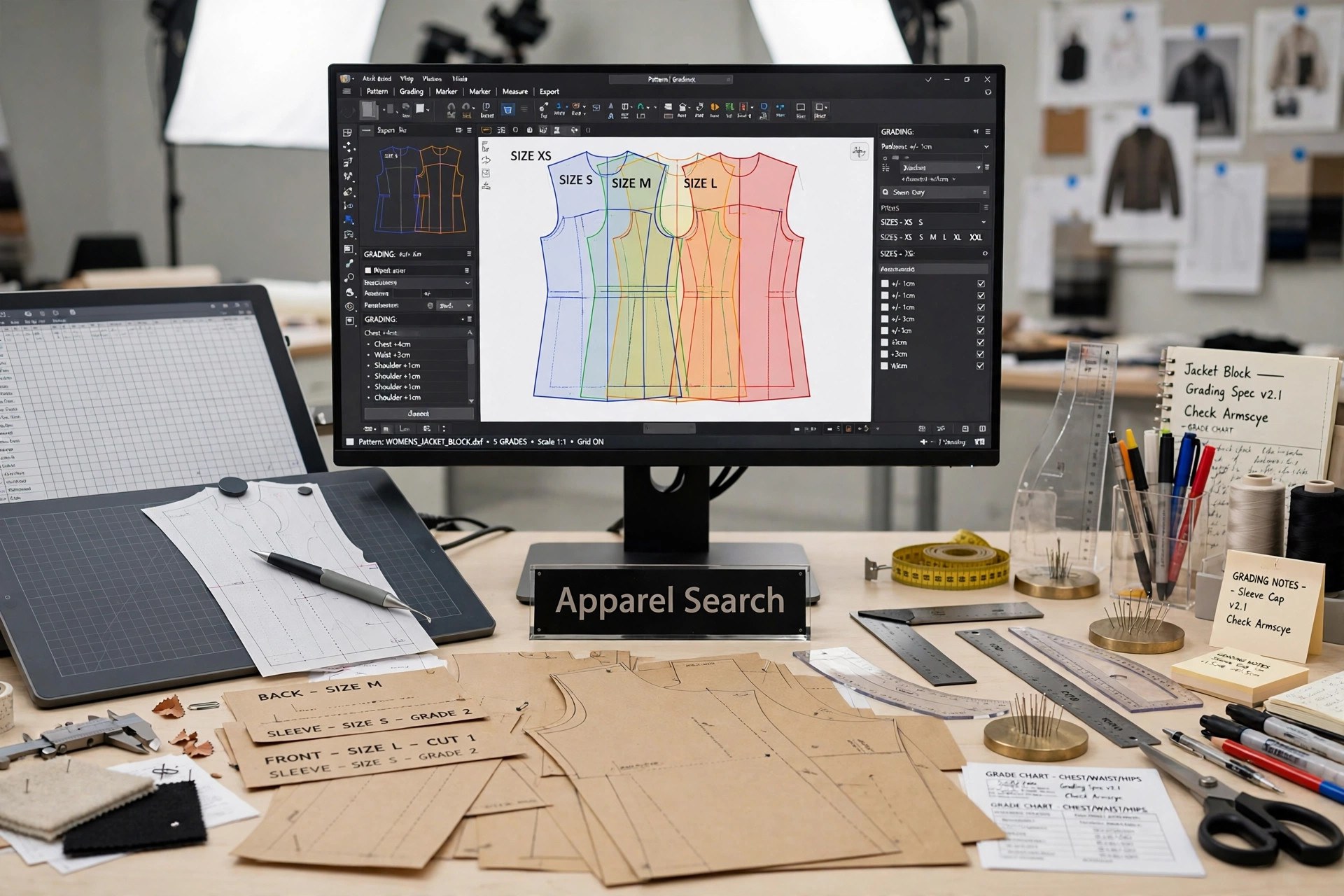
Building and Controlling Patterns in CAD
The engineer constructs, converts and maintains patterns in CAD pattern systems: digitising or importing approved first patterns, rebuilding them with clean geometry — smooth curves, true corners, correct seam lengths that walk together, notches, drill marks and grain lines placed to specification — and structuring each file so other professionals can work on it safely. Pattern pieces carry their full technical identity: size, material, cut quantity, mirroring and placement rules, held in the file rather than in someone’s memory.
From that controlled base, the engineer issues what production actually consumes: graded pattern sets, marker-ready files for the cutting systems, plotted patterns for sample rooms, and the pattern data inside tech packs. Version control is sacred. When a fit correction changes a pattern, the engineer issues a new revision with the change documented, withdraws the superseded data from every library and factory that holds it, and confirms the factory is cutting the current version — because the commonest expensive pattern fault in the industry is a correct pattern and an old file.
Grading Rules and Size Systems
Grading is the engineer’s signature discipline. A fit approved at base size must become eight or fifteen sizes that each fit their wearer, and that growth follows rules: grade increments at chest, waist, length and every other point of measure, distributed around the pattern so proportions, style lines and construction stay true. The engineer builds and maintains those grade rule libraries — different rules for different product types, fabrics and markets — applies them in CAD, and then nests and checks the graded set piece by piece, because a rule that works at the chest can quietly break an armhole, a collar or a pocket placement three sizes out.
Size systems work sits alongside grading: maintaining the company’s size charts and points of measure, aligning pattern grades with garment specifications and tolerances, and checking that a size large measures as a large should in every factory making it. When fit feedback or returns data shows a size running wrong, the engineer traces whether the fault is in the grade rules, the base pattern, a factory’s cutting or the specification itself, and fixes it at the level where it actually lives.
Fit Data, Standards and Factory Support
Fit sessions produce comments; the engineer turns comments into pattern mathematics. A request to ease a bicep, lengthen a back or clean a drag line becomes measured pattern revisions, re-graded and re-checked across the size set rather than patched at one size. The engineer maintains the block library — the proven base patterns from which new styles start — and the construction standards that travel with patterns: seam allowances by operation, shrinkage and growth allowances by fabric behaviour, fusing and component rules, so a style developed in one place sews correctly in another.
Factories are the engineer’s daily customers. The role supports sample rooms and bulk production across several sites at once: answering pattern queries, auditing factory-held patterns against the master data, approving factory-made corrections within agreed limits, and investigating measurement failures back to their data source. In companies using PLM systems, the engineer keeps pattern data, specifications and measurement charts in step, so the garment ordered, the garment costed and the garment cut are the same garment on paper as well as on the rail.
Skills, Qualifications and Career Path
Pattern engineering requires the pattern maker’s understanding of fit and construction plus a systematic, data-minded temperament: geometry, measurement discipline, and fluency in at least one major CAD pattern system, with grading theory underneath it. Most engineers first train and work as pattern makers or technical designers, then specialise into CAD, grading and standards; qualifications in pattern technology, apparel engineering or clothing manufacture support the move, and vendor certification on a CAD system is a practical asset employers recognise.
The work is office and sample-room based, often supporting factories across time zones, with deadline peaks at range development and at bulk release. Career paths lead to senior pattern engineer, grading or CAD lead, technical design and product engineering management, and head of technical roles owning fit and standards for a whole brand. Engineers also move to the CAD and PLM software companies as application specialists, and into consultancy auditing pattern systems for groups whose factories span continents.
Common Questions
What is the difference between a pattern engineer and a pattern maker?
A pattern maker creates the first pattern for a style, drafting or draping from the design. A pattern engineer builds the technical system around patterns: CAD construction and control, grading rules and size sets, tolerances, block libraries and the data factories cut from. Many engineers began as pattern makers.
What does grading mean in pattern engineering?
Applying defined grade rules to grow or shrink a base-size pattern into the full size set, distributing the size differences around each pattern piece so every size keeps the style’s proportions and fit, then checking the graded nest size by size.
Which skills do pattern engineers need most?
Pattern construction and fit knowledge, grading theory, CAD pattern-system fluency, measurement and tolerance discipline, and rigorous version control — plus the communication to support sample rooms and factories working from the data.
More to Explore
Pattern Engineering Resources
References & Further Reading
More Job Description Categories
- Buying Job Descriptions
- Design Job Descriptions
- Marketing & PR Job Descriptions
- Miscellaneous Job Descriptions
- Planning & Allocation Job Descriptions
- Production & Sourcing Job Descriptions (current)
- Sales & Selling Job Descriptions
- Transportation & Warehouse Job Descriptions