VP of Sourcing Job Description
Deciding where and from whom the company buys its making — vendor strategy, negotiation and the country portfolio
A vice president of sourcing decides where a fashion company's garments will be made and on what terms. The role owns the sourcing strategy: which countries belong in the portfolio and in what proportions, which vendors earn the company's orders, what those orders should cost, and how the vendor base develops, consolidates or exits over time. It is the commercial summit of the sourcing function — distinct from the sourcing operations role that runs order flow day to day, and from the title-level sourcing VP posts inside a single product division, because this mandate spans the company's whole bought-in production.
More Production Job Descriptions by Letter:
Sourcing Strategy and the Country Portfolio
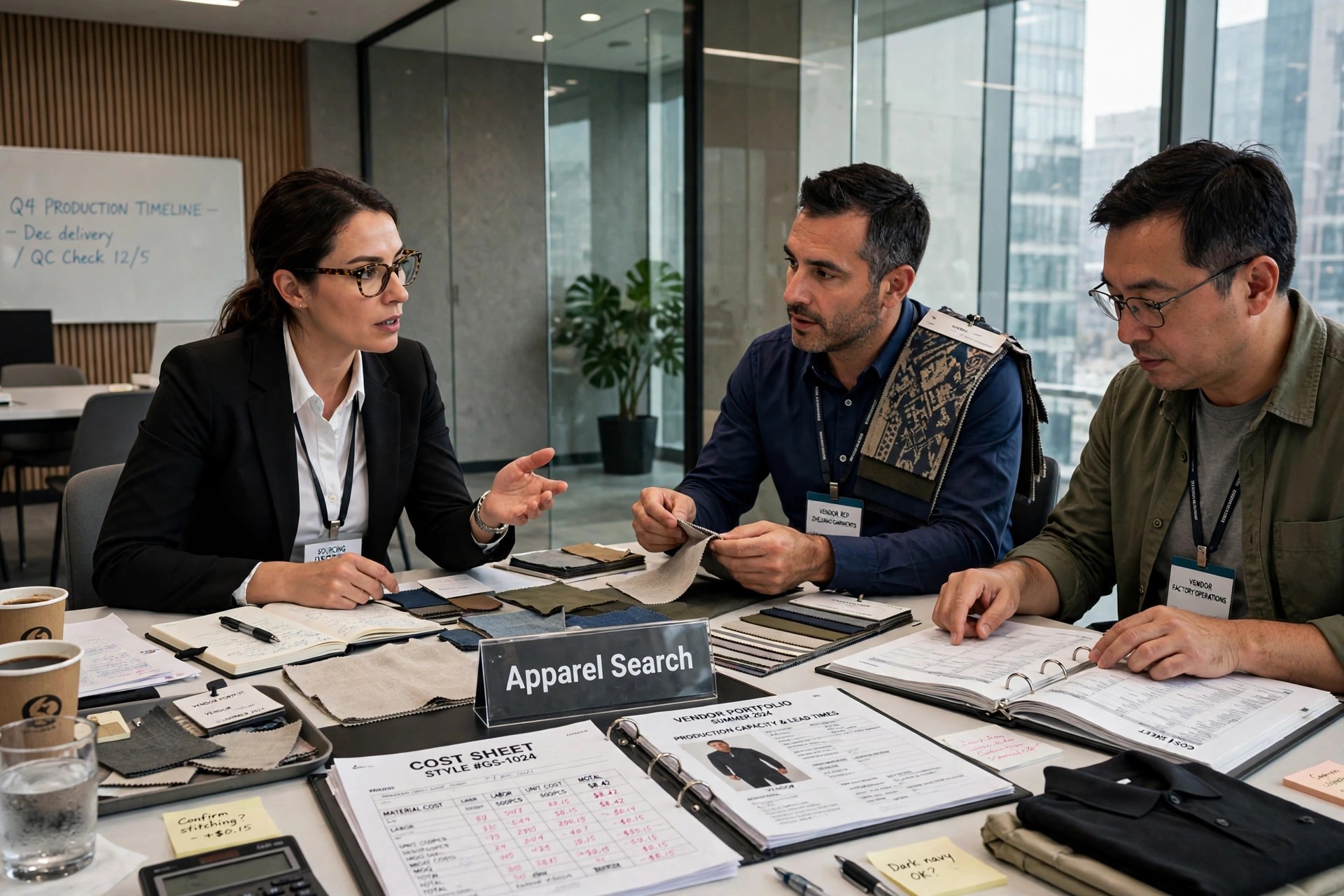
Strategy begins with the map. The VP weighs countries against each other on cost, capability, lead time, quality record, compliance standing, capacity and political and currency risk, and sets the portfolio the company will buy from — specialising some regions in product they make best, keeping second sources where a single-country failure would strand a season. Duty and trade-programme structures, freight routes and speed-to-market demands all enter the calculation, and the portfolio is reviewed as conditions move: a strategy that was right three years ago can quietly become the company's biggest exposure.
Vendor selection is where strategy becomes names. The VP approves which factories join the vendor base, on audit evidence and trial orders; sets the balance between large strategic partners and smaller specialists; and decides consolidation — fewer vendors, deeper relationships, better leverage — against the risk of dependence. Vendor development belongs here too: the multi-season work of raising a good factory's capability, systems and compliance until it can carry more and better product, which is cheaper than endlessly recruiting replacements.
Negotiation, Cost and Commercial Terms
The VP leads the company's major negotiations: seasonal price agreements, capacity commitments, payment terms and the cost frameworks inside which individual orders are priced. Cost strategy is analytical work — open-costing where vendors price against a transparent build-up of fabric, trims, labour minutes and margin; target costing where design starts from the price the market will bear — and the VP chooses the approach per category, then defends the resulting cost base to finance and merchandising with evidence.
Risk and responsibility run through the commercial brief. The VP owns sourcing's position on compliance standards in vendor selection, on responsible purchasing practices such as realistic lead times and stable order patterns, and on exit — how a vendor relationship ends without stranding workers or seasons. When costs spike — cotton, freight, wages, currency — it is the VP who models the impact, proposes the response, and negotiates rather than merely passes increases along. The function's reputation with vendors is also set here: fairly dealt-with factories reserve their best capacity for this company's peak.
Skills and Abilities the Role Requires
Commercial negotiation at scale is the headline skill — firm on economics, precise on terms, and always aware that the relationship continues after the signature. Underneath it sits real product knowledge: garment cost construction, fabric markets, factory capability and quality, because a sourcing strategy written by someone who cannot cost a garment will be dismantled by the first vendor who can.
Strategic and analytical range completes the profile: reading country risk, modelling duty and freight scenarios, presenting a portfolio case to an executive board. Cross-cultural fluency is practical, not decorative — the role is exercised in vendors' offices and factories across several regions, often through interpreters, always through relationships. Judgement about people and partners, and patience for multi-season development work, distinguish the executives who build vendor bases that last.
Qualifications, Training and Career Path
Sourcing VPs typically build through the buying-production ladder: sourcing coordination and management, costing or vendor-management roles, time in regional offices or with agents, then divisional sourcing leadership. Extended periods working in sourcing countries, and responsibility for a whole category's vendor base, are the experiences employers weight most. Grounding in textiles, garment technology, economics or supply chain supports the record; additional languages carry real value.
From this role the paths run to chief supply chain or operating officer posts, to general management of import-led brands, or across to the vendor side as leadership of a manufacturing group's customer portfolio. Within this category's ladder, the VP of sourcing stands above the divisional sourcing VP and senior VP posts filed under S: those lead sourcing for a product area, while this role sets strategy for the entire vendor network — the difference between negotiating a category's prices and deciding the map the whole company buys from.
Common Questions
What does a VP of sourcing do?
They own sourcing strategy for the whole company: the country portfolio, vendor selection and development, major price and terms negotiations, cost strategy, and the responsible management of vendor exits.
How is a VP of sourcing different from a VP of operations, sourcing?
Strategy against execution. The VP of sourcing decides which vendors and countries the company uses and on what terms; the operations VP runs the resulting order flow, compliance operations and logistics every day.
What is a sourcing country portfolio?
The deliberate mix of countries and vendors a company buys production from, balanced for cost, capability, lead time, quality, compliance and risk, so no single region's failure can strand a selling season.
More to Explore
- Fashion Employment Agencies
- Employment Search Engines
- Fashion Job Description Directory
- Fashion Directory
- Fashion Industry News
- Fashion Schools and Education
- Fashion Careers
- VP of Production Job Description
- VP of Operations, Manufacturing Job Description
- VP of Operations, Sourcing Job Description
- Sourcing VP Job Description
- Sourcing Senior VP Job Description
Sourcing Resources
References & Further Reading
More Job Description Categories
- Buying Job Descriptions
- Design Job Descriptions
- Marketing & PR Job Descriptions
- Miscellaneous Job Descriptions
- Planning & Allocation Job Descriptions
- Production & Sourcing Job Descriptions (current)
- Sales & Selling Job Descriptions
- Transportation & Warehouse Job Descriptions