Traffic Coordinator Job Description
Shipment-level execution — booking, tracking and chasing clothing freight day by day
A traffic coordinator moves clothing freight one shipment at a time. The role sits between the warehouse that has goods ready and the carriers who can move them, and its work is execution: tendering each load to the right carrier, booking the collection, tracking the freight while it travels, and acting the moment something deviates — a missed pickup, a delayed trailer, a delivery refused at a store. If the traffic manager's world is contracts and strategy, the coordinator's world is today's board of live shipments, each with a promise attached that somebody in the business has already made to a customer.
More Transportation & Warehouse Job Descriptions by Letter:
Booking and Tendering: Getting Freight Onto Wheels
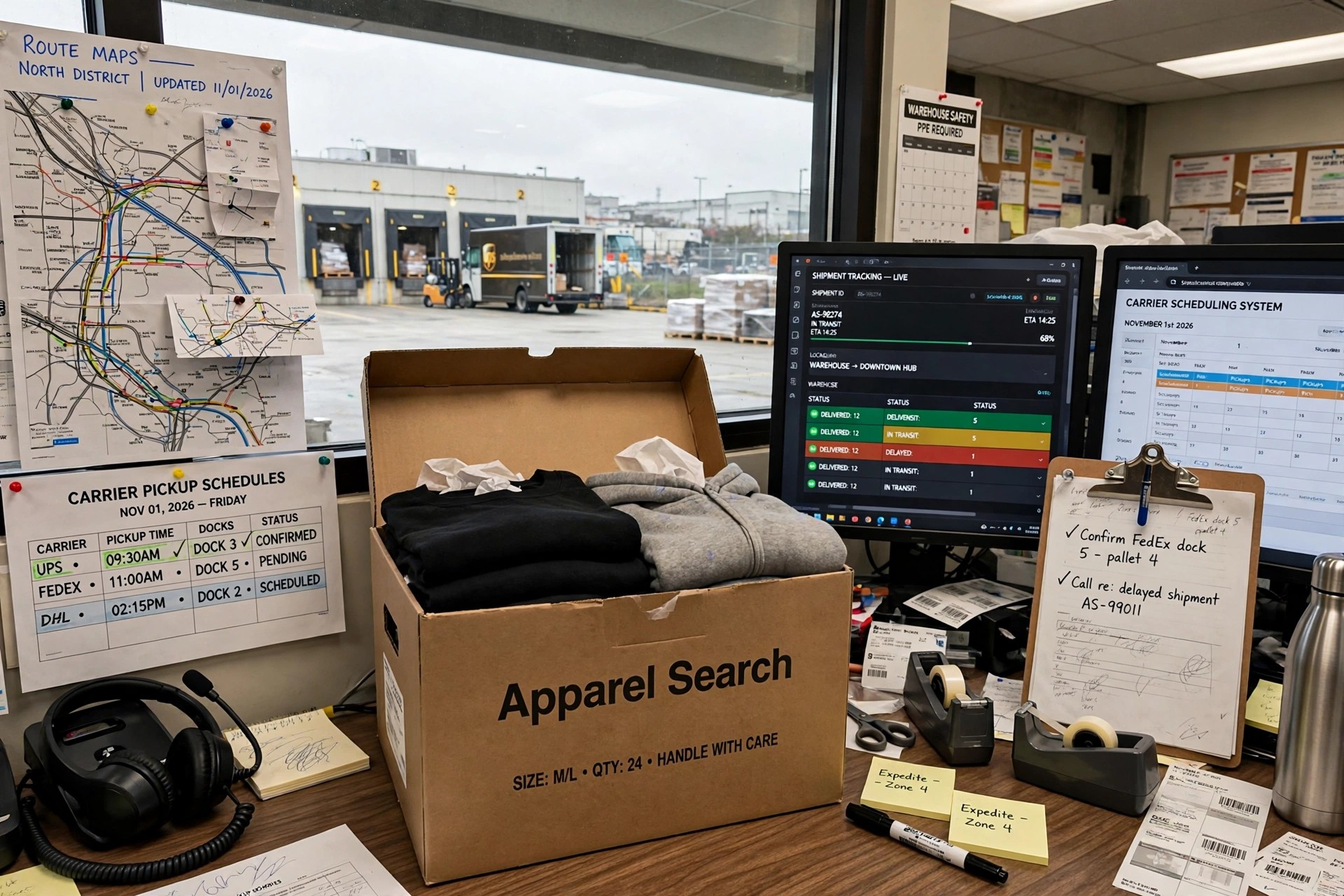
The day starts with what must move. The coordinator takes the ready shipments from warehouses, factories and suppliers, matches each to the carrier and service the routing instructions specify — by destination, weight, size, required delivery date and customer rules — and tenders the load: booking the collection, transmitting the shipment data, and confirming the carrier has accepted it at the quoted service and price. A booking made but not confirmed is the role's classic trap, so acceptance is verified, not assumed, and exceptions are escalated while alternative carriers can still be used.
Details decide whether freight moves cleanly. Collection addresses and opening hours, dock or tail-lift requirements, pallet counts and dimensions, reference numbers the receiving site demands — the coordinator assembles and transmits them accurately because every missing detail becomes a failed collection or a refused delivery at the far end, charged to the shipper. For inbound freight the process reverses: the coordinator issues routing instructions to suppliers, books their ready shipments onto the company's contracted carriers, and keeps unauthorised — and usually far more expensive — supplier-arranged freight out of the network.
Tracking, Exceptions and the Daily Chase
Once freight is moving, the coordinator tracks it against its promised dates: carrier scans and status feeds reviewed through the day, at-risk shipments identified early, and the receiving site, store or customer warned before a delay lands on them unannounced. The role's value concentrates in the exceptions. A vehicle breaks down with a store's launch delivery aboard; a trailer misses its ferry or its sort; a distribution centre rejects a load booked without an appointment. The coordinator works each one live — rebooking, rerouting, upgrading the service where the commercial stakes justify it, and recording the cost and the cause as the decisions are made.
Communication is the medium of all of it. Warehouses ask whether to hold staff for a late collection; stores ask where their delivery is; carriers ask for decisions only the shipper can make. The coordinator answers in specifics — shipment, carrier, current status, next milestone, revised time — drawn from the tracking record rather than optimism, and logs the answer so the next person who picks up the query continues the same conversation. Calm, precise updating under time pressure is the skill colleagues remember this role for.
Proofs, Claims Support and Shipment Records
Delivered freight must be proved delivered. The coordinator obtains and files proofs of delivery, matches them against the shipment records, and supplies them to accounts and customer service when a delivery is queried or an invoice disputed. Where freight is lost or damaged, the coordinator assembles the shipment file — booking, tender, tracking history, delivery evidence — that the traffic manager's claims process works from, and flags repeat failure patterns by carrier, lane or packaging type that the records reveal.
The same records feed the operation's improvement. Missed collections, late deliveries, failed appointments and accessorial charges — waiting time, redelivery, address corrections — are coded by cause as they are closed, because next quarter's carrier review and routing decisions are only as good as this quarter's exception data. Coordinators who keep clean, honest records become the people managers trust with the difficult lanes and the important customers.
Skills, Qualifications and Career Path
Employers look for organised urgency: the ability to run dozens of live shipments in parallel without losing one, fluent use of carrier portals, tracking systems and spreadsheets, and telephone communication that stays clear and courteous when the news is bad. Experience in a dispatch office, warehouse shipping desk or carrier customer-service team all feed the role; formal transport qualifications help but the common route in is operational, learning lanes, carriers and customer rules on the job. Numeracy matters for weights, pallet counts and charge verification at the level of spotting the invoice line that cannot be right.
The coordinator role is the recognised apprenticeship of the traffic function. From it, progression runs to senior coordinator and traffic supervisor, and to the traffic manager page beside this one — the step from moving shipments to managing the carrier strategy and budget behind them. Coordinators also move sideways into the shipping manager's organisation under S and into logistics coordination under L, carrying the same shipment-level discipline into neighbouring functions.
Common Questions
What does a traffic coordinator do?
Executes freight movement shipment by shipment for a clothing company: tendering loads to the contracted carriers, booking and confirming collections, tracking freight against its promised dates, handling missed pickups, delays and refused deliveries live, and keeping the proofs of delivery and exception records.
How is a traffic coordinator different from a traffic manager?
The coordinator works on live shipments — booking, tracking, exceptions. The manager works on the system behind them — carrier selection and contracts, rates, routing policy and the freight budget. Coordinator is the execution desk of the function the manager leads, and its standard route upward.
What skills does a traffic coordinator need?
Parallel organisation across many live shipments, confident use of carrier and tracking systems, precise written and spoken updates under time pressure, and the numeracy to check weights, counts and charges. Experience on a shipping desk or in carrier customer service is the usual preparation.
More to Explore
Traffic and Transportation Resources
Transportation & Warehouse Directory Pages by Letter
References & Further Reading
More Job Description Categories
- Buying Job Descriptions
- Design Job Descriptions
- Marketing & PR Job Descriptions
- Miscellaneous Job Descriptions
- Planning & Allocation Job Descriptions
- Production & Sourcing Job Descriptions
- Sales & Selling Job Descriptions
- Transportation & Warehouse Job Descriptions (current)