Transportation Manager Job Description
The whole transport operation — fleet, network, warehouses and the cost of moving clothing
A transportation manager runs the whole movement operation of a clothing company: every route by which garments travel between factories, warehouses, stores and customers. The scope is deliberately broader than any single desk within it. It covers the contracted carriers the traffic function manages, any fleet the company owns or leases with the drivers who operate it, the network of lanes and schedules connecting the sites, and the daily interface where transport meets warehousing at the dock door. The manager is accountable for the combined result — service to stores and customers, total transport cost, safety and legal compliance — across all of it at once.
More Transportation & Warehouse Job Descriptions by Letter:
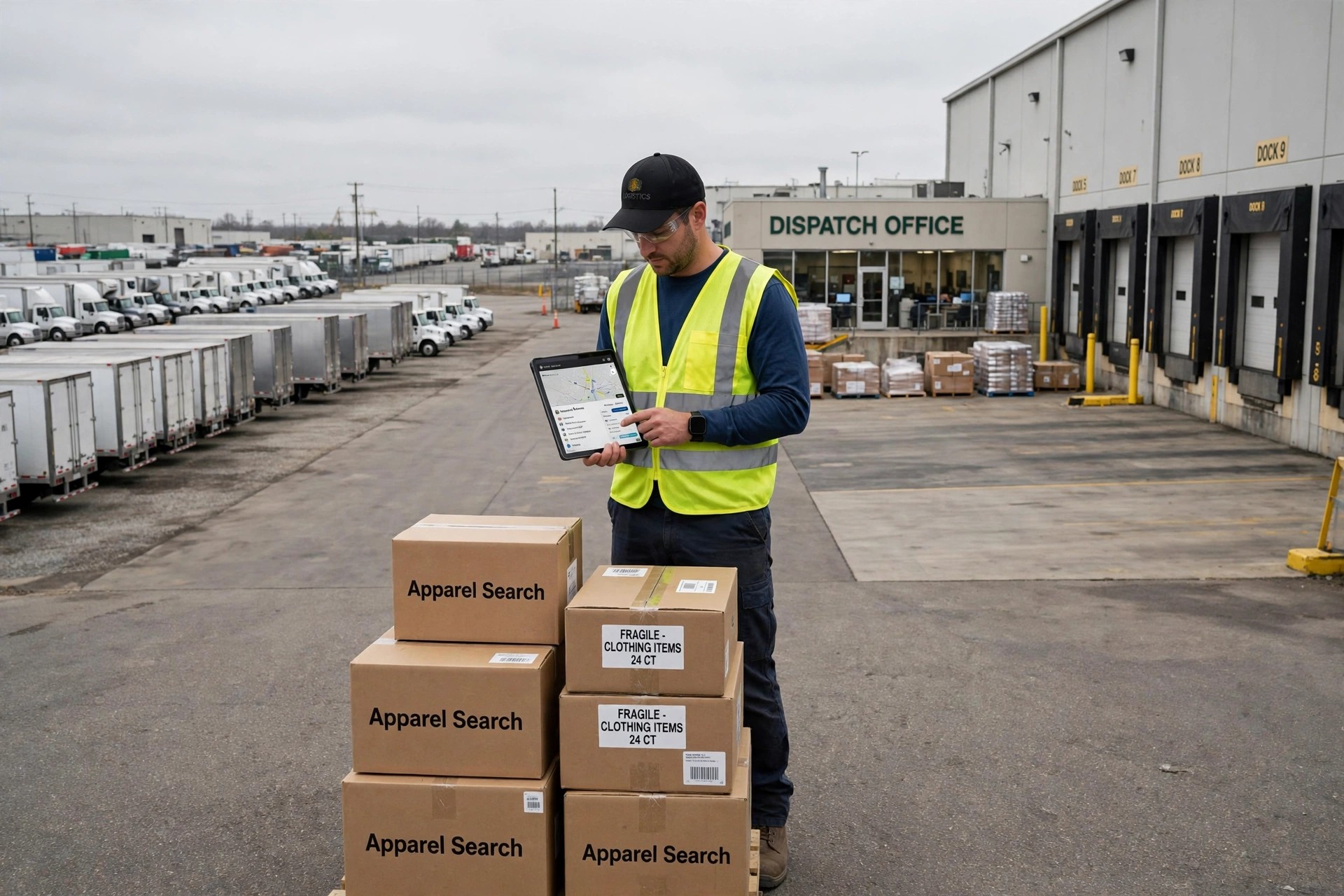
The Network: Lanes, Schedules and Sites
The manager designs and maintains the transport network the business actually runs on: which sites ship to which, on what days, by what mode and carrier or fleet resource; where freight consolidates; where it crosses a dock and changes vehicle; how store delivery routes are sequenced so vehicles run full and arrive inside receiving hours. Apparel loads shape these decisions physically — garments travel as cartons and as hanging freight that cannot be crushed or consolidated like general cargo, so vehicle specification, cage and rail equipment, and cube utilisation are transport questions this role owns rather than details it inherits.
Networks decay as businesses change: stores open and close, online volume grows, a warehouse moves. The manager reviews the network against the real flow data on a regular cycle, re-tendering lanes, re-sequencing routes and re-timing schedules, and models the transport consequences of business decisions before they are taken — a new distribution centre, a click-and-collect promise, a sourcing shift to a different port of entry. Transport is where strategy becomes geography, and this role supplies the geography honestly, with costs attached.
Fleet, Drivers and Contracted Capacity
Where the company operates its own vehicles, the manager carries the fleet accountability: vehicle specification and replacement, maintenance and inspection regimes, fuel, insurance, and the driver workforce — recruitment, licensing, hours compliance, training and safety. Driver management is the most human part of transport: the manager sets the standards drivers are recruited and coached to, investigates incidents and near misses without theatre, and builds schedules that are legal and humane as well as efficient, because a fatigued driver is a safety failure scheduled in advance.
Most networks mix fleet and contracted capacity, and the manager decides the mix lane by lane: own vehicles where density and control justify them, carriers where flexibility or reach wins, spot capacity for peaks. The traffic manager's carrier work, described beside this page, operates inside these decisions. Peak seasons are planned as a single capacity problem across both resources — fleet hours, carrier allocations and warehouse dock capacity solved together, months ahead, rather than three separate shortages discovered in the same week.
Service, Cost and the Warehouse Interface
Transport is judged at the receiving door. The manager owns the service measures the stores and customers experience — deliveries complete, on the booked day, inside the window, with freight in saleable condition — and investigates failures to their operational cause, whether that cause sits with a carrier, a route design, or the warehouse that loaded the vehicle late or badly. The dock interface is managed as one system: booking slots, loading standards, departure discipline and the information flow between warehouse management and transport planning, so neither function optimises itself at the other's expense.
Cost accountability spans the whole operation: fleet running costs, carrier spend, fuel, tolls, empty mileage and the cost of service failures themselves. The manager reports transport cost per delivery, per case and per lane against budget, and brings improvement projects with evidence — backhaul arrangements that fill returning vehicles, delivery frequency changes agreed with stores, packaging or cage changes that raise vehicle fill. In a low-margin trade, a transport network run a few percent better is a competitive advantage that repeats on every single delivery.
Skills, Qualifications and Career Path
Transportation managers arrive from several directions inside the operation: traffic management, fleet and depot management, warehouse and distribution roles with transport responsibility. The common requirements are network-level thinking, budget ownership, regulatory knowledge covering vehicles, drivers and freight, and leadership across both employed drivers and contracted partners. Transport management qualifications — including the professional competence qualifications required of transport managers in regulated fleet operations — carry real weight here, alongside a record of service and cost delivered across a network, not just a site.
The role's neighbours in this letter define it by contrast. The traffic coordinator executes individual shipments; the traffic manager controls carriers, rates and routing; the transportation manager commands the whole — fleet, network, sites and the warehouse interface — and answers for the combined result. From here, progression runs to head of logistics and distribution leadership, and into the supply chain direction roles under S and G in this category.
Common Questions
What does a transportation manager do?
Runs a clothing company's whole transport operation: the network of lanes and schedules between sites, any company fleet and its drivers alongside contracted carriers, transport budgets and service levels, safety and regulatory compliance, and the working interface between transport and the warehouses it serves.
How is a transportation manager different from a traffic manager?
Scope. The traffic manager specialises in freight — carriers, rates, routing policy, claims and freight cost. The transportation manager owns the entire movement operation those arrangements sit inside, including fleet and driver management, network design and multi-site service. Traffic is one discipline within transportation's wider command.
What qualifications does a transportation manager need?
Senior operational experience across transport — traffic, fleet or distribution — with budget ownership and regulatory knowledge of vehicles, drivers and freight. Professional transport management qualifications, including operator-licence competence where fleets are regulated, are strongly valued alongside the delivered record.
More to Explore
Traffic and Transportation Resources
Transportation & Warehouse Directory Pages by Letter
References & Further Reading
More Job Description Categories
- Buying Job Descriptions
- Design Job Descriptions
- Marketing & PR Job Descriptions
- Miscellaneous Job Descriptions
- Planning & Allocation Job Descriptions
- Production & Sourcing Job Descriptions
- Sales & Selling Job Descriptions
- Transportation & Warehouse Job Descriptions (current)