Traffic Manager Job Description
Carrier strategy and the freight budget — rates, routing, claims and carrier performance for clothing
A traffic manager controls how a clothing company's freight moves and what it costs. The role owns the carrier relationships behind the daily traffic: which carriers are used on which lanes, at what negotiated rates, under what service commitments — and the routing policy that warehouses, suppliers and coordinators work to. Beneath the strategy sits hard financial discipline: freight bills audited, claims pursued, accessorial charges challenged, and a transport budget defended lane by lane. The traffic coordinator beside this page moves today's shipments; the traffic manager builds and polices the system those shipments move inside.
More Transportation & Warehouse Job Descriptions by Letter:
Carrier Selection, Rates and Contracts
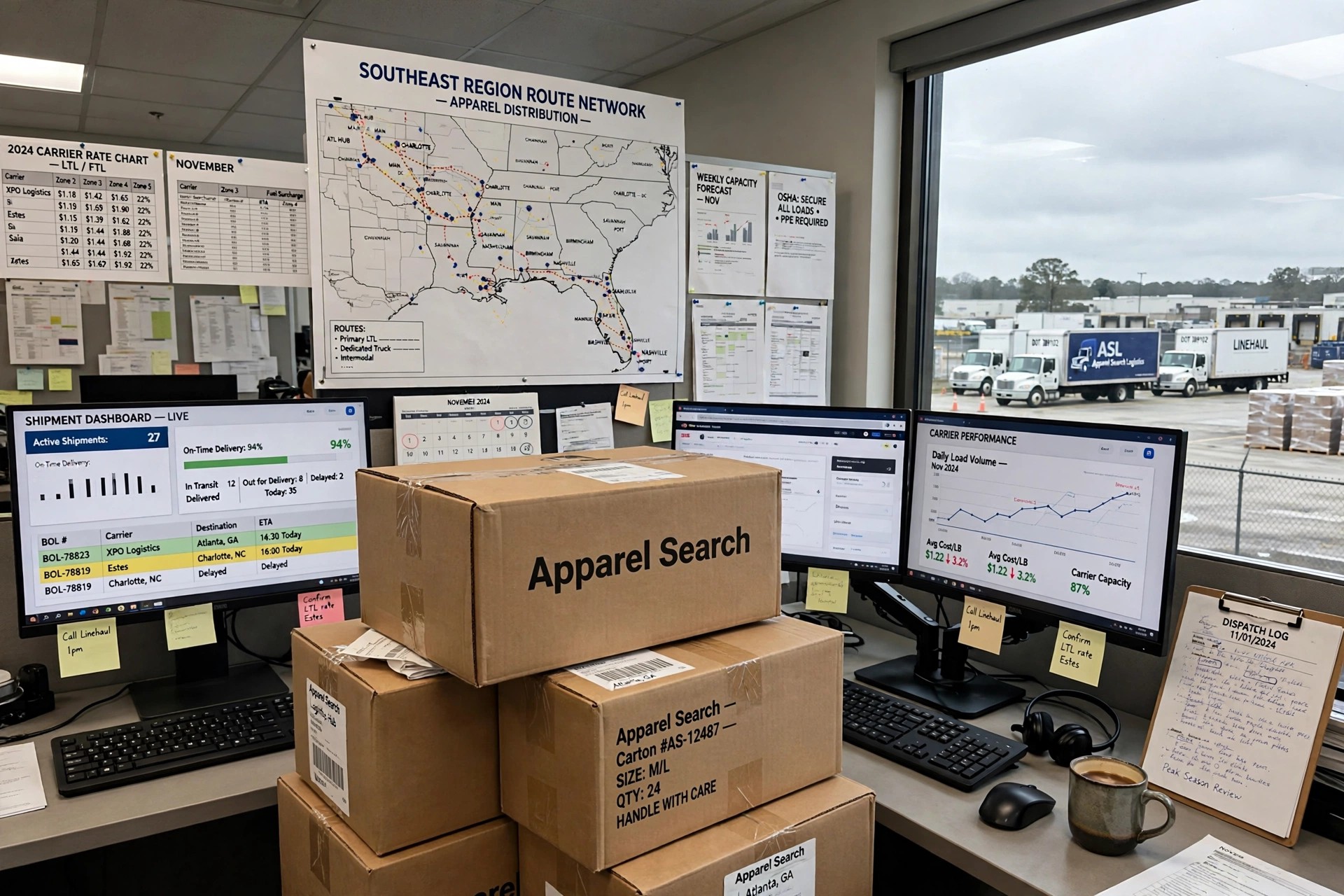
The manager maintains the company's carrier portfolio: parcel, less-than-truckload, full truckload, pallet networks and specialist garment carriers, chosen lane by lane against the freight profile — where clothing actually travels, in what volumes, at what service promises. Contracts and rate agreements are tendered and negotiated on that profile, with fuel surcharges, accessorial tariffs and liability terms read as carefully as the headline rate, because in freight the extras decide the real price. Volume commitments are set at levels the business can honestly meet, and backup carriers are kept warm on critical lanes so a single failure never stops the freight.
Rates only pay if they are applied. The manager ensures the contracted tariffs live in the rating and audit systems the company uses, reviews carrier invoices against them — overcharges, duplicated accessorials and misapplied discounts are routine findings — and runs the tender cycle again when volumes, networks or service failures say the current portfolio has stopped earning its place. Carrier performance reviews use the coordinators' exception records: on-time collection and delivery, damage and loss rates, claim settlement speed, invoicing accuracy, scored and discussed with each carrier on a regular rhythm.
Routing Policy, Guides and the Traffic Team
Policy is how strategy reaches the dock. The manager publishes the routing guide the whole business works to: which carrier and service for which destination, shipment size and urgency; how suppliers must route inbound freight on the company's account; what approvals an upgraded or premium service requires. The guide is maintained as carriers, rates and customer requirements change, and compliance with it is audited — freight that bypasses the guide usually bypasses the negotiated rates too, and its cost lands in the manager's budget variance with a name attached.
The traffic team works to that policy daily, and the manager leads it: traffic coordinators and clerks whose shipment-level work is described beside this page. The manager sets their priorities across lanes and customers, takes the escalations that exceed a coordinator's authority — the service upgrade that costs real money, the carrier failure that needs a commercial conversation — and develops the team's carrier and systems knowledge deliberately, because the manager's own route into the role ran across that same desk.
Claims, Compliance and Freight Cost Control
Lost and damaged freight is pursued as money, not mourned as luck. The manager owns the claims process: values and liability limits understood per carrier and service, claim files assembled from the coordinators' shipment records, filing deadlines diarised and met, settlement rates tracked by carrier. Recurring damage is treated as an engineering problem as much as a claims one — packaging, carton strength and pallet presentation reviewed with the warehouse until the loss rate, not just the paperwork, improves.
The role also keeps the company legal and its customers satisfied. Transport regulations that touch the shipper — dangerous goods in the small print of cosmetics and aerosols within clothing shipments, weight and labelling rules, carrier insurance requirements — are monitored, and major retail customers' transportation requirements are met alongside their routing guides, with chargebacks for freight non-compliance disputed from the records when they are wrongly applied. The freight budget closes the loop: cost per shipment and per lane reported against plan, variances explained in operational causes, and savings projects — consolidation, mode shifts, packaging changes — proposed with numbers attached.
Skills, Qualifications and Career Path
Traffic managers are built from traffic work: coordinator and dispatch experience, freight audit or carrier-side operations, with a demonstrated grip on rates, claims and carrier negotiation. Employers value transport and logistics qualifications, but weigh the commercial record more: budgets held, tenders run, claim recovery improved, carrier performance measurably raised. The numeracy is non-negotiable — this role argues in cost per shipment, per lane and per claim — and the negotiation is continuous, with carriers whose own managers are professionals at the same table.
Two neighbours in this letter mark the role's boundaries. The traffic coordinator executes shipments inside the manager's policy; the transportation manager, beside this page, carries the wider network scope — fleet decisions and multi-site transport — of which traffic management is one part. From traffic manager, progression runs toward that wider transportation and logistics leadership, or deeper into supply chain management under S in this category.
Common Questions
What does a traffic manager do?
Owns a clothing company's freight arrangements: selecting carriers and negotiating rates and contracts, setting the routing policy and guides that sites and suppliers work to, leading the traffic team, auditing freight bills, running loss and damage claims, and controlling carrier performance and transport cost.
How is a traffic manager different from a transportation manager?
The traffic manager's scope is the freight itself — carriers, rates, routing, claims and cost. The transportation manager's scope is wider: the whole transport operation including any company fleet, drivers, multiple sites and the interface with warehousing. Traffic is a specialism; transportation management is the broader command.
What experience leads to traffic manager?
Traffic coordination and dispatch experience, freight bill audit and claims work, and evidence of commercial results — tenders supported, budgets held, carrier performance improved. Transport qualifications strengthen a candidacy; the operational record decides it.
More to Explore
Traffic and Transportation Resources
Transportation & Warehouse Directory Pages by Letter
References & Further Reading
More Job Description Categories
- Buying Job Descriptions
- Design Job Descriptions
- Marketing & PR Job Descriptions
- Miscellaneous Job Descriptions
- Planning & Allocation Job Descriptions
- Production & Sourcing Job Descriptions
- Sales & Selling Job Descriptions
- Transportation & Warehouse Job Descriptions (current)