Stitch 304 · Class 300 Lock Stitch
Stitch 304 — Zigzag Lockstitch
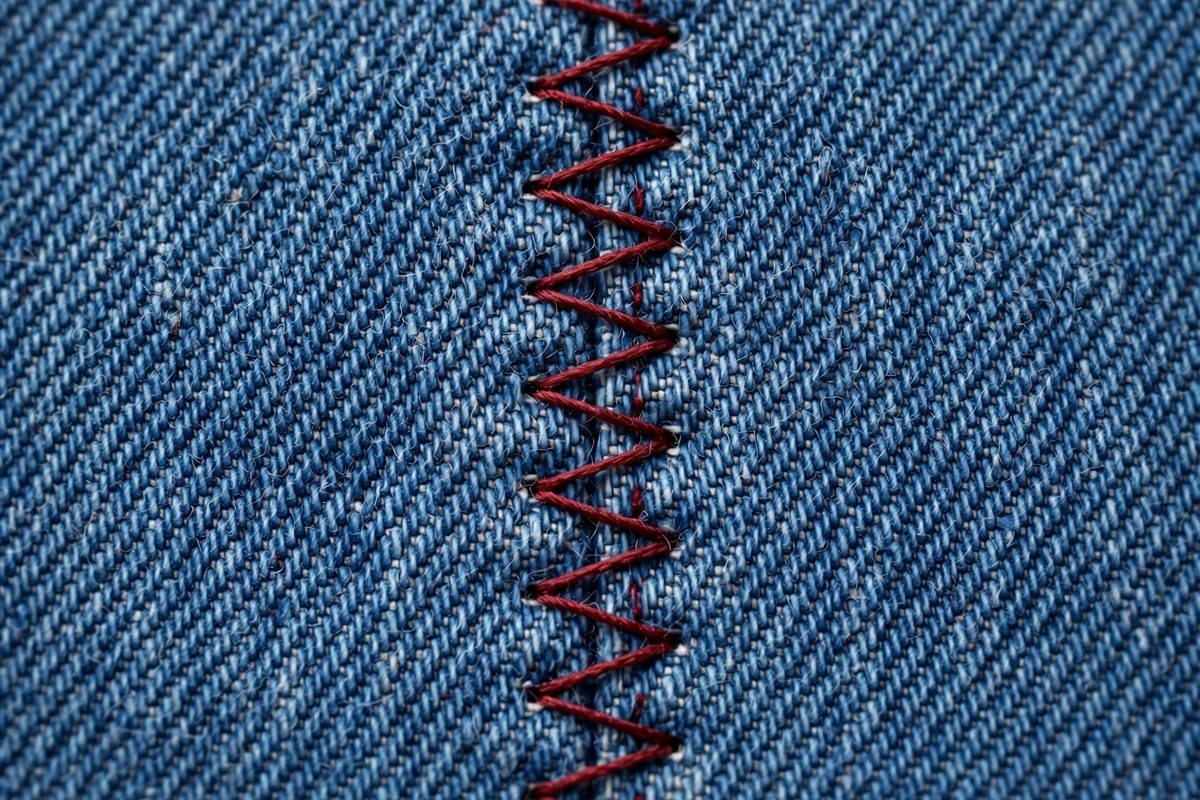
Stitch 304 is the lockstitch in zigzag form: formed exactly as stitch 301, except that successive single stitches are placed side to side so they build a symmetrical zigzag. The zigzag geometry gives the seam thread to spare, which is why 304 is sometimes called the stretch lockstitch.
How Stitch 304 Forms
- The needle descends at one side of the stitch width and the loop of thread A interlaces with bobbin thread B midway through the material — precisely the 301 formation.
- Before the next penetration, the needle (on most machines the needle bar swings sideways; on some, the work is shifted) moves across to the opposite side of the width.
- The second stitch interlaces at the far side. Alternating penetrations build the symmetrical zigzag, one stitch per leg.
- Width and length are independently adjustable: a short stitch length crowds the legs into a dense satin stitch, while a longer length opens the zigzag out.
Formation diagram for stitch 304. Thread A is the needle thread; thread B is the bobbin thread. Illustration by Apparel Search.
The Threads
| Element | Detail |
|---|---|
| Thread count | 2 — one needle thread, one bobbin thread, interlaced as in 301. |
| Needle thread (A) | Forms the visible zigzag on the top face and, through the interlacings, on the underside too. |
| Bobbin thread (B) | Runs beneath and interlaces at every penetration point, on both sides of the width. |
| Typical threads | Standard sewing threads as for 301; fine or soft threads for satin stitch and appliqué; elastic-compatible soft spun threads for lingerie work. |
| Thread use | Higher than 301 and rising with width — a wide zigzag can use three to four times the thread of a straight seam of the same length. |
What It Looks Like
On the top, stitch 304 is a clean, even zigzag: single stitches forming the legs, meeting at sharp points on each side. On the underside the same zigzag appears, since every penetration interlaces in the material just as 301 does.
Set the stitch length very short and the legs pack together into satin stitch — a smooth, solid bar of thread used for appliqué edges, monograms and buttonholes. Set it long and narrow and it becomes a discreet stretch stitch for knit seams.
Strengths and Limits
Strengths
- Stretches moderately: the zigzag can straighten under load, giving seams on knits and light stretch wovens room to move.
- Covers ground sideways: one pass secures a width of fabric, ideal for elastic, appliqué and edge finishing.
- Versatile: width and length adjustments turn one formation into zigzag, satin stitch, bartacks and buttonholes.
- Keeps the lock stitch's security — it does not unravel from the end.
Limits
- Weaker than 301 as a straight structural seam: load is carried on diagonal legs rather than along the seam line.
- Uses considerably more thread than 301, and sews more slowly across a seam's length.
- A wide zigzag on light fabric can tunnel — pulling the fabric into a ridge between the penetration points.
Where Stitch 304 Is Used
Stitch 304 is the working zigzag of both factory and home sewing. It sews knit and stretch fabrics where a straight 301 seam would pop; it applies elastic to waistbands and leg openings; it finishes raw edges, secures appliqué, and — at satin-stitch settings — embroiders and sews buttonholes on domestic machines. Condensed to a very short, wide setting it forms the dense bars of a bartack that reinforce pocket corners, belt loops and strap ends.
Typical fabrics: jersey and interlock knits, stretch wovens, lace and lingerie fabrics, and any woven that needs an edge covered rather than a seam joined. When the zigzag itself must stretch harder or survive more stress, the class steps up to stitch 315, which triples the stitches in every leg.
Common Questions
What is the difference between stitch 304 and stitch 315?
Both are zigzag lock stitches. In 304, a single stitch forms each leg of the zigzag. In 315, three stitches form each leg, which puts more thread in the seam, spreads the load and gives noticeably more stretch and strength.
Is a zigzag seam weaker than a straight seam?
For a structural seam in a stable woven, yes — 301 carries load along the seam line more efficiently. The zigzag trades some of that strength for stretch and coverage, which is the right trade on knits and elastic work.
What is satin stitch?
Satin stitch is stitch 304 sewn at a very short stitch length so the zigzag legs pack tightly together into a smooth, solid bar. It is used for appliqué edges, decorative work and buttonholes.
Sources & the photographic reference
The stitch and seam classifications on this page follow ASTM D-6193, Standard Practice for Stitches and Seams, explained here in Apparel Search's own words with original diagrams. For photographs of these stitches and seams, see the Garmenco guide's Class 300 page — Professor Bernard Kahn's photographic guide, which Apparel Search has recommended for years and continues to link as the photo reference for this classification. Our guide is the permanent on-site companion to it.
Related Stitches
 Stitch 301 — LockstitchThe standard straight stitch of garment making.
 Stitch 306 — Blind LockstitchThe nearly invisible hem stitch.
 Stitch 315 — Three-Step ZigzagThree stitches per zigzag leg, for stretch.
 Stitch Class 300 — Lock StitchThe whole class: how lock stitches form, and how the four types compare.
More to Explore
Search Apparel Search
Stitch and seam classifications follow ASTM D-6193, Standard Practice for Stitches and Seams. Diagrams on these pages are original Apparel Search drawings.