Stitch 301 · Class 300 Lock Stitch
Stitch 301 — Lockstitch
Stitch 301 is the plain two-thread lockstitch sewn in a straight line: a needle thread and a bobbin thread interlaced midway through the material, so the stitch looks the same on both faces. It is the most widely used stitch in the world — the default seam stitch of garment manufacturing.
How Stitch 301 Forms
- The needle carries thread A down through the plies of material. As it starts to rise, a small loop of thread A forms beneath the material.
- The machine's rotating hook (or shuttle) catches that loop and carries it around the bobbin case, passing it around bobbin thread B.
- The needle rises fully and the take-up lever pulls the stitch tight: the loop of A and thread B are interlaced, and the interlacing point is drawn up to sit midway between the two surfaces of the material — hidden inside the seam.
- The feed dogs advance the material by exactly one stitch length, and the cycle repeats, building the straight row of stitches.
Formation diagram for stitch 301. Thread A is the needle thread; thread B is the bobbin thread. Illustration by Apparel Search.
The Threads
| Element | Detail |
|---|---|
| Thread count | 2 — one needle thread, one bobbin thread. |
| Needle thread (A) | Does the visible work on both faces: its segments form the dashed line seen on top and underneath. |
| Bobbin thread (B) | Wound on a small bobbin under the needle plate; it only ever appears as the interlacing partner inside the material and as segments on the underside. |
| Typical threads | Spun or core-spun polyester for most garment seams; cotton or silk where a soft, dyeable or press-friendly thread is wanted; heavier topstitch thread for decorative rows. |
| Thread use | Among the most economical of all stitches — roughly two and a half metres of thread, counting both threads, for every metre of seam at normal stitch lengths. |
What It Looks Like
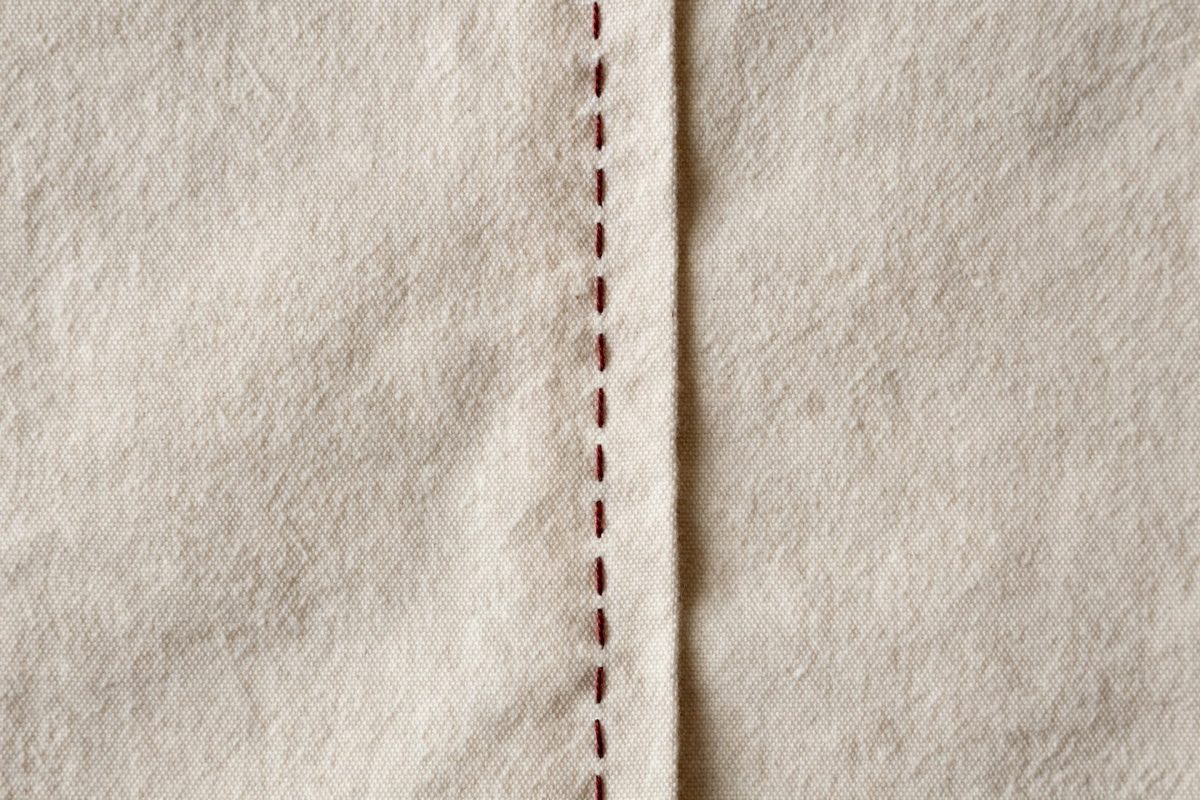
On the top, stitch 301 appears as a straight row of short, even thread segments — a dashed line. On the underside it appears exactly the same, because the same two threads present identical segments on both faces and the knot is buried between them.
That symmetry is also a diagnostic. In a balanced 301 seam you cannot see the interlacing at all. If loops of one colour show on the opposite face, or the knot sits visibly on one surface, the thread tensions are unbalanced — the side where the knot appears is the side whose thread is being pulled through by the tighter partner.
Strengths and Limits
Strengths
- Does not unravel: break one thread and the interlacings on either side still hold, unlike a chain stitch.
- Identical, neat appearance on both faces — no wrong side to a 301 seam.
- Strong and economical: high seam strength for very little thread.
- Sews in any direction and turns corners cleanly; ends are secured with a short backtack.
Limits
- Very little stretch: the tight interlacing leaves almost no spare thread, so a strained 301 seam on a knit can pop its threads.
- The bobbin holds a limited length of thread, so very long seams need bobbin changes.
- On thick or spongy stacks the needle can deflect and skip stitches if the machine is not set up for the work.
Where Stitch 301 Is Used
Stitch 301 is the general-purpose construction stitch for woven fabrics: shirt and blouse seams, tailored jackets and trousers, dresses, skirts, uniforms, workwear, and most denim seams. It sets pockets, waistbands, collars and cuffs, and — sewn with a longer stitch and often a heavier or contrasting thread — it is also the standard topstitch that edges lapels, pocket flaps and jeans.
Typical fabrics: cotton poplin and twill, linen, wool suiting and coatings, denim, gabardine, and stable synthetics — anything that does not rely on the seam itself stretching. Where a seam must stretch, the class offers 304 and 315; where an edge must disappear, it offers 306. For the seam constructions 301 most often sews, see the Class SS superimposed seams — the plain SSa seam is its home ground. New to sewing? The sewing basics guide shows where 301 fits among the everyday stitches.
Common Questions
Is stitch 301 the stitch in most of my clothes?
For woven garments, very likely yes. The straight seams of shirts, trousers, dresses and jackets are overwhelmingly sewn with 301. Knit garments use more chain and overedge stitches, and jeans often mix 301 with chain stitching on some seams.
Can stitch 301 sew stretch fabric?
It can, but the seam will not stretch with the fabric, and under strain the thread — not the fabric — is what gives. For seams that must stretch, use the zigzag lock stitches 304 or 315, or a chain or overedge stitch from Classes 400 and 500.
Why does my 301 seam pucker?
Usually tension: if the interlacing is pulled too tight, the thread contracts the seam line and the fabric gathers slightly along it. Balanced tension, the right needle and thread for the fabric, and a suitable stitch length cure most puckering.
Sources & the photographic reference
The stitch and seam classifications on this page follow ASTM D-6193, Standard Practice for Stitches and Seams, explained here in Apparel Search's own words with original diagrams. For photographs of these stitches and seams, see the Garmenco guide's Class 300 page — Professor Bernard Kahn's photographic guide, which Apparel Search has recommended for years and continues to link as the photo reference for this classification. Our guide is the permanent on-site companion to it.
Related Stitches
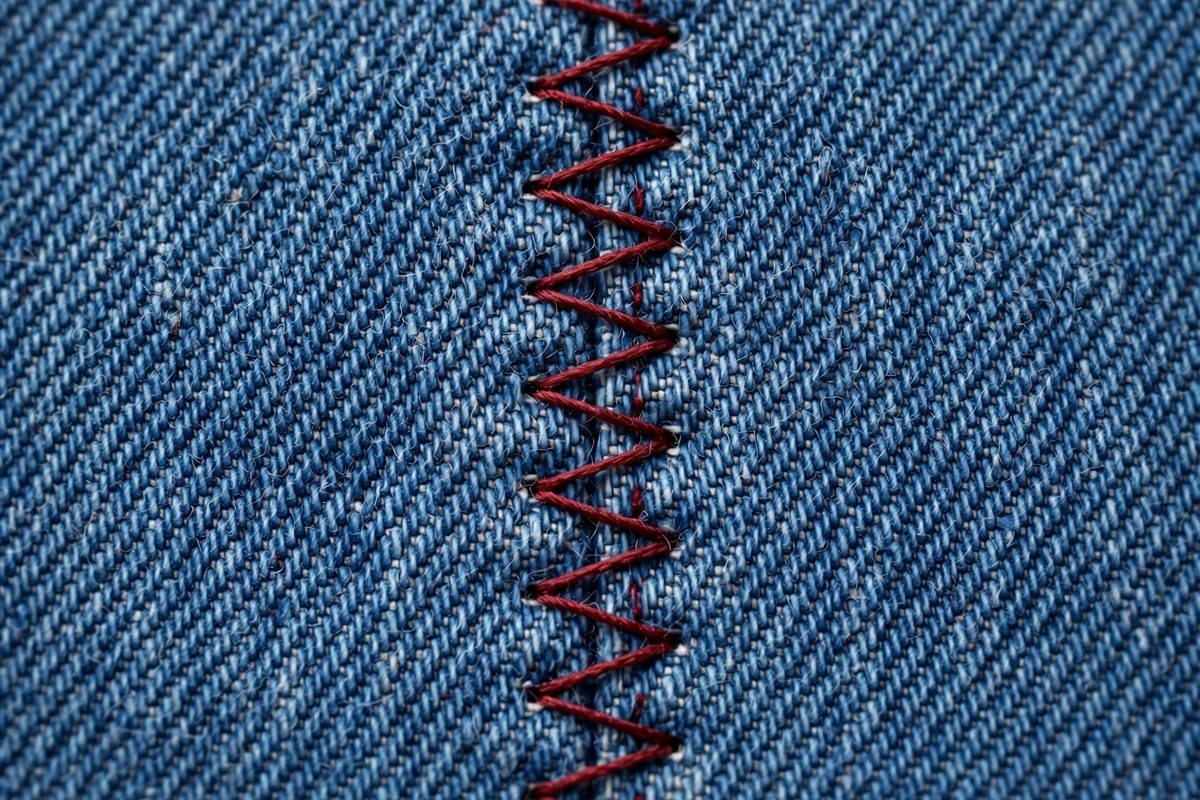 Stitch 304 — Zigzag LockstitchThe lockstitch swung into a symmetrical zigzag.
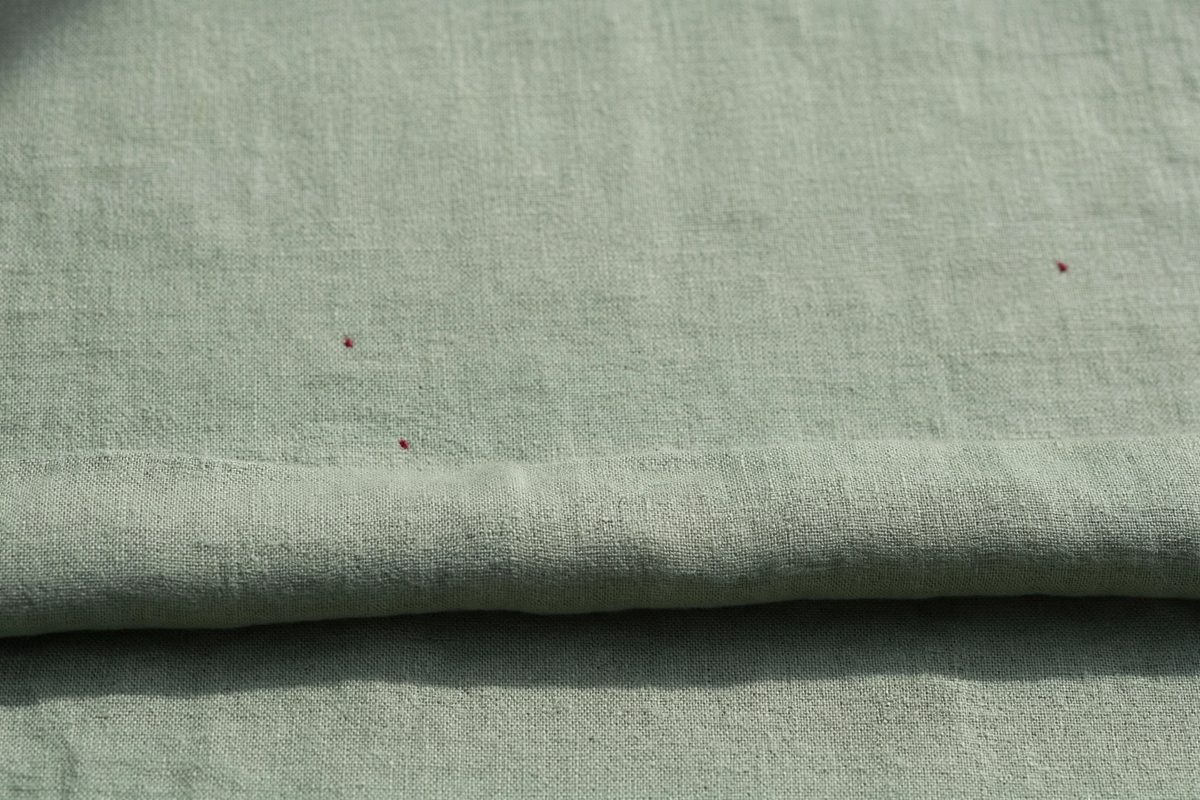 Stitch 306 — Blind LockstitchThe nearly invisible hem stitch.
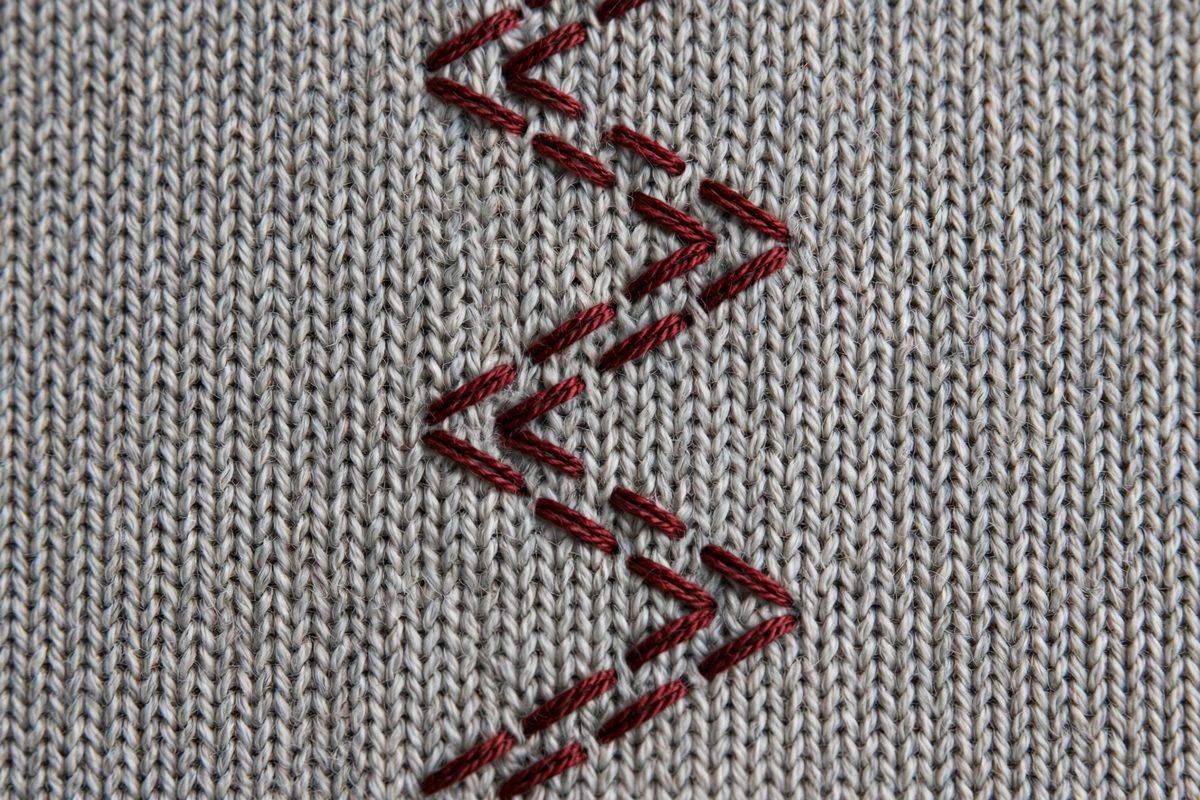 Stitch 315 — Three-Step ZigzagThree stitches per zigzag leg, for stretch.
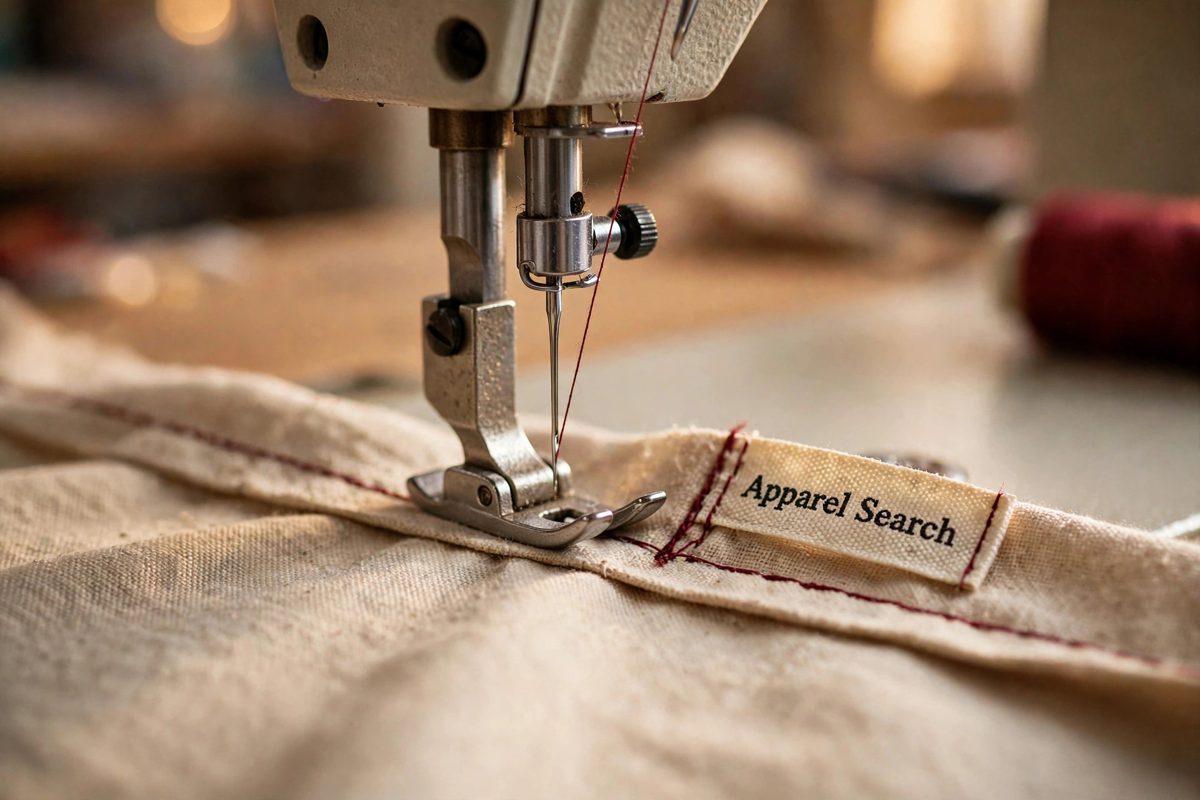 Stitch Class 300 — Lock StitchThe whole class: how lock stitches form, and how the four types compare.
More to Explore
Search Apparel Search
Stitch and seam classifications follow ASTM D-6193, Standard Practice for Stitches and Seams. Diagrams on these pages are original Apparel Search drawings.