Stitch Class 300 · Lock Stitch
Stitch Class 300 — Lock Stitches
Class 300 is the lock stitch family of ASTM D-6193: two threads — a needle thread and a bobbin thread — interlaced in the middle of the material so the stitch looks the same on both sides. Four types are classified and illustrated in this class: 301, 304, 306 and 315. Between them they sew the great majority of the world's woven garments.
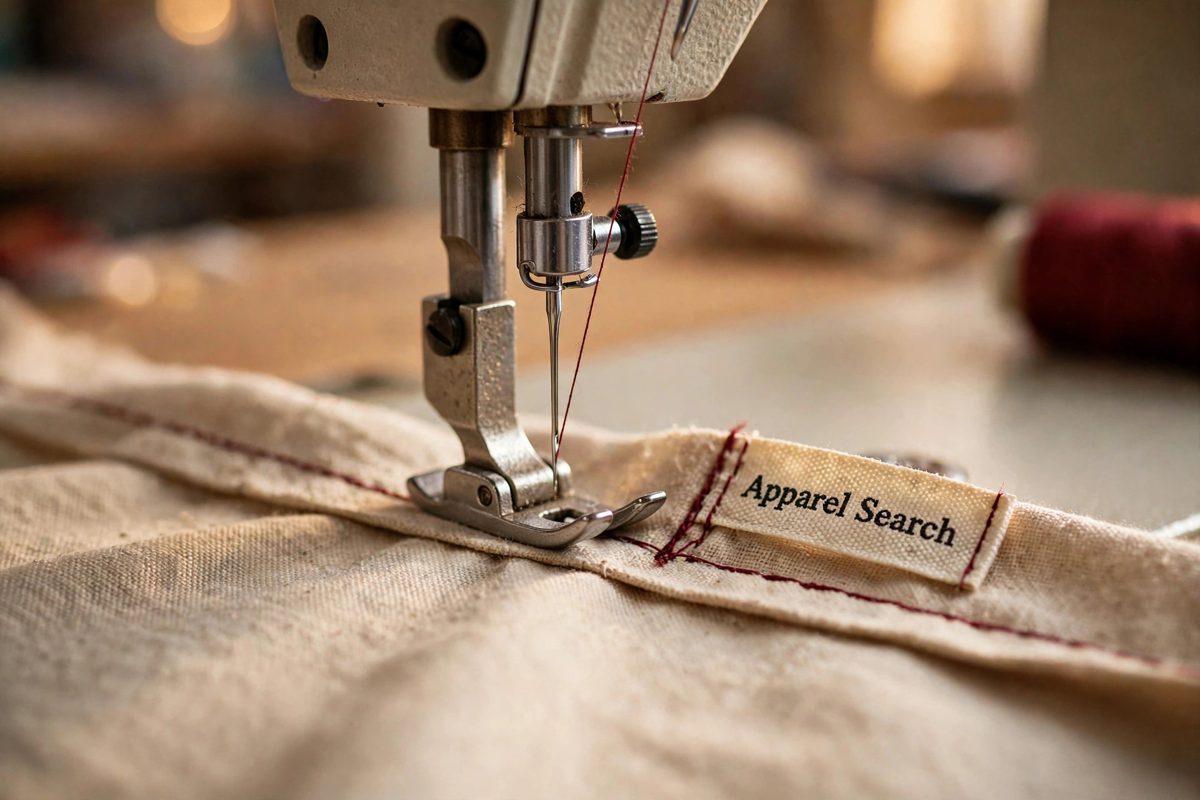
Search Apparel Search
What Makes a Lock Stitch a Lock Stitch
Every stitch in Class 300 is formed by two threads. The needle thread (called thread A) is carried down through the material by the needle, where its loop is passed around the bobbin thread (thread B) held in a small bobbin beneath the needle plate. As the needle rises, the two threads are pulled together — interlaced — and the interlacing point is drawn up to sit midway between the two surfaces of the material, hidden inside the seam.
That buried interlacing gives the lock stitch its character. The stitch presents the same neat row of thread segments on the top and the underside, it uses relatively little thread, and — unlike a chain stitch — it does not unravel from the end if a thread breaks: each interlacing locks its neighbours in place. Its weakness is the mirror image of its neatness: with the knot pulled tight into the material, a plain lock stitch has very little spare thread to give, so it stretches far less than chain or overedge stitches. The zigzag members of the class (304 and 315) exist precisely to buy back stretch while keeping the lock.
How every Class 300 stitch forms: one interlacing, hidden midway through the material. Illustration by Apparel Search.
The Four Lock Stitch Types
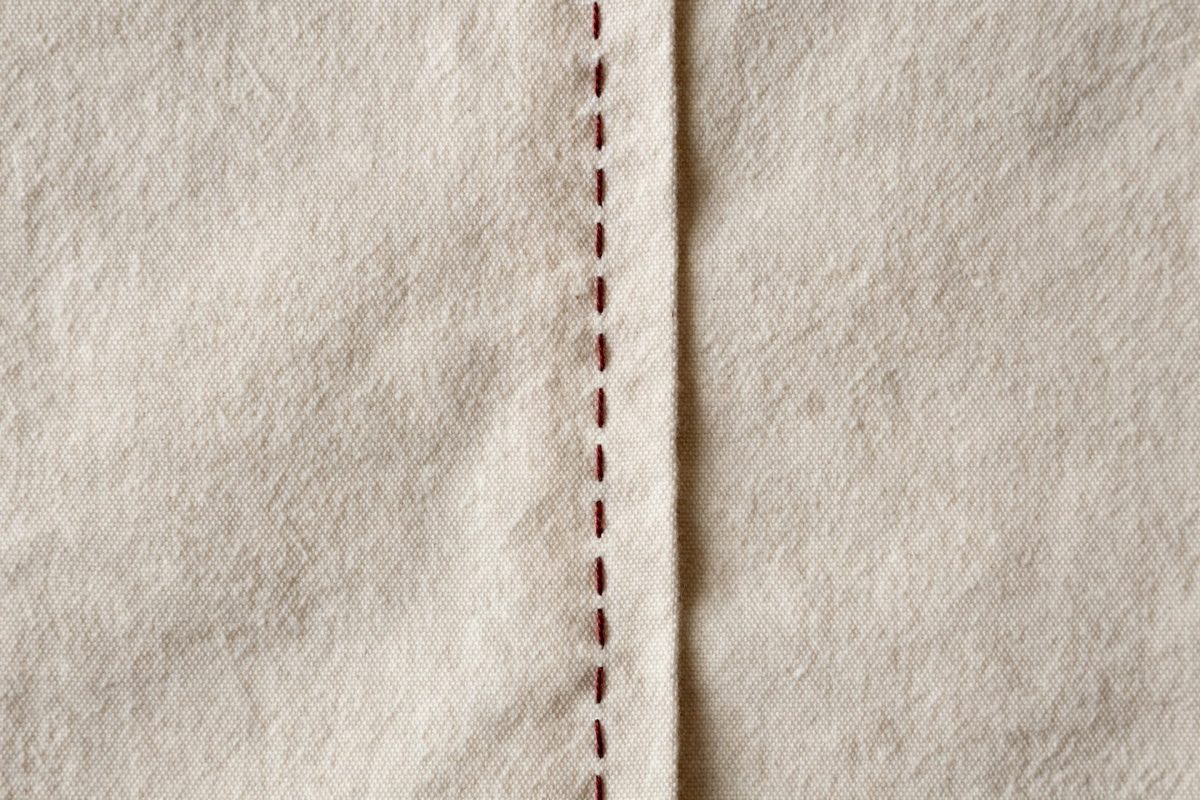 Stitch 301 — LockstitchThe standard straight stitch: a straight row of interlaced stitches, identical on both sides. The default seam stitch of garment making.
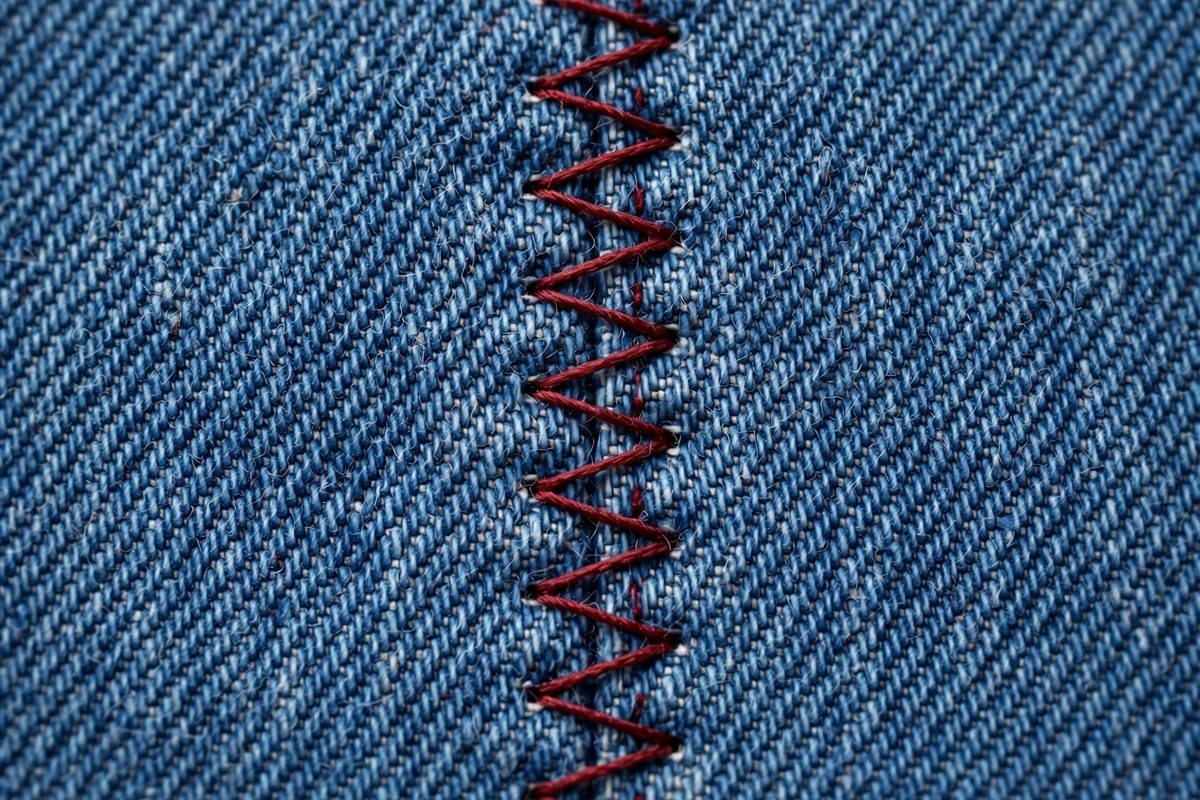 Stitch 304 — Zigzag LockstitchThe 301 formation swung side to side into a symmetrical zigzag, adding stretch for knits, elastic and edge work.
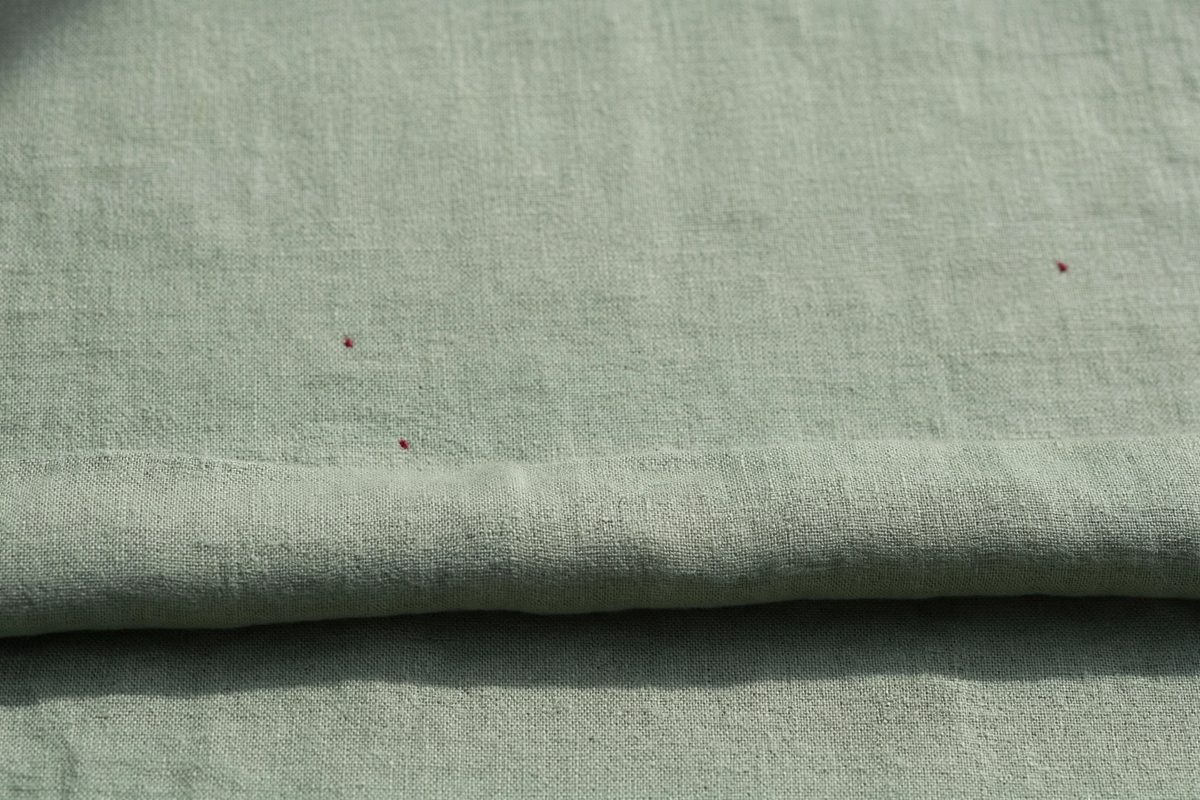 Stitch 306 — Blind LockstitchThe hem stitch that barely shows: loops travel inside the hem fold and catch only a few yarns of the outer ply.
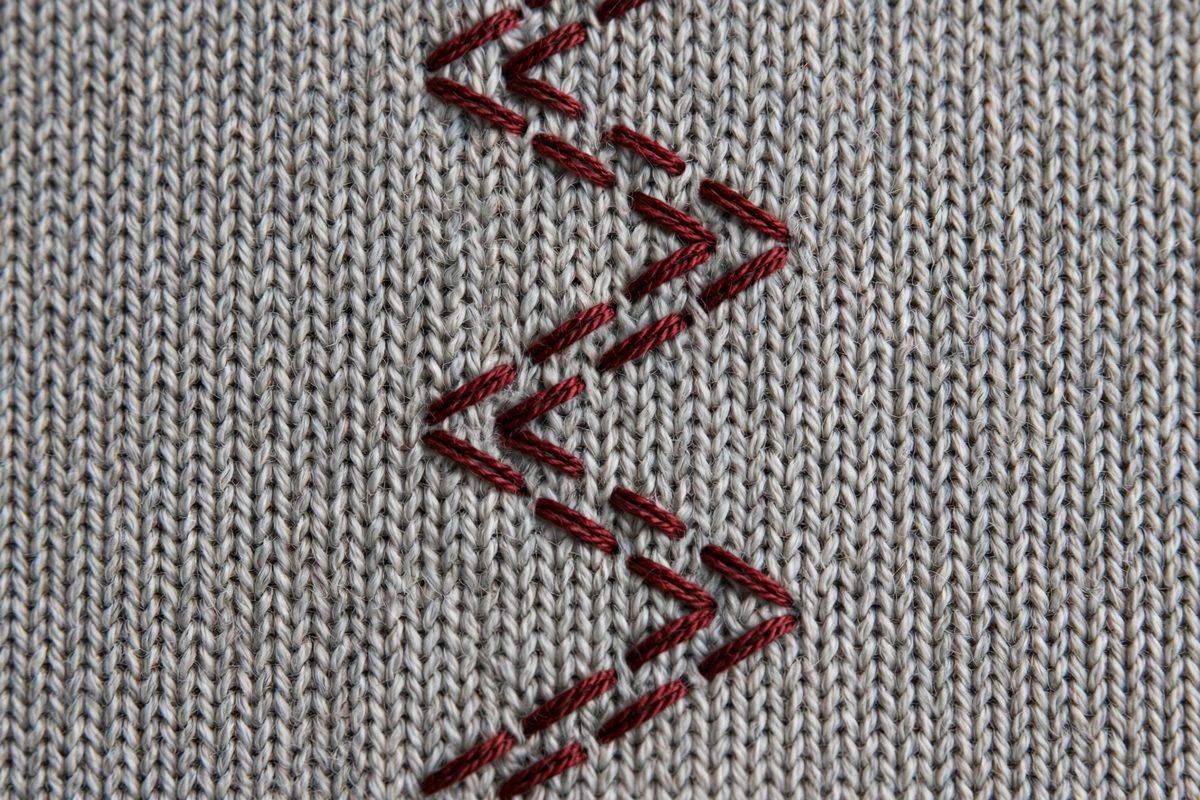 Stitch 315 — Three-Step ZigzagGroups of three stitches form each leg of the zigzag — more stretch and strength for lingerie, swimwear and elastic.
The Class at a Glance
| Type | Pattern | Threads | Stretch | Typical work |
|---|---|---|---|---|
| 301 | Straight | 2 (needle + bobbin) | Minimal | Seams in woven garments, topstitching, shirts, tailoring |
| 304 | Zigzag, one stitch per leg | 2 | Moderate | Knits, elastic application, appliqué, buttonholes on home machines |
| 306 | Blind — floats inside a fold | 2 | Minimal | Invisible hems on trousers, skirts, dresses and drapery |
| 315 | Zigzag, three stitches per leg | 2 | High for a lock stitch | Lingerie, swimwear, elastic joining, sewing on stretch fabrics |
All four types are formed on lockstitch machines with a rotating hook or shuttle that passes the needle-thread loop around the bobbin. Industrial versions run from single-needle flatbed machines to dedicated blindstitch and zigzag machines; the same four formations are the straight stitch, zigzag, blind hem and multi-step zigzag settings on a home machine.
Choosing between them
Start with 301 whenever the fabric is a stable woven and the seam does not need to stretch — it is the strongest, neatest and most economical choice. Move to 304 when the seam must give a little, or when the stitch itself has to cover ground sideways, as in appliqué and elastic work. Choose 315 over 304 when the zigzag will be worked hard — the triple-stitched legs spread the load and stretch further before the thread is stressed. Reserve 306 for hems: it is a specialist formation that trades strength for invisibility, and it belongs on edges that are folded, not on structural seams.
Common Questions
What is a lock stitch?
A lock stitch is a two-thread stitch in which a needle thread and a bobbin thread are interlaced midway between the surfaces of the material. Because the interlacing is pulled inside the seam, the stitch looks the same on the top and the underside and does not unravel from the end when a thread breaks.
Why is the lock stitch the most common garment stitch?
It is neat on both sides, economical with thread, secure against unravelling, and strong for its size — so the straight lock stitch, type 301, is the default seam stitch for woven garments worldwide.
What is the lock stitch's main weakness?
Stretch. The interlacing is pulled tight into the material, leaving little spare thread, so a straight lock stitch seam can pop on stretch fabrics. The zigzag members of the class — 304 and especially 315 — add thread geometry that lets the seam give.
Is a lock stitch the same as a chain stitch?
No. A lock stitch interlaces two separate threads (needle and bobbin) inside the material. A chain stitch (Class 100 and Class 400) loops threads on the underside, which gives more stretch but lets the seam unravel from the end if the looper thread breaks.
Sources & the photographic reference
The stitch and seam classifications on this page follow ASTM D-6193, Standard Practice for Stitches and Seams, explained here in Apparel Search's own words with original diagrams. For photographs of these stitches and seams, see the Garmenco guide's Class 300 page — Professor Bernard Kahn's photographic guide, which Apparel Search has recommended for years and continues to link as the photo reference for this classification. Our guide is the permanent on-site companion to it.
More to Explore
Stitch and seam classifications follow ASTM D-6193, Standard Practice for Stitches and Seams. Diagrams on these pages are original Apparel Search drawings.