Stitch 315 · Class 300 Lock Stitch
Stitch 315 — Three-Step Zigzag Lockstitch
Stitch 315 is the three-step zigzag lockstitch: formed exactly as the 304 zigzag, except that successive groups of three stitches build each leg of the zigzag. Tripling the stitches puts far more thread in the seam — and more thread means more stretch, more strength and a flatter finish on elastic work.
How Stitch 315 Forms
- The needle interlaces its first stitch at one side of the width, exactly as in stitch 301.
- Instead of swinging straight across, the needle steps part-way across and interlaces a second stitch, then steps again and interlaces a third — three stitches climbing the leg of the zigzag.
- The needle then works back down the other side in three more stitches, completing one full zigzag of six interlacings.
- The pattern repeats: three up, three down, each stitch a complete lock stitch formation in its own right.
Formation diagram for stitch 315. Thread A is the needle thread; thread B is the bobbin thread. Illustration by Apparel Search.
The Threads
| Element | Detail |
|---|---|
| Thread count | 2 — one needle thread, one bobbin thread. |
| Needle thread (A) | Forms the stepped zigzag on the top face; with six interlacings per zigzag it lays down far more thread than 304. |
| Bobbin thread (B) | Interlaces at every one of the six penetration points in each zigzag repeat. |
| Typical threads | Soft spun polyester and woolly nylon-type threads where the seam touches skin or must stretch; standard threads for general stretch work. |
| Thread use | The highest in Class 300 — roughly three times the needle thread of a comparable 304 zigzag. |
What It Looks Like
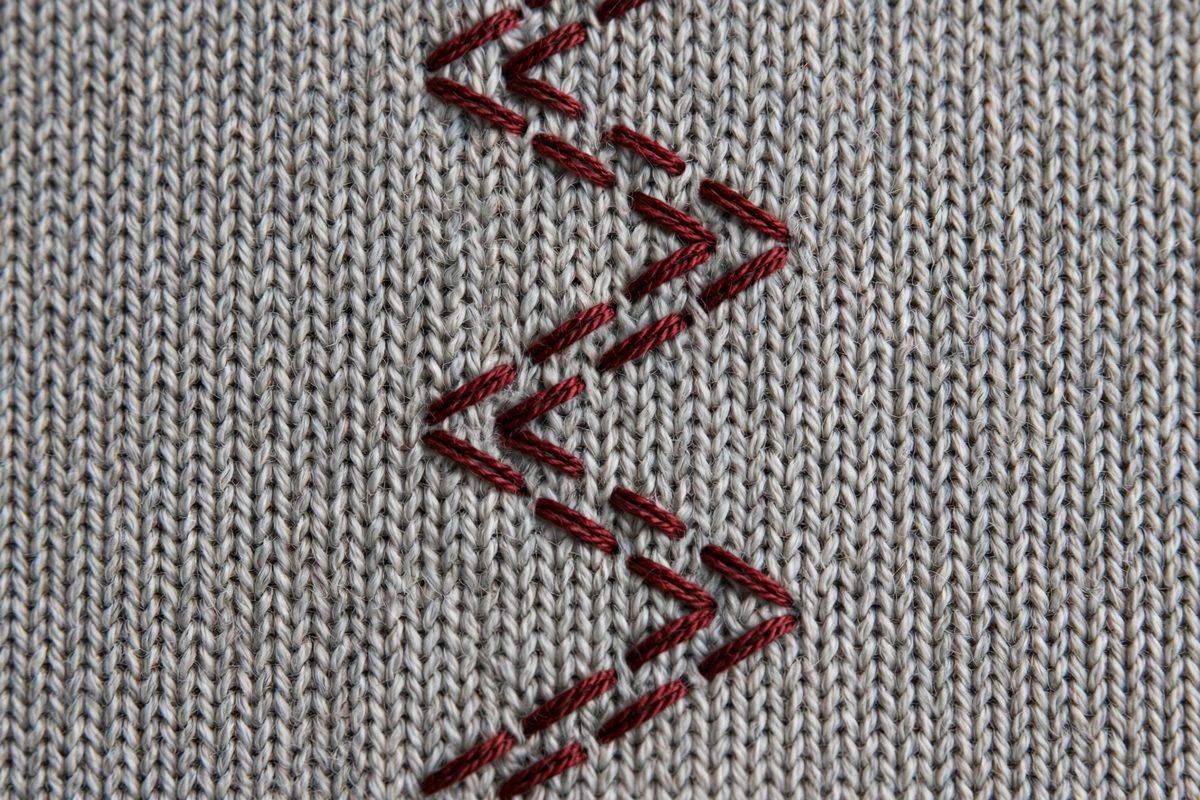
On the top, stitch 315 reads as a zigzag with staircase legs: instead of one clean diagonal, each side is a little flight of three short stitches stepping across. On the underside the same stepped zigzag appears, as every penetration interlaces within the material.
On elastic and lace the effect is practical as much as visual: the stepped legs lie flatter than a single diagonal stitch, spread the grip over six points per repeat, and do not saw into soft materials the way a taut single zigzag can.
Strengths and Limits
Strengths
- The most stretch of any Class 300 stitch — the triple-stitched legs give the seam the most thread to extend with.
- Stronger under repeated stress: load is shared by three stitches per leg, so individual stitches are less likely to pop.
- Lies flat and gentle on elastic, lace and skin-side seams.
- Still a lock stitch — secure against unravelling, identical on both faces.
Limits
- Slow: six interlacings cover the ground one 304 zigzag covers in two, so it is a poor choice for long production seams.
- Uses the most thread of any lock stitch type.
- No advantage on stable wovens, where 301 is neater, faster and stronger for the purpose.
Where Stitch 315 Is Used
Stitch 315 is the specialist zigzag of the intimate apparel and stretch trades: attaching elastic to lingerie and swimwear, joining stretch lace, seaming dancewear and activewear panels, and finishing the edges of elastic waistbands. Home sewers meet it as the three-step (or multi-step) zigzag setting, recommended for sewing knits, applying elastic, and mending tears — the stepped legs bridge a tear far better than a single zigzag.
Typical fabrics: stretch lace, powernet and elastane blends, swimwear nylon-elastane, jersey, and elastic itself. If the work needs only moderate stretch, stitch 304 is faster; if it needs none, stitch 301 is the answer. For the basics of how these stitches divide the everyday work, see the sewing basics guide.
Common Questions
When should I choose stitch 315 over stitch 304?
When the seam or the elastic will be stretched hard and often — lingerie, swimwear, dancewear — or when a single zigzag keeps breaking. The three stitches per leg give 315 more stretch and share the load; for light-duty zigzag work, 304 is quicker.
Why are three stitches per leg stronger than one?
Each leg of the zigzag carries the seam's load. One long stitch concentrates that load at two penetration points; three shorter stitches spread it over six, and add thread that can extend before any single stitch is stressed to breaking.
What is the three-step zigzag called on a home machine?
Usually 'three-step zigzag' or 'multi-step zigzag'. It is the setting sewing guides recommend for elastic application, knit seams and mending, precisely because of its stretch and grip.
Sources & the photographic reference
The stitch and seam classifications on this page follow ASTM D-6193, Standard Practice for Stitches and Seams, explained here in Apparel Search's own words with original diagrams. For photographs of these stitches and seams, see the Garmenco guide's Class 300 page — Professor Bernard Kahn's photographic guide, which Apparel Search has recommended for years and continues to link as the photo reference for this classification. Our guide is the permanent on-site companion to it.
Related Stitches
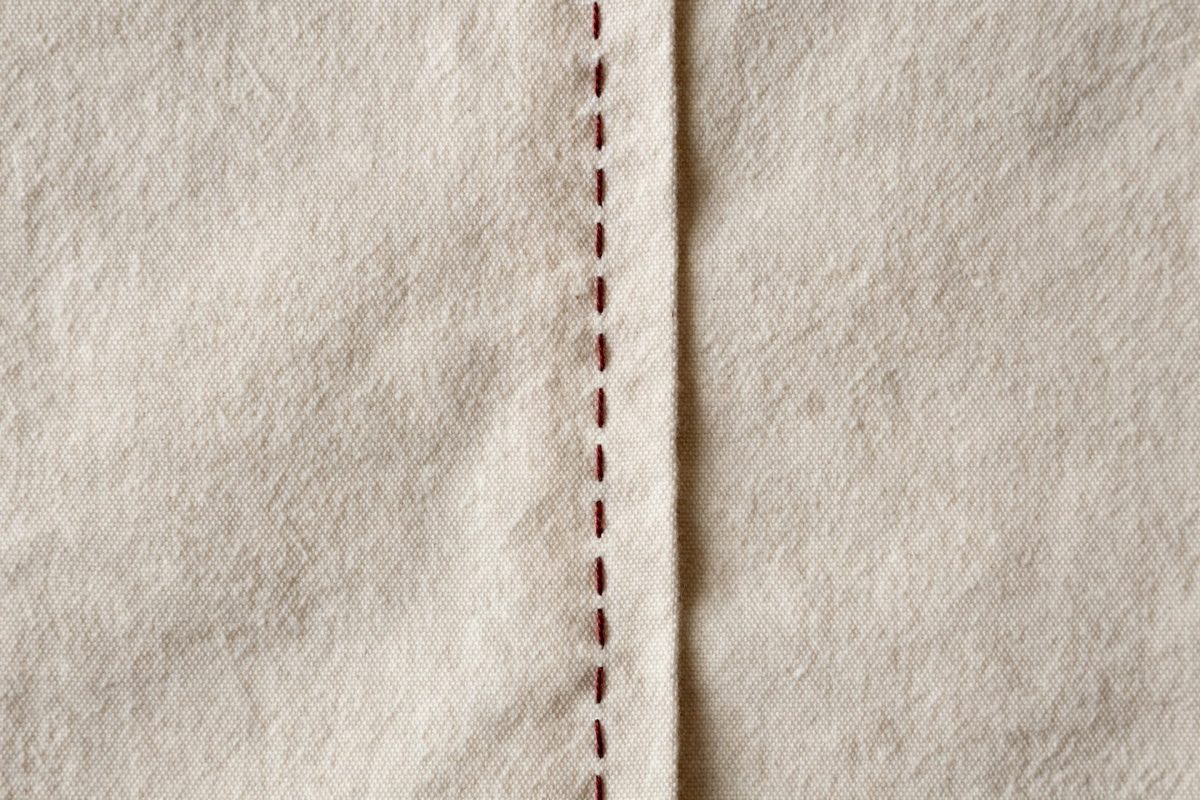 Stitch 301 — LockstitchThe standard straight stitch of garment making.
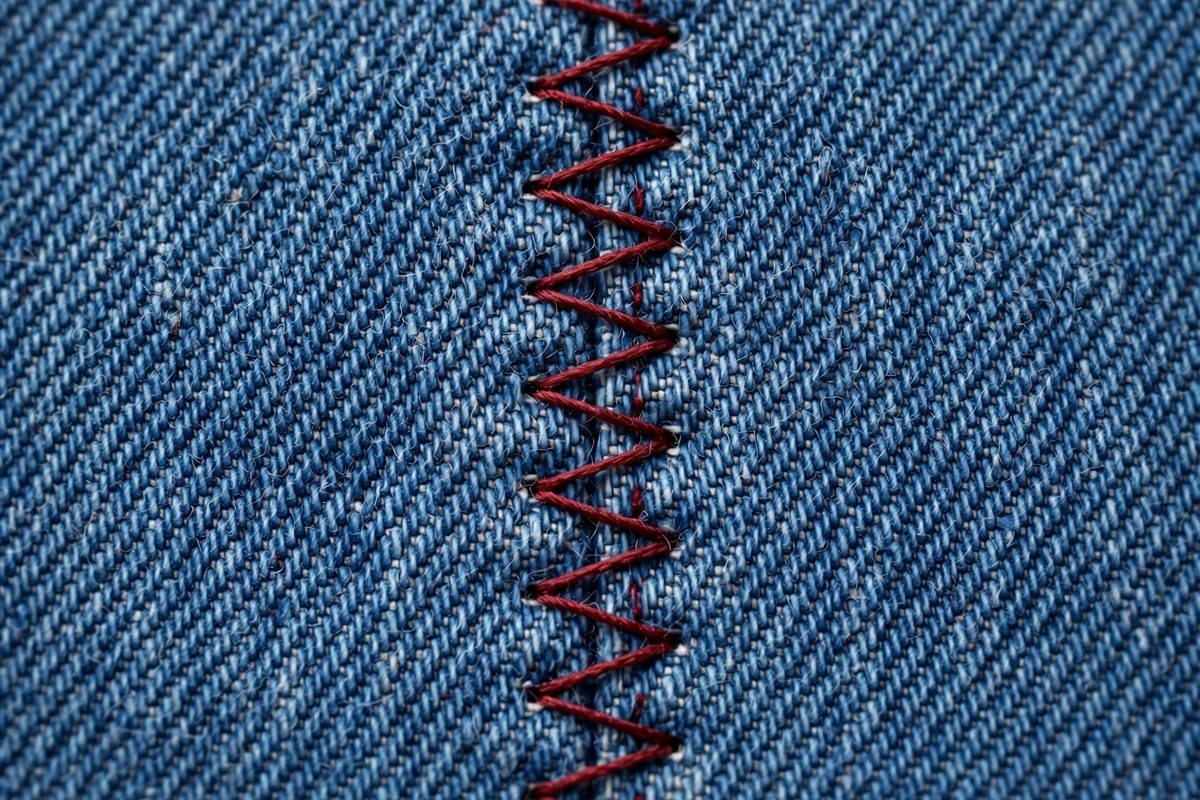 Stitch 304 — Zigzag LockstitchThe lockstitch swung into a symmetrical zigzag.
 Stitch 306 — Blind LockstitchThe nearly invisible hem stitch.
 Stitch Class 300 — Lock StitchThe whole class: how lock stitches form, and how the four types compare.
More to Explore
Search Apparel Search
Stitch and seam classifications follow ASTM D-6193, Standard Practice for Stitches and Seams. Diagrams on these pages are original Apparel Search drawings.