Stitch Class 200 · Hand Stitch
Stitch Class 200 — Hand Stitches
Class 200 collects the stitches that originated at the hand-sewing table: each is formed with a single thread passed through the material as one line, in and out, and secured by that line's own path — no loops, no looper, no second thread. Two types are illustrated in full in this guide: 202, the backstitch, and 204, the catch stitch. They are the oldest formations in the classification, and the modern factory still cannot do without them.
Search Apparel Search
What Makes a Class 200 Stitch a Hand Stitch
The class rule is a sentence long: the stitch is formed by hand, with one or more needle threads, each passing through the material as a single line of thread, and each stitch is secured by that single line passing in and out of the material. There is no interlooping (Class 100), no interlacing of two thread groups (Class 300) — security comes from the path the thread takes, not from knots or loops.
That makes Class 200 the class of judgement. A machine repeats a formation perfectly; a hand sewer chooses every stitch's length, depth and tension as the work demands — a shallow bite where nothing may show, a doubled-back anchor where strength matters, a slack diagonal where the cloth must move. The standard also classifies types 201, 203 and 205 in this class, including the saddle stitch that machines imitate; the two types below are the working pair this guide illustrates in full — one that sews seams, one that holds hems and facings. See them beside every other stitch in the Explore Stitches gallery.
The class in one picture: stitch 202's single line of thread, doubled back on itself underneath — security from the path, not from loops. Illustration by Apparel Search.
The Two Hand Stitch Types
 Stitch 202 — Backstitch
 Stitch 204 — Catch Stitch
The Class at a Glance
| Type | Pattern | Threads | Surface appearance | Typical work |
|---|---|---|---|---|
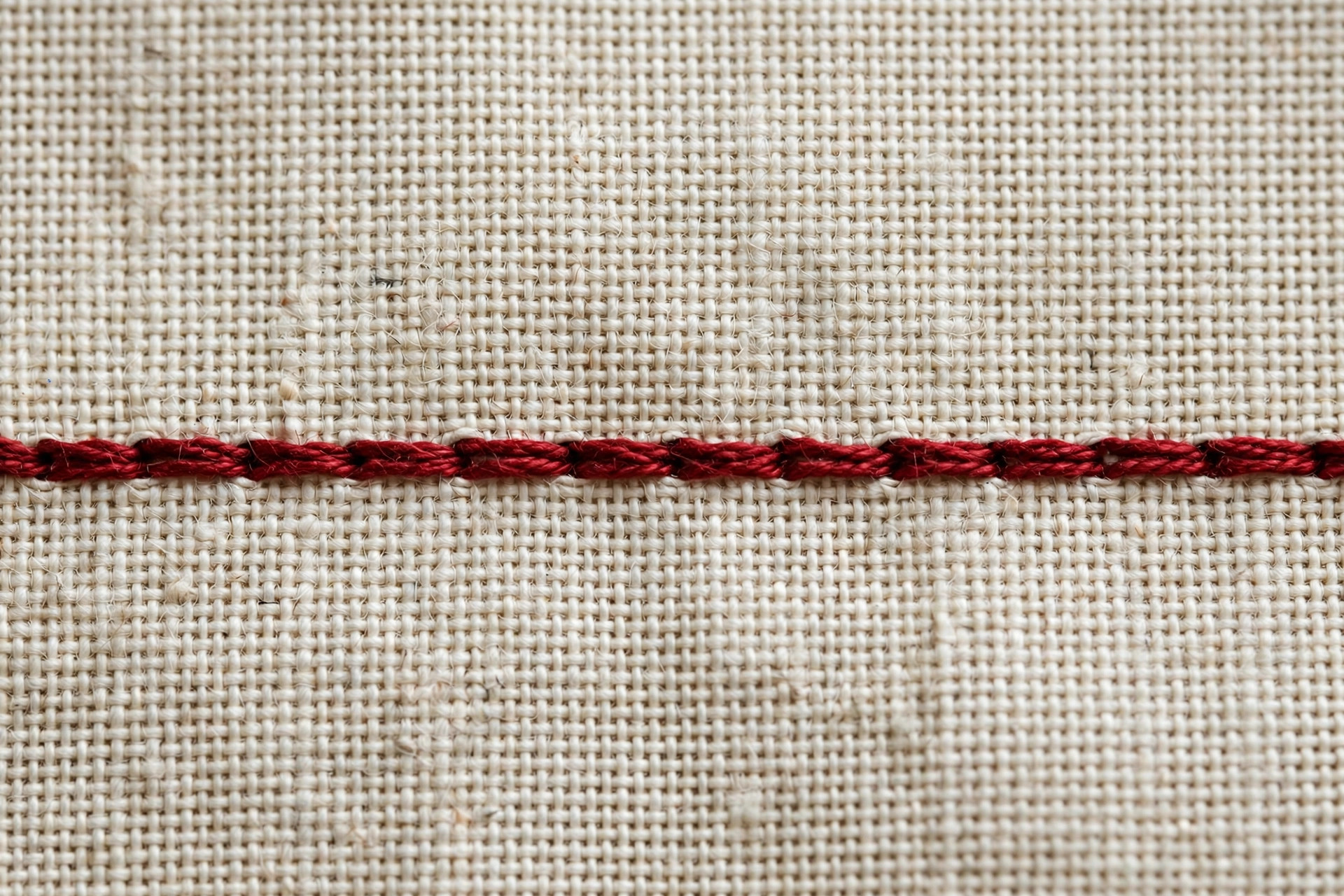
| 202 | Straight, doubled back | 1 | One continuous line | Basting and tacking, repairs, permanent hand seams, prick stitch |
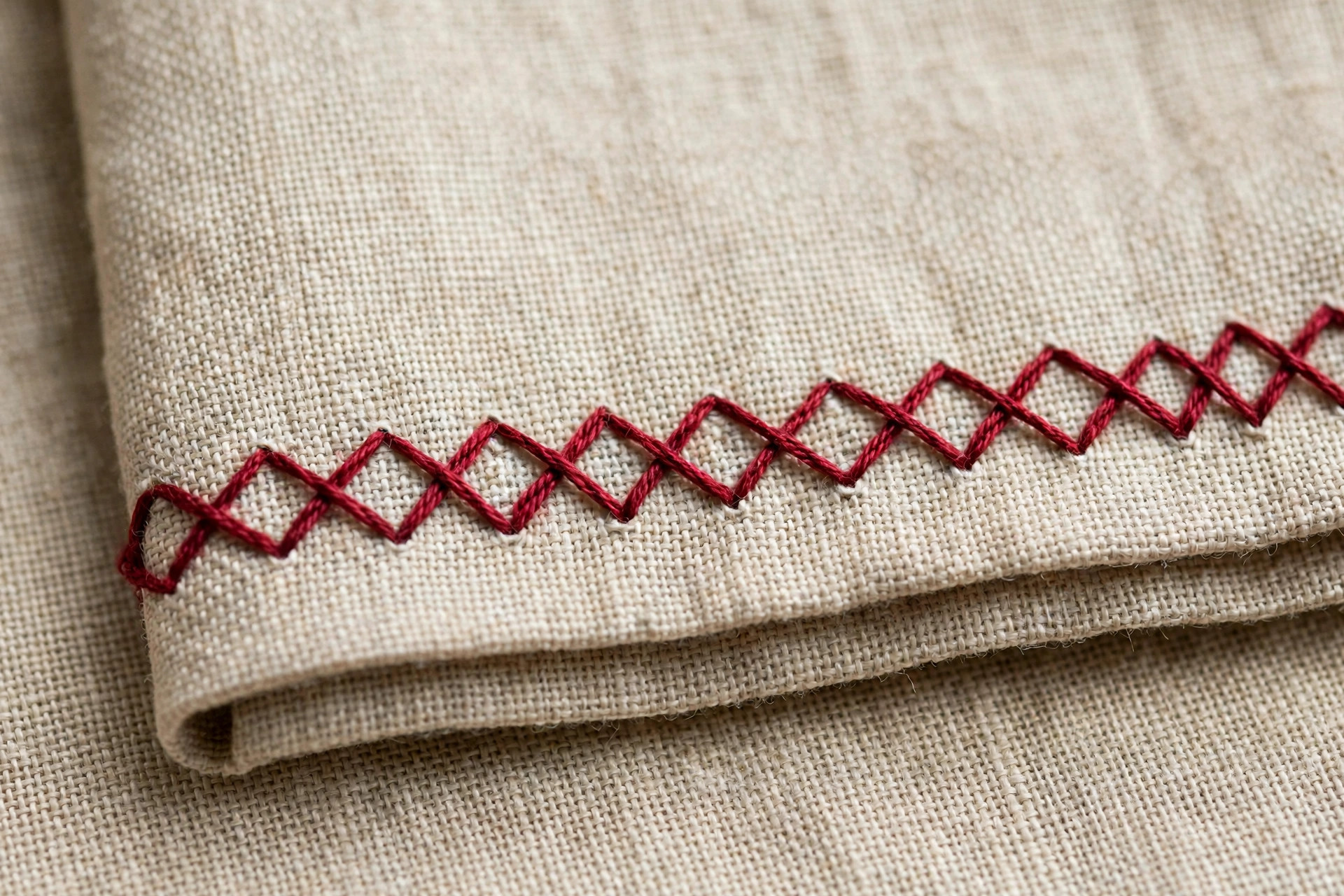
| 204 | Criss-cross between two lines | 1 | A row of X crosses (inside) | Hems in heavy fabrics, holding facings and interfacing |
Choosing between them
The two types divide hand work by purpose. If the thread must join — carry a seam's load, close a tear, set a zip — the answer is 202: its doubled-back path is built for tension. If the thread must hold down — keep a hem, a facing or a layer of canvas lying flat and moving freely — the answer is 204: its crossing lattice is built to flex. Nearly every hand-sewing job in a workroom is one of those two purposes wearing different clothes.
Common Questions
What makes Class 200 the hand stitch class?
Every Class 200 stitch originated as a hand stitch and is formed the same way: a single thread is passed through the material as one continuous line, in and out, and the stitch is secured by that line's own path — never by loops or by a second thread.
Why sew by hand when machines exist?
Control and access. A hand needle reaches corners, layers and repairs no machine foot can, works one stitch at a time at exactly the depth wanted, and — in tailoring — produces finishes, like the prick stitch, that are valued precisely because they are hand work.
Which hand stitch is strongest?
The backstitch, type 202. Its doubled-back thread path anchors every surface stitch, making a hand seam that can carry real loads. The catch stitch, type 204, is not a seam stitch at all — it is a flexible holding stitch for hems and facings.
Do machines sew Class 200 stitches?
Some machines imitate hand-stitch effects, and the saddle-stitch member of the class (type 205) exists to simulate hand sewing by machine. But the classified formations of Class 200 are the hand stitches themselves, needle and single thread.
Sources & the photographic reference
The stitch and seam classifications on this page follow ASTM D-6193, Standard Practice for Stitches and Seams, explained here in Apparel Search's own words with original diagrams. For photographs of these stitches and seams, see the Garmenco guide's Class 200 page — Professor Bernard Kahn's photographic guide, which Apparel Search has recommended for years and continues to link as the photo reference for this classification. Our guide is the permanent on-site companion to it.
More to Explore
Stitch and seam classifications follow ASTM D-6193, Standard Practice for Stitches and Seams. Diagrams on these pages are original Apparel Search drawings.