Stitch Class 100 · Chain Stitch
Stitch Class 100 — Chain Stitches
Class 100 is the single-thread chain stitch family of ASTM D-6193: one needle thread, passed through the material and interlooped with itself on the underside, where a blind looper — carrying no thread of its own — builds a chain of loops. Three types are illustrated in full in this guide: 101, 103 and 107. Between them they baste garments, close sacks, link sweaters and hem trousers — and every one of them can be pulled out from the end, which is sometimes the point and sometimes the problem.

Search Apparel Search
What Makes a Class 100 Stitch a Chain Stitch
Every stitch in Class 100 is formed from one needle thread. The needle carries the thread through the material and, beneath it, a blind looper catches the loop and holds it open so the next loop can pass through it. Each loop is secured by interlooping with the loop that follows — never by a second thread, and never by a knot. The result shows two faces: a plain row of thread segments on top, and a chain of loops on the underside that gives the class its name.
That construction writes the class's character. With no bobbin to wind or exhaust, a chain stitch machine sews continuously from a cone and sews fast. The underside chain holds a little spare thread, so the seam has a modest give. And because every loop hangs on the next, the seam can be unravelled from the finishing end — a defect in a seam that must hold forever, a genuine feature in basting that must come out and in a sack seam that must open with one pull. The standard also classifies types 102, 104 and 105 in this class; the three types below are the ones this guide illustrates in full. See every stitch in the guide side by side in the Explore Stitches gallery.
How every Class 100 stitch forms: one thread, each loop secured by the next, the chain riding on the underside. Illustration by Apparel Search.
The Three Chain Stitch Types
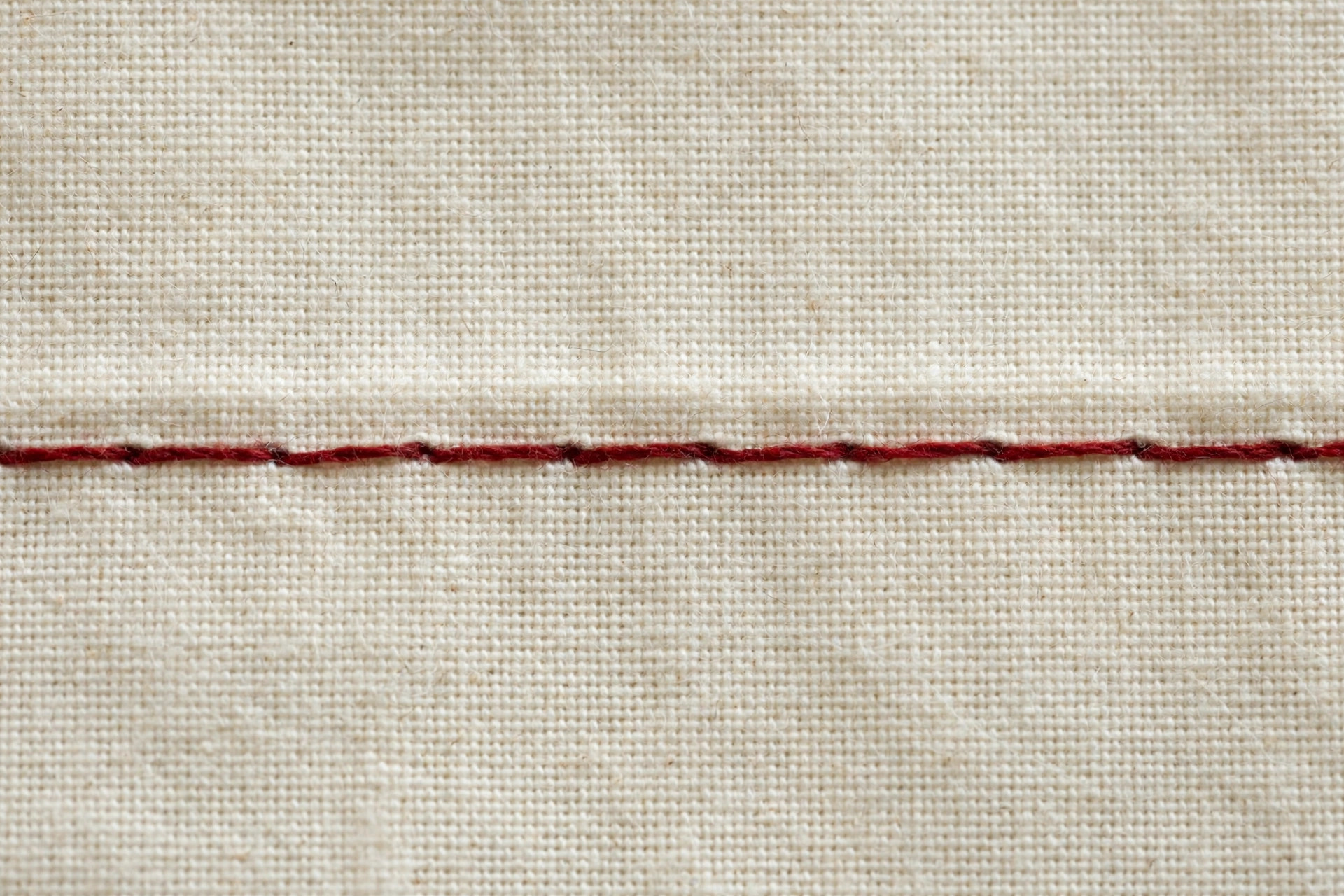 Stitch 101 — Single-Thread Chain StitchThe basic chain stitch: basting, bag closing, linking knitwear and light construction.
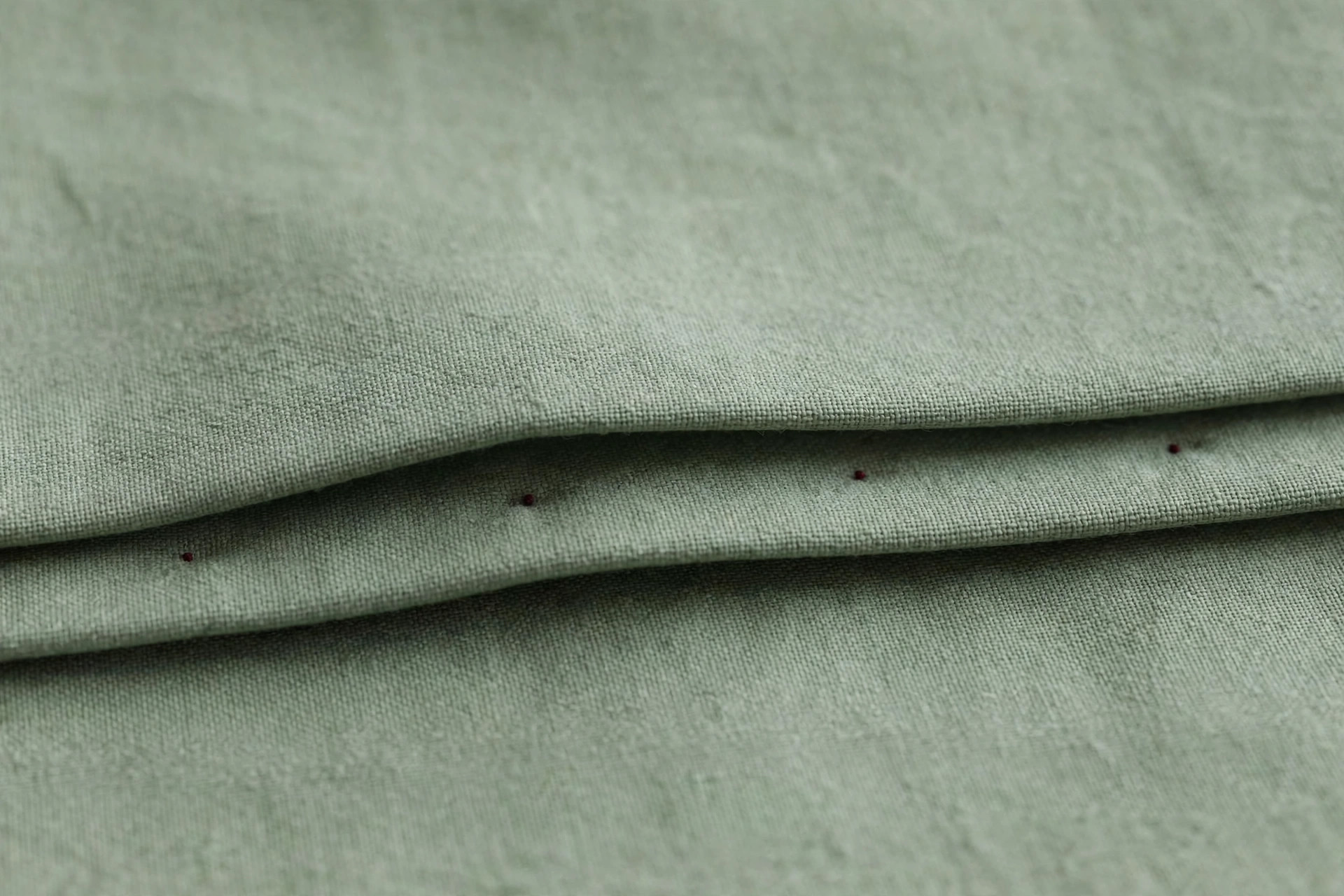 Stitch 103 — Blind Chain StitchThe chain hidden in a hem fold: nearly invisible hems on cuffs, trousers and skirts.
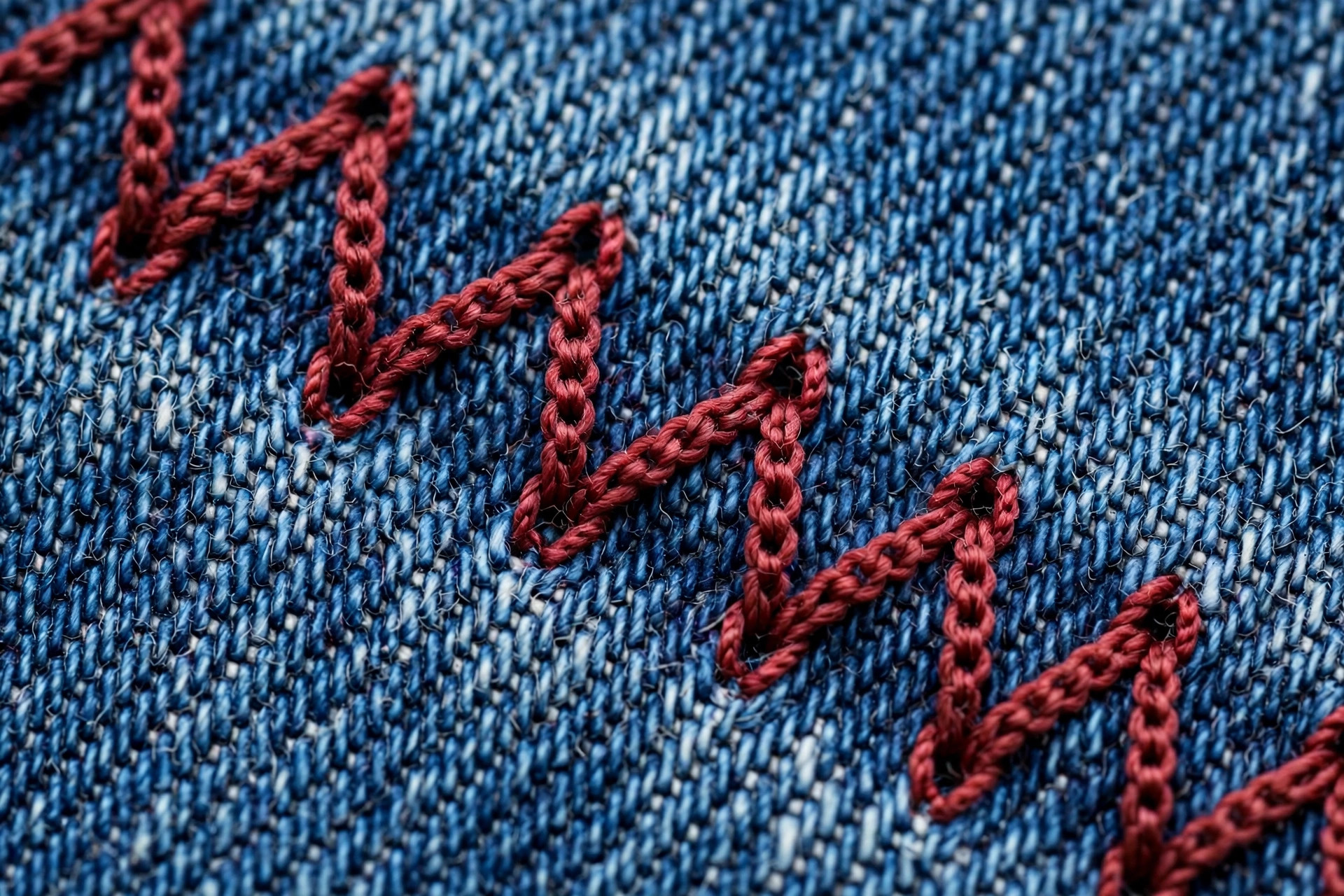 Stitch 107 — Zigzag Chain StitchThe 101 formation swung into a symmetrical zigzag, for stretch and coverage.
The Class at a Glance
| Type | Pattern | Threads | What shows on the face | Typical work |
|---|---|---|---|---|
| 101 | Straight | 1 | A row of segments | Basting, bag closing, linking, hat construction, button sewing |
| 103 | Blind — floats inside a fold | 1 | Almost nothing | Invisible hems on cuffs, trouser bottoms, skirts and dresses |
| 107 | Zigzag, one stitch per leg | 1 | A zigzag row | Decorative rows, elastic and lace application, light knit seaming |
A numbering note: ASTM D-6193 lists Class 100 as types 101–105, and Professor Kahn's guide illustrates 101, 103 and 104. The zigzag form carries the number 107 in the international ISO 4915 numbering, whose written description of it — the 101 formation in a symmetrical zigzag — is the clearest name-tag the stitch has; this guide uses 107 for it so the formation has its own page.
Choosing between them
Reach for 101 whenever a straight single-thread seam is wanted and its removability is either harmless or the whole point — basting, sacks, linking. Choose 103 when the stitch must disappear: it is the class's hemming specialist, trading even more security for invisibility. Choose 107 when the seam must give a little or cover a width — elastic, lace, light knits — while accepting the class's rule that ends must always be secured. When a seam must simply never come undone, leave the class entirely: that is what the Class 300 lock stitches are for.
Common Questions
What is a chain stitch?
A chain stitch is formed by looping a thread through itself. In Class 100 a single needle thread is passed through the material and interlooped with itself on the underside, forming a chain of loops below and a row of segments above. A blind looper handles the loops but contributes no thread.
Why do chain stitch seams unravel?
Because each loop is held only by the loop that follows it. Break the thread or pull the loose end at the finish of the seam and every loop can slip out of the next in turn. Securing the ends — condensed stitches, a knot, or ends trapped in another seam — is part of sewing any Class 100 stitch.
Is a chain stitch weaker than a lock stitch?
For a permanent structural seam, the lock stitch is the safer default: its interlacings are independent and cannot run. The chain stitch trades that security for speed, a single thread supply, a little stretch, and — for basting and bag closing — deliberate easy removal.
What is a blind looper?
The part of a chainstitch machine that catches and holds the needle-thread loop under the material so the next loop can pass through it. It carries no thread of its own, which is why Class 100 is the single-thread chain class.
Sources & the photographic reference
The stitch and seam classifications on this page follow ASTM D-6193, Standard Practice for Stitches and Seams, explained here in Apparel Search's own words with original diagrams. For photographs of these stitches and seams, see the Garmenco guide's Class 100 page — Professor Bernard Kahn's photographic guide, which Apparel Search has recommended for years and continues to link as the photo reference for this classification. Our guide is the permanent on-site companion to it.
More to Explore
Stitch and seam classifications follow ASTM D-6193, Standard Practice for Stitches and Seams. Diagrams on these pages are original Apparel Search drawings.