Stitch 103 · Class 100 Chain Stitch
Stitch 103 — Blind Chain Stitch
Stitch 103 is the blind stitch of the chain stitch class: formed with one needle thread that passes through the top (hem) ply, then travels horizontally through only part of the bottom (outer) ply without penetrating its full depth, interlooping with itself on the surface of the hem ply inside the fold. From the face of the garment almost nothing shows — and because it is a single-thread chain, a tailor can let the hem down again with one pull.
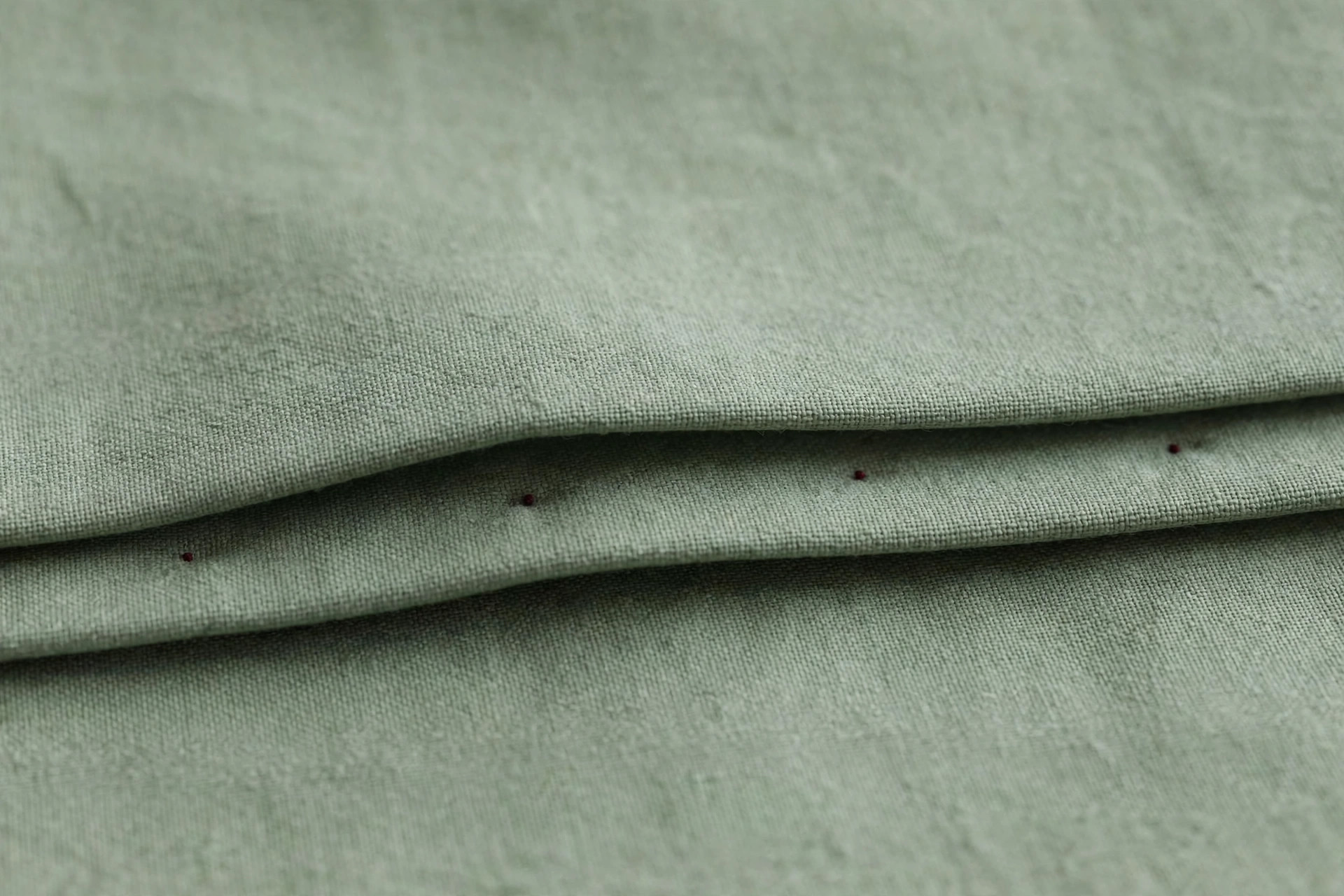
How Stitch 103 Forms
- The hem is folded and presented to the machine with the fold uppermost and the garment body opened back beneath it, so the needle works inside the fold — the standard blindstitch setup.
- The needle — curved on dedicated blindstitch machines, so it can travel sideways — passes its loop of thread through the folded hem ply.
- The needle then swings into the outer ply but only through part of its depth, catching a few yarns. It never penetrates to the face of the garment.
- On the surface of the hem ply, inside the fold, the loop interloops with itself — the Class 100 chain formation — and the machine advances. The long floats between bites stay hidden inside the fold.
- The cycle repeats along the hem: bite, float, interloop. Only the tiny bites touch the outer ply at all.
Formation diagram for stitch 103. Illustration by Apparel Search.
The Threads
| Element | Detail |
|---|---|
| Thread count | 1 — a single needle thread, interlooped with itself. |
| Needle thread (A) | Travels in long floats inside the hem fold, takes the shallow bites into the outer ply, and forms the chain loops on the hem ply. |
| Looper | Blind, as throughout Class 100: it handles the loops but supplies no thread. |
| Typical threads | Fine, soft threads matched closely to the garment colour. Invisibility depends on the thread disappearing, so colour match matters more here than in almost any other stitch. |
| Thread use | Very low: most of each stitch is a single float inside the fold. |
What It Looks Like
On the face of the garment: ideally nothing — a pressed fold, and at wide intervals a tiny speck where a bite caught the outer ply. Sewn in a matched thread, a 103 hem reads as unstitched, which is the entire purpose of the formation.
On the inside, open the hem out and the pattern appears: loose floats running along the fold in a shallow zigzag, each float ending in a small chain loop on the hem ply. The floats are deliberately slack, so the hem can hang and move without dimpling the face. Compare the two-thread blind lock stitch, 306: its inside pattern is similar, but its loops are locked by a second thread — see the detail section below for why that difference matters at the alterations bench.
Stitch 103 in Detail
Stitch 103 and stitch 306 do the same visible job — an invisible machine hem — by different machinery, and the difference is the thread count. Stitch 306 is a lock stitch: two threads interlaced on the hem ply, so a broken thread stays local. Stitch 103 is a chain stitch: one thread interlooped with itself, so the whole hem hangs on a series in which each loop is held by the next. Break the thread of a 103 hem and worry at the loose end, and the hem can run out along its length.
That weakness is, once again, also a service. Trousers are sold with hems that may need letting down, and skirts are re-hemmed as fashions change. An alterations tailor faced with a 103 hem finds the end of the thread, pulls, and the hem is open in seconds, with no unpicking and no damage to the cloth. A 306 hem must be unpicked stitch by stitch. Factories know both sides of this: 103 is quick to sew and quick to alter; 306 is the choice when the hem must never let go.
Setup decides whether any blind stitch deserves its name. The bite depth is the whole craft: too deep and thread dimples — or specks — show on the face; too shallow and the bites catch so few yarns that the hem pulls away in wear. Loose weaves and slippery fabrics are the hard cases, and some of them still hem better by hand with the catch stitch (204) or a hand blind stitch, where the sewer can feel each bite.
Strengths and Limits
Strengths
- Nearly invisible from the face — a clean, professional machine hem.
- One thread only: no bobbin, fast continuous sewing, very low thread use.
- Alteration-friendly: the chain pulls out cleanly when a hem needs letting down or re-doing.
- The slack floats let the hem hang softly without dimpling the face.
Limits
- Single-thread security: one broken thread can let the whole hem run out.
- Demands careful setup — bite too deep shows on the face, too shallow pulls away.
- Holds by a few caught yarns at each bite, so it suits hems, never load-bearing seams.
- On very loose or slippery fabrics the shallow bites can slip free.
Where Stitch 103 Is Used
Professor Kahn's guide gives the classic assignment in five words: blindstitch hem on cuffs and bottoms. Trouser and slack bottoms, skirt and dress hems, jacket cuffs and sleeve hems, and curtain hems are blind-stitched with 103 throughout the industry, on dedicated blindstitch machines with curved needles that can travel inside a fold. It also fells linings and tacks facings where a visible stitch would spoil a clean edge.
Typical fabrics: wool suiting and coatings, crepe, gabardine, dress-weight cottons and linens — fabrics with enough body for a shallow bite to hold. The hem constructions themselves belong to the edge-finishing seam family covered later in this guide; for how hems and edges are finished and pressed, see our seam finishes and pressing guide, and browse the Explore Stitches gallery to compare 103 with its two-thread counterpart, stitch 306.
Common Questions
What is the difference between stitch 103 and stitch 306?
Both sew nearly invisible hems with floats hidden in the fold. Stitch 103 uses one thread interlooped with itself (a chain stitch), so it is quick to sew and pulls out easily for alterations. Stitch 306 uses two threads interlaced as a lock stitch, so a broken thread cannot let the hem run out — but it must be unpicked stitch by stitch.
Why did my blind hem fall down all at once?
That is the signature failure of a single-thread chain hem: the thread broke or was snagged at one point, and the loops ran out from there. It is the price of the same construction that makes 103 hems so easy to let down deliberately.
Why do tiny stitches show on the face of my hem?
The needle is biting too deeply into the outer ply, so thread reaches the face — or the thread colour is not matched closely enough for the specks that do show to disappear. A shallower bite and a fine, matched thread are the usual cures.
Is stitch 103 sewn by hand or machine?
By machine — it is a powered chain stitch formation made on a blindstitch machine with a curved needle. The similar-looking hand blind hem is a different, unclassed hand technique; the flexible hand hem stitch of the classification is the catch stitch, type 204.
Sources & the photographic reference
The stitch and seam classifications on this page follow ASTM D-6193, Standard Practice for Stitches and Seams, explained here in Apparel Search's own words with original diagrams. For photographs of these stitches and seams, see the Garmenco guide's Class 100 page — Professor Bernard Kahn's photographic guide, which Apparel Search has recommended for years and continues to link as the photo reference for this classification. Our guide is the permanent on-site companion to it.
Related Stitches
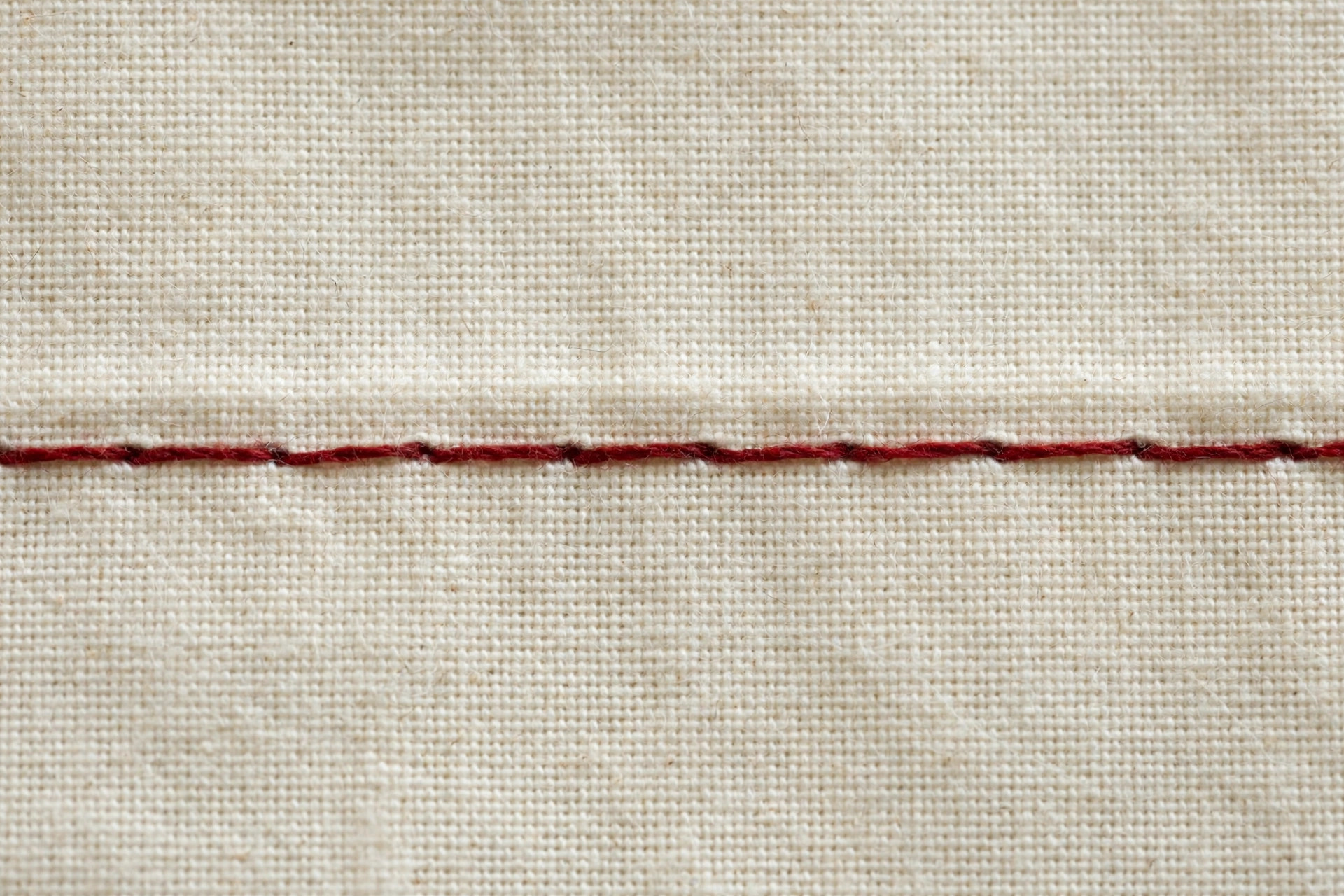 Stitch 101 — Single-Thread Chain Stitch
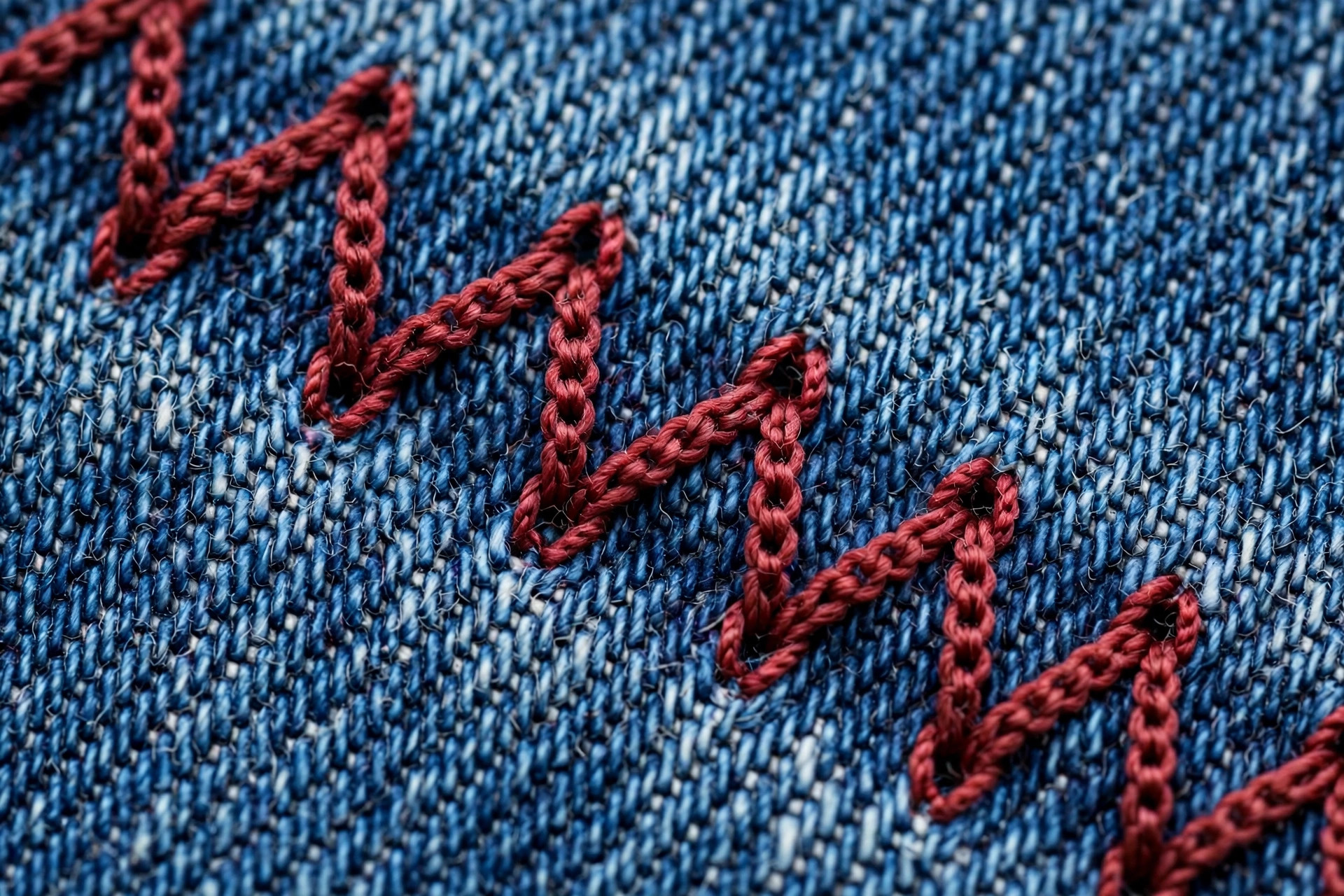 Stitch 107 — Zigzag Chain Stitch
 Stitch Class 100 — Chain Stitch
More to Explore
Search Apparel Search
Stitch and seam classifications follow ASTM D-6193, Standard Practice for Stitches and Seams. Diagrams on these pages are original Apparel Search drawings.