Stitch 101 · Class 100 Chain Stitch
Stitch 101 — Single-Thread Chain Stitch
Stitch 101 is the basic single-thread chain stitch: formed with one needle thread that is passed through the material and interlooped with itself on the underside, so a chain of loops holds the seam together from below while the top shows a plain row of thread segments. It is the simplest powered stitch in the classification — and the easiest seam in the world to take apart, which is sometimes exactly what is wanted.
How Stitch 101 Forms
- The needle carries the single thread down through the material. As the needle starts to rise, a loop of thread forms beneath the material.
- A blind looper — a hook-like element under the needle plate that carries no thread of its own — catches the loop and holds it open.
- The needle descends again at the next stitch position, and its new loop is passed through the loop held by the looper. The first loop is drawn up against the underside of the material, and the new loop is held in its turn.
- The cycle repeats: every loop is secured only by the loop that follows it, building a chain of interlooped loops along the underside while straight segments accumulate on the top.
- At the end of the seam the chain must be secured — by sewing over the last stitches, knotting, or leaving the end to be trapped by a later operation. Left unsecured, the final loop can be pulled and the whole seam will run out.
Formation diagram for stitch 101. Illustration by Apparel Search.
The Threads
| Element | Detail |
|---|---|
| Thread count | 1 — a single needle thread forms the entire stitch. |
| Needle thread (A) | Does all the work: it appears as straight segments on the top face and as the chain of loops on the underside. |
| Looper | A blind looper manipulates the loops beneath the material but contributes no thread — this is why the class is called single-thread. |
| Typical threads | Whatever the job needs: soft spun threads for basting that will be removed, strong spun polyester for bag closing, fine threads for linking knitwear. |
| Thread use | More than a lock stitch — the underside chain consumes extra thread, on the order of three metres of thread for every metre of seam at typical stitch lengths. |
What It Looks Like
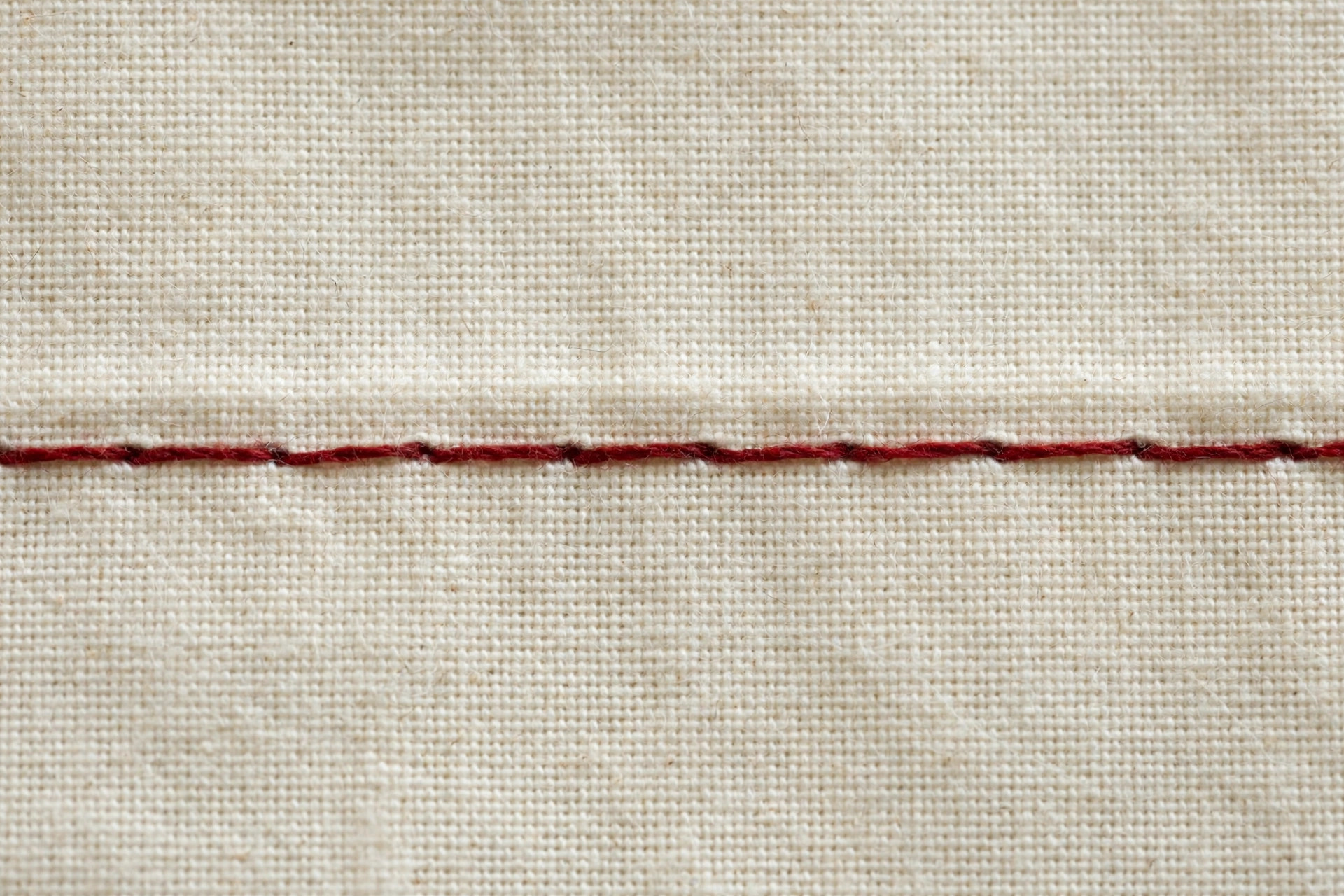
On the top, stitch 101 shows a straight row of short, even thread segments — at a glance, the twin of a lock stitch seam. On the underside it is unmistakable: a chain of open loops, each loop passing through the one before, like the chain a crochet hook makes.
That underside chain is the quickest identification test in all of sewing. If the back of a seam shows loops chained through each other and the seam was sewn with a single thread colour throughout, you are looking at a Class 100 stitch. It is also the seam's weak point made visible: the loops are a series, not a set of independent knots, and the security of every stitch depends on the stitch after it.
Stitch 101 in Detail
The unravelling behaviour deserves a closer look, because it defines where 101 earns its keep. Pull the loose end of the thread at the finishing end of a 101 seam and each loop slips out of the next in turn — the seam unzips from the end with almost no resistance. Manufacturers turn that liability into three different tools. In basting, a 101 seam holds parts together through fitting and handling, then pulls out in seconds when the real seam is in. In bag closing, sacks of feed, flour, coffee and fertiliser are closed with a 101 chain precisely so the buyer can open them with one pull on the thread end. And in linking, the chain formation joins the panels of fully-fashioned knitwear loop by loop, so the seam stretches with the sweater instead of fighting it.
Where a 101 seam must stay put, the ends do the securing. A few condensed stitches (a very short stitch length) at each end, a backtack of the chain over itself, or an end left long and trapped inside a later seam or hem all work. What never works is trusting the chain to hold itself: a snagged loop mid-seam, or a thread worn through at one point, gives the seam a starting point to run from, and a run can travel a long way before anything stops it.
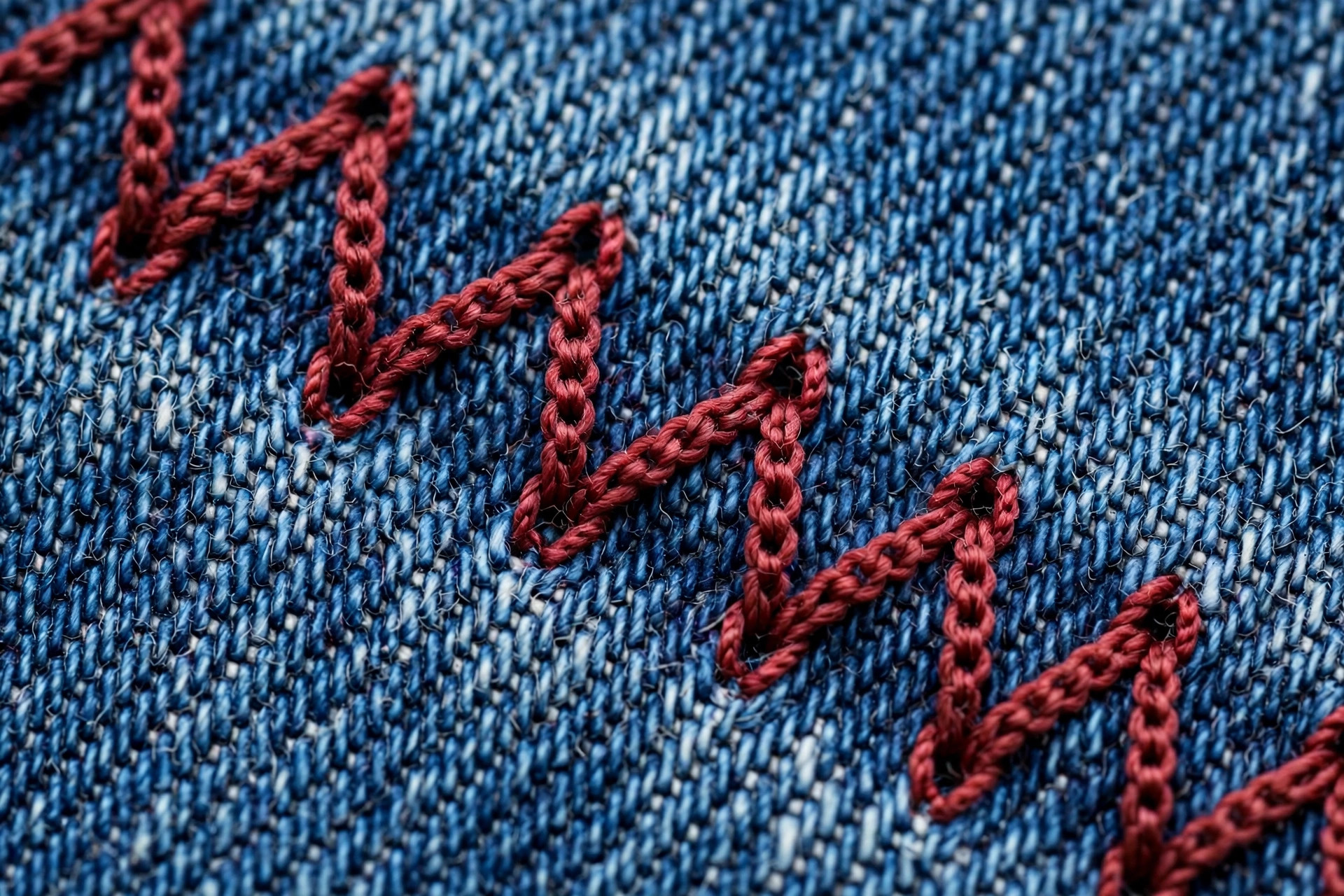
Stitch 101 is also the reference formation for its whole class. Every other Class 100 type is a variation on this single-thread interlooping: 103 hides the same chain inside a hem fold, and 107 swings it into a zigzag. The multi-thread chain stitches of Class 400 add a second, looper thread to the same idea — which buys security, at the price of a second thread supply.
Strengths and Limits
Strengths
- One thread only: no bobbin to wind or change, and the supply runs continuously from a cone — long seams never stop for a bobbin.
- Fast to sew and even faster to remove, which makes it the natural basting and bag-closing stitch.
- The underside chain gives the seam a little give, useful on knitwear and curved work.
- Simple machines: the formation needs only a needle and a blind looper.
Limits
- Unravels from the finishing end: pull the wrong thread, or break one loop, and the seam can run out stitch by stitch.
- The underside chain can snag on rough handling and hardware.
- Uses noticeably more thread than a lock stitch of the same length.
- Not a security stitch — it should never be the only thing holding a seam that must not open.
Where Stitch 101 Is Used
Professor Kahn's guide lists the classic 101 jobs: basting, bag closing, linking, hat construction and button sewing. Basting seams in 101 hold garment parts for fitting and first handling, then pull out cleanly. Bag-closing machines sew the mouths of sacks and bags with 101 because the closure is strong in use and opens with a single pull. Linking machines join fully-fashioned sweater panels with a fine 101 chain worked through the edge loops of the knitting itself, producing seams that stretch and recover with the garment. Button-sewing machines use a 101-type chain to attach buttons, where the loops are locked off at the end of each button cycle.
Beyond the factory, 101 is the stitch inside most of the temporary sewing of the trade: the long, loose basting rows that hold a tailored jacket together before its permanent seams are sewn, and the easy-rip seams that close pockets and vents for shipping and pressing. For the seam constructions a chain stitch most often sews, see the Class SS superimposed seams. If you are learning to sew, the sewing basics guide shows where the chain stitch sits among the everyday stitches, and the Explore Stitches gallery shows every stitch type in this guide side by side.
Common Questions
What is the difference between stitch 101 and stitch 301?
Both look alike from the top. Stitch 301 is a lock stitch: two threads interlaced inside the material, secure against unravelling. Stitch 101 is a chain stitch: one thread interlooped with itself on the underside, which gives a little stretch but lets the seam run out from the end if the thread is pulled or broken.
Why would anyone choose a stitch that unravels?
Because sometimes the seam is supposed to come out. Basting must be removed after fitting, and a feed sack must open easily at the farm. Stitch 101 is strong while it is in place and effortless to remove on purpose — the unravelling is the feature.
How do you stop a 101 seam from unravelling in a finished garment?
Secure both ends: sew a few very short stitches at the start and finish, knot or backtack the chain, or trap the thread ends inside another seam or a hem. A mid-seam break can still start a run, which is why 101 is kept to jobs where that risk is acceptable.
What is a blind looper?
The element under the needle plate of a chainstitch machine that catches and holds the needle-thread loop so the next loop can pass through it. It is called blind because it carries no thread of its own — the whole stitch is formed from the single needle thread.
Sources & the photographic reference
The stitch and seam classifications on this page follow ASTM D-6193, Standard Practice for Stitches and Seams, explained here in Apparel Search's own words with original diagrams. For photographs of these stitches and seams, see the Garmenco guide's Class 100 page — Professor Bernard Kahn's photographic guide, which Apparel Search has recommended for years and continues to link as the photo reference for this classification. Our guide is the permanent on-site companion to it.
Related Stitches
 Stitch 103 — Blind Chain Stitch
 Stitch 107 — Zigzag Chain Stitch
 Stitch Class 100 — Chain Stitch
More to Explore
Search Apparel Search
Stitch and seam classifications follow ASTM D-6193, Standard Practice for Stitches and Seams. Diagrams on these pages are original Apparel Search drawings.