Explore Stitches · Photo Gallery
Explore Stitches — Every Stitch Type by Class
Found a stitch on a garment and want to know what it is? This gallery shows every stitch type in the guide — all twenty-three classified types, plus the buttonhole and button-sewing pages — as photo cards grouped by class. Match the stitch in your hand to a photograph here, then follow its card to the full guide: how that stitch forms, what it looks like on both faces, its strengths and limits, and where it is used.
Turn the garment inside out before you match. Many stitches look alike from the top — a 301 lockstitch and a 401 chain stitch are near-twins on the face — and it is the underside that tells them apart: interlaced in the middle, chained in loops, or wrapped over the edge. The cards below are arranged so the families sit together, which makes the differences easy to see side by side.
Search Apparel Search
Jump to a class
How Stitch Numbers Work
The first digit of a stitch number is its class — the family that describes how the stitch is formed. A stitch numbered in the 100s is a single-thread chain stitch, the 200s are hand stitches, the 300s are lock stitches, the 400s are multi-thread chain stitches, the 500s are overedge stitches and the 600s are flat cover stitches. The remaining digits simply identify the individual type within its class: stitch 301 is type 01 of Class 300, and stitch 516 is type 16 of Class 500.
So the number on any specification sheet, spec pack or garment ticket already tells you the formation before you see a single stitch: read the hundreds digit for the family, then use this gallery to find the exact type. The buttonhole and button-sewing operations at the end of the gallery carry no class number of their own — they are complete operations, each sewn with a stitch borrowed from Class 100 or Class 300.
Stitch Class 100 — Chain Stitches
One needle thread, interlooped with itself underneath the material. The simplest powered stitches in the classification — light, quick, and famous for pulling out cleanly when a seam is meant to be temporary.
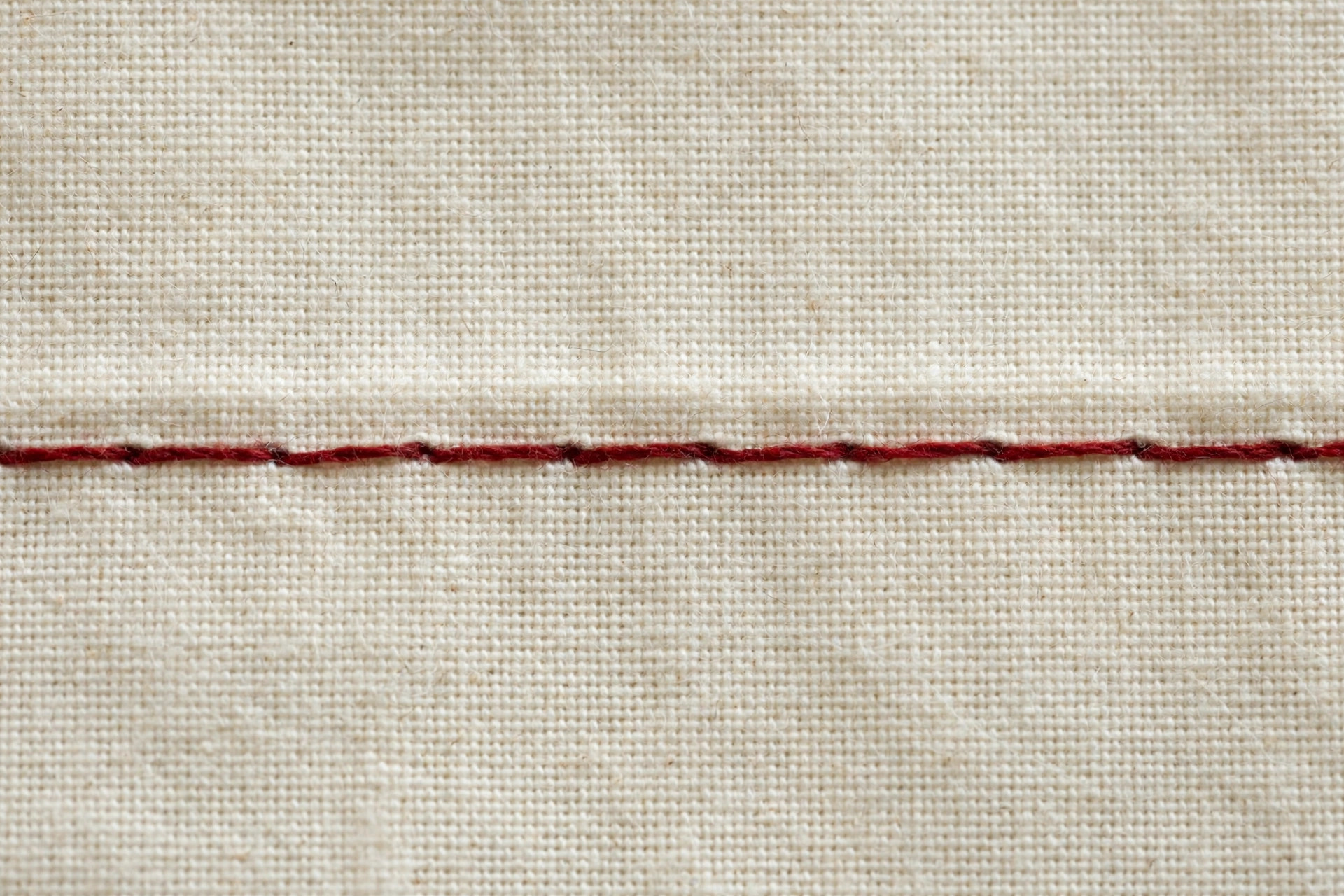 Stitch 101 — Single-Thread Chain StitchBasting, bag closing and temporary seams — the one-thread chain that pulls out with a single tug.
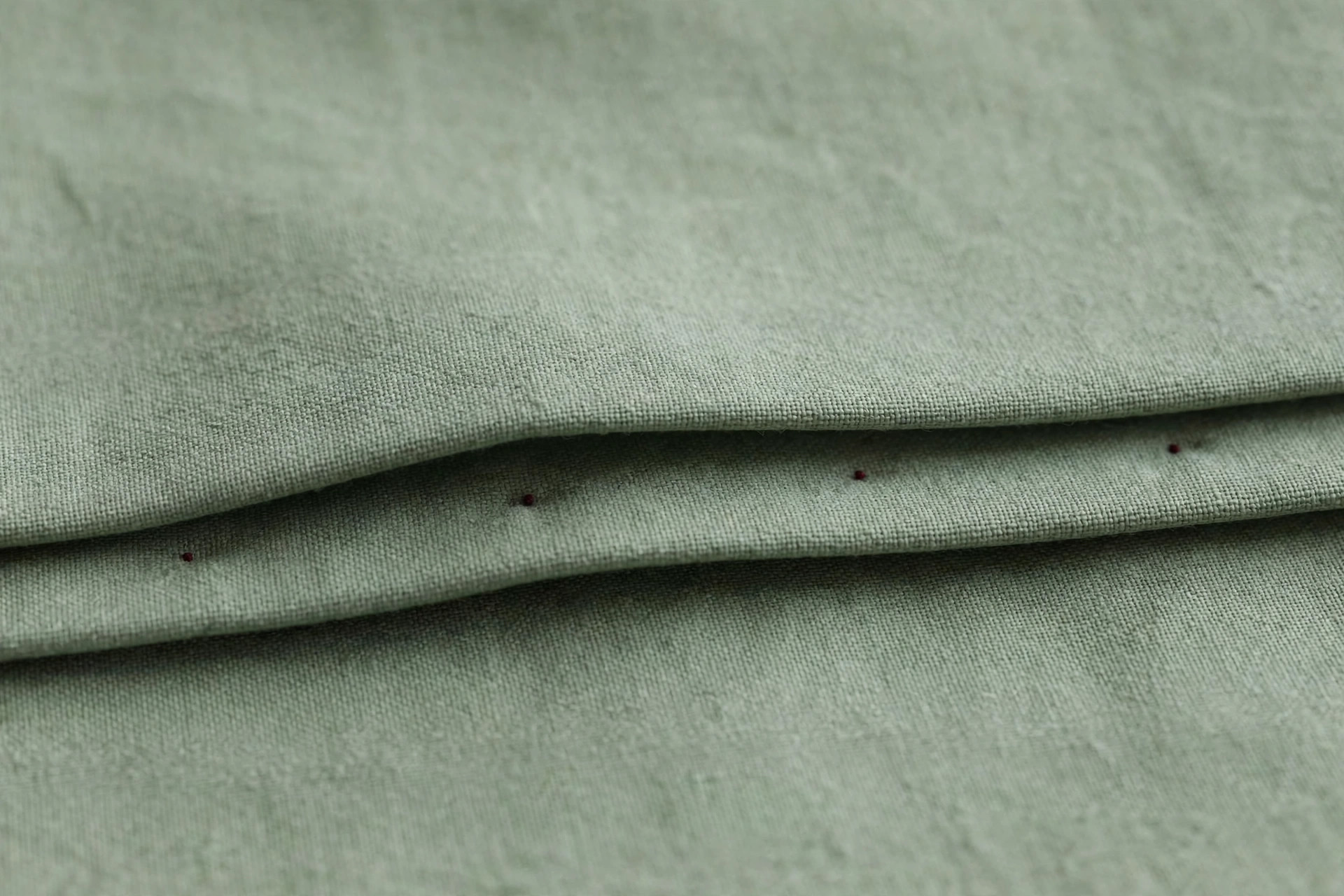 Stitch 103 — Blind Chain StitchThe nearly invisible chain-stitch hem — and a tailor can let it down again with one pull.
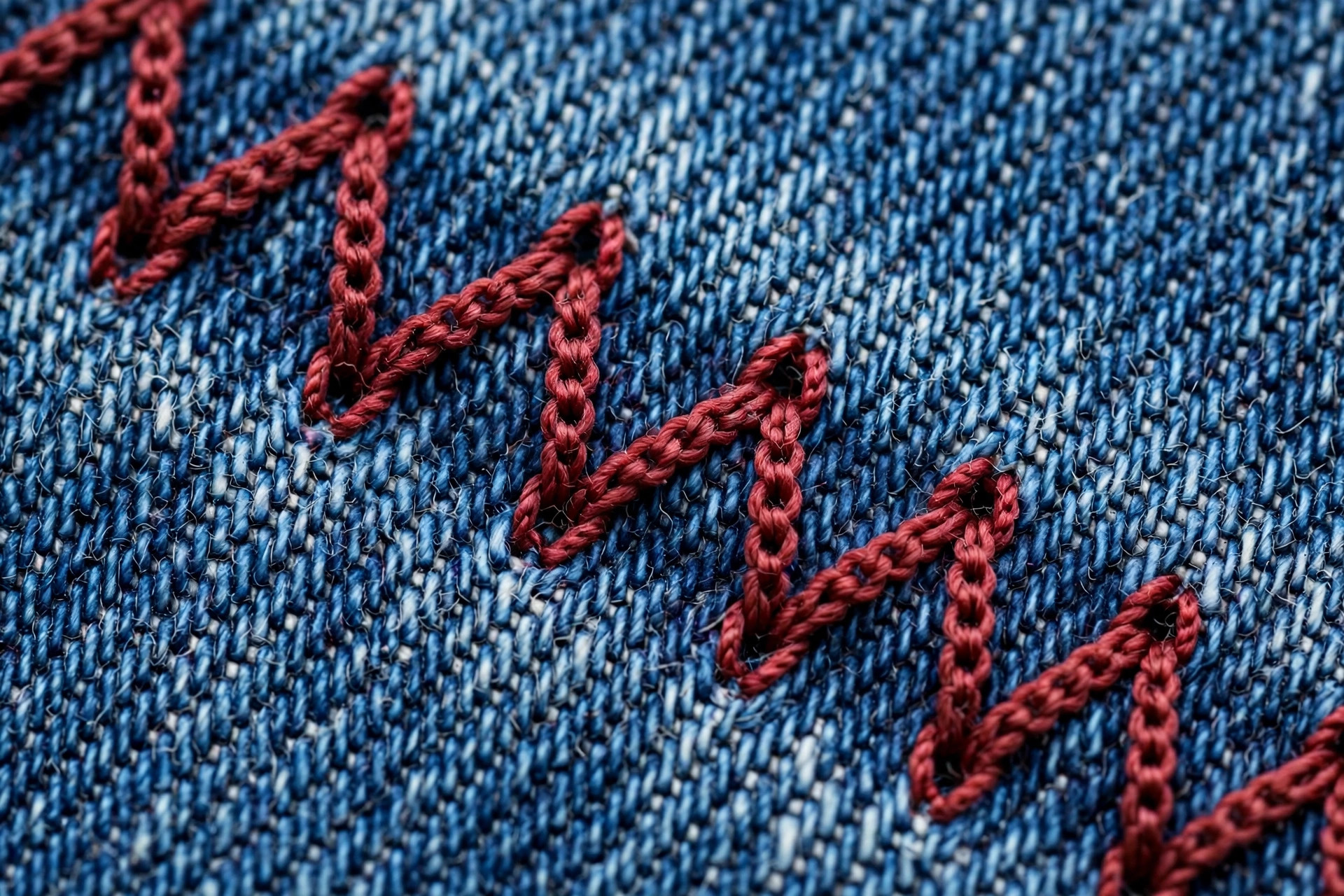 Stitch 107 — Zigzag Single-Thread Chain StitchThe 101 chain swung into a zigzag, putting spare thread in the seam so it can give.
Stitch Class 200 — Hand Stitches
Stitches worked by hand with a single needle thread. Slow by factory standards, unmatched for control — the stitches of tailoring, finishing and repair.
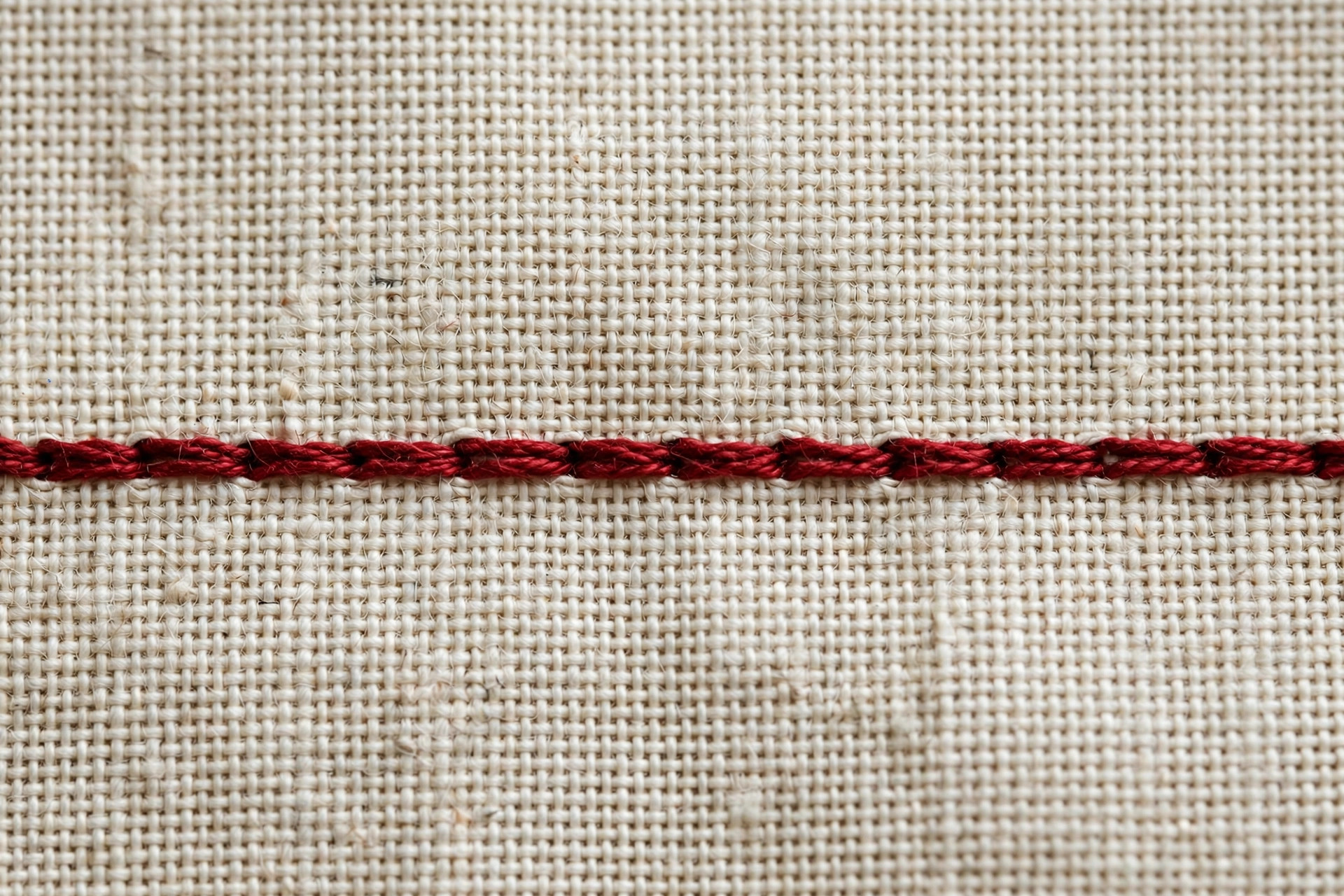 Stitch 202 — Backstitch
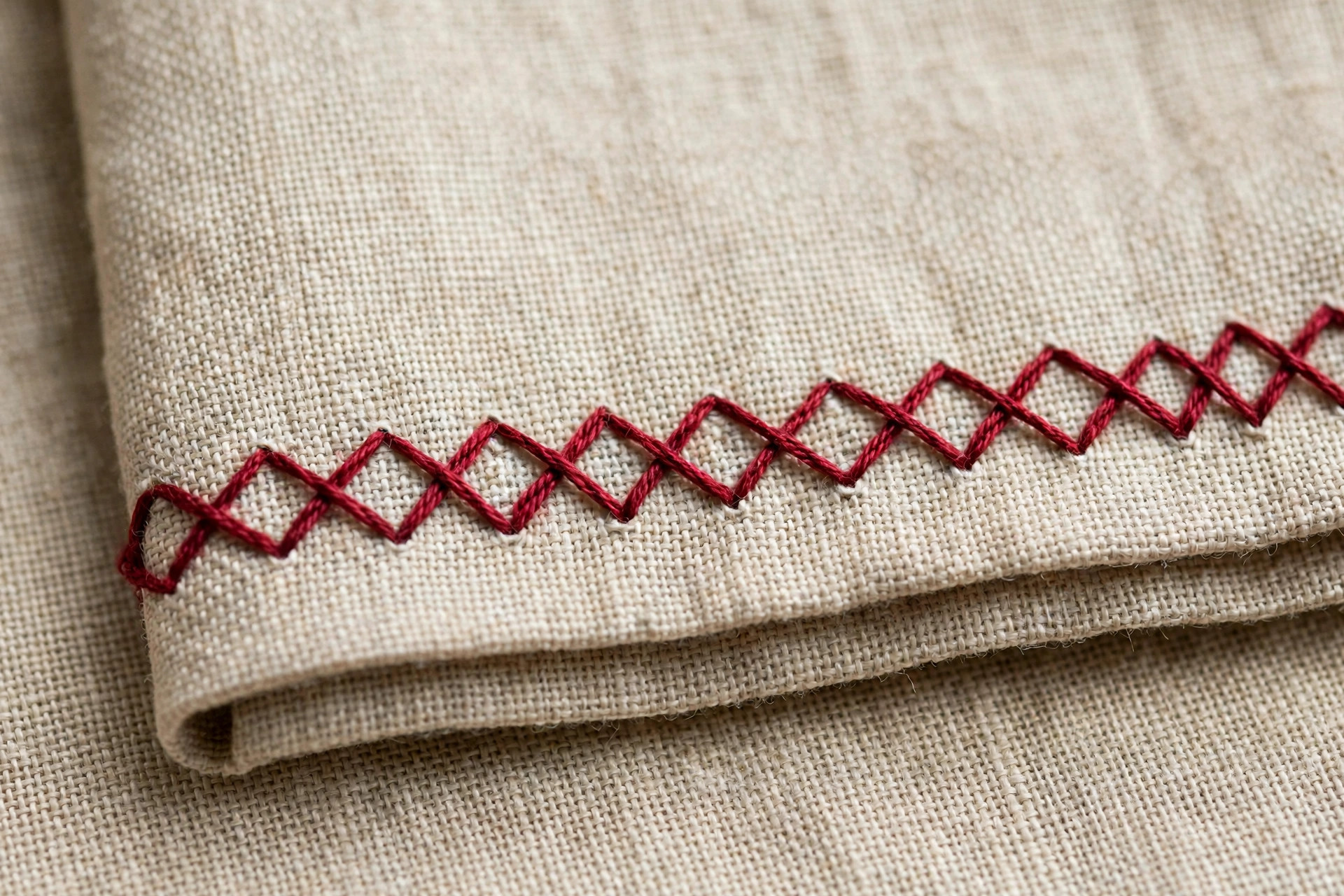 Stitch 204 — Catch Stitch (Herringbone)
Stitch Class 300 — Lock Stitches
A needle thread and a bobbin thread interlaced midway through the material, so the stitch looks the same on both faces and cannot unravel from the end. The most widely used family in garment making.
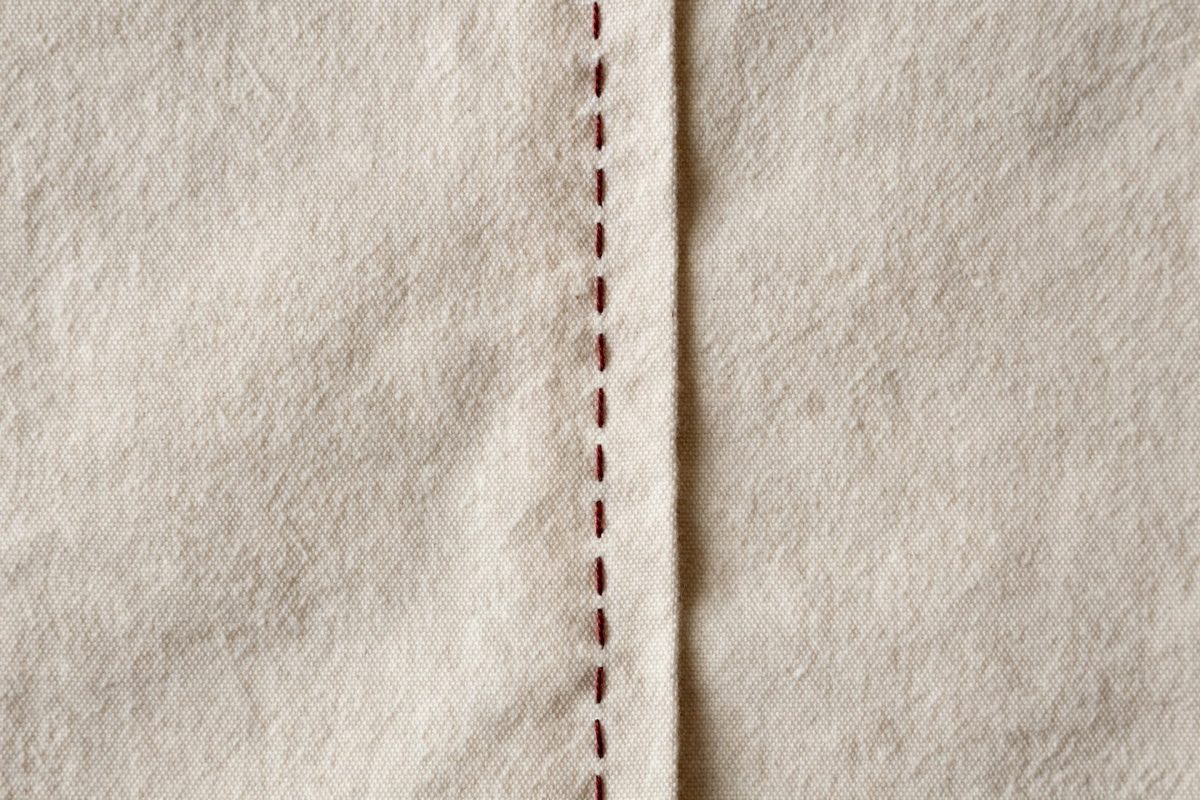 Stitch 301 — LockstitchThe standard straight stitch — the default seam stitch of garment making.
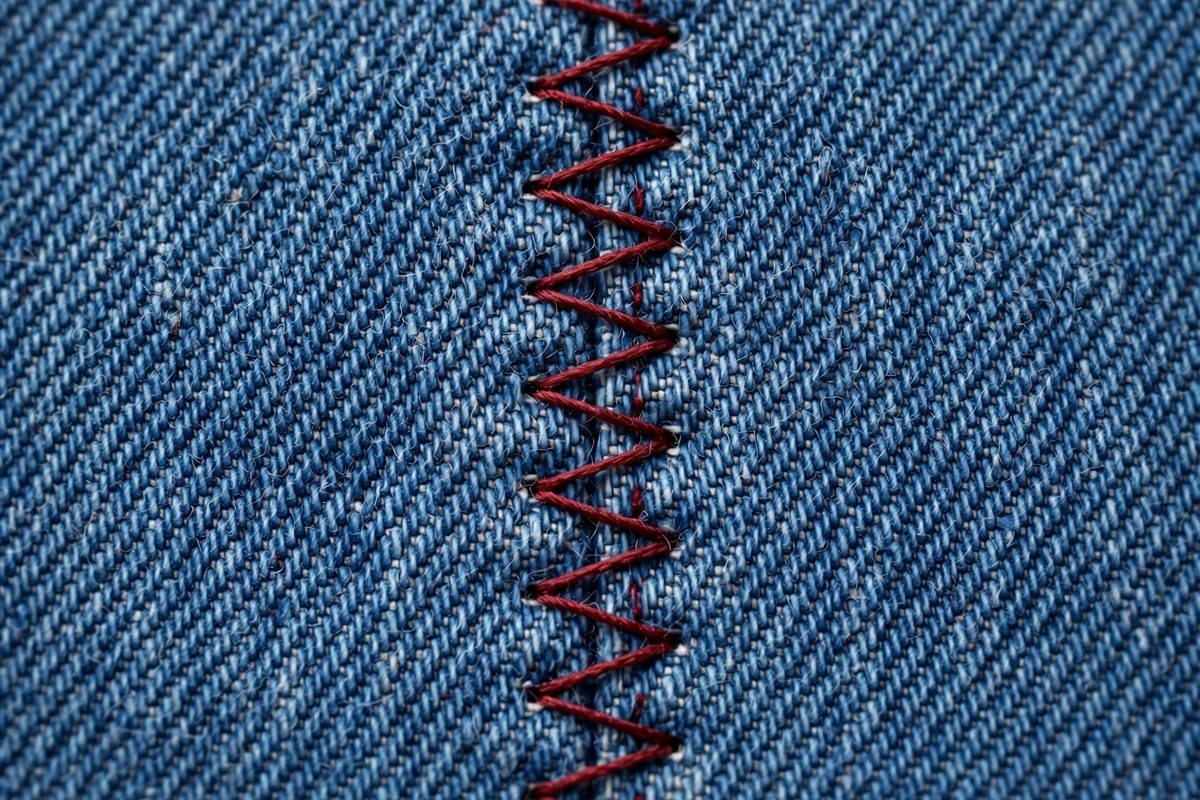 Stitch 304 — Zigzag LockstitchThe lockstitch swung into a zigzag — stretch for knits, elastic and appliqué.
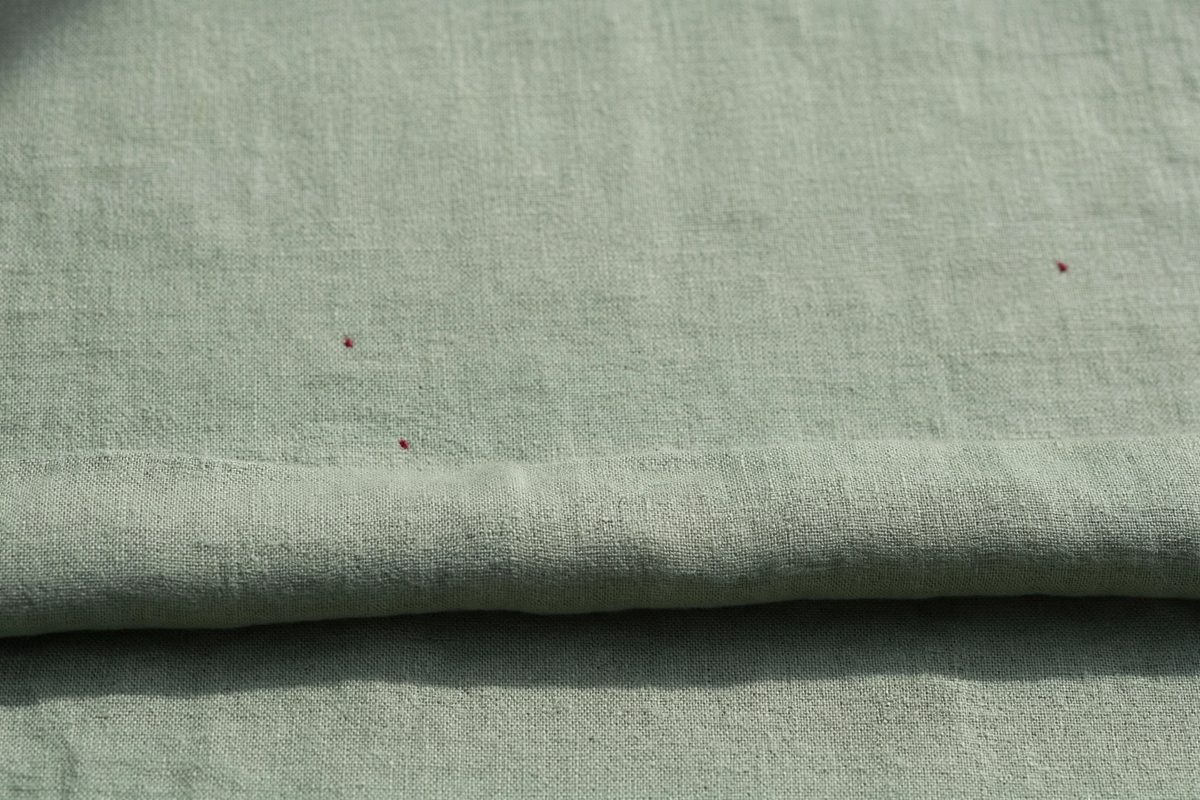 Stitch 306 — Blind LockstitchThe nearly invisible lockstitch hem for trousers, skirts and dresses.
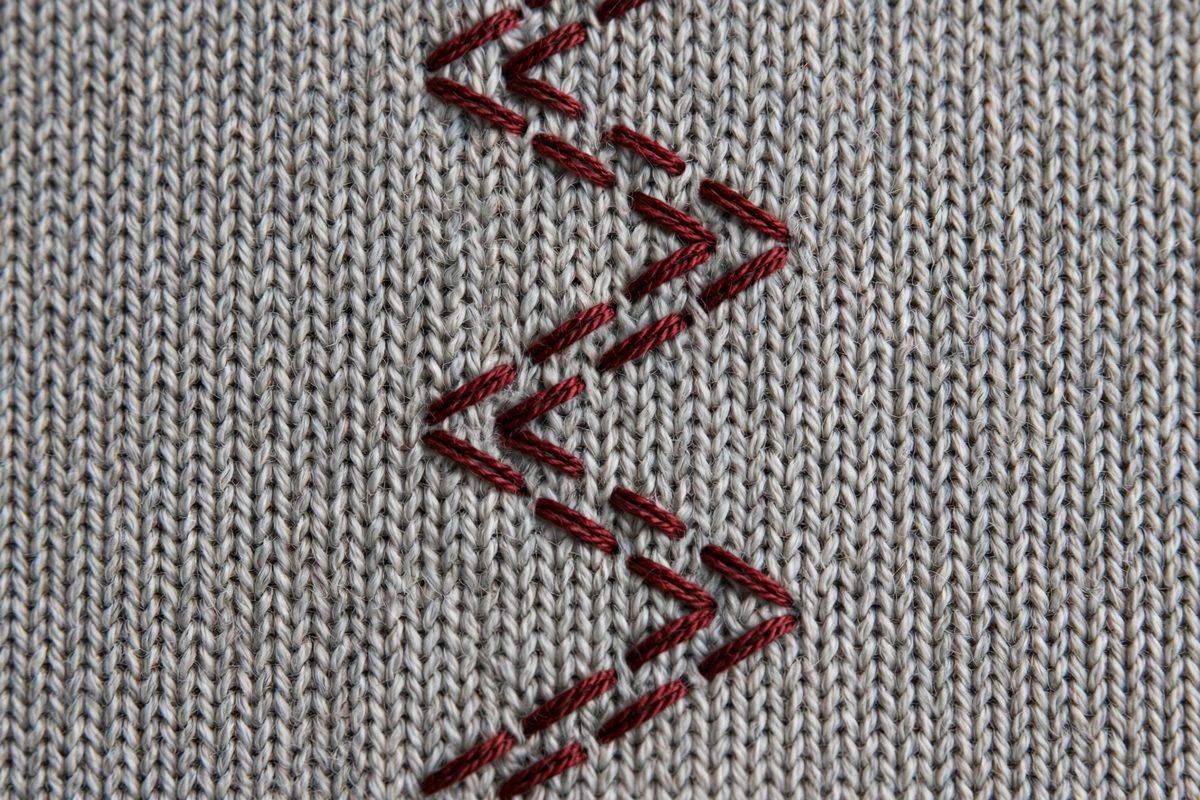 Stitch 315 — Three-Step Zigzag LockstitchThree stitches per zigzag leg — extra stretch for lingerie, swimwear and elastic.
Stitch Class 400 — Multi-Thread Chain Stitches
Needle threads interlooped with a separate looper thread, forming a chain underneath and a plain row on top. Faster and stretchier than the lock stitch, with no bobbin to run out.
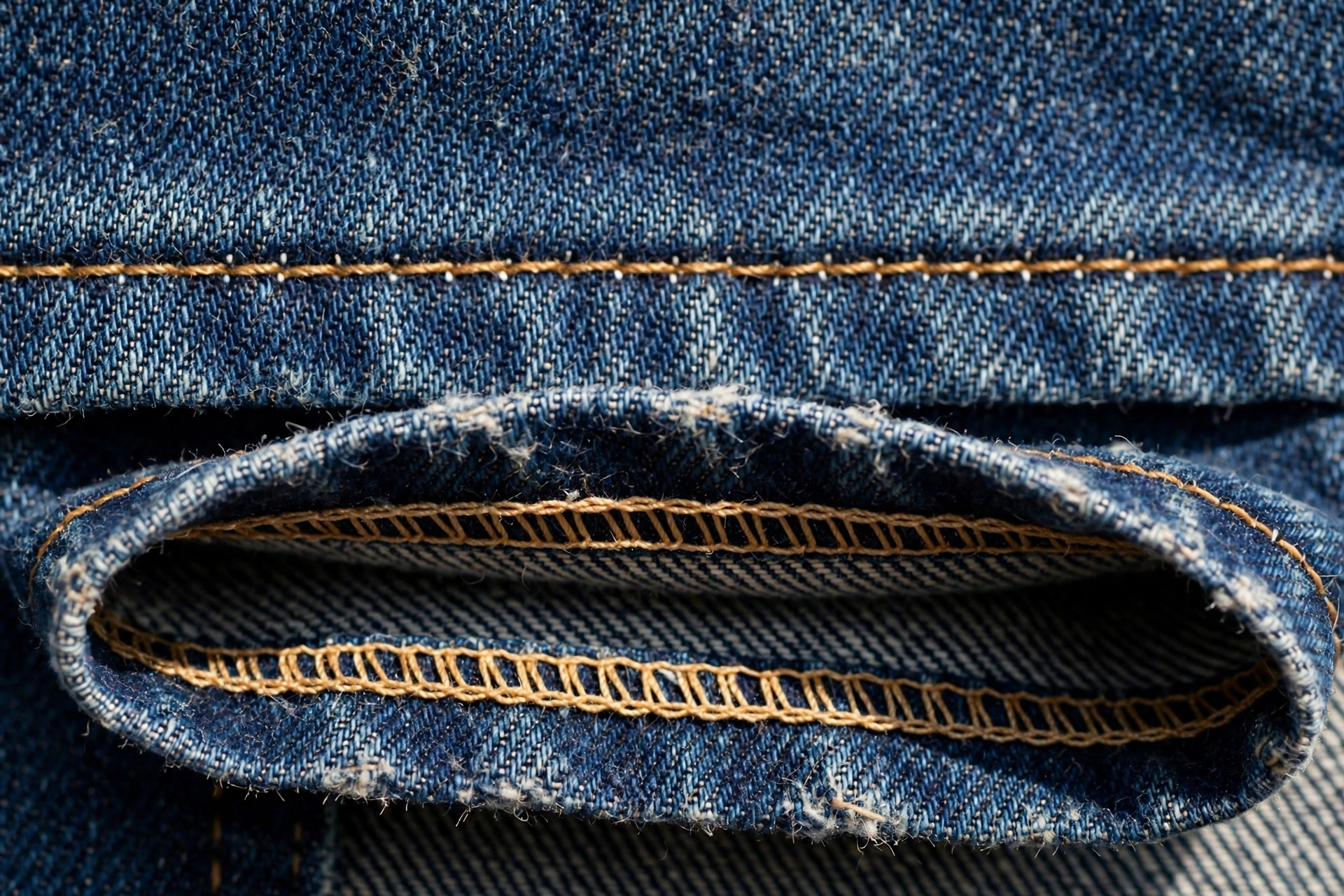 Stitch 401 — Chain StitchThe two-thread chain stitch of jeans and workwear — fast, stretchy, no bobbin to change.
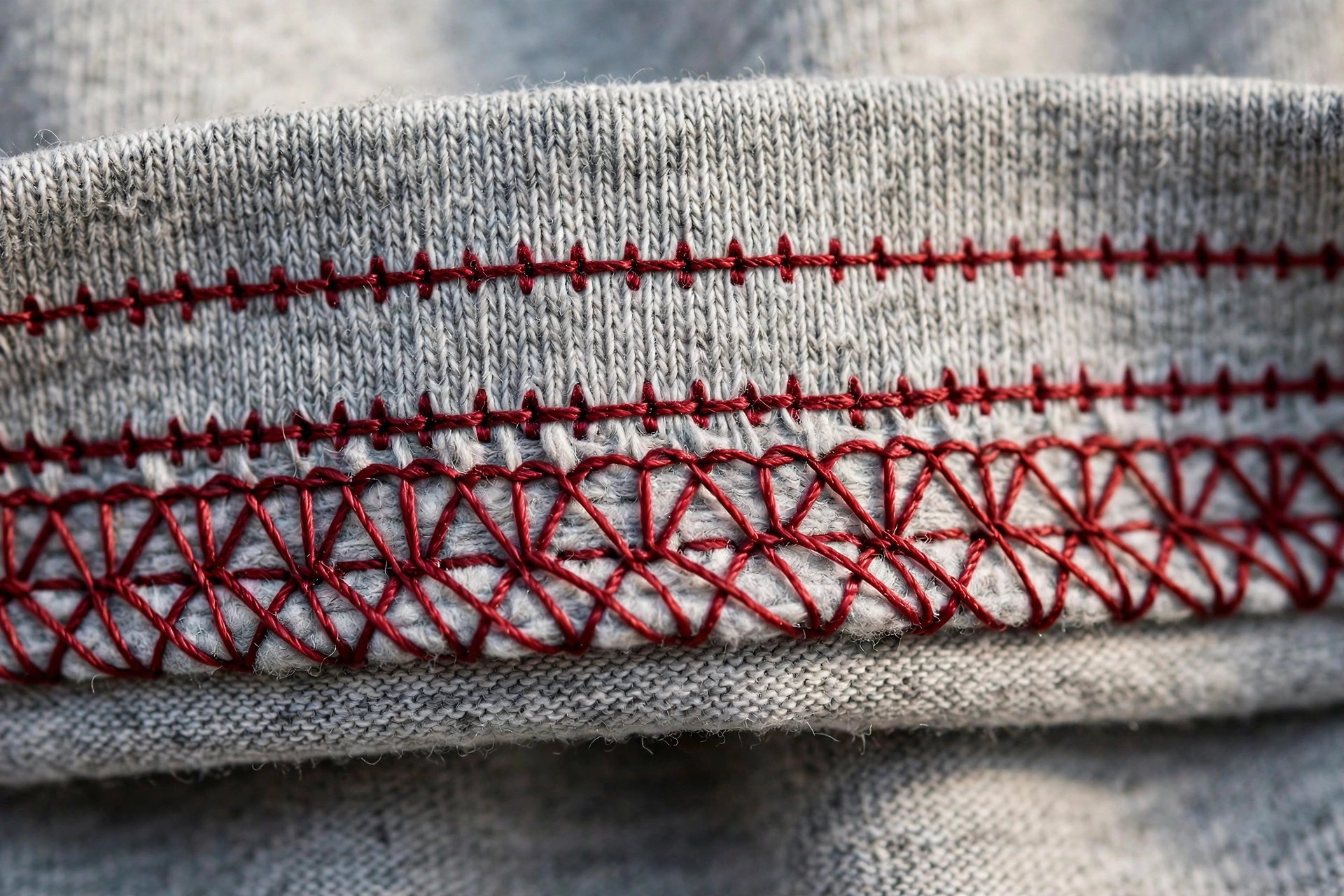 Stitch 406 — Bottom Cover StitchTwo needle rows covered underneath by the looper — the flat, stretchy T-shirt hem stitch.
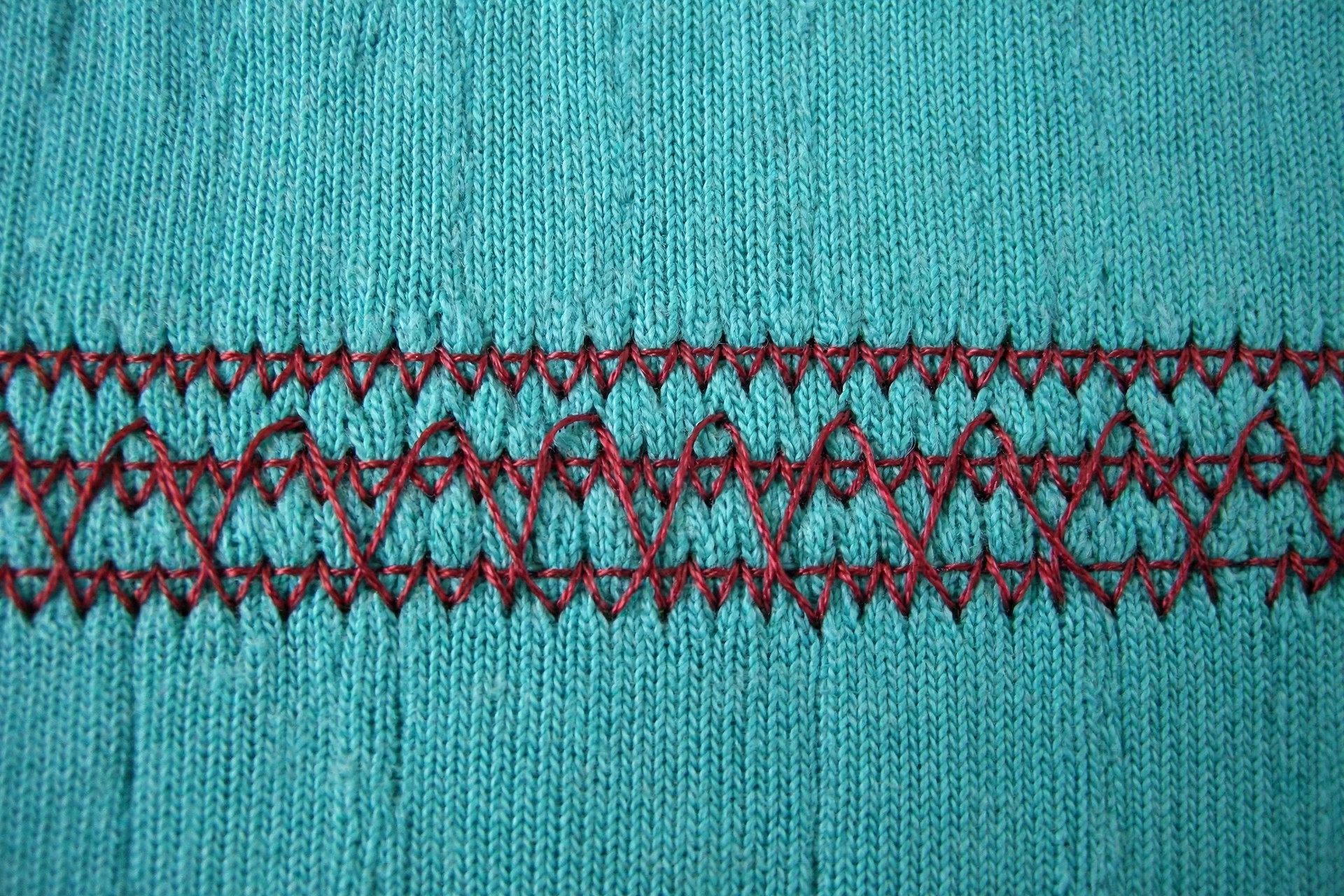 Stitch 407 — Bottom Cover StitchThe three-needle version of 406 — the same flat cover, spread across a wider band.
Stitch Class 500 — Overedge Stitches
The serger family: threads interloop over the cut edge of the material itself, trimming, seaming and finishing an edge in a single pass. The safety stitches in this class sew a separate chain seam row alongside the overedge finish.
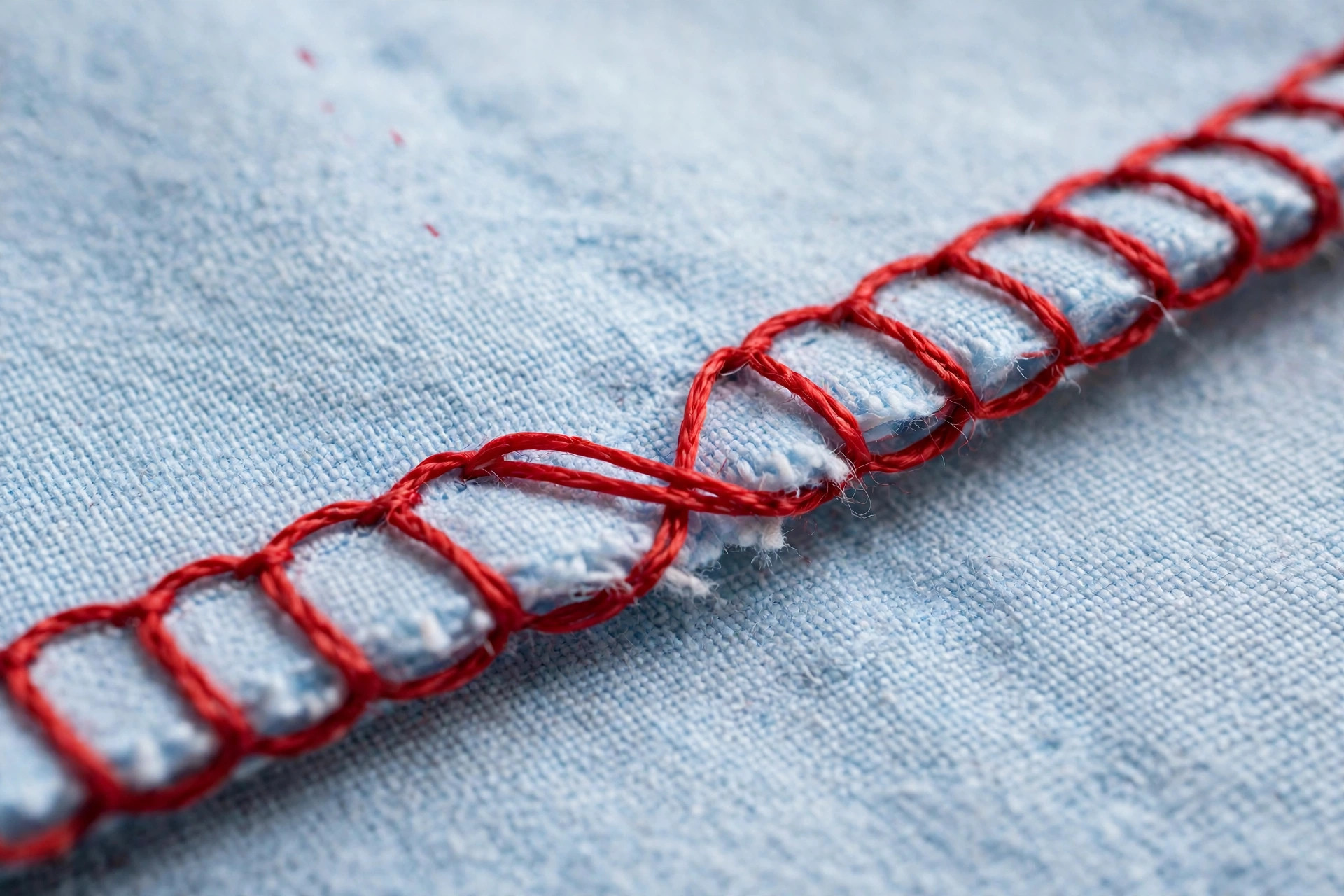 Stitch 503 — Two-Thread OveredgeThe lightest overedge — a simple purl finish along a single raw edge.
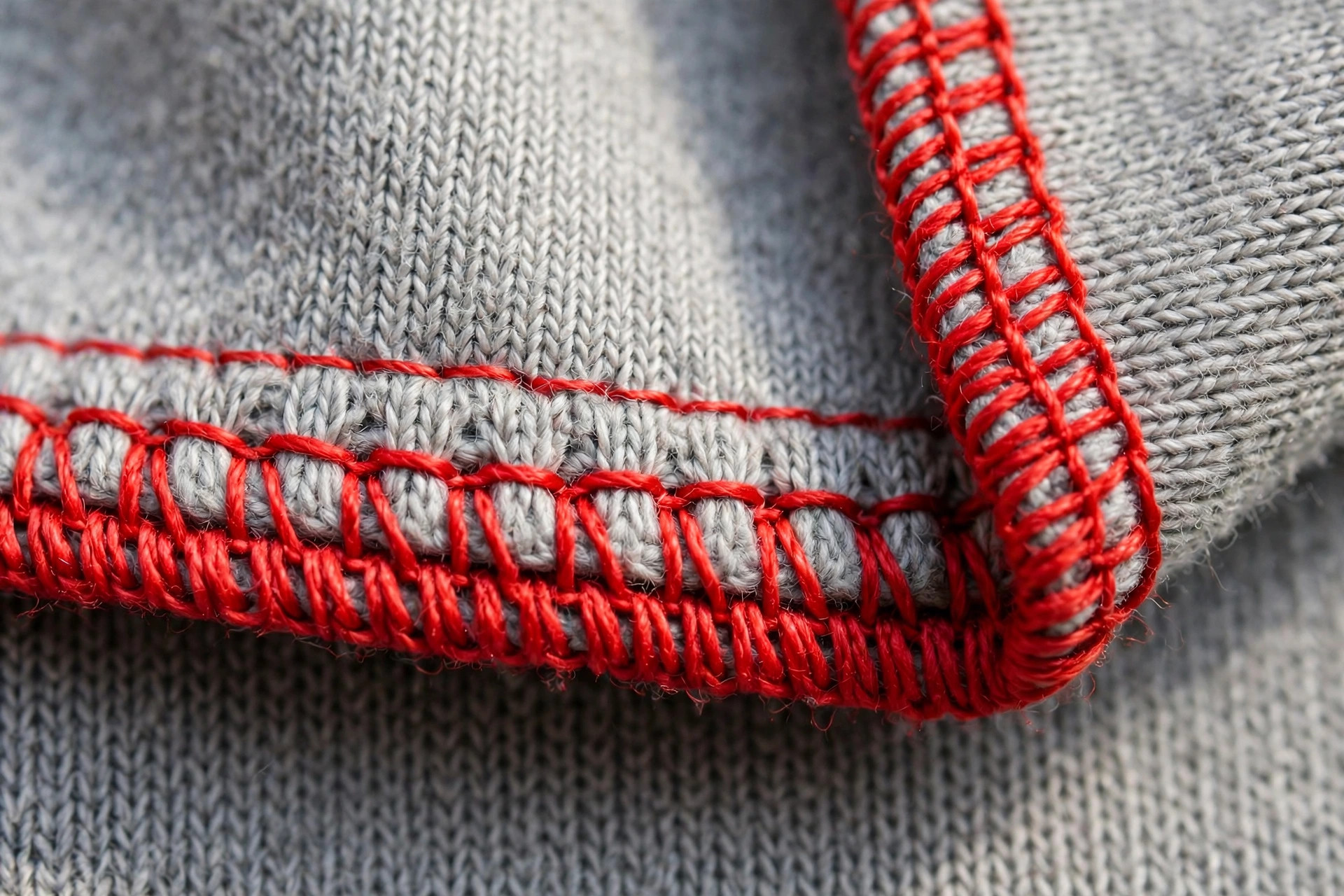 Stitch 504 — Three-Thread OveredgeThe standard serger stitch — the most widely used overedge stitch in the world.
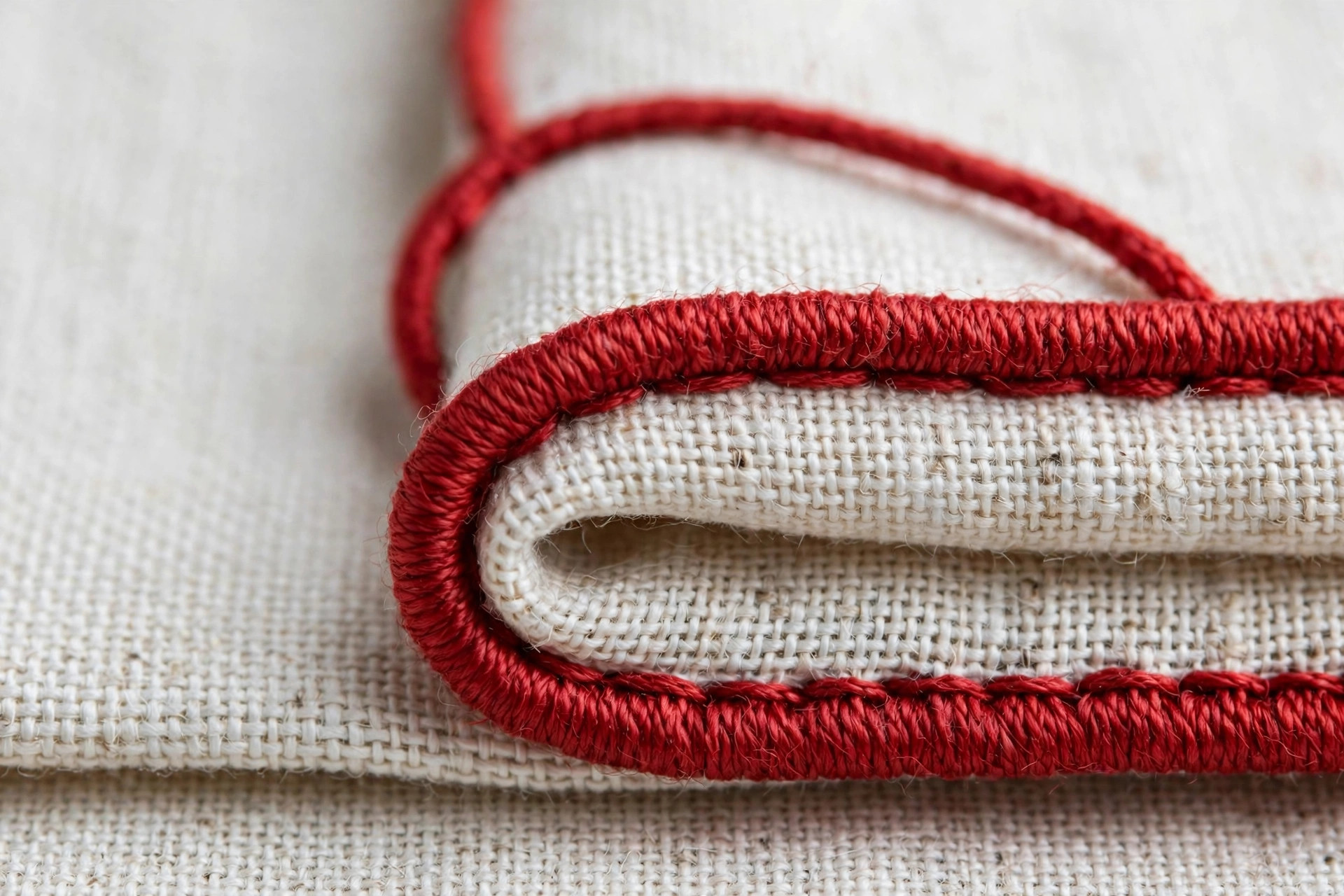 Stitch 505 — Double-Purl OveredgeA doubled, raised purl cord that covers and protects the raw edge — the merrow-style edging.
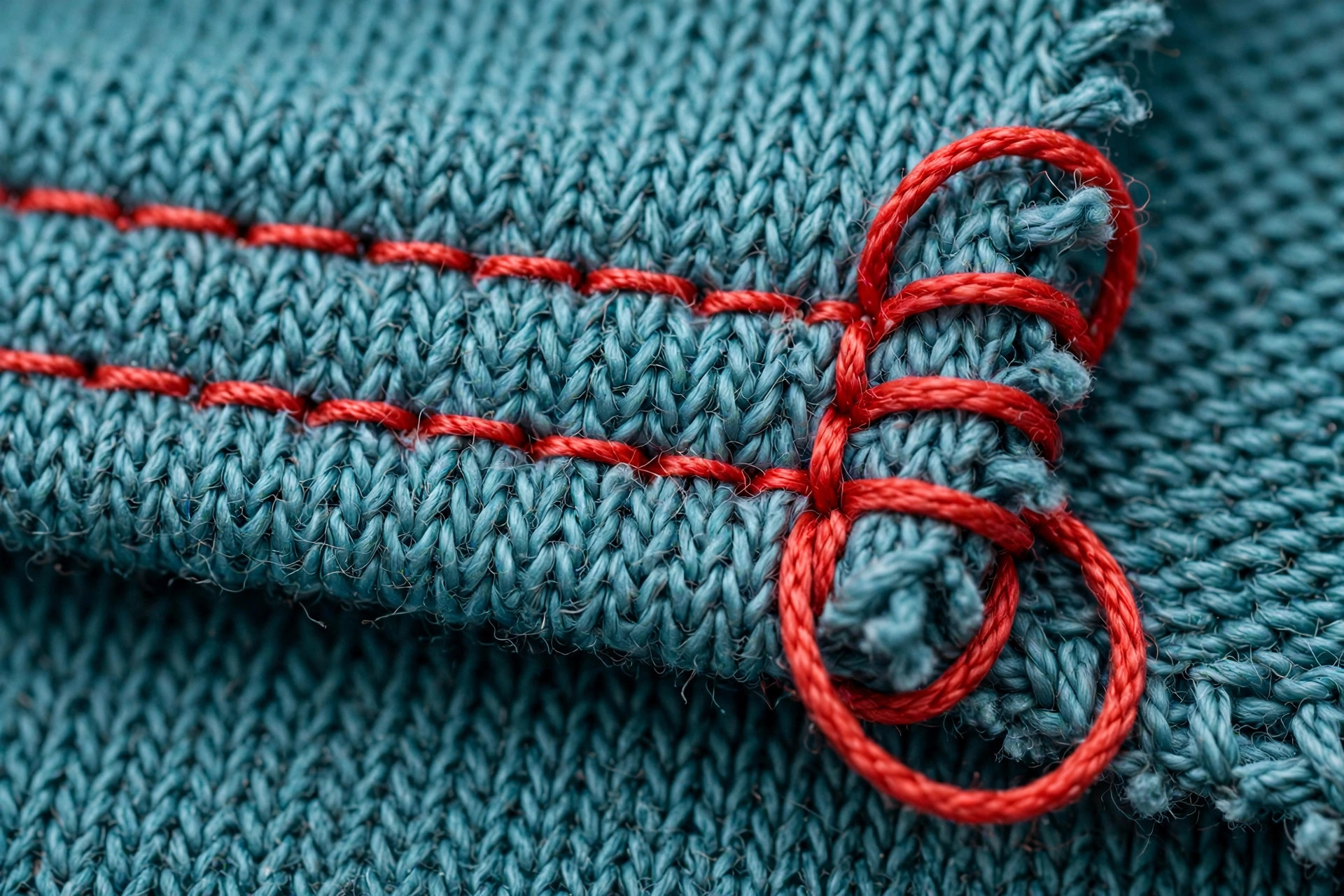 Stitch 512 — Mock Safety StitchOne wide, stretchy overedge formation whose left needle row imitates a separate seam line.
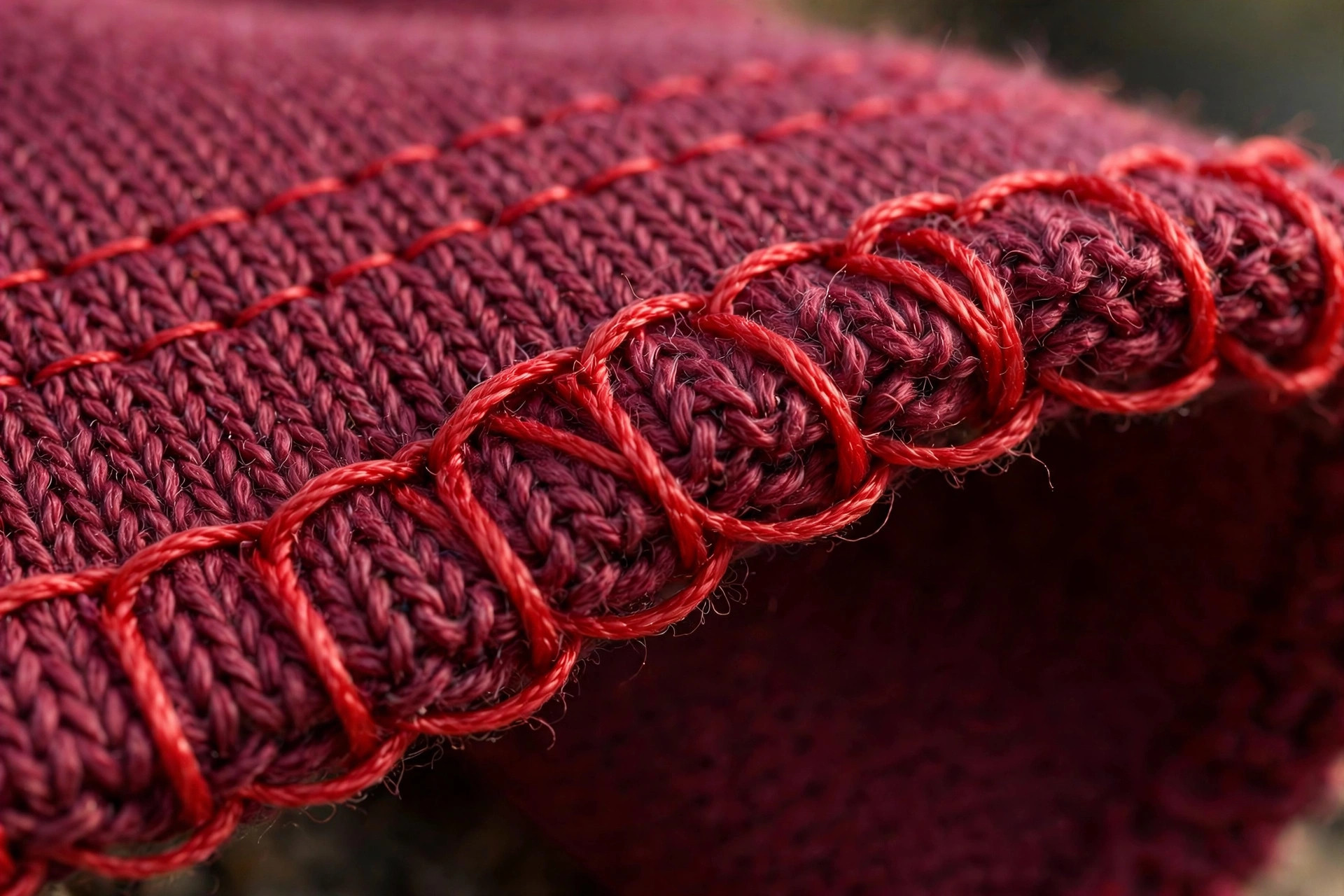 Stitch 514 — Four-Thread OveredgeThe four-thread overlock — the standard strong seam for knit garments.
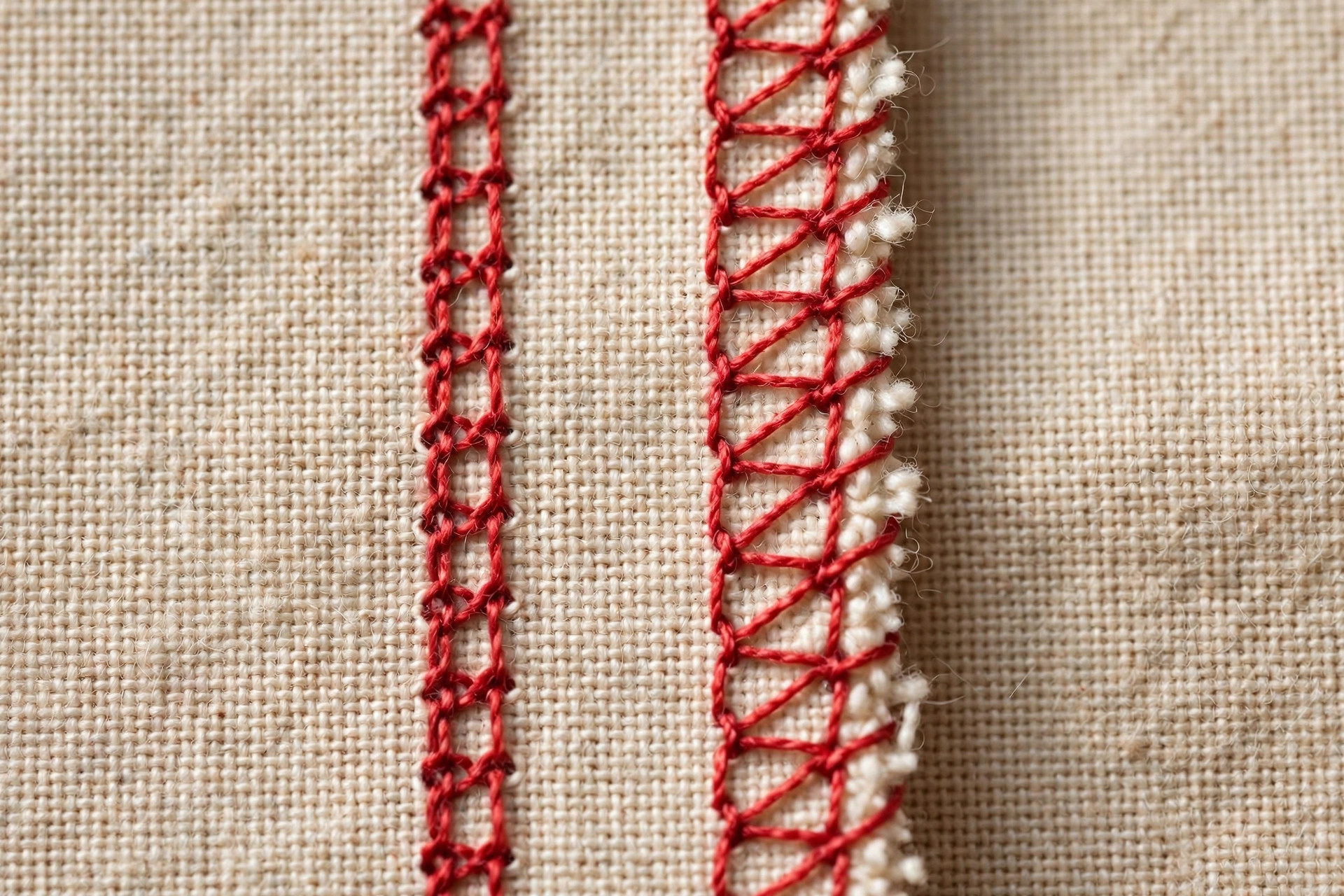 Stitch 515 — Four-Thread Safety StitchA 401 chain seam row plus a 503 edge finish, sewn independently in one pass.
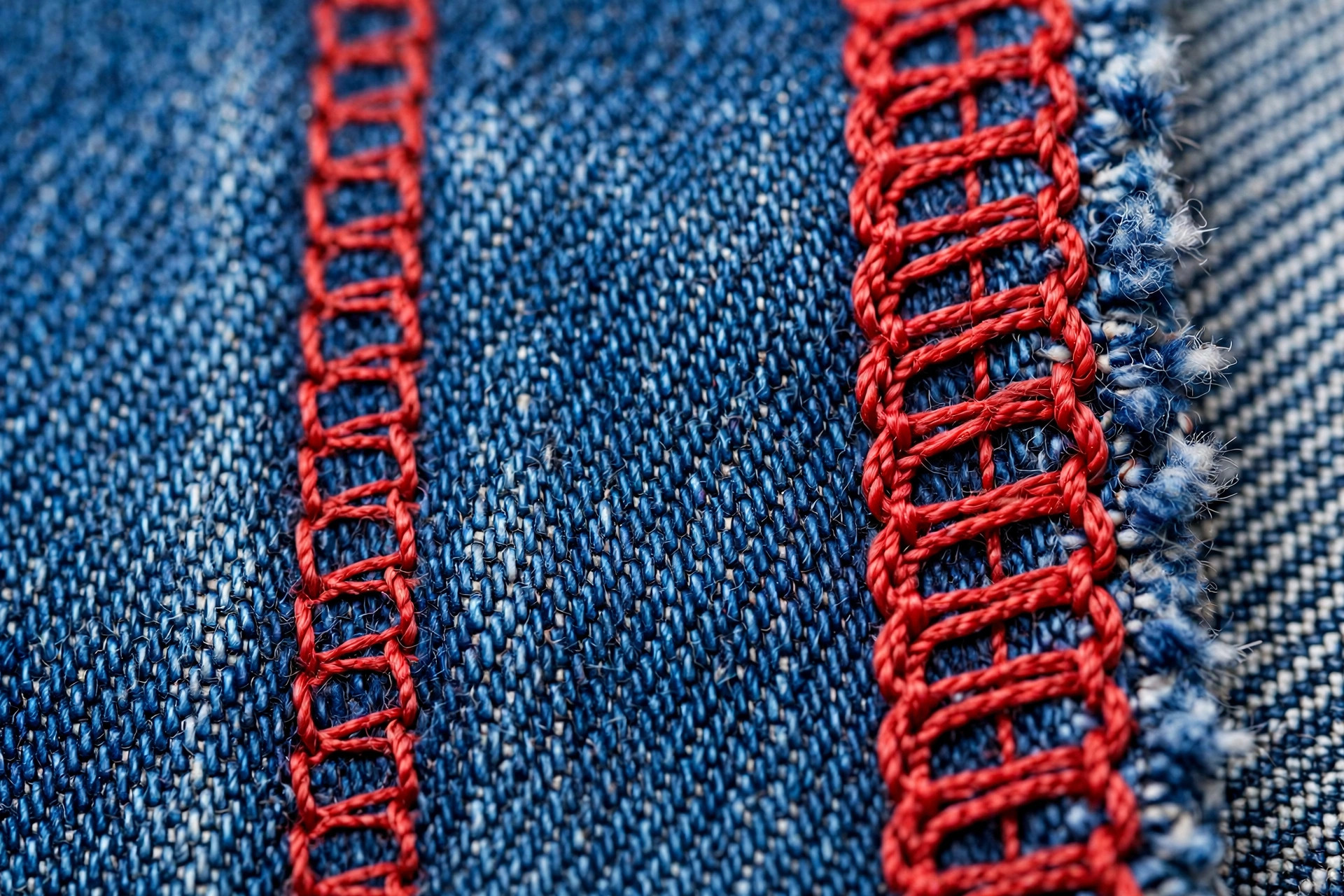 Stitch 516 — Five-Thread Safety StitchThe woven-garment industry standard — a 401 seam row with a 504 overedge finish.
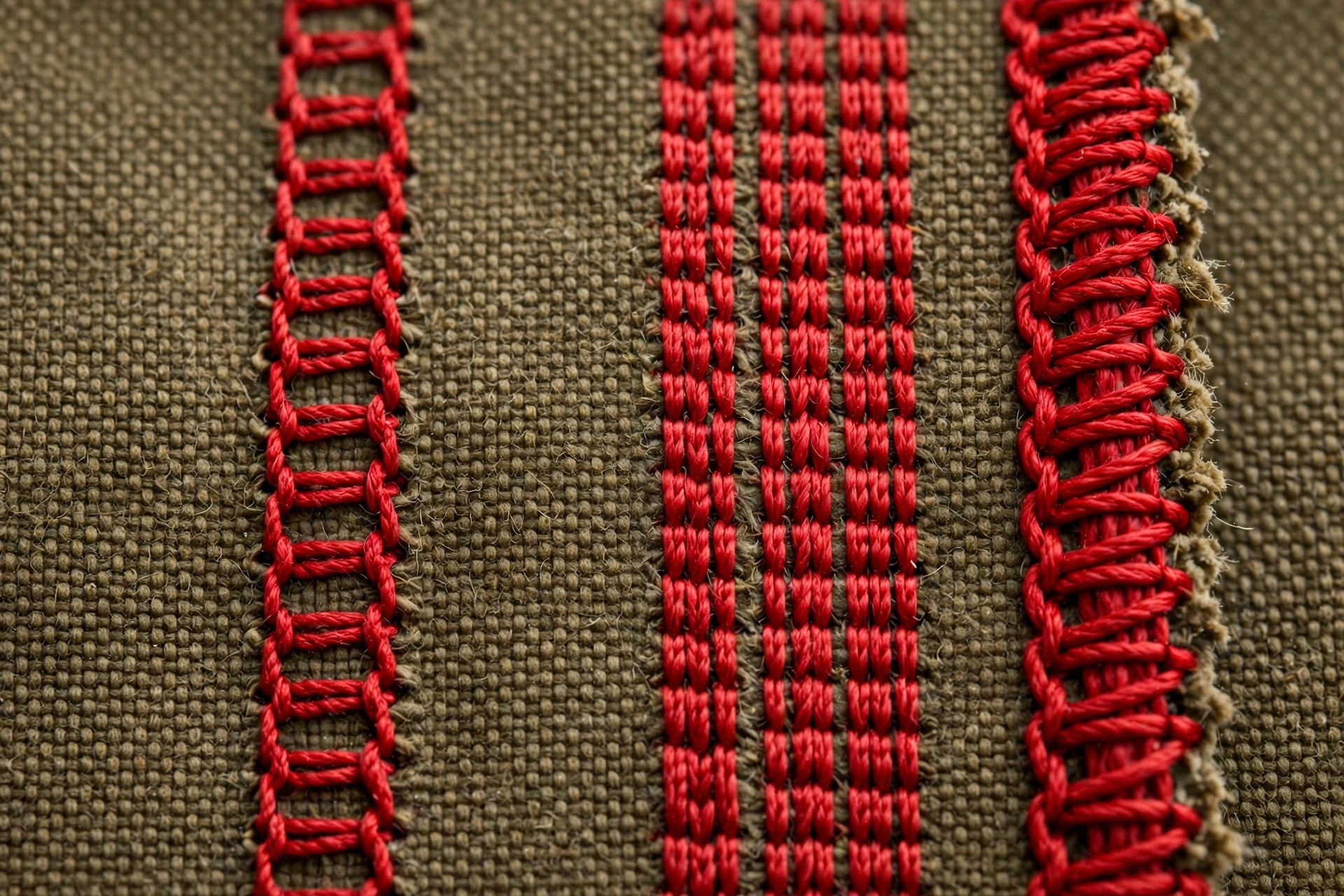 Stitch 519 — Six-Thread Safety StitchThe widest, heaviest safety stitch — a 401 seam row with a two-needle 514 finish.
Stitch Class 600 — Flat Stitches
Cover stitches whose threads cover both surfaces of the material, so seams lie flat with no ridge underneath. The finishing family of modern knitwear and sportswear.
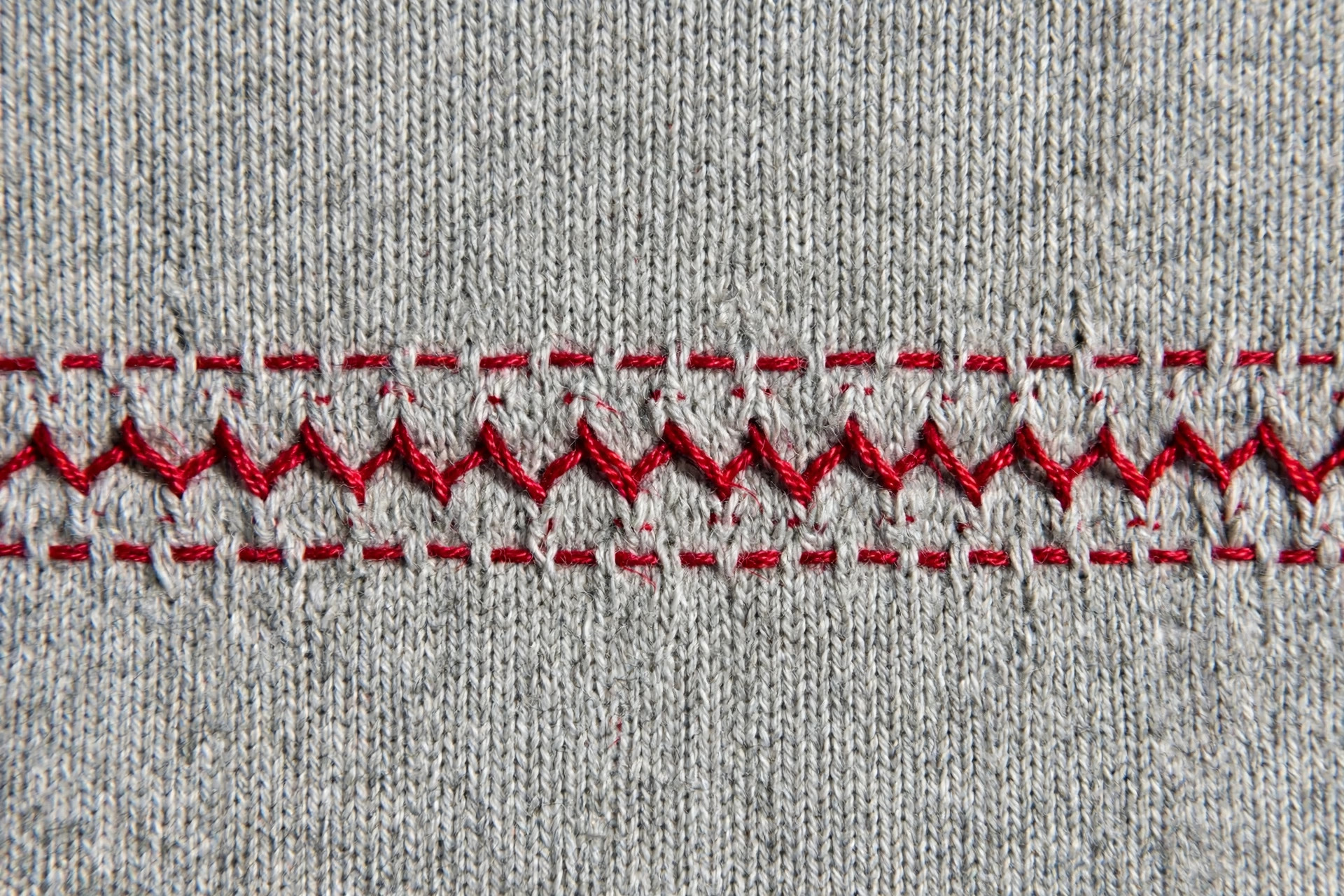 Stitch 602 — Two-Needle Bottom Cover StitchFour threads covering both faces — everyday knit hems, bindings and seam covers.
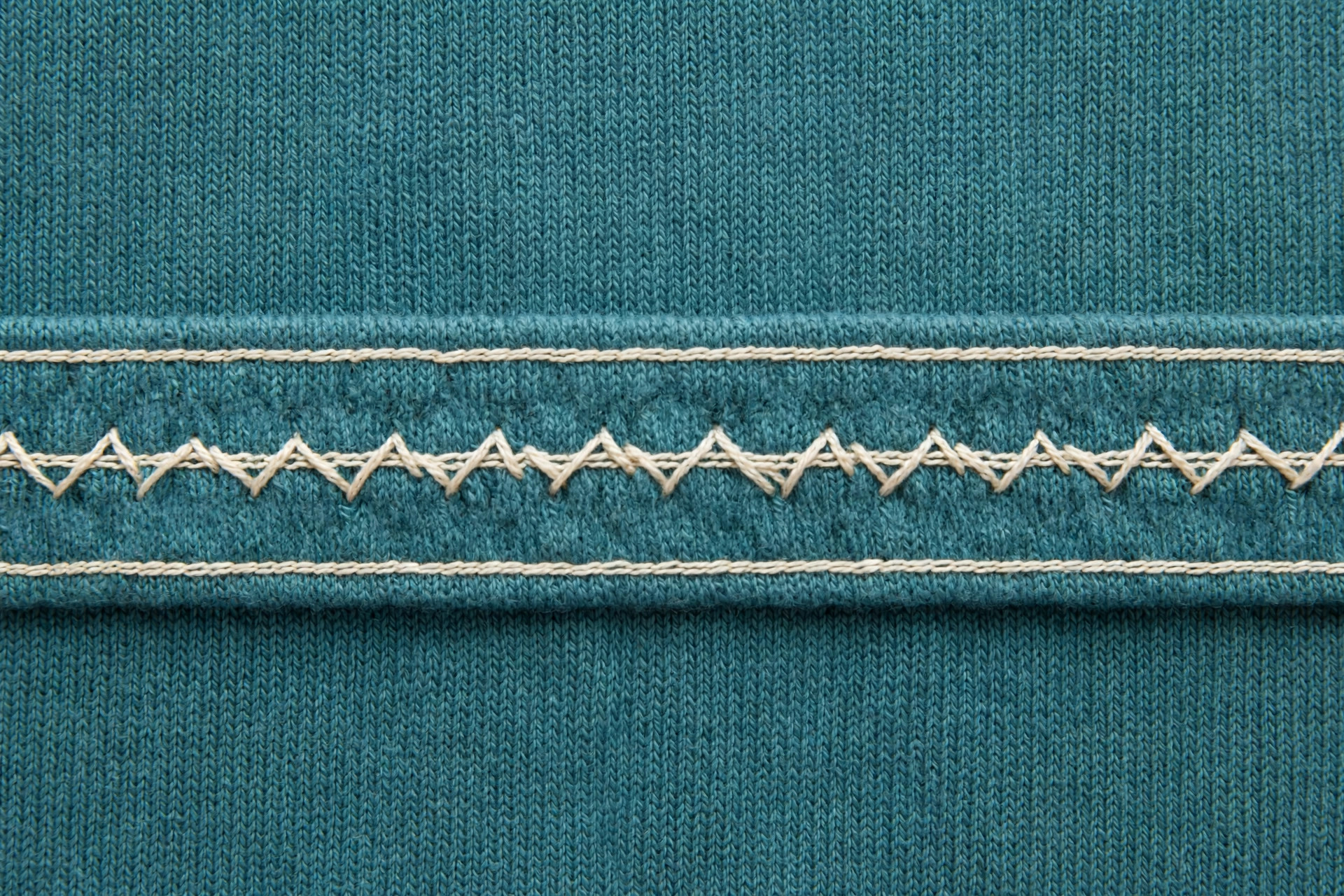 Stitch 605 — Three-Needle Top-and-Bottom Cover StitchFive threads across three needle rows — wide, flat cover for lap seams and heavier knits.
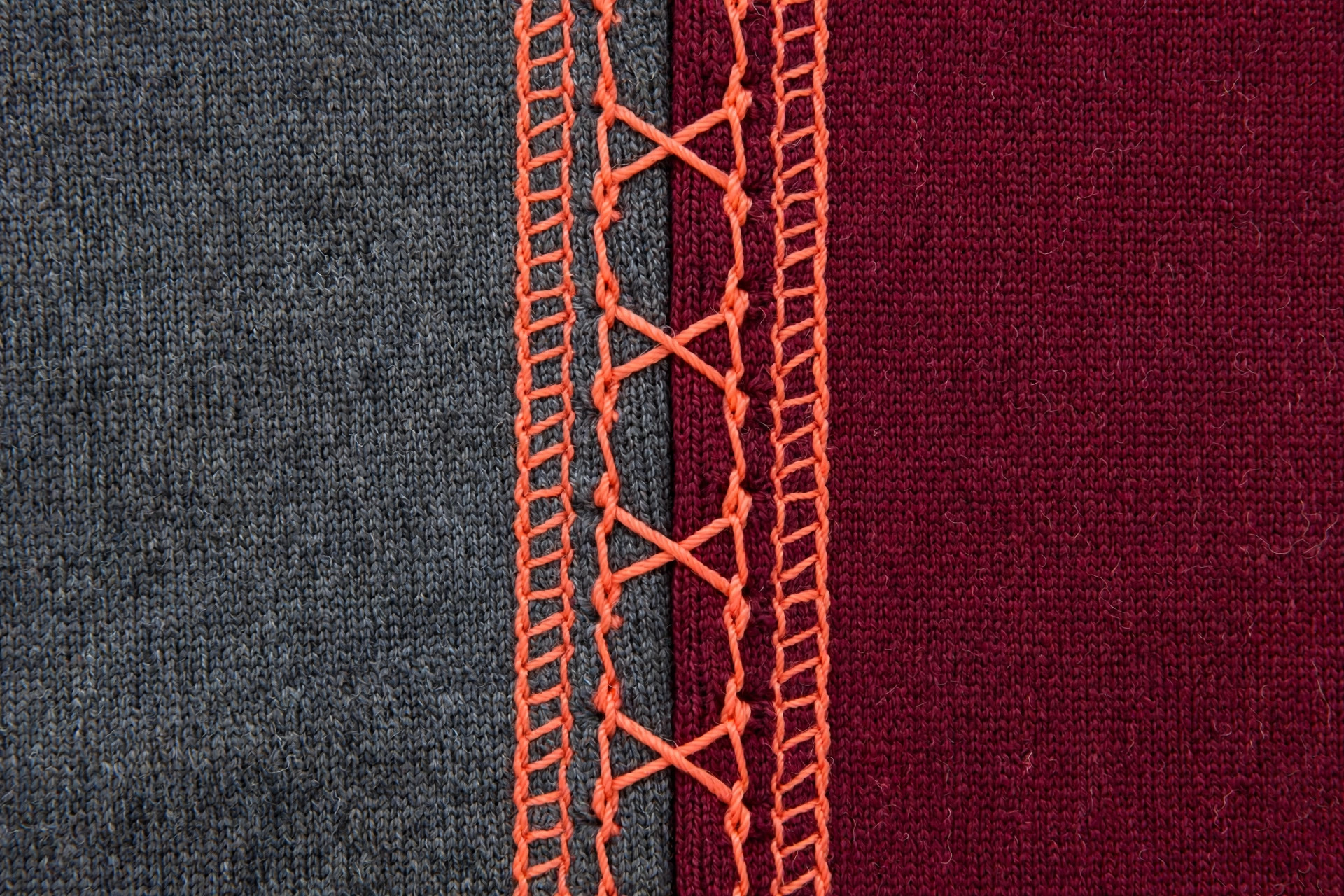 Stitch 607 — Flatlock StitchButts two panels edge to edge with almost no thickness — the comfort seam of sportswear.
Buttonholes & Button Sewing
Not a numbered class of their own — these are the automatic-cycle operations that finish a garment's closures, sewn with the chain stitches of Class 100 and the lock stitches of Class 300. Each page covers the five examples in the classification's inventory.
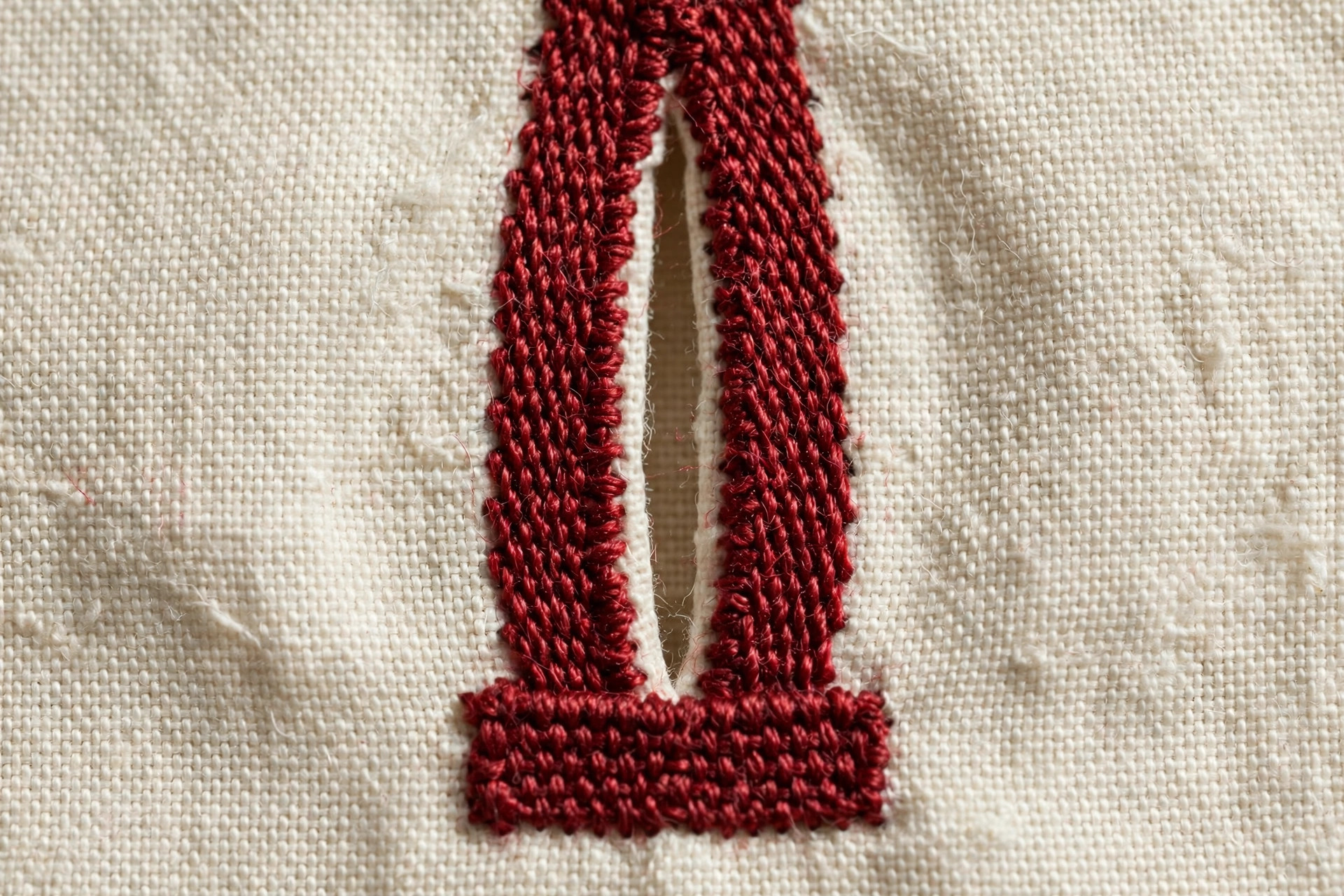 Buttonholes — Chain, Lock & Keyhole
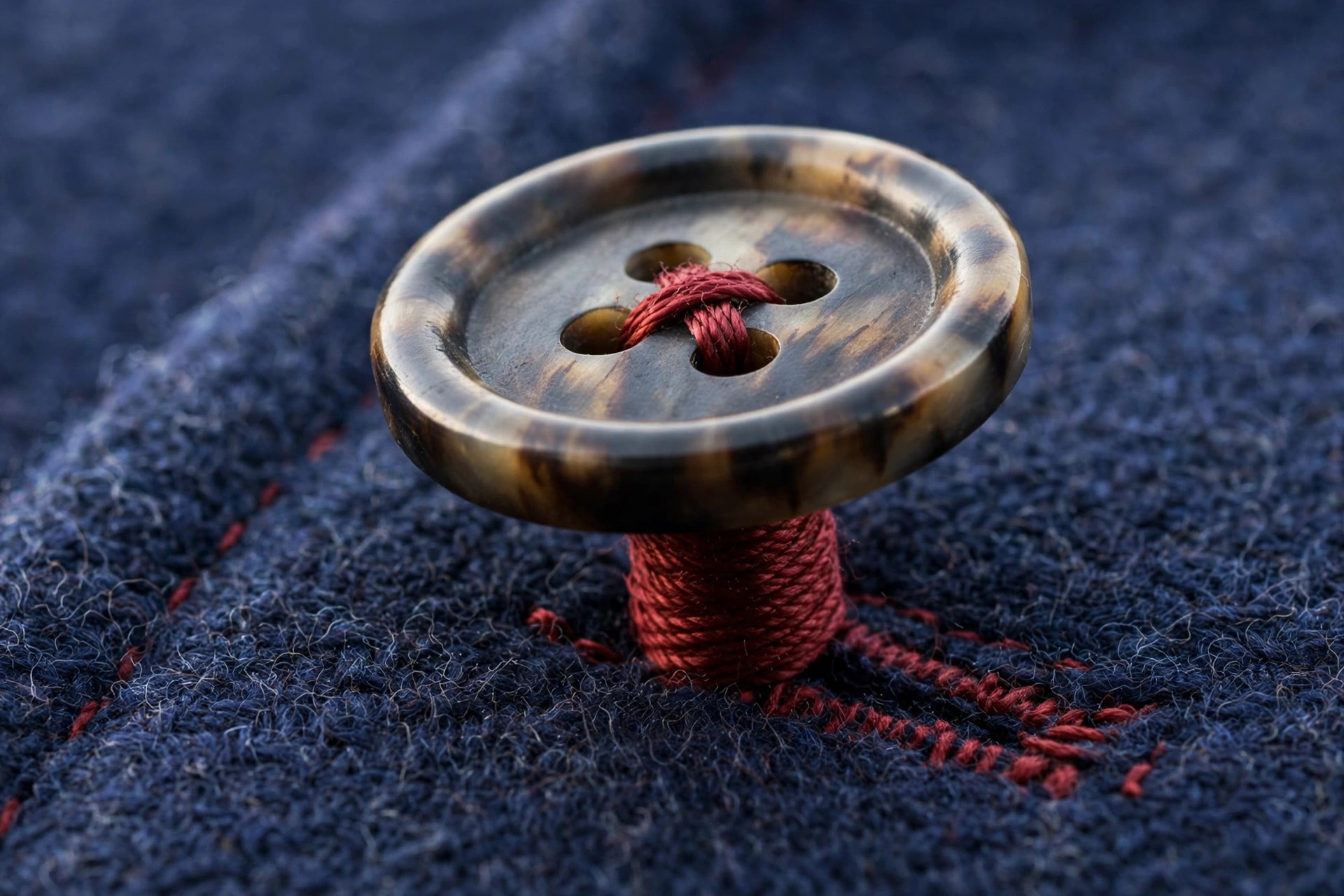 Button Sewing — Two-Hole, Four-Hole & Shank
Now Explore Seams
A stitch is only half of a sewn join — the other half is the seam: how the pieces of material themselves are arranged before the stitch goes through them. The seam side of this guide classifies 218 seam types in six lettered classes, from the plain superimposed seam of an ordinary shirt to bound, flat, edge-finishing and ornamental constructions. Once you have identified a garment's stitch here, explore the seam classes to identify its construction, too.
More to Explore
Stitch and seam classifications follow ASTM D-6193, Standard Practice for Stitches and Seams. Diagrams on these pages are original Apparel Search drawings.