Stitch 503 · Class 500 Overedge
Stitch 503 — Two-Thread Overedge
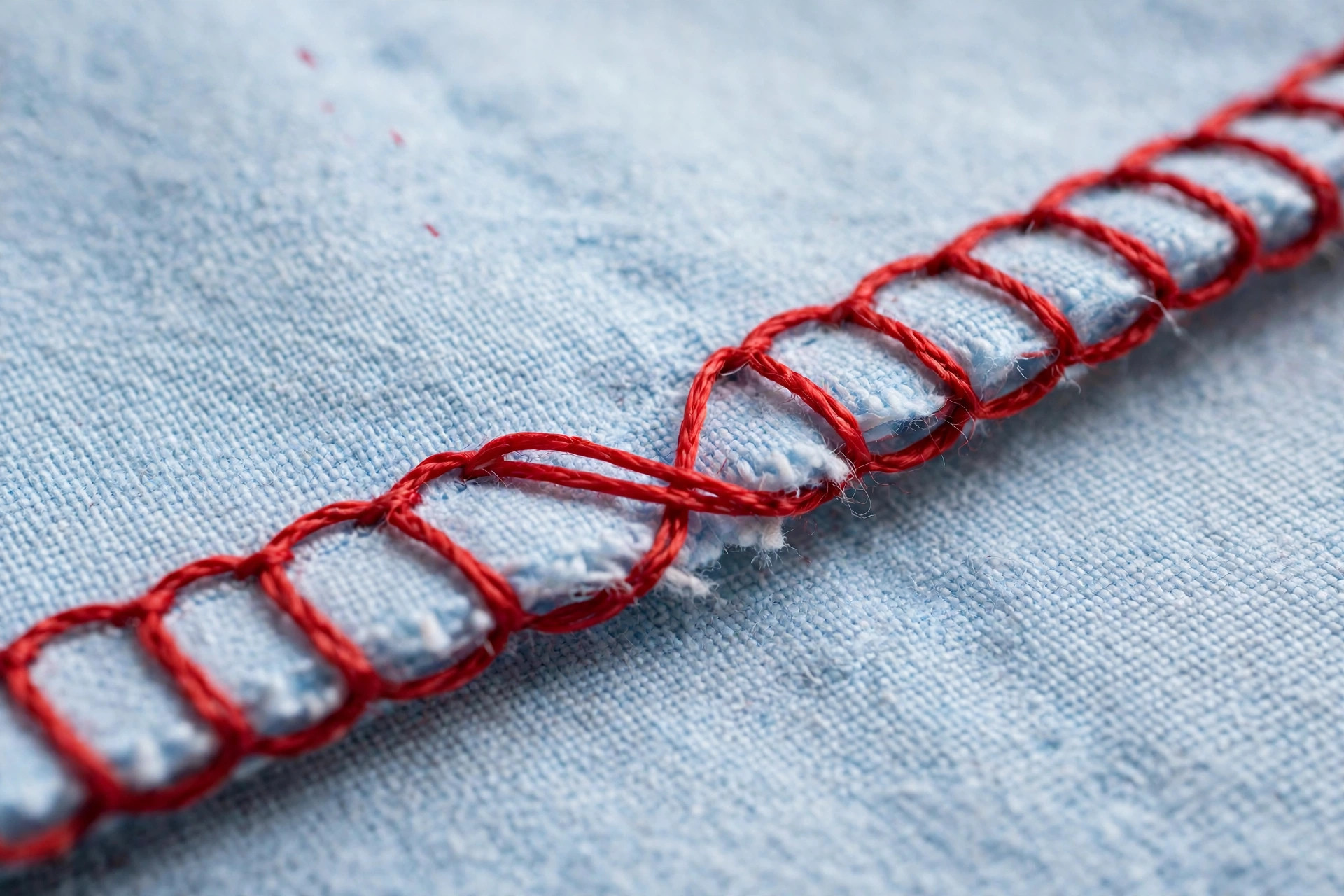
Stitch 503 is the two-thread overedge stitch: one needle thread and one looper thread that interloop so the threads cross over right on the cut edge of the material, forming a light purl along it. It is the simplest true overedge stitch in regular use — an edge finish first, and only the lightest of seams.
What Stitch 503 Is
Stitch 503 belongs to the single-needle serging group of Class 500. A single needle works close to the edge of one or two plies while one looper — a lower looper that does the work of two in the three-thread types — carries its thread up and over the edge to meet the needle thread. Their meeting point, the crossover, sits on the edge itself, and the row of crossovers forms the stitch's purl.
Because only two threads are involved, 503 lays the least thread on an edge of any overedge type: the finish is flat, soft and economical, with an open, slightly lacy character when it is sewn in fine thread. That lightness is both its virtue and its boundary — it tidies and protects an edge beautifully, but it was never meant to carry a garment's structural seams on its own.
How Stitch 503 Forms
- The machine's knives trim the edge clean, and the single needle carries its thread down through the material a short distance — the bite — from the edge.
- Below the material, the looper picks up the needle-thread loop and carries its own thread up and around the cut edge to the top surface.
- On the next needle descent, the needle passes through the looper thread held out over the edge, and the looper in turn catches the new needle loop: needle thread and looper thread interloop, crossing over on the edge.
- The stitches are drawn up so the crossover — the purl — sits exactly on the edge, neither pulled to the top nor dragged underneath.
- The feed advances the work by one stitch length and the cycle repeats, building the continuous light wrap.
Formation diagram for stitch 503, shown in cross-section at the fabric edge. Red is the needle thread; dark blue is the looper thread. Illustration by Apparel Search.
The Threads
| Element | Detail |
|---|---|
| Thread count | 2 — one needle thread, one looper thread. |
| Needle thread | Runs along the top of the material and through it at each penetration; it is one of the two threads that cross on the edge. |
| Looper thread | Travels beneath the material, wraps up around the cut edge, and interloops with the needle thread on the edge — doing alone what upper and lower loopers share in stitch 504. |
| Typical threads | Fine spun polyester or cotton-wrapped threads for serging; soft texturized threads where the finish touches skin; decorative threads for visible edging. |
| Thread use | The lowest in Class 500 — roughly a third less thread than a comparable 504 finish, which is why it is chosen for high-volume light edging. |
What It Looks Like
On the top, stitch 503 shows a row of short needle-thread segments running to the edge, where each meets the looper thread in a small crossover. The edge itself wears a slim, open purl — you can see the fabric between the wraps, unlike the fully covered edge of a 504.
On the underside, the looper thread runs back along the material from the edge, mirroring the top in a lighter key. The whole finish is noticeably flatter and softer than a three-thread serge, and the seam it makes can hinge open almost flat — pretty, but a warning that it is not built for load.
Strengths and Limits
Strengths
- The flattest, softest edge finish in the class — no bulky ridge inside a garment.
- Economical: two threads and the lowest thread consumption of any overedge type.
- Excellent for blindhemming on knits, where its light wrap holds a folded edge without weight.
- Gentle on delicate fabrics that a heavier stitch would mark or distort.
Limits
- Weak as a seam: the single interlooping row grins open under strain and is not a structural stitch.
- The least secure finish in the class — pull the looper thread from the end and the stitching can run back.
- Open coverage: on fabrics that fray heavily, yarns can escape between the wraps.
Where Stitch 503 Is Used
Stitch 503 is a finishing stitch. It serges the raw edges of single plies before they are seamed by other means, finishes the inside edges of unlined woven garments where a flat finish matters, and — its signature job — blindhems knit garments, holding a folded hem edge with a wrap light enough not to ridge the face. It also edges lightweight scarves, veiling and lingerie parts, and finishes the cut edges of loosely woven fabrics gently enough not to distort them.
Typical fabrics: light cottons and linens, chiffon and georgette, fine jersey, lace and other sheers — anywhere the finish must disappear. The moment an edge must also be a seam, step up to stitch 504; where the two rows must be truly independent, the safety stitches 515 and 516 take over — 515 in fact uses this very stitch as its finishing row.
Common Questions
Is stitch 503 strong enough to seam a garment?
Not on its own, except for the lightest duty. It is an edge-finishing stitch: its single row of interloopings opens under strain (seam grin) and can run back if the looper thread is pulled. Structural seams belong to 512, 514 or the safety stitches.
What is the crossover on stitch 503?
With only one looper thread, the needle thread and the looper thread meet and interloop directly on the cut edge of the material rather than across the top and underside. That meeting point is the crossover, and the row of crossovers forms the purl you see along the edge.
Why is stitch 503 used for blindhemming?
Its wrap is light and flat, so a folded hem edge can be secured without a bulky ridge showing through to the face of a knit garment — and it uses very little thread doing it.
Sources & the photographic reference
The stitch and seam classifications on this page follow ASTM D-6193, Standard Practice for Stitches and Seams, explained here in Apparel Search's own words with original diagrams. For photographs of these stitches and seams, see the Garmenco guide's Class 500 page — Professor Bernard Kahn's photographic guide, which Apparel Search has recommended for years and continues to link as the photo reference for this classification. Our guide is the permanent on-site companion to it.
Related Stitches
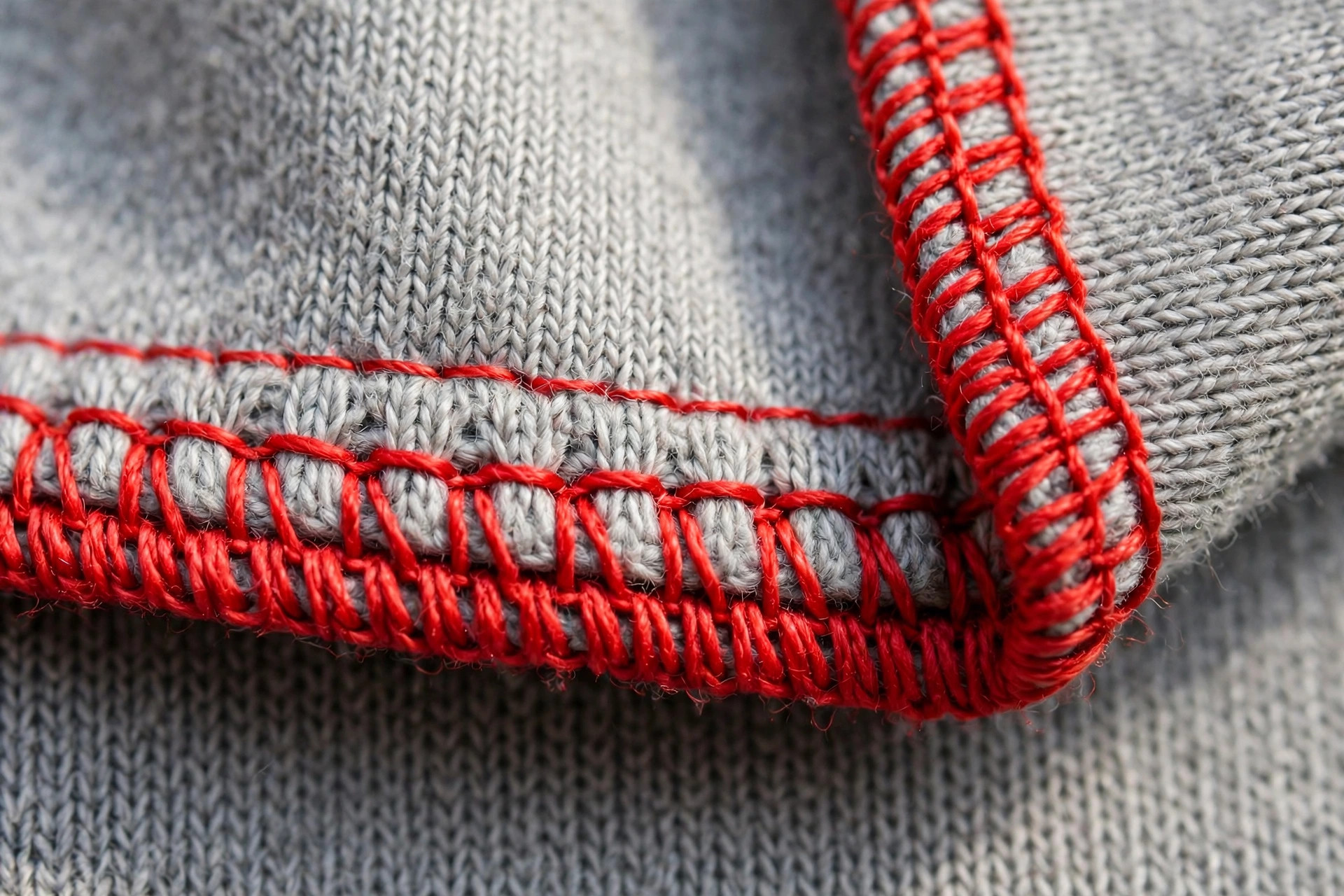 Stitch 504 — Three-Thread OveredgeThe standard serger stitch — one needle, two loopers.
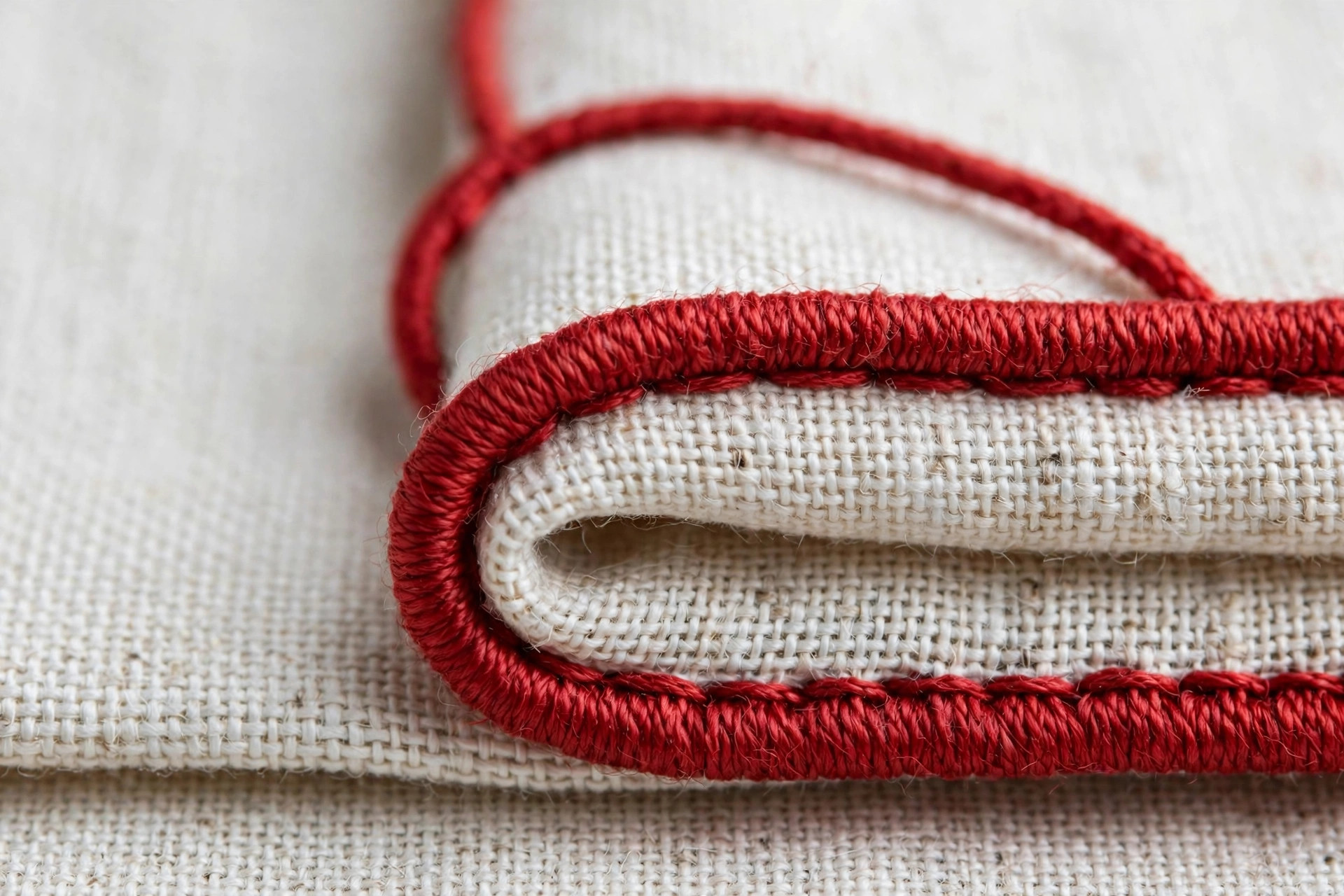 Stitch 505 — Double-Purl OveredgeThree threads building a doubled purl cord on the edge.
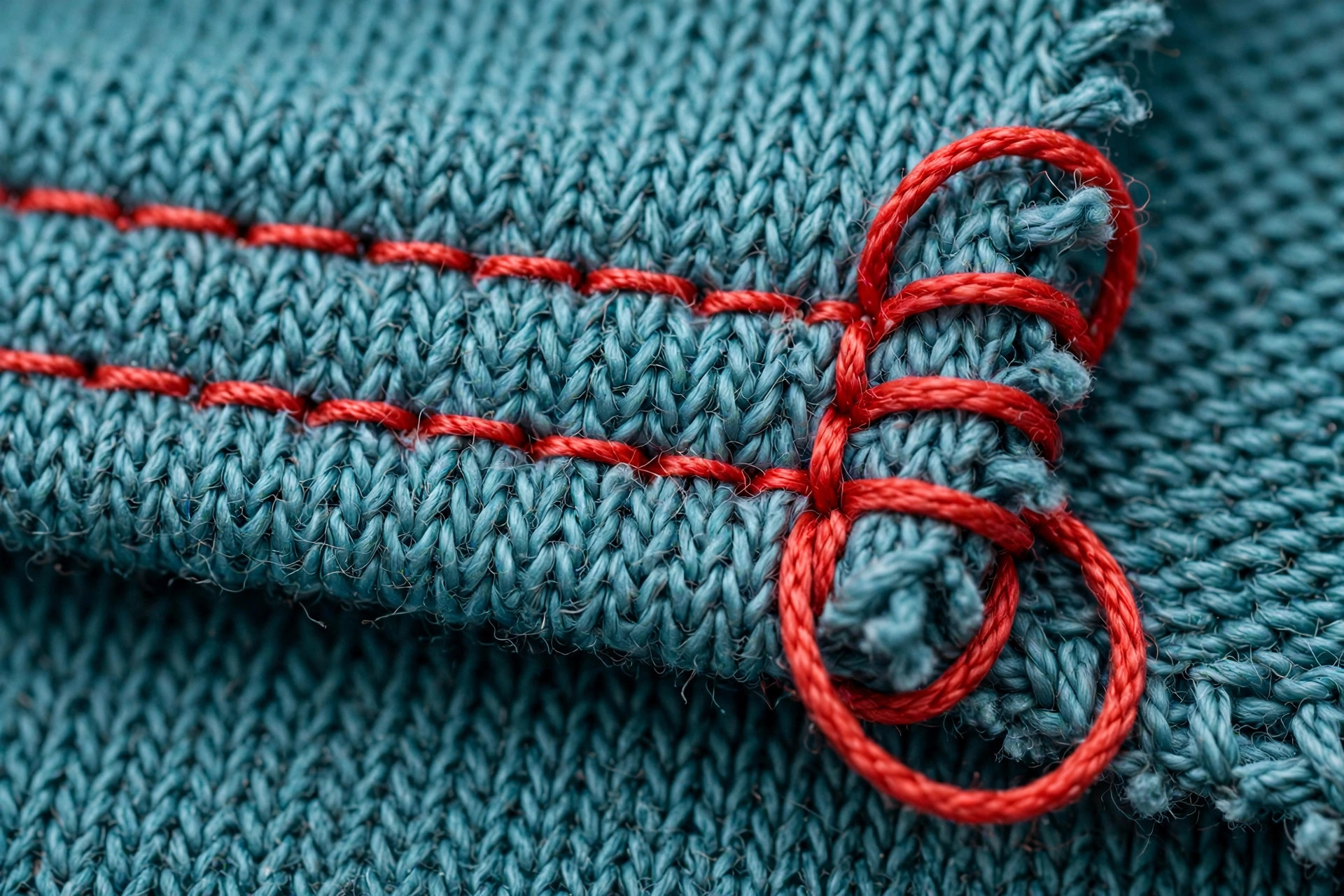 Stitch 512 — Mock Safety StitchFour threads imitating a safety stitch in one pass.
 Stitch 514 — Four-Thread OveredgeTwo needles, two loopers: the strong knitwear seam stitch.
 Stitch 515 — Four-Thread Safety StitchA 401 chainstitch row plus a 503 overedge row, sewn together.
 Stitch 516 — Five-Thread Safety StitchA 401 chainstitch row plus a 504 overedge row, sewn together.
 Stitch 519 — Six-Thread Safety StitchA 401 chainstitch row plus a wide 514 overedge row.
 Stitch Class 500 — OveredgeThe whole class: how overedge stitches form, and how all eight types compare.
More to Explore
Search Apparel Search
Stitch and seam classifications follow ASTM D-6193, Standard Practice for Stitches and Seams. Diagrams on these pages are original Apparel Search drawings.