Stitch 516 · Class 500 Overedge
Stitch 516 — Five-Thread Safety Stitch
Stitch 516 is the five-thread safety stitch: a 401 chainstitch seam row and a 504 overedge finishing row sewn independently in one pass — two threads for the chainstitch, three for the overedge. It is the standard safety stitch of the woven-garment industry.
What Stitch 516 Is
Stitch 516 is the safety stitch the industry means when it says safety stitch without qualification. Like 515, it sews two complete, independent stitch systems in a single machine pass: a type 401 chainstitch row set in from the edge does the seaming, while an overedge row at the trimmed edge does the finishing. The difference is the finishing row: 516 uses the full type 504 three-thread overedge, whose two loopers wrap the edge completely.
That fuller wrap is why 516, not 515, became the woven standard. Woven fabrics fray; workwear, trousers and denim are laundered hard and abraded constantly; the edge finish has to be a complete envelope, not a light binding. Paired with a chainstitch seam that has its own threads and its own life, 516 gives the woven trades their benchmark: seam and finish, independent, in one pass, at production speed.
How Stitch 516 Forms
- The work feeds under two needle systems; the knives trim the edge to the overedge line an instant before it is sewn.
- The chainstitch needle descends set in from the edge, and the chain looper interloops with its thread beneath the material — the 401 seam row forms, stitch by stitch.
- Simultaneously the overedge needle descends at the edge while its upper and lower loopers wrap the trimmed edge and interloop with the needle thread and each other — the 504 finishing row forms.
- The two rows share nothing but the fabric and the feed: separate needles, separate loopers, separate thread cones.
- Both rows advance together in register, so every inch of seam is backed by an inch of finished edge.
Formation diagram for stitch 516, shown in cross-section at the fabric edge. Red is the needle thread; dark blue is the looper thread. Illustration by Apparel Search.
The Threads
| Element | Detail |
|---|---|
| Thread count | 5 — two for the 401 row (needle + chain looper), three for the 504 row (needle + upper looper + lower looper). |
| Chainstitch threads | The seam system: a straight needle-thread line on top, chain loops beneath. This row carries the garment's structural load. |
| Overedge needle thread | Anchors the 504 wrap in the material at the edge. |
| Overedge looper threads | Upper and lower loopers wrap the edge completely and interloop on it in the 504 purl — the fullest standard edge finish. |
| Typical threads | Core-spun polyester-cotton or spun polyester throughout; heavier counts for denim and workwear duty. |
| Thread use | High — five cones feeding two formations; the cost is accepted for the two-row security. |
What It Looks Like
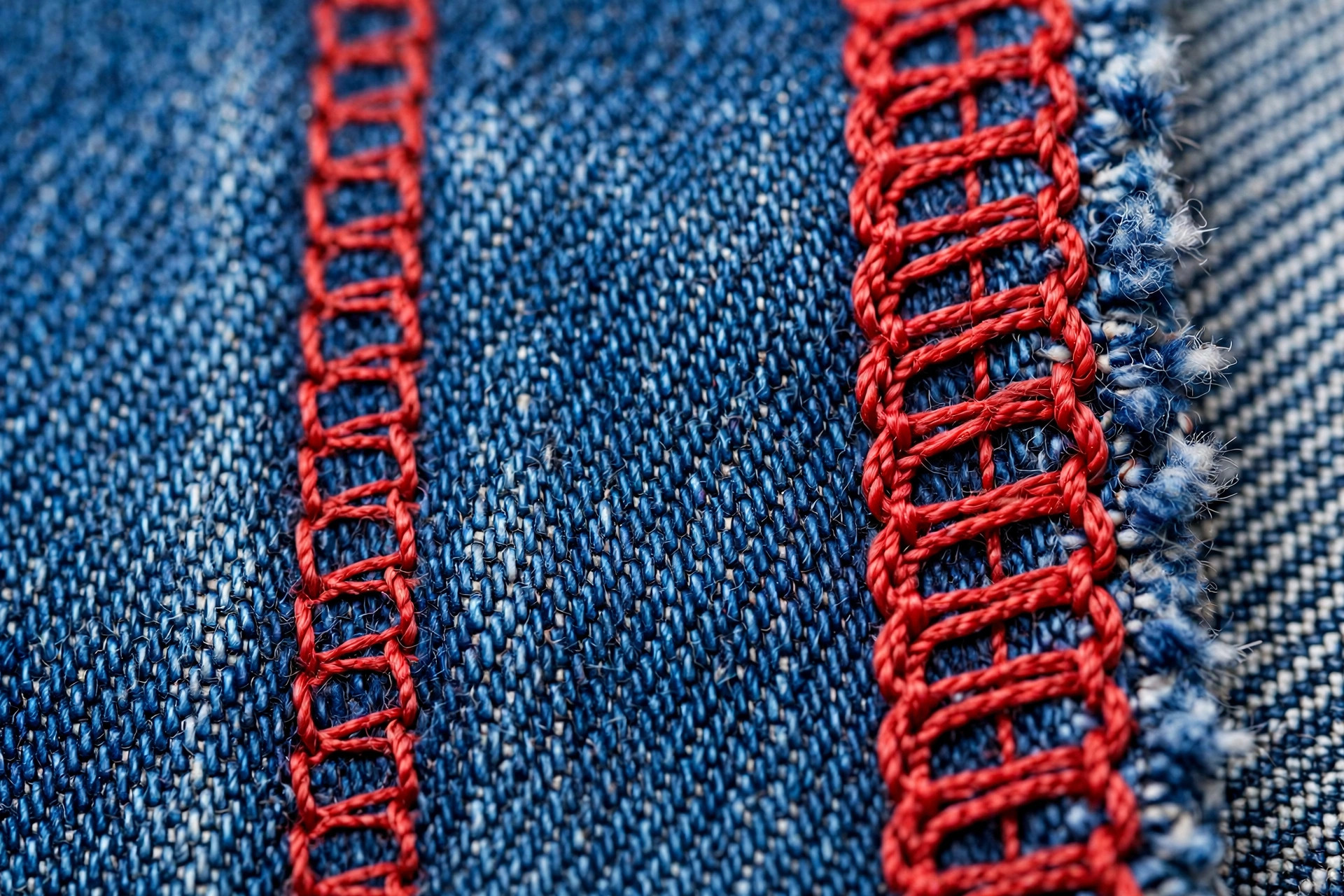
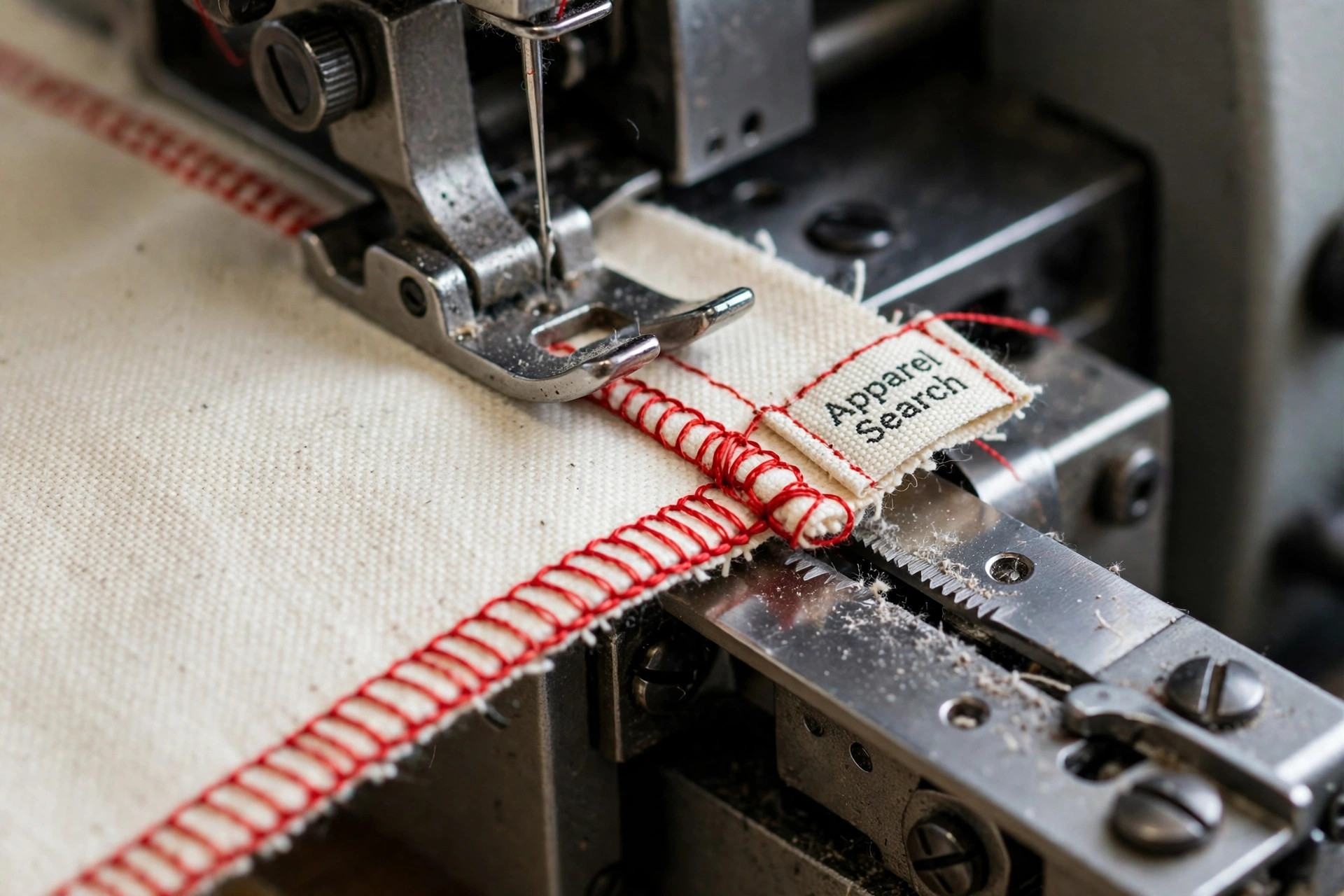
On the top, stitch 516 shows the family likeness at its clearest: a straight chainstitch seam line, then a band of clean fabric, then the overedge row with its needle line and the dense 504 wrap covering the edge completely, purl sitting on the edge.
On the underside, chain loops run beneath the seam line and the lower looper's diagonals cover the edge zone — two systems, plainly separate. A 516 seam pressed open lies flat and clean, each allowance edge already finished: this is the inside view of most better trousers and workwear.
Strengths and Limits
Strengths
- True safety with the fullest standard finish: independent seam row plus a complete 504 edge envelope.
- The woven industry's benchmark — machines, parts and operator skill are available everywhere.
- Seam allowances press open flat, each edge already finished: no second operation.
- Strong, durable and repairable: either row can be re-sewn without disturbing the other.
Limits
- Five threads and two formations: the highest running cost of the common safety stitches.
- The combined width is bulky for very light fabrics — 515 is the gentler choice there.
- The chainstitch row can run back from a broken looper thread if seam ends are not secured.
Where Stitch 516 Is Used
Stitch 516 is the default construction seam for woven garments: trousers and chinos, jeans and denim jackets (in the seams that are not felled), workwear and uniforms, shorts, skirts and casual jackets are sewn with it throughout the industry. Anywhere a woven seam must be strong, its allowance must lie open and finished, and the garment must survive years of laundering, 516 is the specification writers reach for.
Typical fabrics: denim, twill, gabardine, canvas, poplin and other medium-to-heavy wovens; stable knits also take it well. Drop to 515 for light fabrics, rise to 519 for the widest duty — and compare the 512 mock safety only where its single-formation economy is honestly enough.
Common Questions
Which two stitches make up stitch 516?
A type 401 chainstitch (two threads) forms the seam row, and a type 504 three-thread overedge (three threads) forms the finishing row — five threads in total, sewn simultaneously but independently.
Why is stitch 516 used on trousers and workwear?
Because it does three things at once: it seams with an independent chainstitch row, it finishes the allowance edges completely with the 504 wrap, and it leaves allowances that press open flat. The seam also survives failure of the finish — the definition of a safety stitch.
What is the difference between stitch 516 and stitch 515?
The finishing row. 515 finishes with the light two-thread 503 overedge (four threads total); 516 finishes with the full three-thread 504 overedge (five threads total), which covers and protects the edge more completely — the better choice for fraying wovens and hard-wearing garments.
Sources & the photographic reference
The stitch and seam classifications on this page follow ASTM D-6193, Standard Practice for Stitches and Seams, explained here in Apparel Search's own words with original diagrams. For photographs of these stitches and seams, see the Garmenco guide's Class 500 page — Professor Bernard Kahn's photographic guide, which Apparel Search has recommended for years and continues to link as the photo reference for this classification. Our guide is the permanent on-site companion to it.
Related Stitches
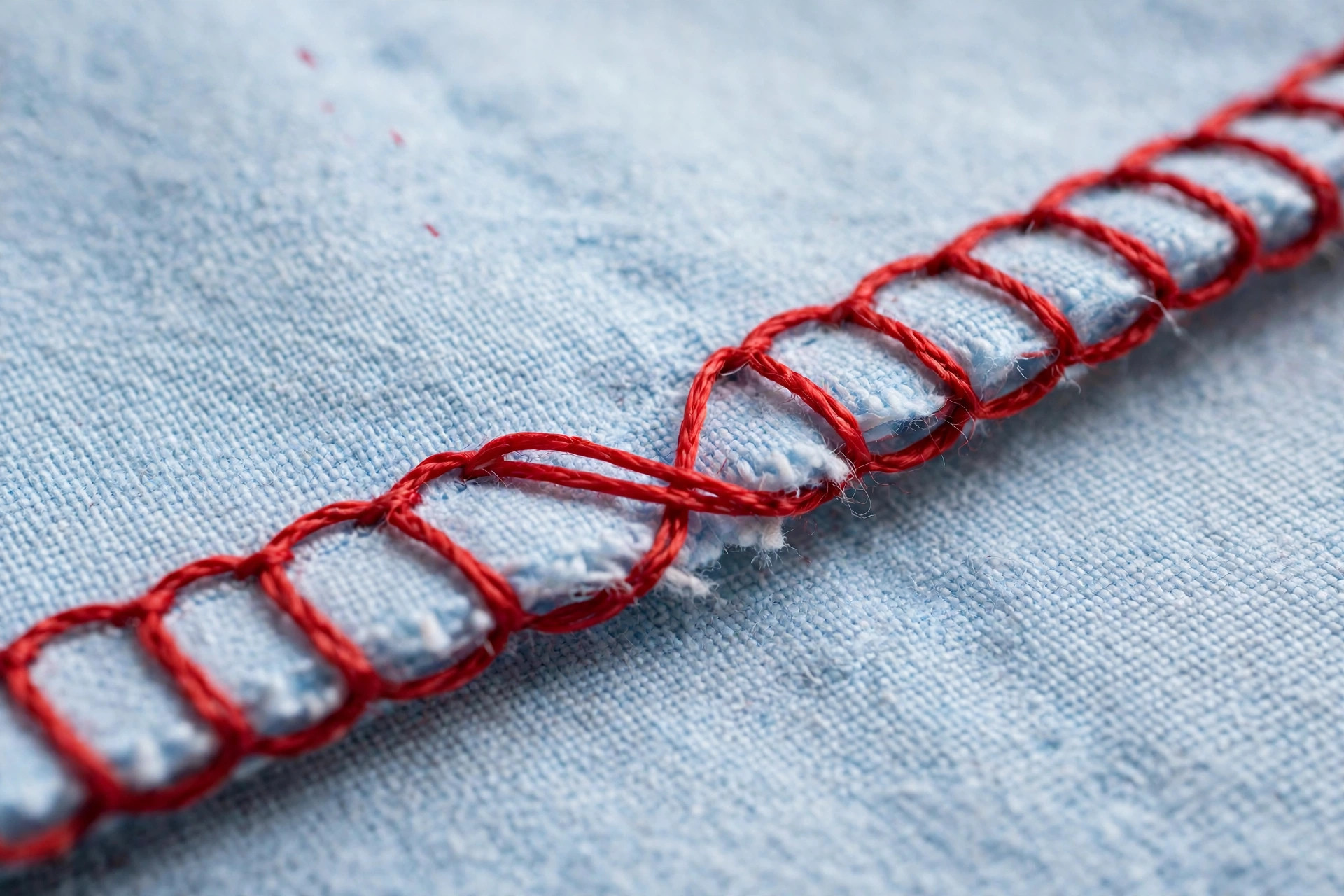 Stitch 503 — Two-Thread OveredgeOne needle, one looper: the lightest edge finish in the class.
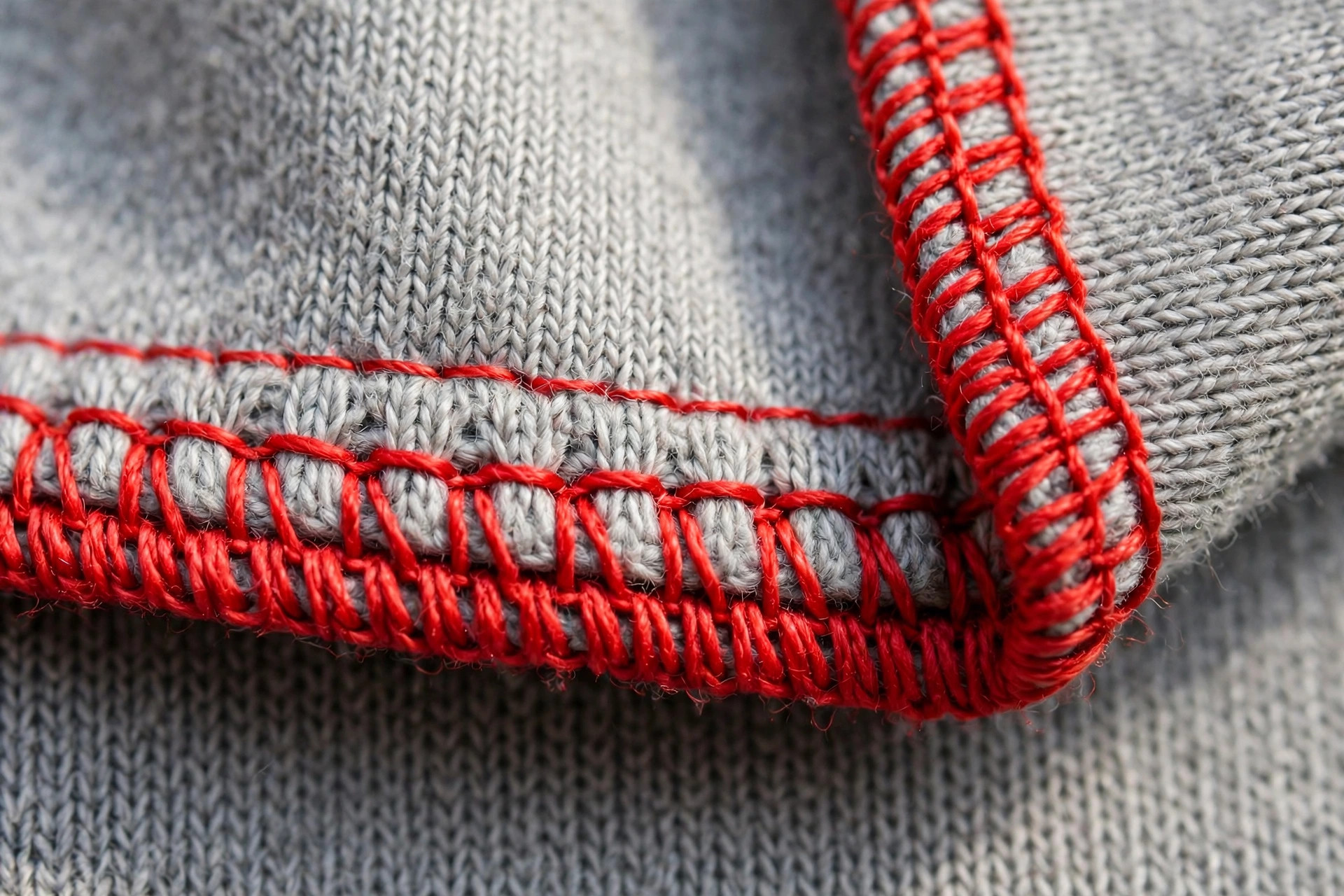 Stitch 504 — Three-Thread OveredgeThe standard serger stitch — one needle, two loopers.
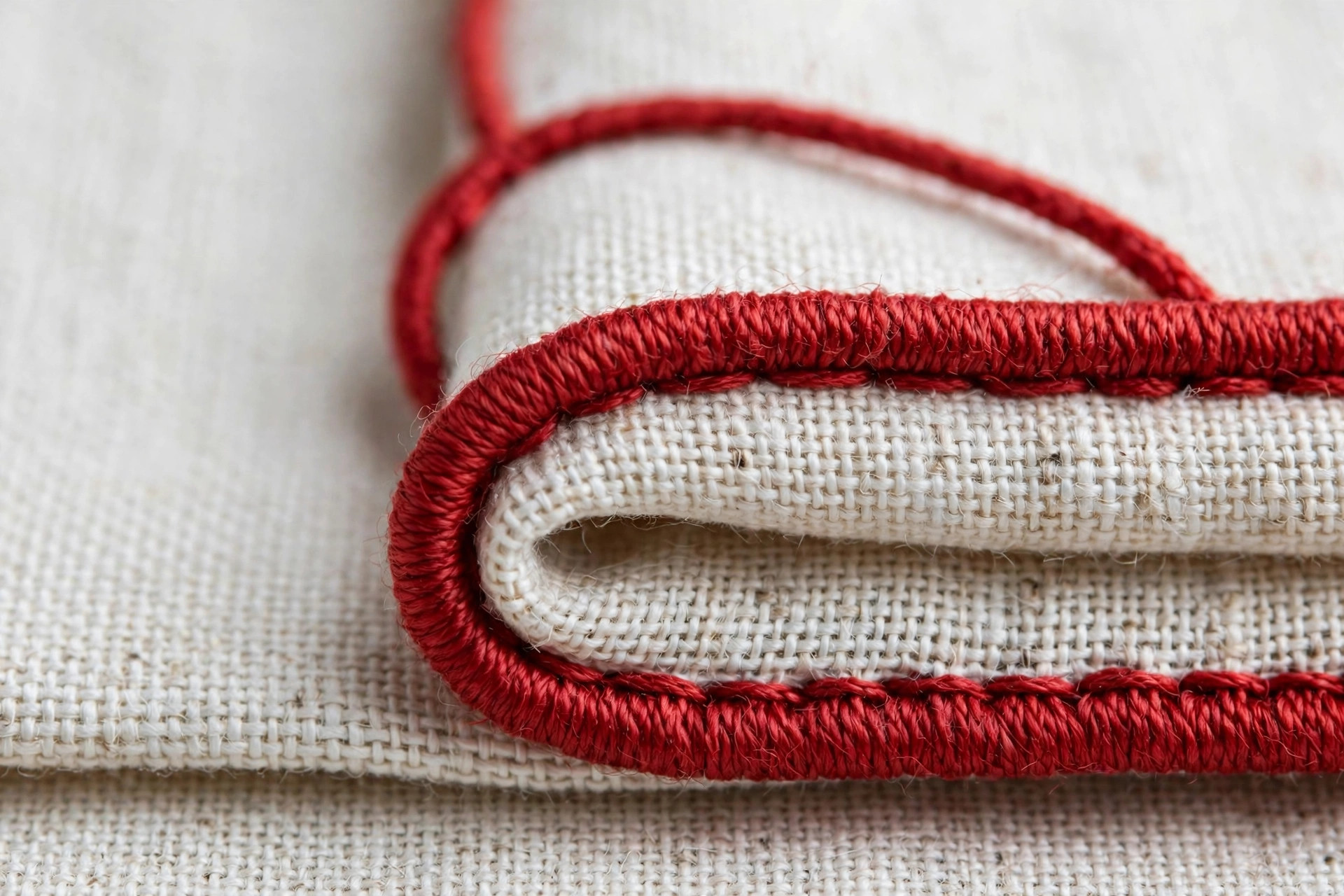 Stitch 505 — Double-Purl OveredgeThree threads building a doubled purl cord on the edge.
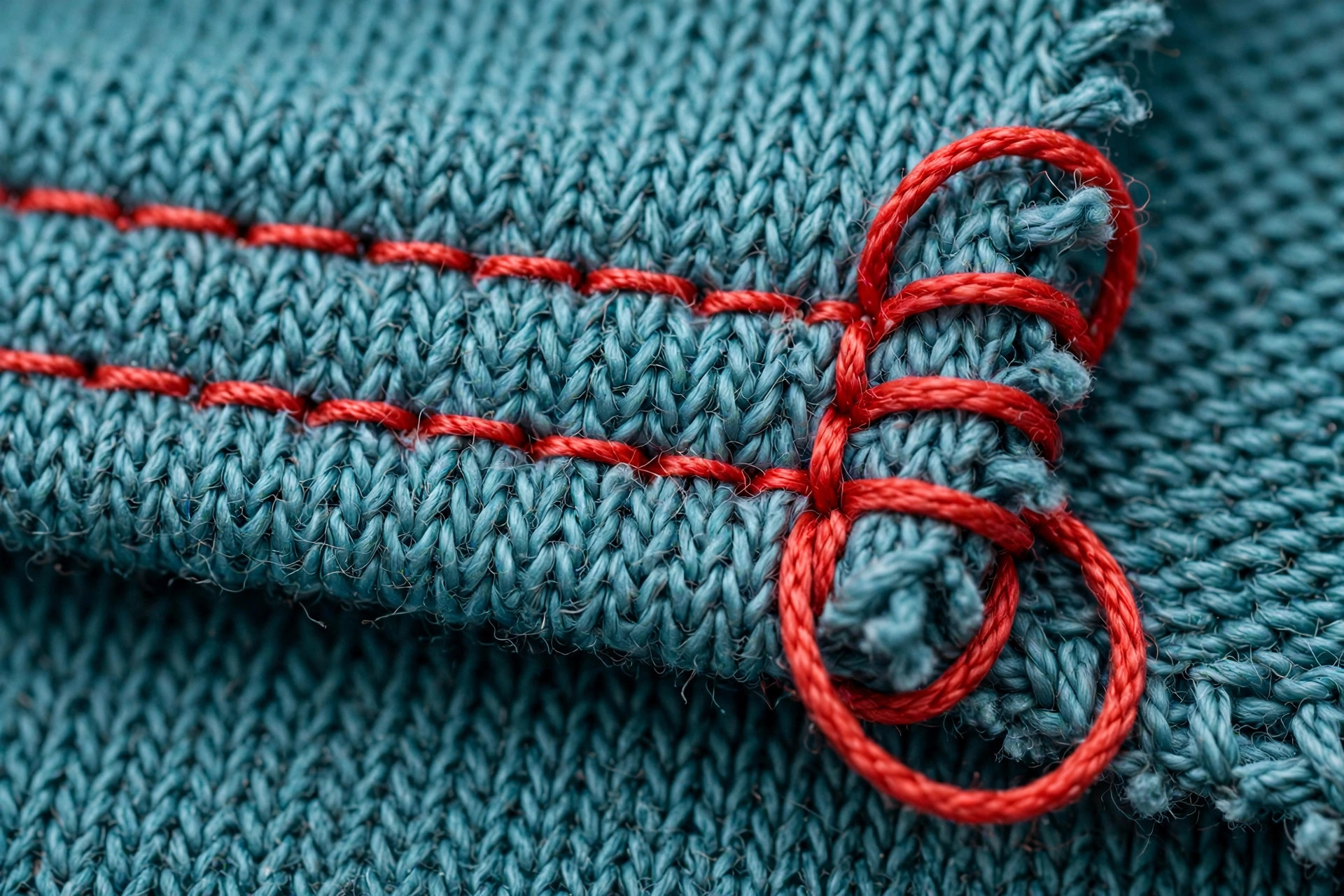 Stitch 512 — Mock Safety StitchFour threads imitating a safety stitch in one pass.
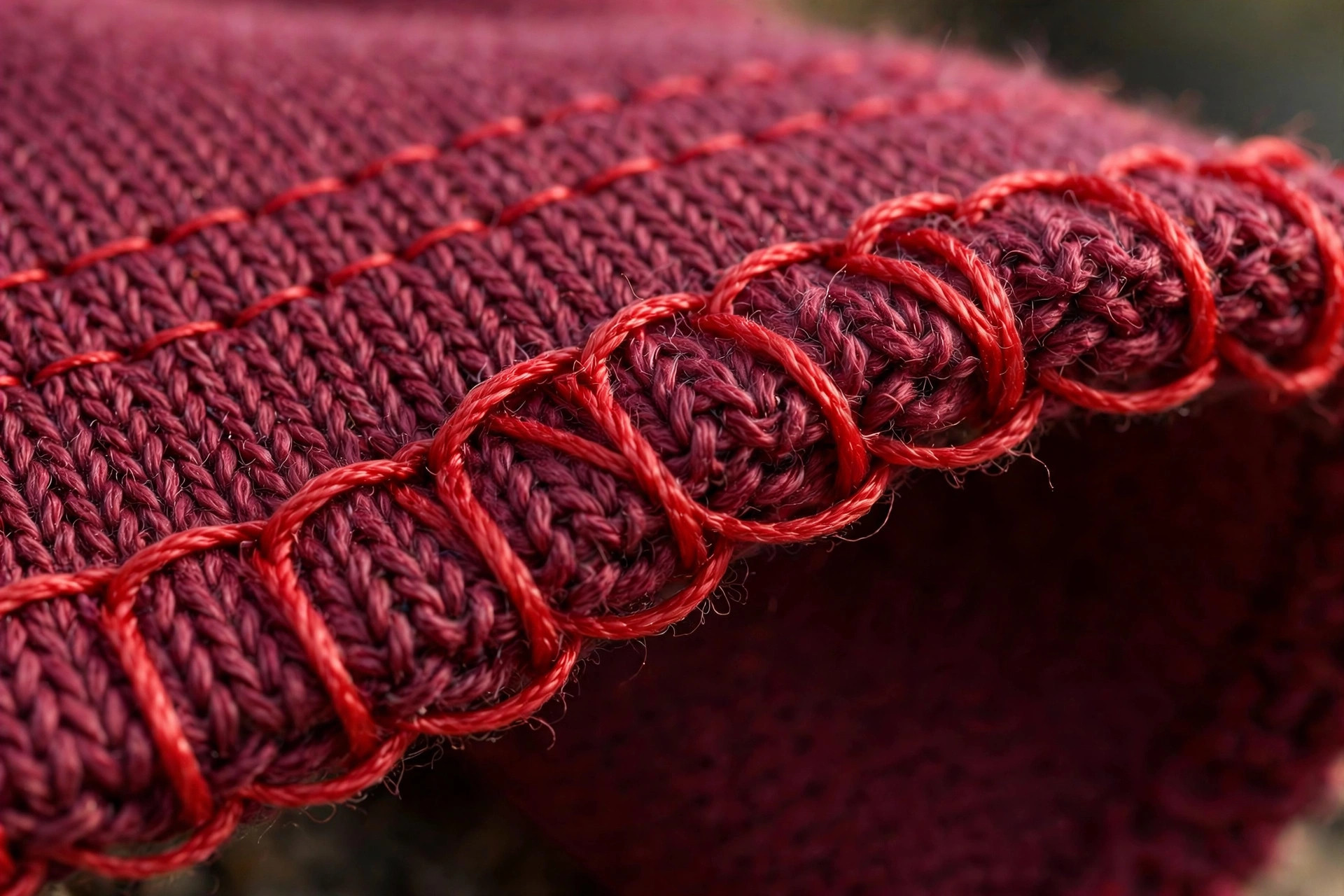 Stitch 514 — Four-Thread OveredgeTwo needles, two loopers: the strong knitwear seam stitch.
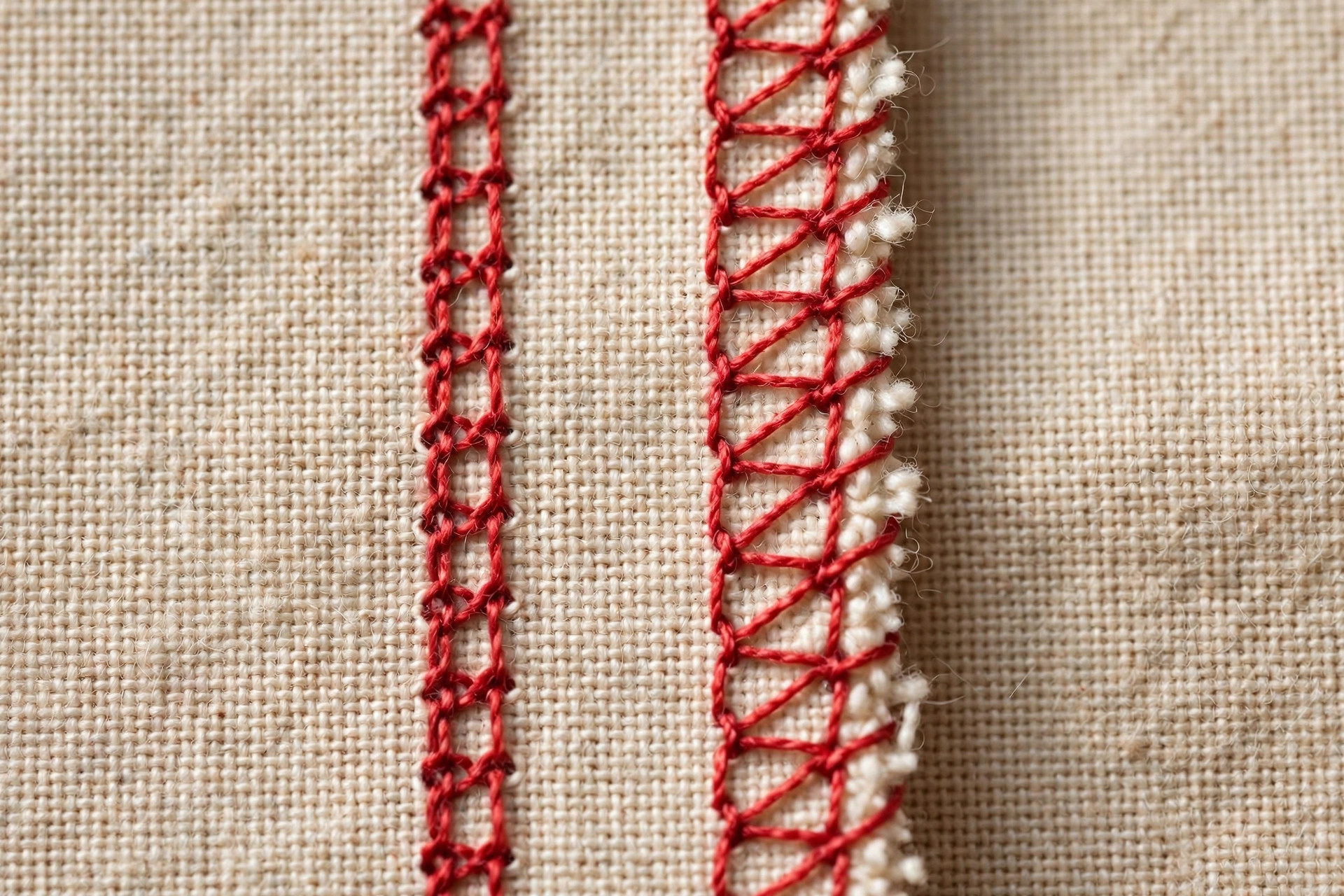 Stitch 515 — Four-Thread Safety StitchA 401 chainstitch row plus a 503 overedge row, sewn together.
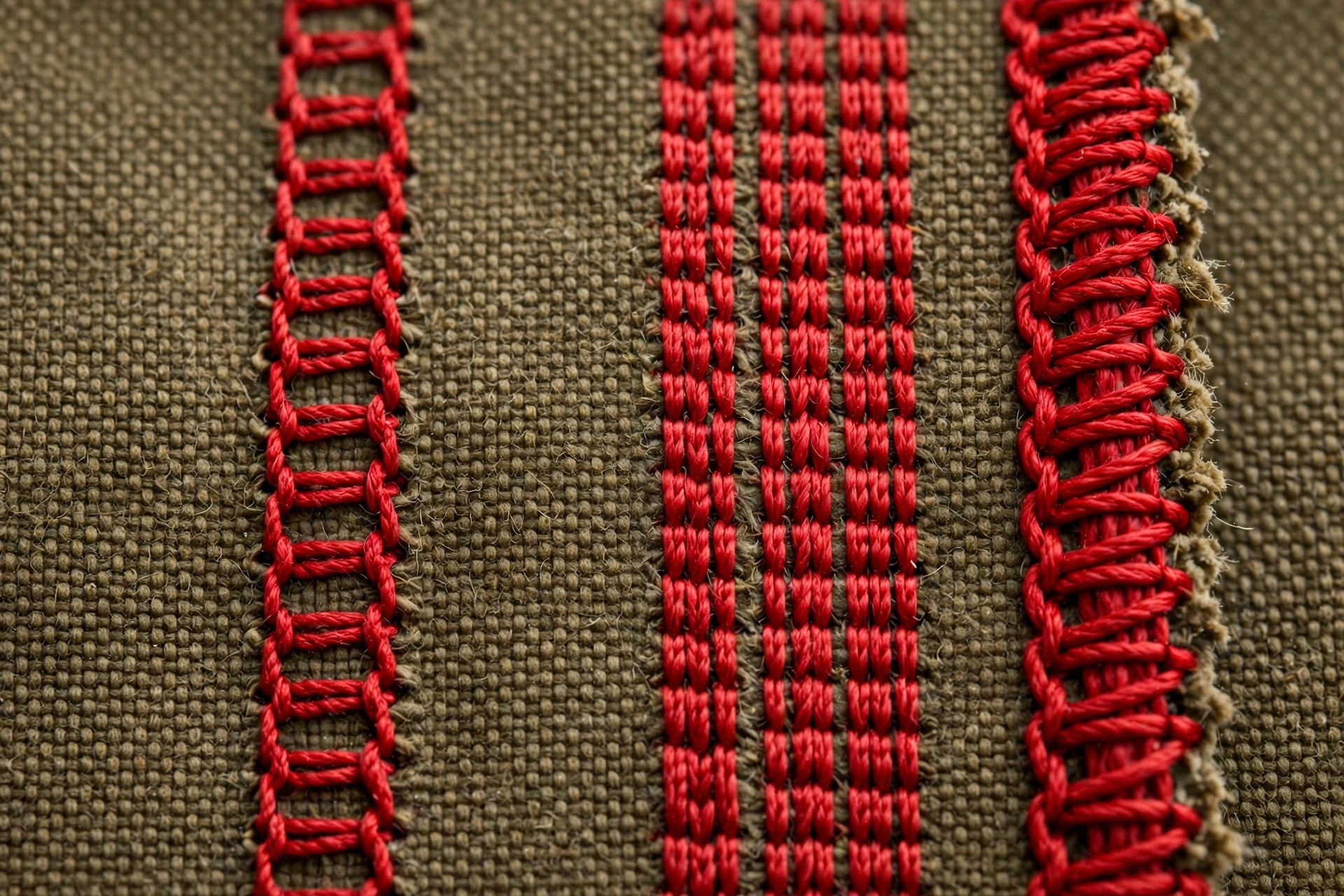 Stitch 519 — Six-Thread Safety StitchA 401 chainstitch row plus a wide 514 overedge row.
 Stitch Class 500 — OveredgeThe whole class: how overedge stitches form, and how all eight types compare.
More to Explore
Search Apparel Search
Stitch and seam classifications follow ASTM D-6193, Standard Practice for Stitches and Seams. Diagrams on these pages are original Apparel Search drawings.