Stitch 514 · Class 500 Overedge
Stitch 514 — Four-Thread Overedge
Stitch 514 is the four-thread overedge stitch: two needle threads and two looper threads, with both needle threads entering the upper looper loop, forming one compact, balanced overedge seam. It is the four-thread overlock of home and factory alike — the standard strong seam for knit garments.
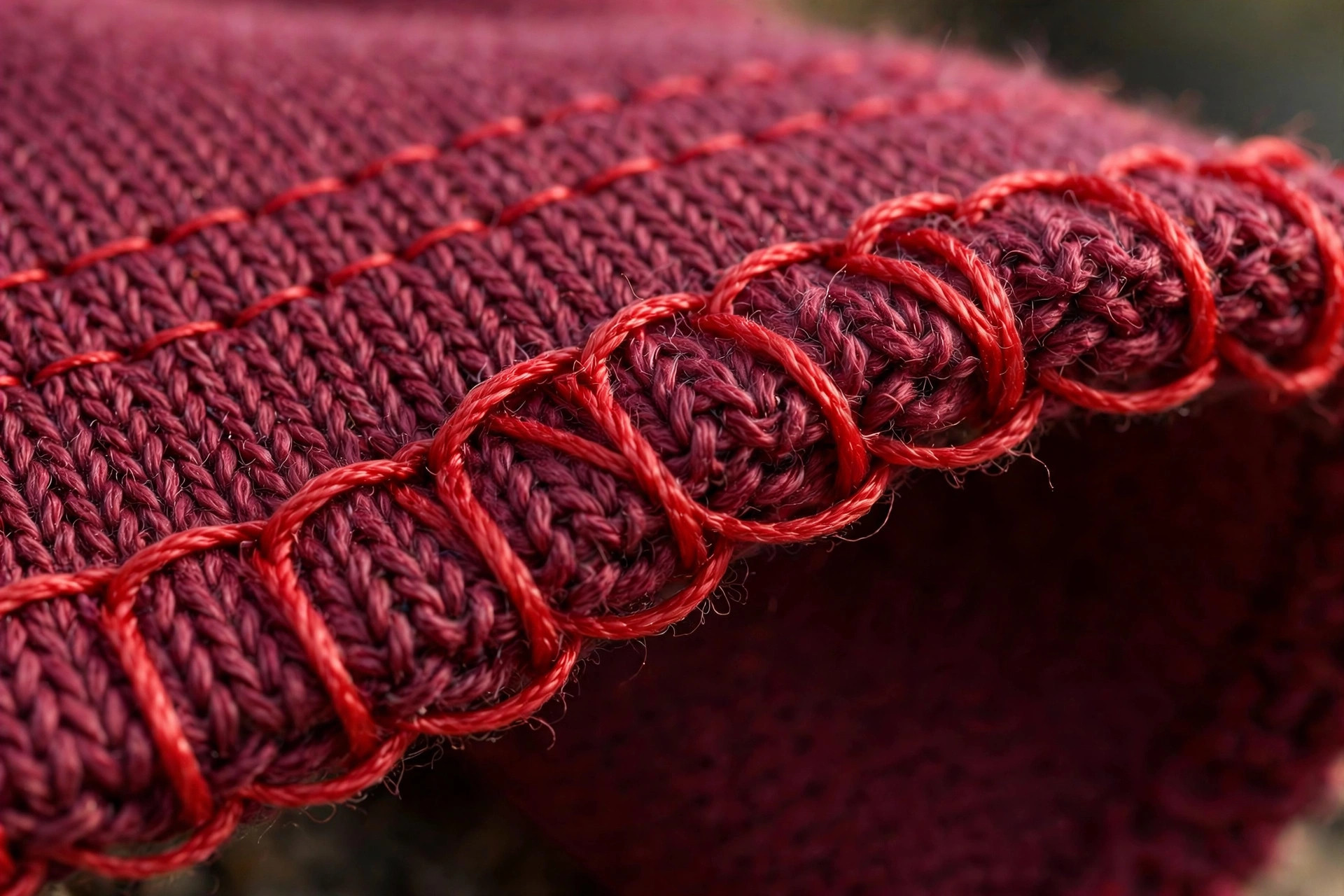
What Stitch 514 Is
Stitch 514 takes the 504 formation and gives it a second needle. The two needles work side by side within the bite, and — the detail that defines the type — both needle threads pass through the loop of the upper looper thread as the stitch forms. The two needle rows and the edge wrap are therefore locked together at every stitch into a single, symmetrical unit.
The practical result is the seam most knit clothing is actually sewn with: stronger than 504 because two needle rows share the load, stretchy because the looper paths are long, neat because the formation is balanced, and well-behaved on the machine — 514 chains off cleanly at the end of a seam, one reason production sewers generally prefer it to its sibling 512.
How Stitch 514 Forms
- The knives trim the edge, and the two needles descend together at their set gauge, each carrying its thread through the material.
- The lower looper passes beneath the material, taking up both needle-thread loops, and carries its thread out to the edge.
- The upper looper lays its thread across the top toward the needles, and both needles — descending again — pass through the upper looper's loop: both needle threads enter the same looper loop, the defining act of stitch 514.
- The lower looper interloops with the upper looper at the edge to form the purl, and all four threads draw up together into the balanced stitch.
- The feed advances the work; at the end of the seam the formation chains off cleanly, ready to be secured in the next seam or with a bartack.
Formation diagram for stitch 514, shown in cross-section at the fabric edge. Red is the needle thread; dark blue is the looper thread. Illustration by Apparel Search.
The Threads
| Element | Detail |
|---|---|
| Thread count | 4 — two needle threads, two looper threads (upper and lower). |
| Needle threads (×2) | Two parallel rows sharing the seam load; both enter the upper looper loop at every stitch, locking the formation together. |
| Upper looper thread | Covers the top between the needle rows and the edge; its loop is the hub both needle threads pass through. |
| Lower looper thread | Covers the underside and interloops with the upper looper on the edge to form the purl. |
| Typical threads | Spun polyester in the needles; texturized polyester in the loopers for softness and coverage on knits. |
| Thread use | High — roughly double a 504 seam's needle-thread use, with looper use to match; the price of the stronger seam. |
What It Looks Like
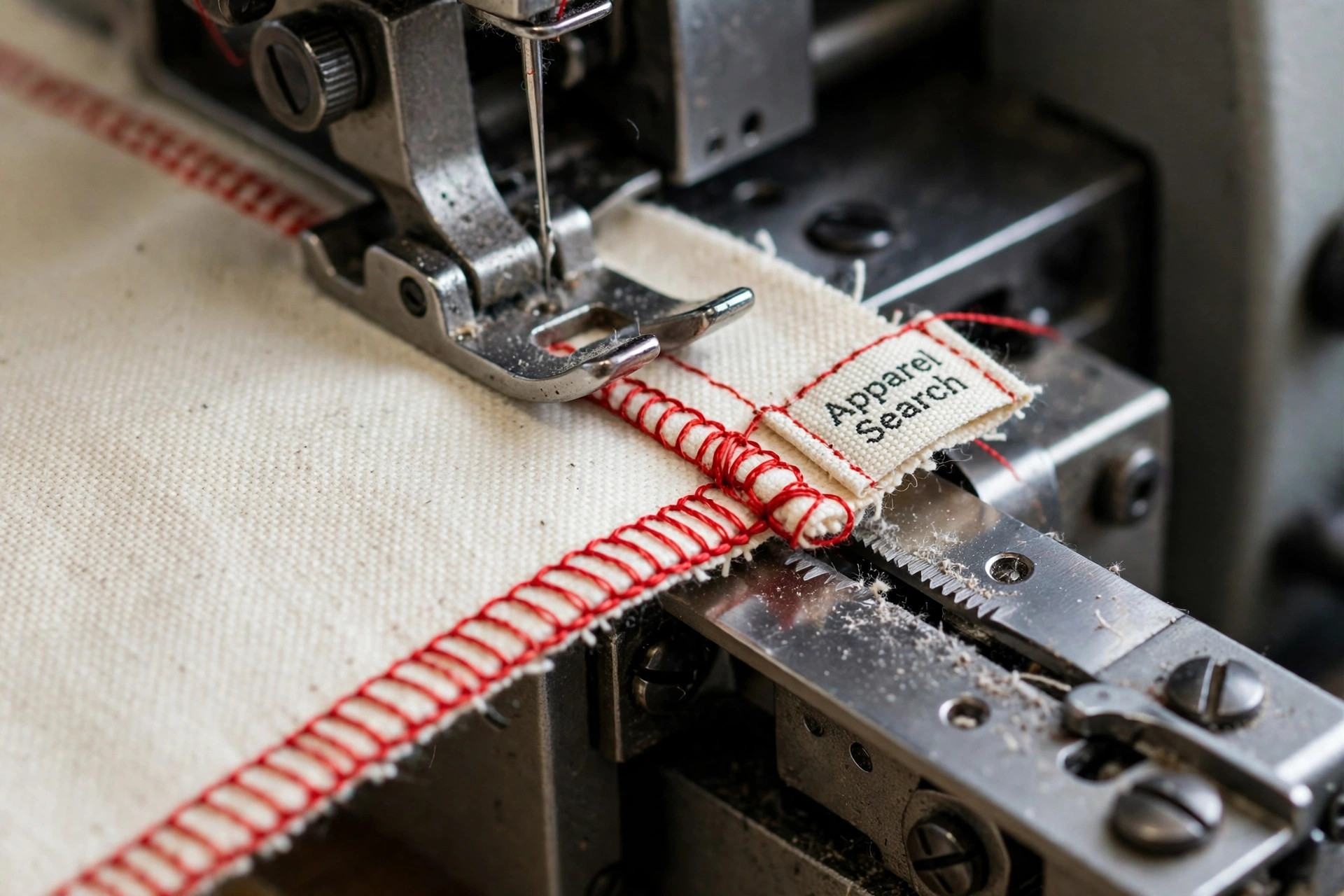
On the top, stitch 514 shows two close parallel needle rows, the upper looper thread filling the ground from the right-hand row to the edge in even diagonals, and a firm purl on the edge. It looks like a 504 that has grown a second seam line — tidy and deliberate.
On the underside, the lower looper's diagonals mirror the top, serving both needle rows in one regular pattern. Compared with 512, the whole stitch is narrower and more compact: the two rows sit closer together and the wrap is tighter to the edge.
Strengths and Limits
Strengths
- A genuine seam, not just a finish: two needle rows give real strength with overedge stretch.
- Balanced and compact — both needle threads lock into the upper looper loop at every stitch.
- Chains off better than 512, so seams start and end cleanly in production.
- The default four-thread formation: parts, needles and know-how exist everywhere.
Limits
- More thread and more bulk than 504; inside a garment the seam is a noticeable ridge.
- Still one formation: damage the looper threads and the whole seam is compromised, unlike a true safety stitch.
- Two needles mean two threads to break — a skipped or broken needle thread shows at once.
Where Stitch 514 Is Used
Stitch 514 is the production seam of the knitwear industry: side seams, shoulder seams and sleeve settings on T-shirts, sweatshirts, hoodies, underwear, leggings, swimwear and activewear are sewn with it by the million, trimming, joining and finishing in one pass. It also seams stretch wovens and light denim casualwear where a lockstitch seam would be too rigid.
Typical fabrics: jersey, interlock, rib, fleece, ponte and other knits; stretch twills and shirtings. For pure edge finishing it is more stitch than needed — 504 is cheaper — and for woven workwear the true safety stitch 516 is the stronger system. The widest safety stitch, 519, uses this very 514 formation as its finishing row.
Common Questions
What is the difference between stitch 514 and stitch 512?
Both use two needles and two loopers. In 514, both needle threads enter the upper looper loop, making one compact balanced seam. In 512, the left needle row is arranged to imitate a separate safety-stitch seam line over a wider bite. In practice 514 is the cleaner production seam and chains off better; 512 is chosen for width and stretch.
Is stitch 514 the four-thread overlock on home sergers?
Yes — the two-needle, four-thread overlock that home machines advertise as their strong seam stitch is 514 (some machines also offer the 512 arrangement). It is the stitch most ready-to-wear knit garments are sewn with.
Can stitch 514 replace a safety stitch?
For knit garments, it usually does the job — the seam and finish in one pass are strong and stretchy. But it is a single formation: a true safety stitch (515, 516, 519) keeps an independent chainstitch seam even if the overedge row is cut or worn away, and woven workwear still specifies it.
Sources & the photographic reference
The stitch and seam classifications on this page follow ASTM D-6193, Standard Practice for Stitches and Seams, explained here in Apparel Search's own words with original diagrams. For photographs of these stitches and seams, see the Garmenco guide's Class 500 page — Professor Bernard Kahn's photographic guide, which Apparel Search has recommended for years and continues to link as the photo reference for this classification. Our guide is the permanent on-site companion to it.
Related Stitches
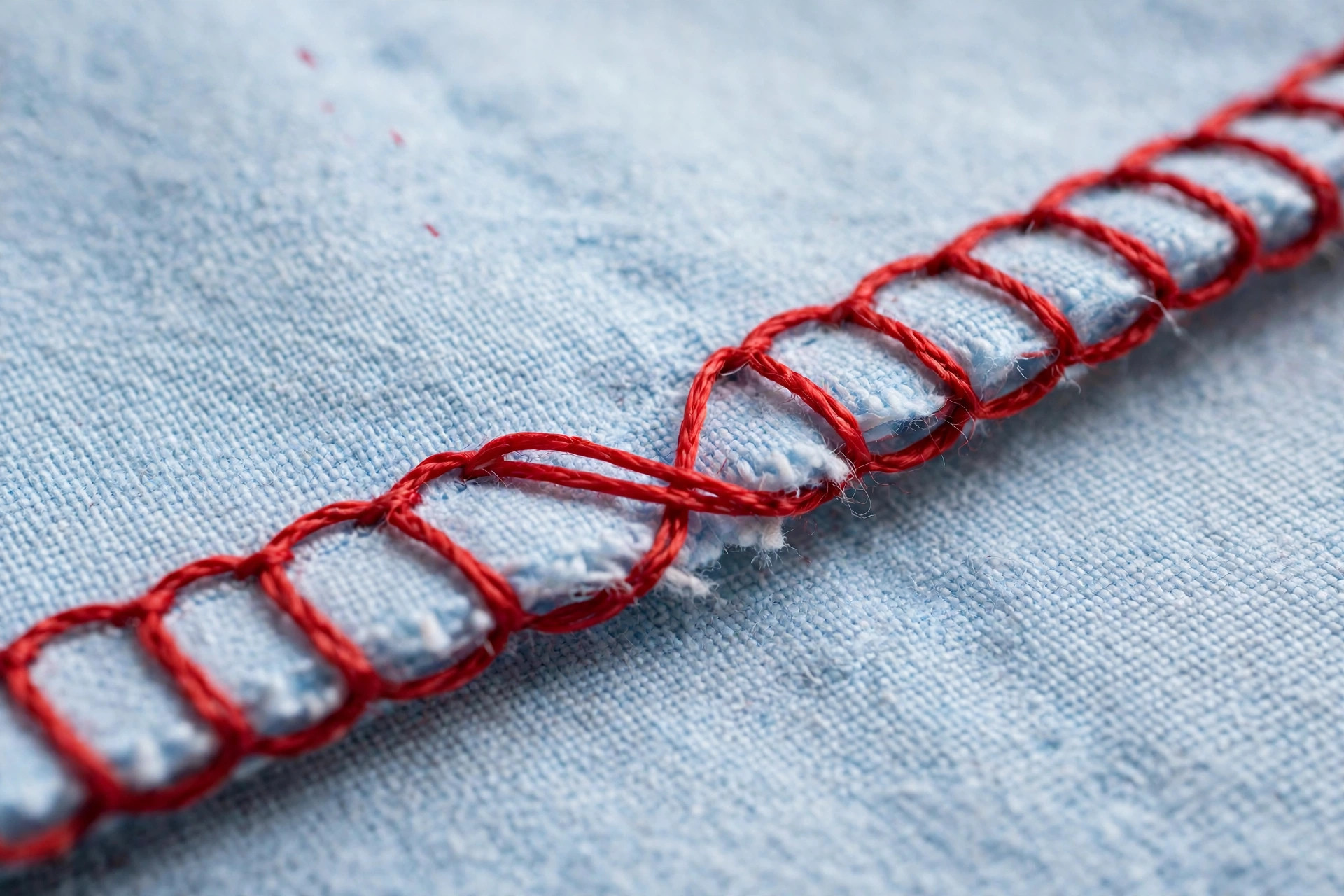 Stitch 503 — Two-Thread OveredgeOne needle, one looper: the lightest edge finish in the class.
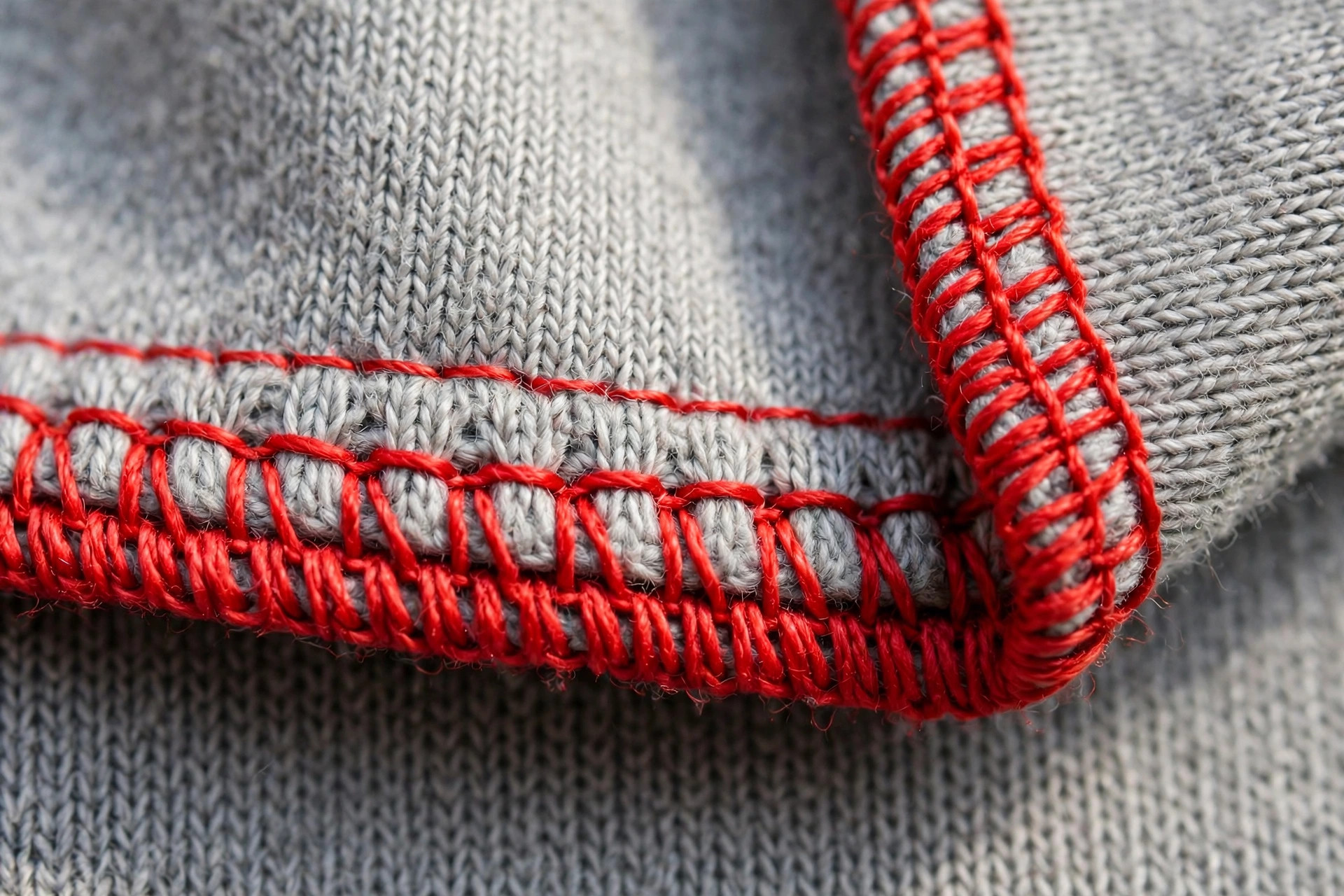 Stitch 504 — Three-Thread OveredgeThe standard serger stitch — one needle, two loopers.
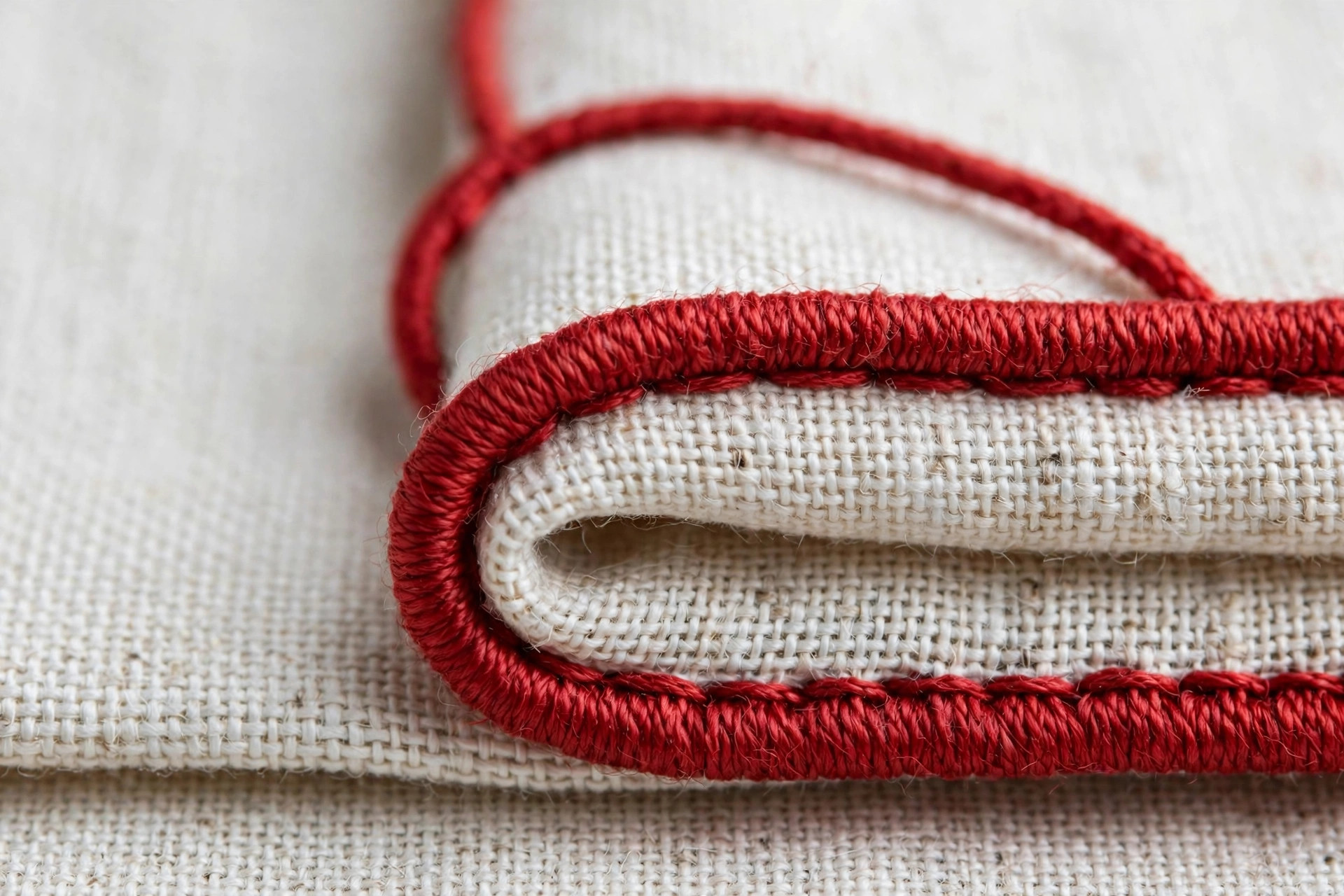 Stitch 505 — Double-Purl OveredgeThree threads building a doubled purl cord on the edge.
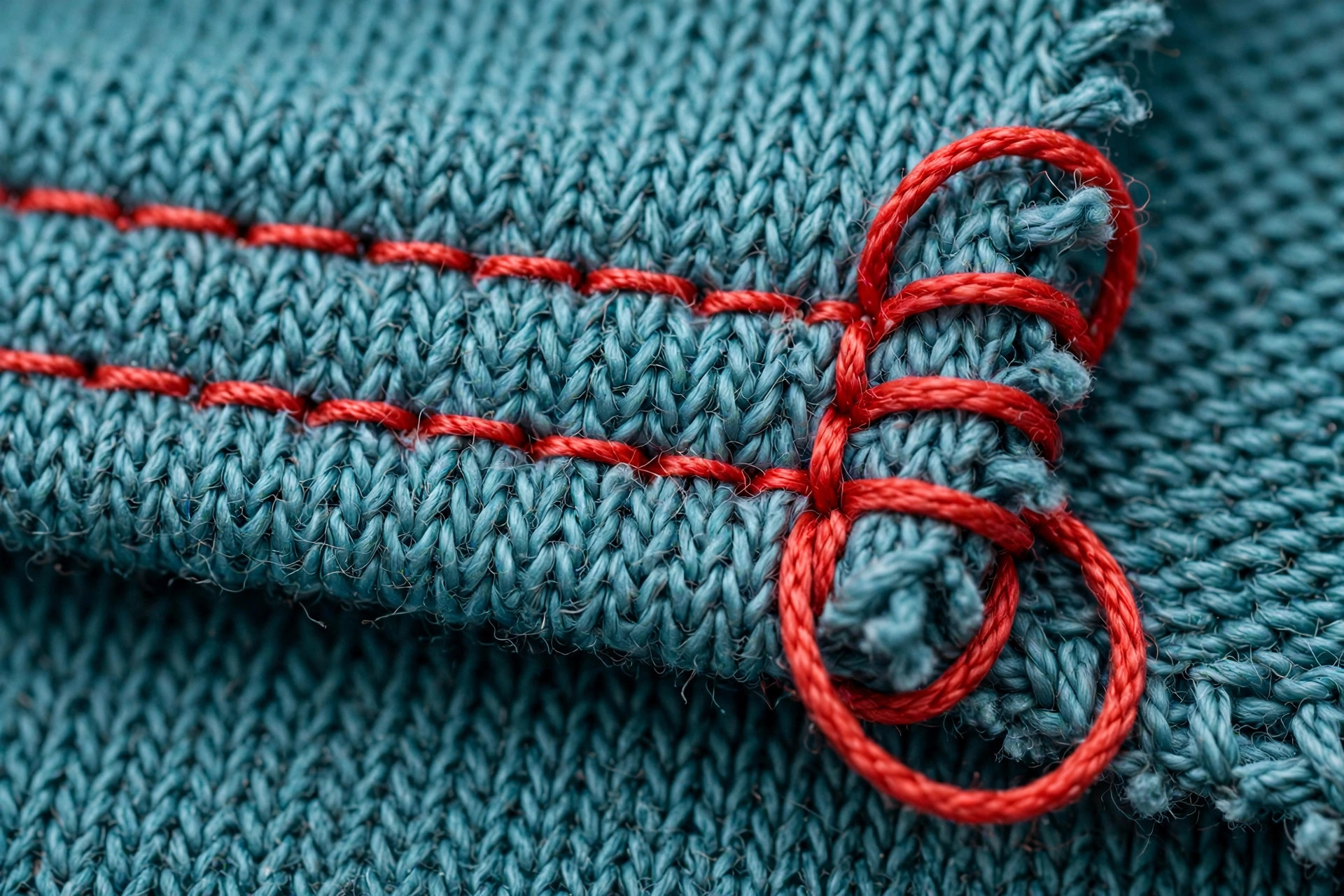 Stitch 512 — Mock Safety StitchFour threads imitating a safety stitch in one pass.
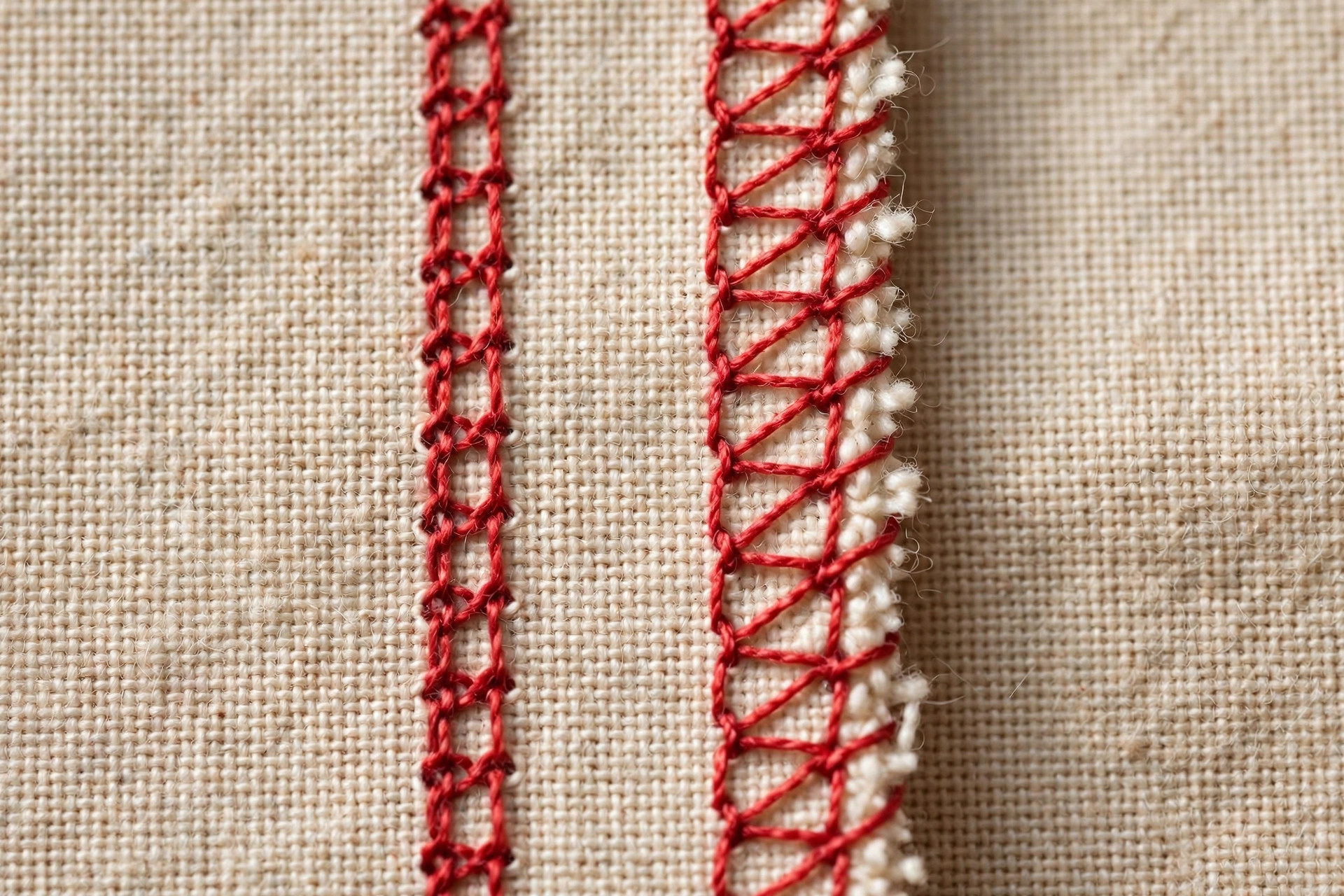 Stitch 515 — Four-Thread Safety StitchA 401 chainstitch row plus a 503 overedge row, sewn together.
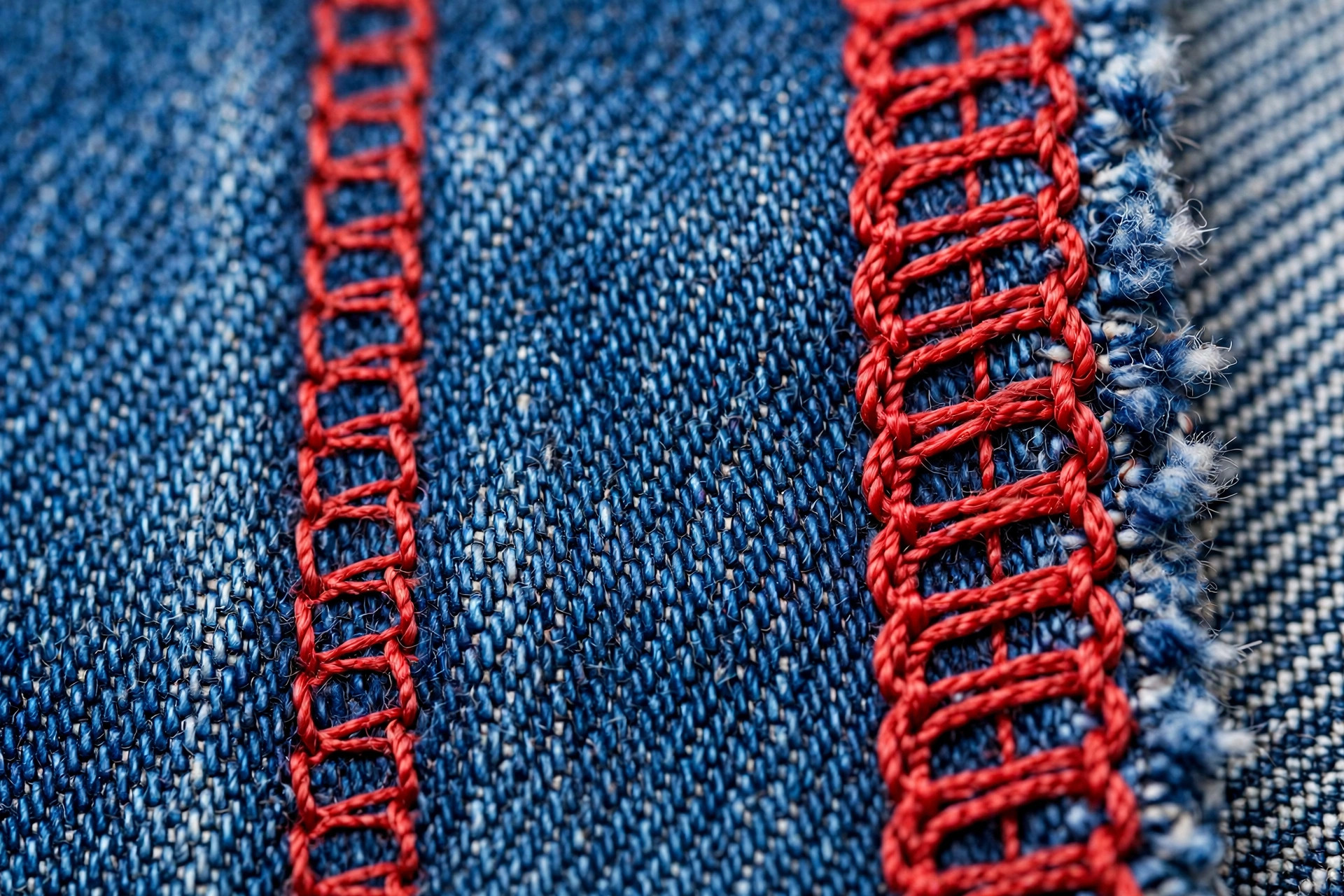 Stitch 516 — Five-Thread Safety StitchA 401 chainstitch row plus a 504 overedge row, sewn together.
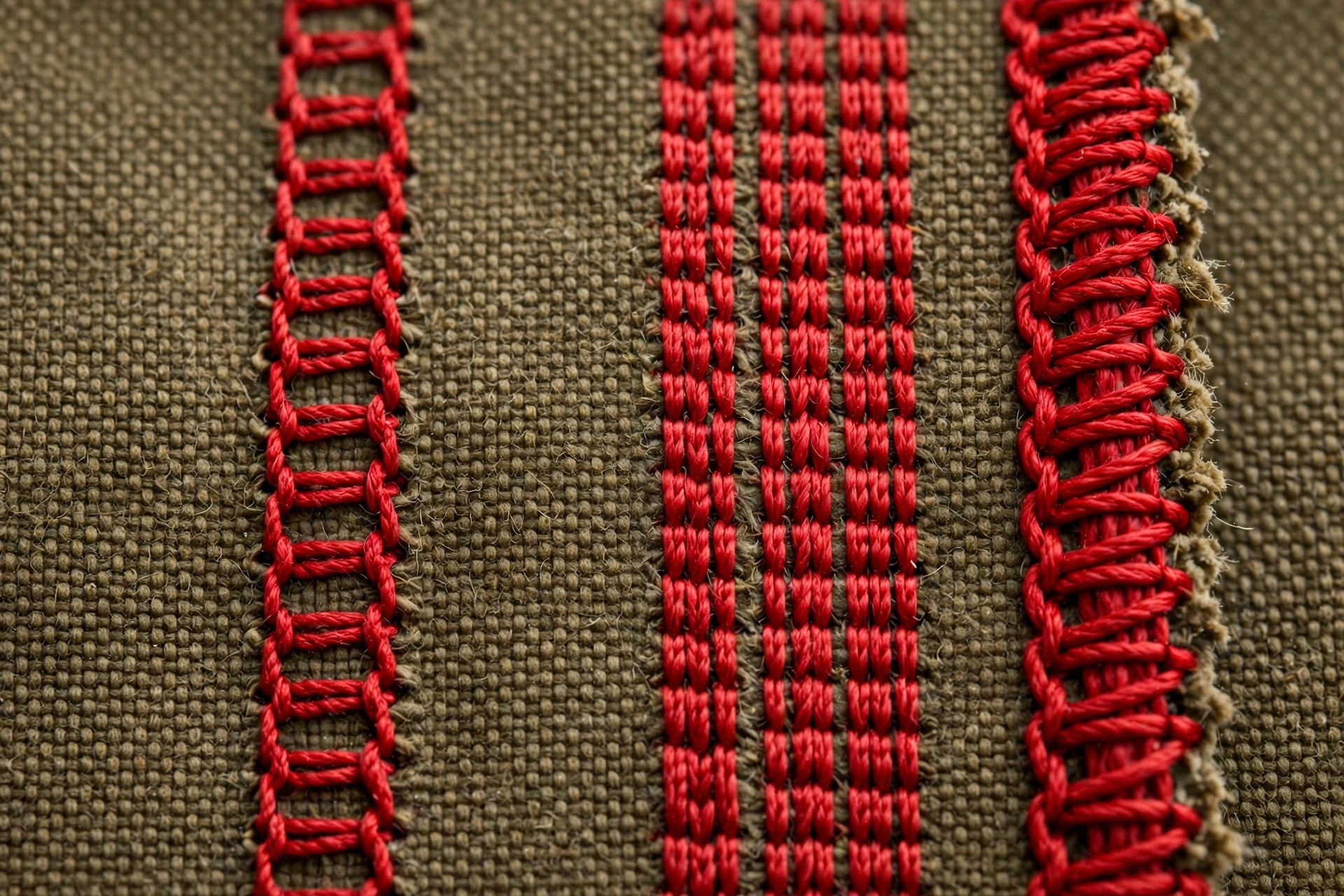 Stitch 519 — Six-Thread Safety StitchA 401 chainstitch row plus a wide 514 overedge row.
 Stitch Class 500 — OveredgeThe whole class: how overedge stitches form, and how all eight types compare.
More to Explore
Search Apparel Search
Stitch and seam classifications follow ASTM D-6193, Standard Practice for Stitches and Seams. Diagrams on these pages are original Apparel Search drawings.