Stitch Class 500 · Overedge
Stitch Class 500 — Overedge Stitches
Class 500 is the overedge family of ASTM D-6193 — the overlock or serger stitches. Needle threads and looper threads interloop over the cut edge of the material, so one pass can trim the edge, join the plies and wrap the raw edge in thread so it cannot fray. Eight types are covered in this guide: 503, 504, 505, 512, 514, 515, 516 and 519. Between them they sew nearly every knit garment in the world and finish the edges of most woven ones.
Search Apparel Search
What Makes an Overedge Stitch an Overedge Stitch
Every stitch in Class 500 is formed over an edge. One or more needle threads pass through the material a short distance from its cut edge — that distance is the stitch's bite — and one or more looper threads, carried by loopers above and below the material instead of a bobbin, travel out to the edge, wrap around it, and interloop with the needle threads and with each other. The line of interlooping that forms along the very edge is called the purl. Because the threads enclose the edge itself, the stitch finishes the edge at the same time as it sews.
Three machine features give the class its character. First, loopers, not bobbins: every thread comes from a cone, so an overedge machine never stops for a bobbin change, but it uses far more thread than a lockstitch — the long looper paths around the edge are hungry. Second, trimming knives: a pair of knives just ahead of the needles trims the edge clean as it is sewn, which is why serged edges look so crisp — and why nothing wider than the bite survives. Third, adjustable width and length: the bite (stitch width) and the feed advance (stitch length) are set independently, so the same formation can be a narrow rolled-edge finish or a wide, strong seam.
The class divides into three working groups. The single-needle serging stitches (503, 504, 505) wrap one edge — finishing single plies and lightly seaming knits. The two-needle overedge stitches (512, 514) add a second needle row inside the bite, turning the wrap into a genuine seam with real strength and stretch. The safety stitches (515, 516, 519) sew a complete Class 400 chainstitch seam row alongside the overedge row in the same pass — two independent rows, so the seam and the edge finish are separate systems that back each other up.
How every Class 500 stitch is built: needle threads through the material, looper threads wrapping the edge. Illustration by Apparel Search.
The Eight Overedge Types
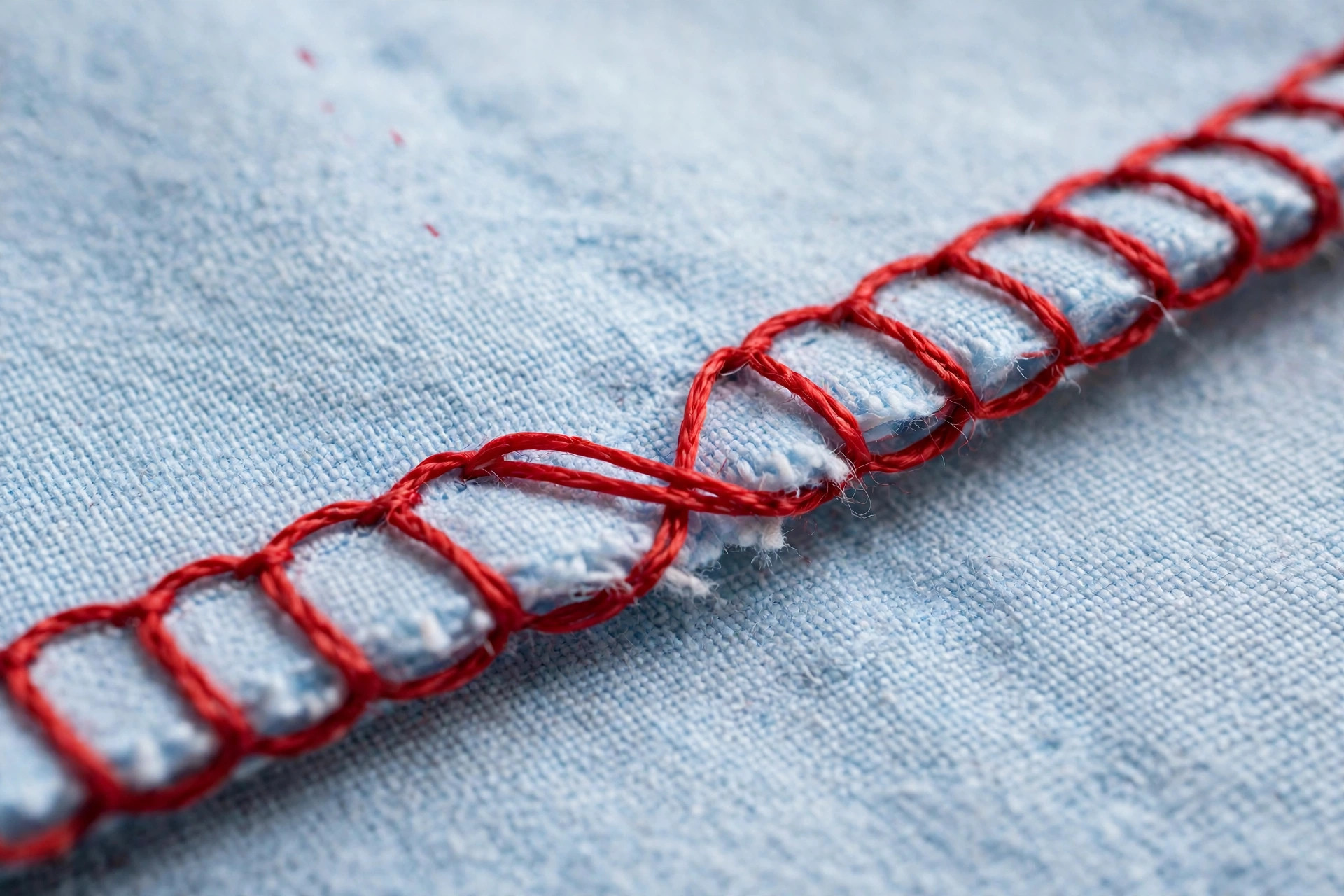 Stitch 503 — Two-Thread OveredgeOne needle, one looper: the lightest edge finish in the class.
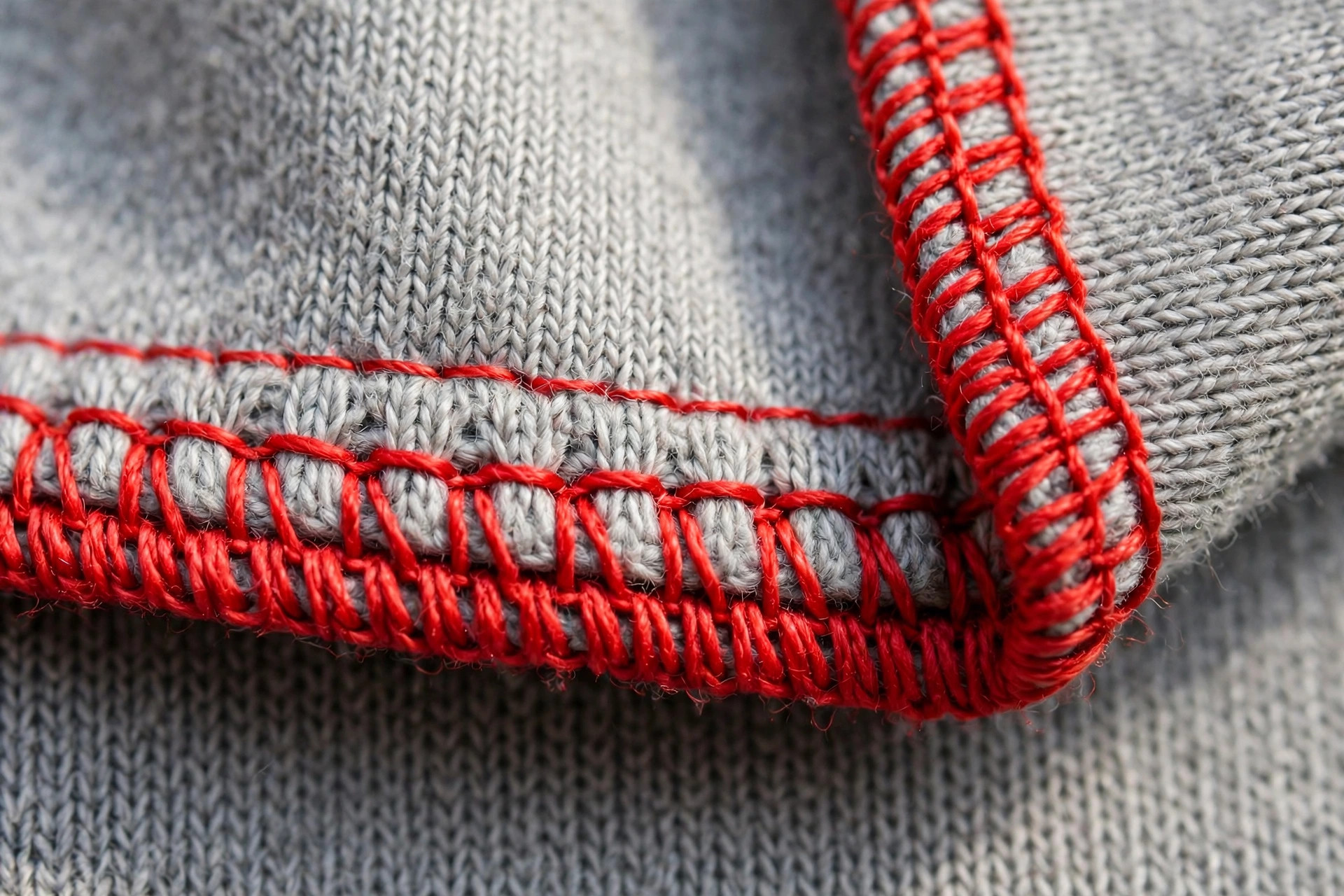 Stitch 504 — Three-Thread OveredgeThe standard serger stitch — one needle, two loopers.
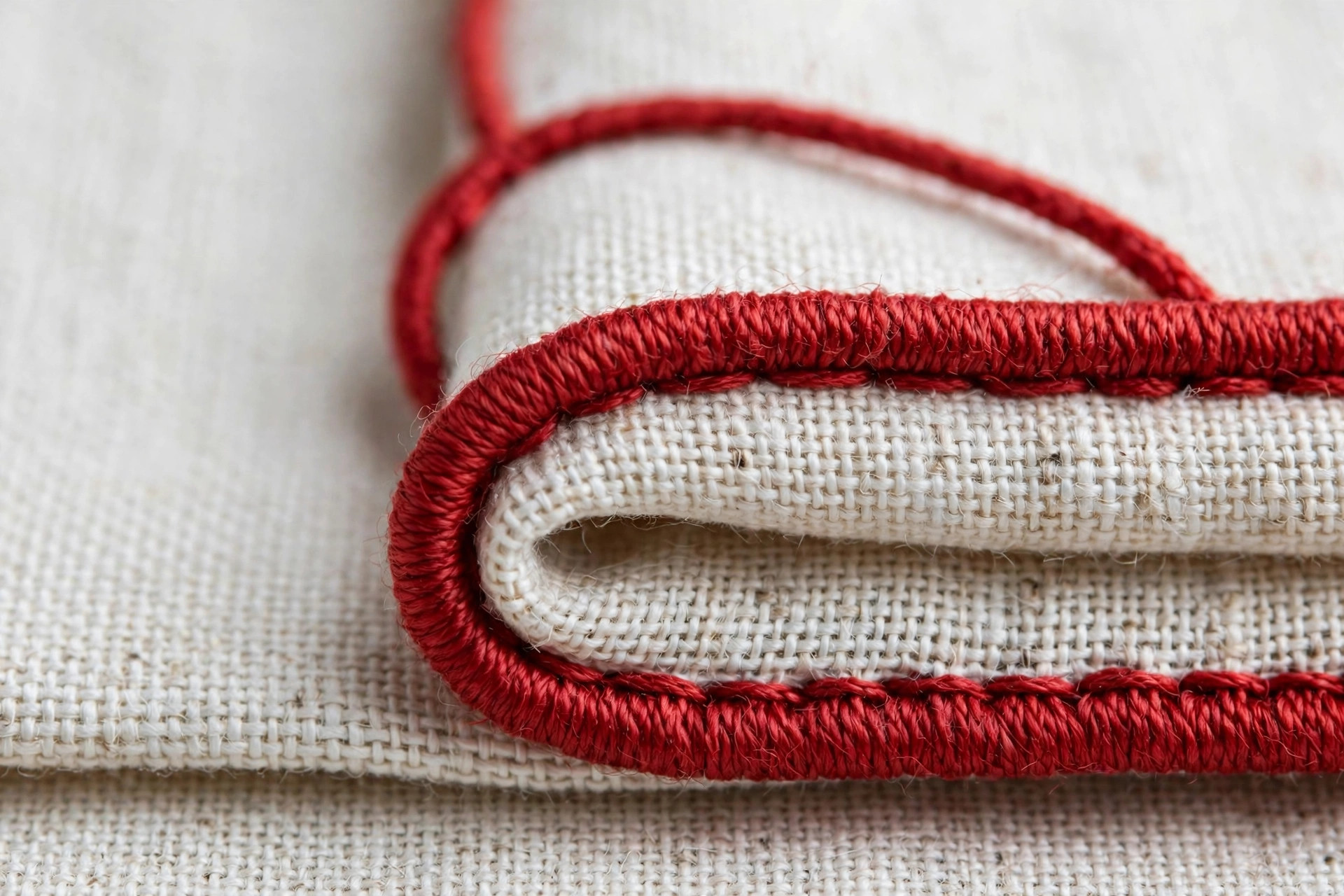 Stitch 505 — Double-Purl OveredgeThree threads building a doubled purl cord on the edge.
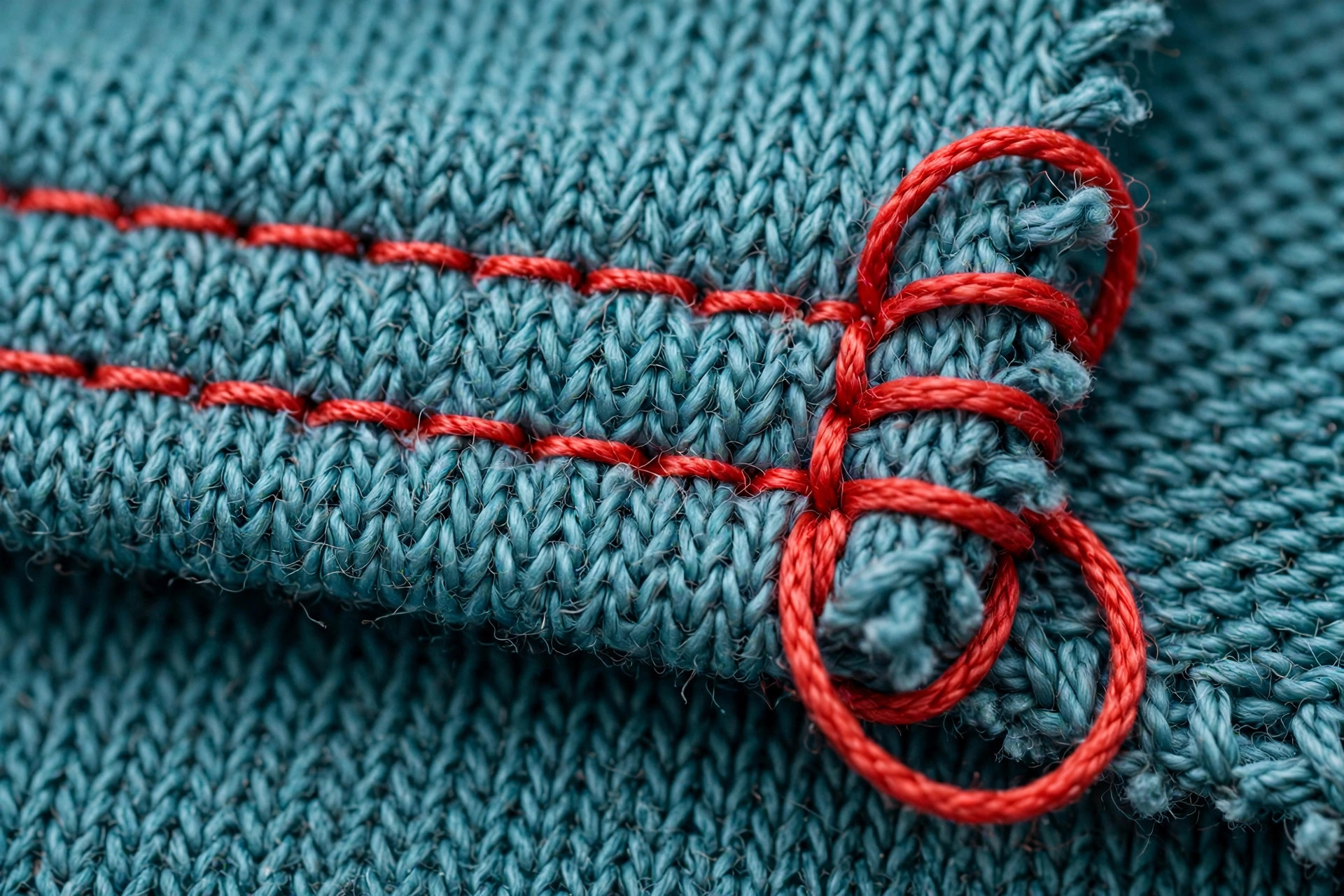 Stitch 512 — Mock Safety StitchFour threads imitating a safety stitch in one pass.
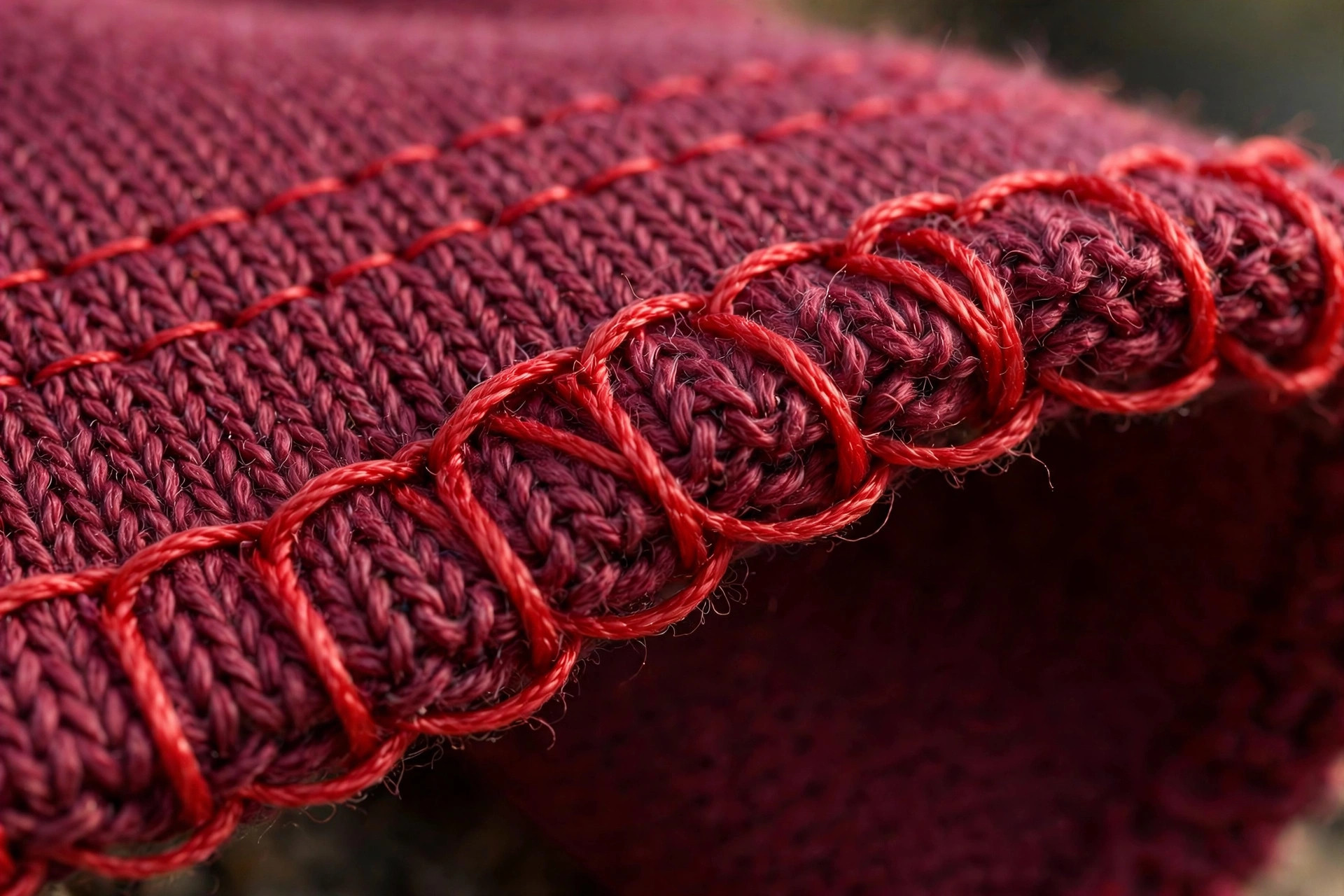 Stitch 514 — Four-Thread OveredgeTwo needles, two loopers: the strong knitwear seam stitch.
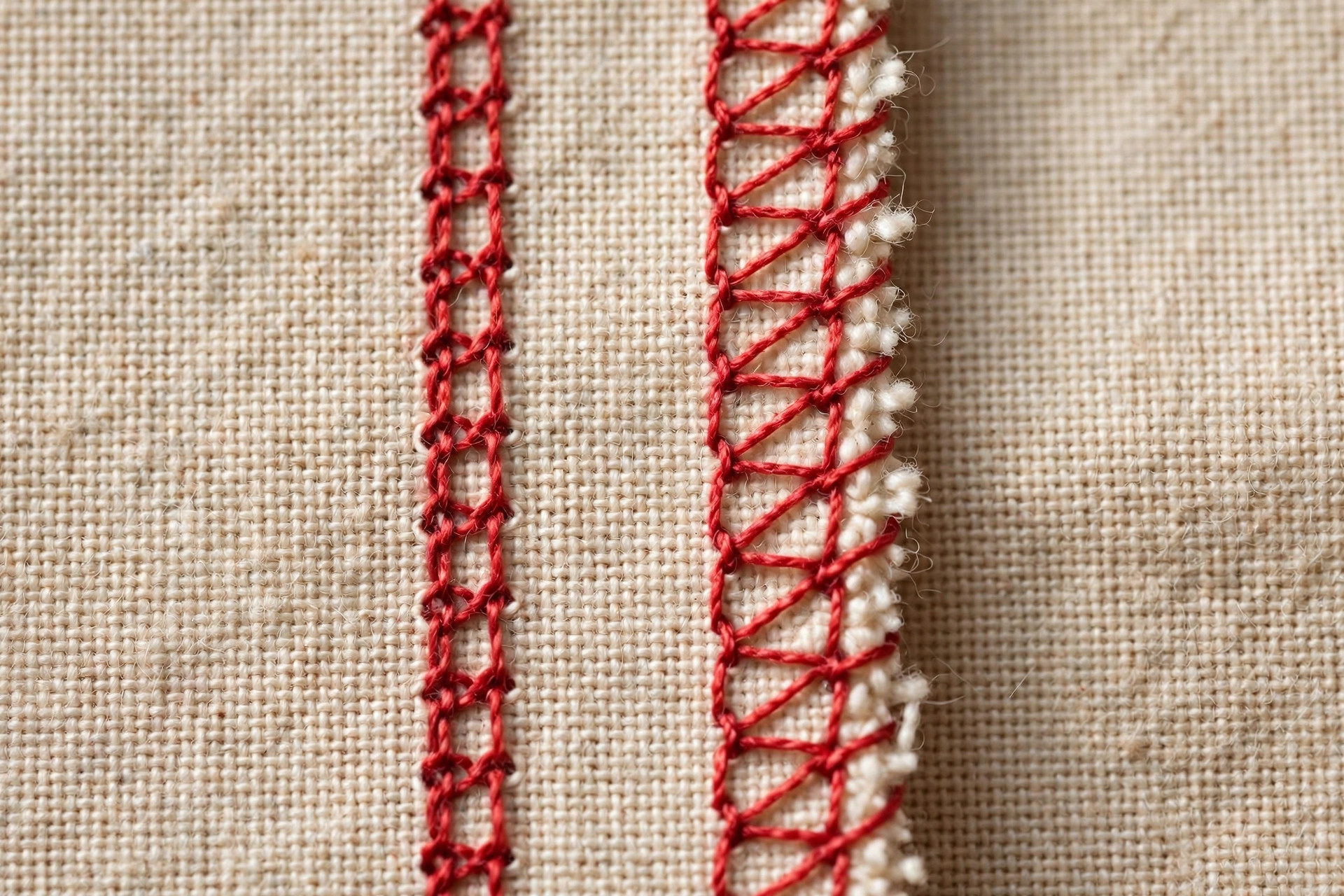 Stitch 515 — Four-Thread Safety StitchA 401 chainstitch row plus a 503 overedge row, sewn together.
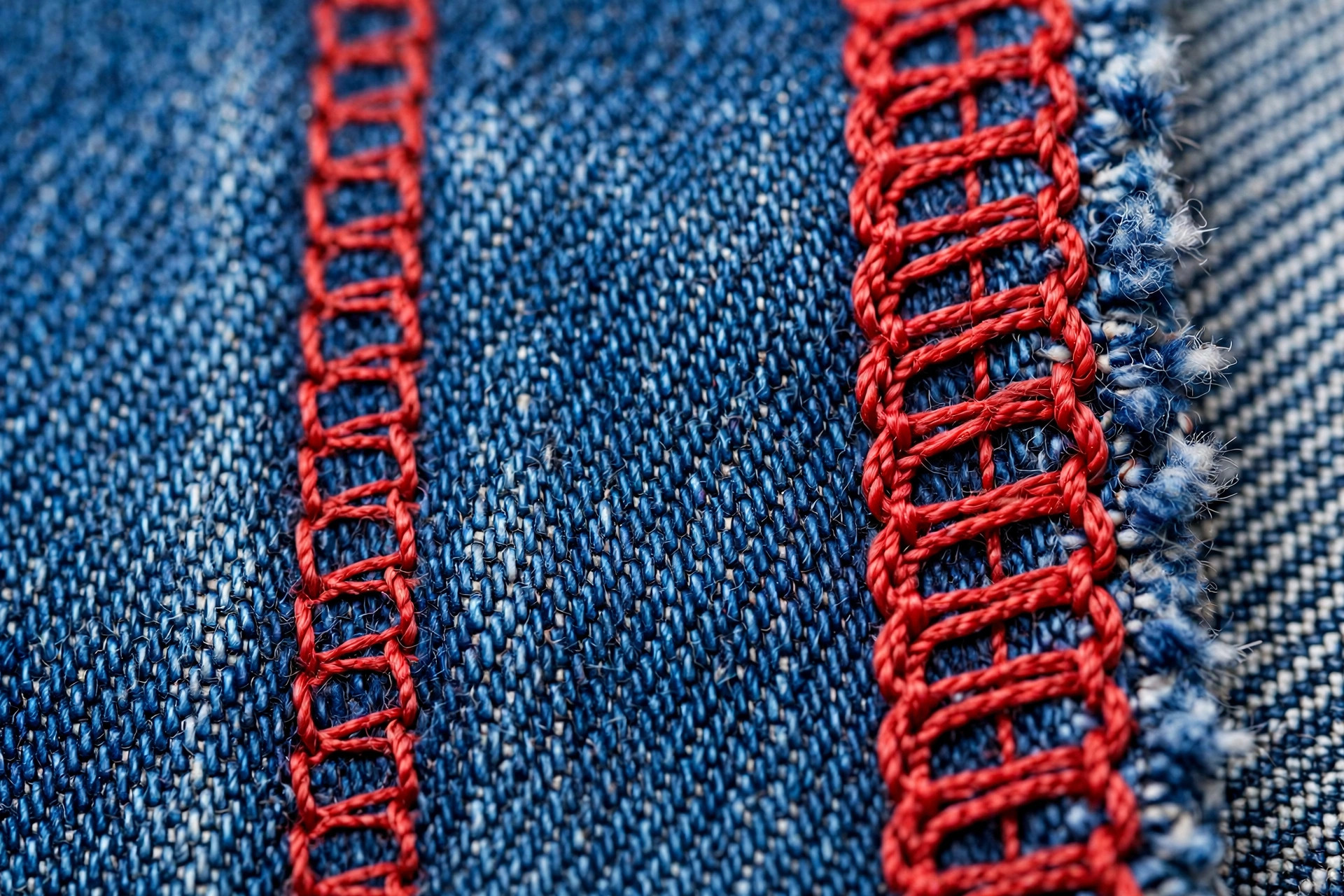 Stitch 516 — Five-Thread Safety StitchA 401 chainstitch row plus a 504 overedge row, sewn together.
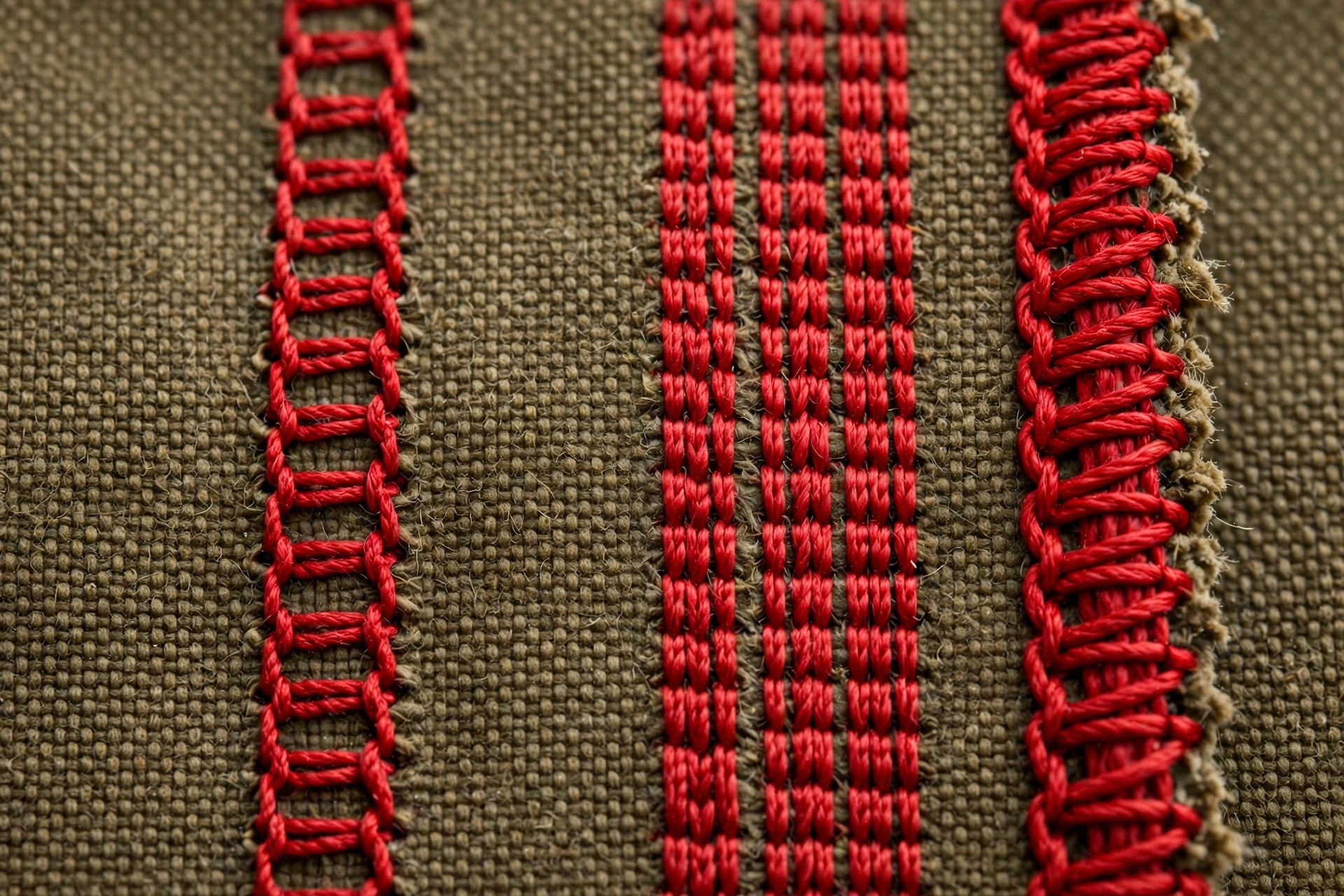 Stitch 519 — Six-Thread Safety StitchA 401 chainstitch row plus a wide 514 overedge row.
Looking for a stitch you cannot find here? The Explore Stitches gallery shows every stitch type in this guide as a thumbnail card, grouped by class.
The Class at a Glance
| Type | Threads | Rows | Stretch | Typical work |
|---|---|---|---|---|
| 503 | 2 (1 needle + 1 looper) | 1 overedge | Good | Light serging, blindhemming, finishing single plies |
| 504 | 3 (1 needle + 2 loopers) | 1 overedge | Good | The standard serger stitch: edge finishing and knit seaming |
| 505 | 3 (1 needle + 2 loopers) | 1 overedge | Moderate | Merrow-style edging, decorative and protective edge cover |
| 512 | 4 (2 needles + 2 loopers) | 1 formation, 2 needle rows | High | Mock safety seaming of knits, wide bite, high stretch |
| 514 | 4 (2 needles + 2 loopers) | 1 overedge, 2 needle rows | High | Four-thread overlock seaming of knits and stretch wovens |
| 515 | 4 (401 + 503) | 2 independent | Good | True safety seaming with a lighter edge finish |
| 516 | 5 (401 + 504) | 2 independent | Good | The woven-garment safety standard: trousers, workwear, denim |
| 519 | 6 (401 + 514) | 2 independent | High | The widest safety stitch for heavy and stretch seaming |
Choosing between them
Finish a single edge and nothing more? Start with 504 — the balanced three-thread wrap is the default for a reason — and drop to 503 only where the lightest, least bulky finish matters, or step sideways to 505 when the edge itself is a feature, as on napkins, badges and blanket edges. Seam knits in one pass? 514 is the production answer, with 512 where its wide bite and extra stretch suit the fabric. Seam wovens where the seam must never depend on the edge finish? That is safety-stitch work: 516 for the general case, 515 where a lighter finish is enough, and 519 where the widest, heaviest combination is justified. For the seam constructions these stitches most often sew, see the Class SS superimposed seams.
Common Questions
What is an overedge stitch?
An overedge stitch is formed by threads that pass over the cut edge of the material, wrapping and enclosing it. Class 500 stitches are sewn by needles and loopers — there is no bobbin — and most overlock machines trim the edge with knives in the same pass, so the stitch joins, trims and finishes at once.
What is the difference between serging and seaming in Class 500?
Serging finishes a single ply's edge so it cannot fray; seaming joins two or more plies. The single-needle types 503, 504 and 505 are mainly serging and light seaming stitches, the two-needle types 512 and 514 are seaming stitches, and the safety stitches 515, 516 and 519 seam and finish in one pass with two independent rows.
Why do overedge seams stretch better than lockstitch seams?
The looper threads travel long diagonal paths around the edge, so an overedge seam carries a great deal of spare thread that can extend under load. A lockstitch seam locks its threads tight inside the material and has almost nothing to give, which is why knit garments are sewn with Class 500 stitches.
What is a safety stitch?
A safety stitch sews two independent rows at once: a chainstitch row (type 401) set in from the edge, which carries the seam, and an overedge row at the edge, which finishes it. If one row fails, the other still holds. Types 515, 516 and 519 are the true safety stitches; 512 imitates the arrangement inside a single formation and is called a mock safety stitch.
What does the purl on an overedge stitch mean?
The purl is the row of small loops the looper threads form along the very edge of the material where they interloop. A neat, even purl sitting exactly on the edge is the sign of a balanced overedge stitch; stitch 505 doubles it, building a raised cord of two purls.
Sources & the photographic reference
The stitch and seam classifications on this page follow ASTM D-6193, Standard Practice for Stitches and Seams, explained here in Apparel Search's own words with original diagrams. For photographs of these stitches and seams, see the Garmenco guide's Class 500 page — Professor Bernard Kahn's photographic guide, which Apparel Search has recommended for years and continues to link as the photo reference for this classification. Our guide is the permanent on-site companion to it.
More to Explore
Stitch and seam classifications follow ASTM D-6193, Standard Practice for Stitches and Seams. Diagrams on these pages are original Apparel Search drawings.