Stitch 515 · Class 500 Overedge
Stitch 515 — Four-Thread Safety Stitch
Stitch 515 is the four-thread safety stitch: two independent rows sewn in one pass — a 401 chainstitch row set in from the edge, which carries the seam, and a 503 overedge row at the edge, which finishes it. Four threads in all: two for the chainstitch, two for the overedge.
What Stitch 515 Is
A safety stitch is not one stitch but two, sewn simultaneously by one machine with two needle systems. Stitch 515 pairs the lightest members of each family: the seam row is a type 401 two-thread chainstitch — a needle thread interlooped beneath the material with its own chain looper thread — and the finishing row is a type 503 two-thread overedge, worked by a second needle and its looper at the trimmed edge.
The safety principle is independence. The chainstitch row never touches the overedge row; each is a complete stitch system with its own threads. If the overedge finish is worn, cut or unravelled, the chainstitch seam still holds the garment together — and if the seam row is damaged, the overedge still binds the plies at the edge. That redundancy, not raw strength, is what the word safety buys, and 515 delivers it with the fewest threads of any true safety stitch.
How Stitch 515 Forms
- The work passes under two needle systems at once. The knives trim the fabric edge to the overedge needle's line.
- The left (chainstitch) needle descends set in from the edge; beneath the material, the chain looper catches its loop and interloops with it, building the 401 chain — stitch by stitch, a complete seam row forms.
- At the same moment, the right (overedge) needle descends at the edge; its looper wraps the trimmed edge and interloops with the needle thread on the edge, building the 503 finish — its own complete row.
- Neither row's threads touch the other row's: two formations, two thread systems, one machine pass.
- The feed advances both rows together, so seam and finish are sewn in perfect register along the whole length.
Formation diagram for stitch 515, shown in cross-section at the fabric edge. Red is the needle thread; dark blue is the looper thread. Illustration by Apparel Search.
The Threads
| Element | Detail |
|---|---|
| Thread count | 4 — two for the 401 row (needle + chain looper), two for the 503 row (needle + looper). |
| Chainstitch needle thread | Forms the straight seam line on the top; it carries the structural load of the seam. |
| Chain looper thread | Interloops with the chainstitch needle thread beneath the material, forming the chain that gives the row its stretch and its name. |
| Overedge needle + looper threads | Form the 503 wrap at the edge: they finish and protect the raw edge, and carry no structural duty. |
| Typical threads | Core-spun or spun polyester throughout; the chainstitch row often takes the stronger thread, since it is the seam. |
| Thread use | Moderate for a safety stitch — the lightest true safety combination, using less thread than 516 or 519. |
What It Looks Like
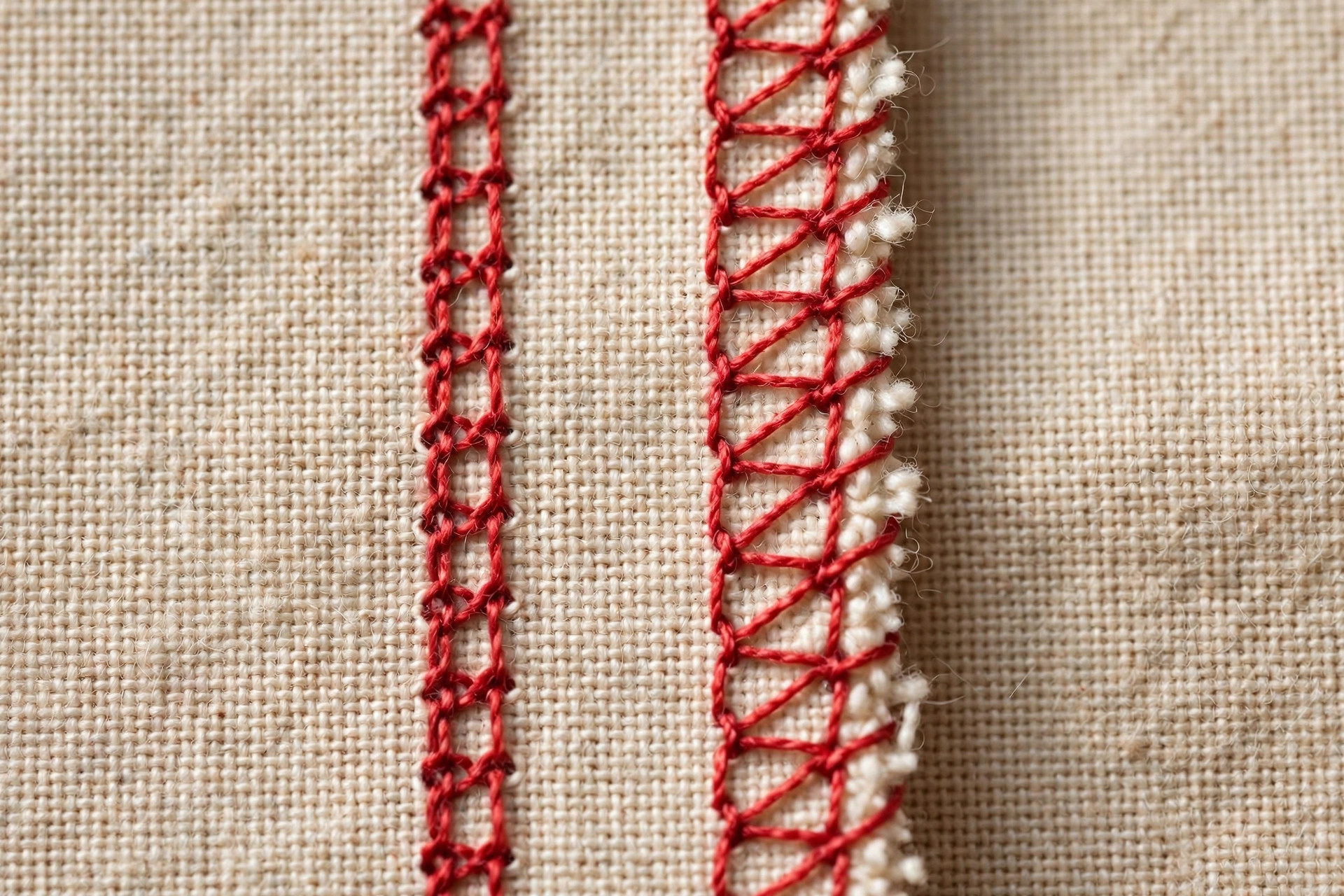
On the top, stitch 515 reads as two distinct, separated rows: a straight chainstitch line running parallel to the edge, and — a clear gap of fabric away — the slim overedge wrap on the edge itself. Nothing connects them on the surface.
On the underside, the separation is just as clear: a row of chain loops beneath the seam line, and the light 503 wrap at the edge. Compare a 512 mock safety, whose underside shows one shared looper pattern serving both rows — the underside is where true and mock safety stitches confess which they are.
Strengths and Limits
Strengths
- True safety: the seam row is fully independent — the garment holds together even if the edge finish fails.
- The lightest true safety stitch: four threads, a slim finish, less bulk and less thread than 516.
- Seams and finishes in one pass at full production speed.
- The chainstitch row gives the seam useful stretch and a flat, openable seam allowance.
Limits
- The 503 finish is the lightest in the class: on heavily fraying fabrics its open wrap protects the edge less completely than a 504.
- Chainstitch security cuts both ways: a broken chain looper thread can let the seam row run back if the end is not secured.
- Needs a dedicated safety-stitch machine with two needle systems — not a serger setting.
Where Stitch 515 Is Used
Stitch 515 seams light and medium wovens and stable knits where a true safety construction is specified but a heavy edge finish is not: shirts and blouses, children's wear, light trousers and shorts, uniforms and work shirts, and casual dresses. It is the economical safety choice — the same two-row security as 516 with a lighter touch on the edge.
Typical fabrics: shirting cottons, poplin, light twill, chambray, stable jerseys. Where the fabric frays hard or the garment works hard — denim, workwear, heavy trousers — step up to 516, whose 504 finishing row wraps the edge more completely; where the widest finish is wanted, 519 is the top of the family.
Common Questions
Which stitches combine to make stitch 515?
A type 401 chainstitch forms the seam row and a type 503 overedge forms the finishing row, sewn simultaneously. Two threads each gives the four-thread total — and is why 515 is a 401 + 503 combination, not 401 + 504 (that five-thread pairing is stitch 516).
What makes stitch 515 a true safety stitch but 512 only a mock one?
Independence. In 515 the chainstitch seam row has its own needle and looper threads and never interloops with the overedge row, so each row survives the other's failure. In 512 both apparent rows share the same looper threads in a single formation.
When should I choose 515 over 516?
When the garment is light and the fabric does not fray aggressively. 515 gives the same two-row safety with a slimmer, cheaper finish. Choose 516 when the edge needs the fuller protection of a three-thread 504 wrap.
Sources & the photographic reference
The stitch and seam classifications on this page follow ASTM D-6193, Standard Practice for Stitches and Seams, explained here in Apparel Search's own words with original diagrams. For photographs of these stitches and seams, see the Garmenco guide's Class 500 page — Professor Bernard Kahn's photographic guide, which Apparel Search has recommended for years and continues to link as the photo reference for this classification. Our guide is the permanent on-site companion to it.
Related Stitches
 Stitch 503 — Two-Thread OveredgeOne needle, one looper: the lightest edge finish in the class.
 Stitch 504 — Three-Thread OveredgeThe standard serger stitch — one needle, two loopers.
 Stitch 505 — Double-Purl OveredgeThree threads building a doubled purl cord on the edge.
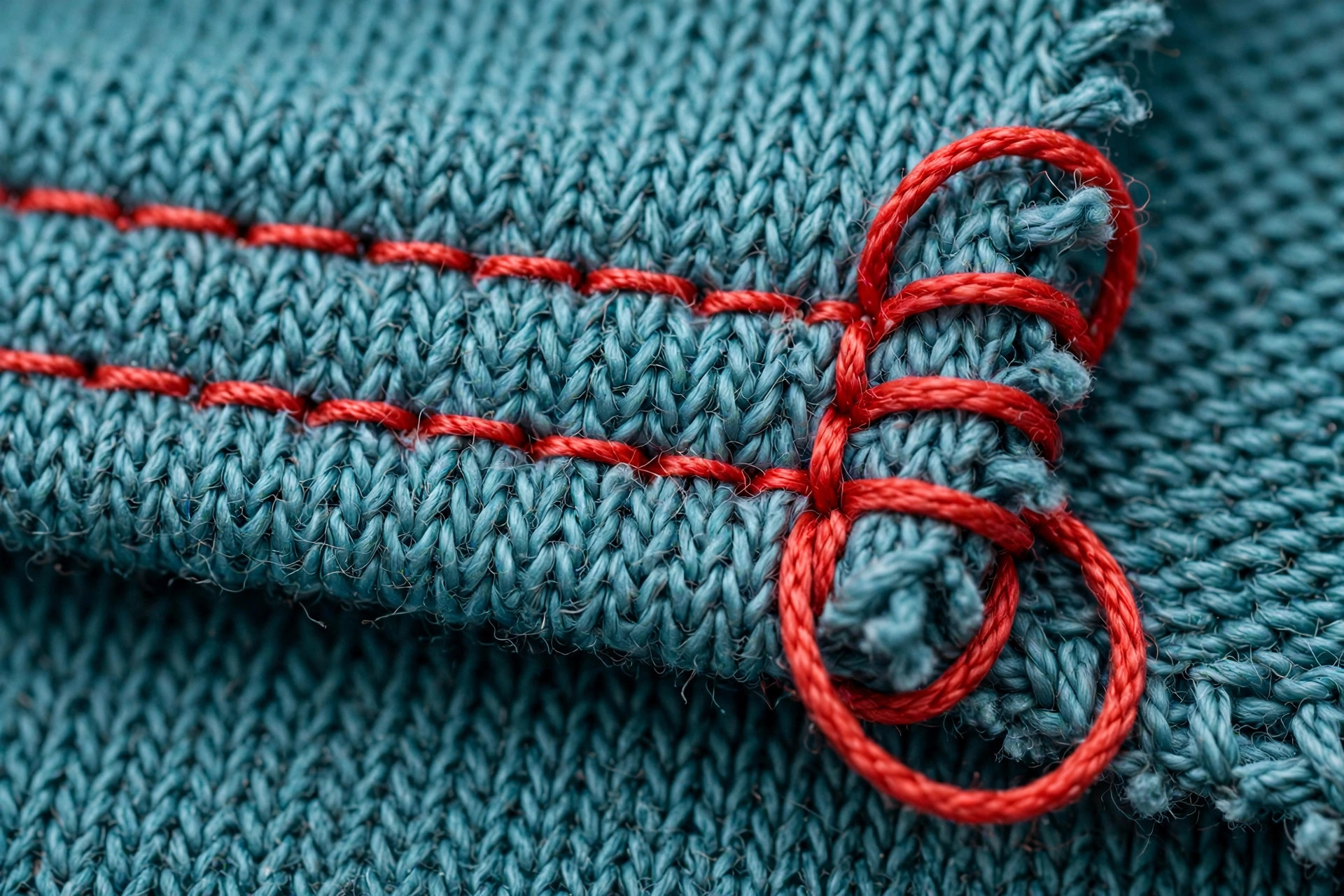 Stitch 512 — Mock Safety StitchFour threads imitating a safety stitch in one pass.
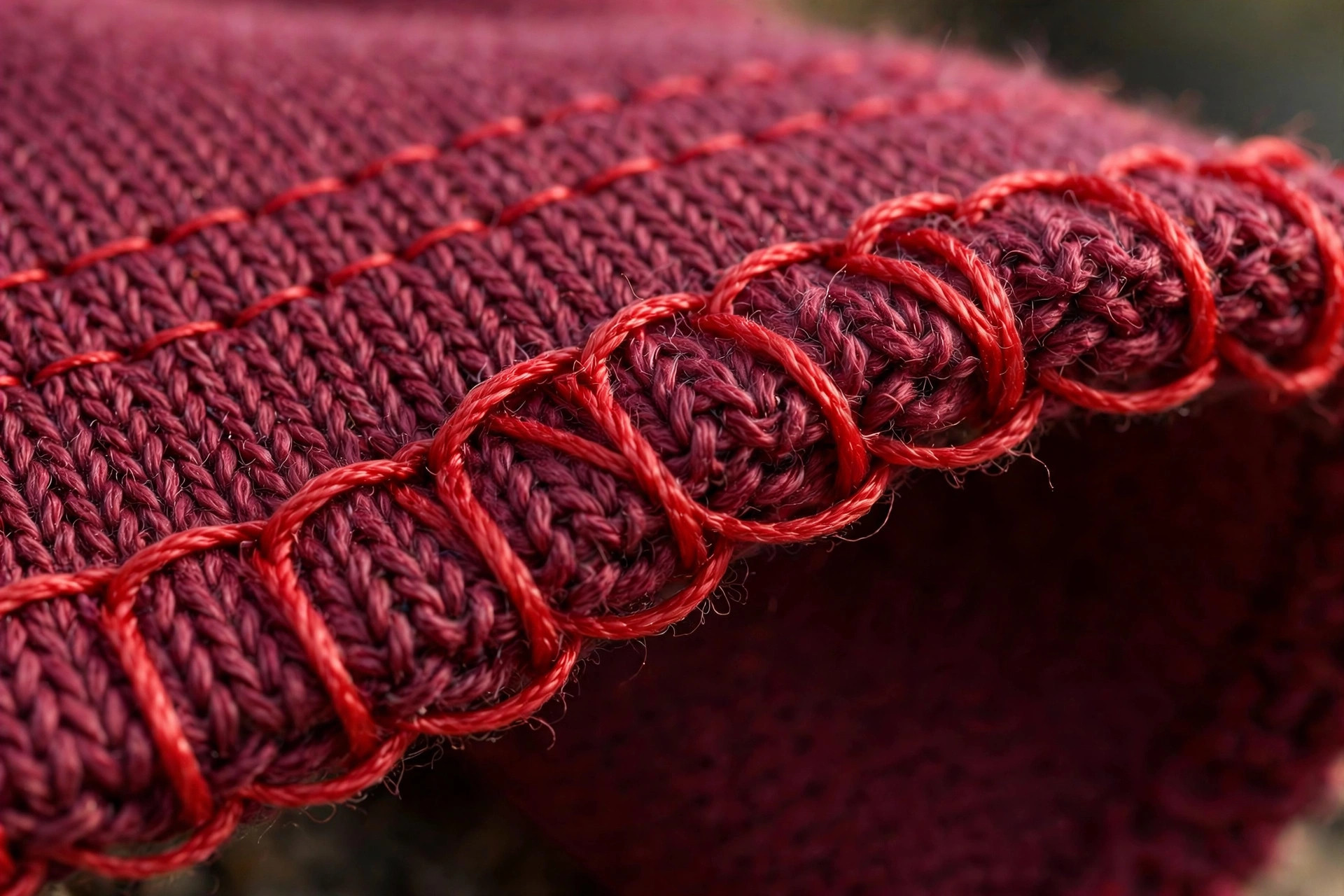 Stitch 514 — Four-Thread OveredgeTwo needles, two loopers: the strong knitwear seam stitch.
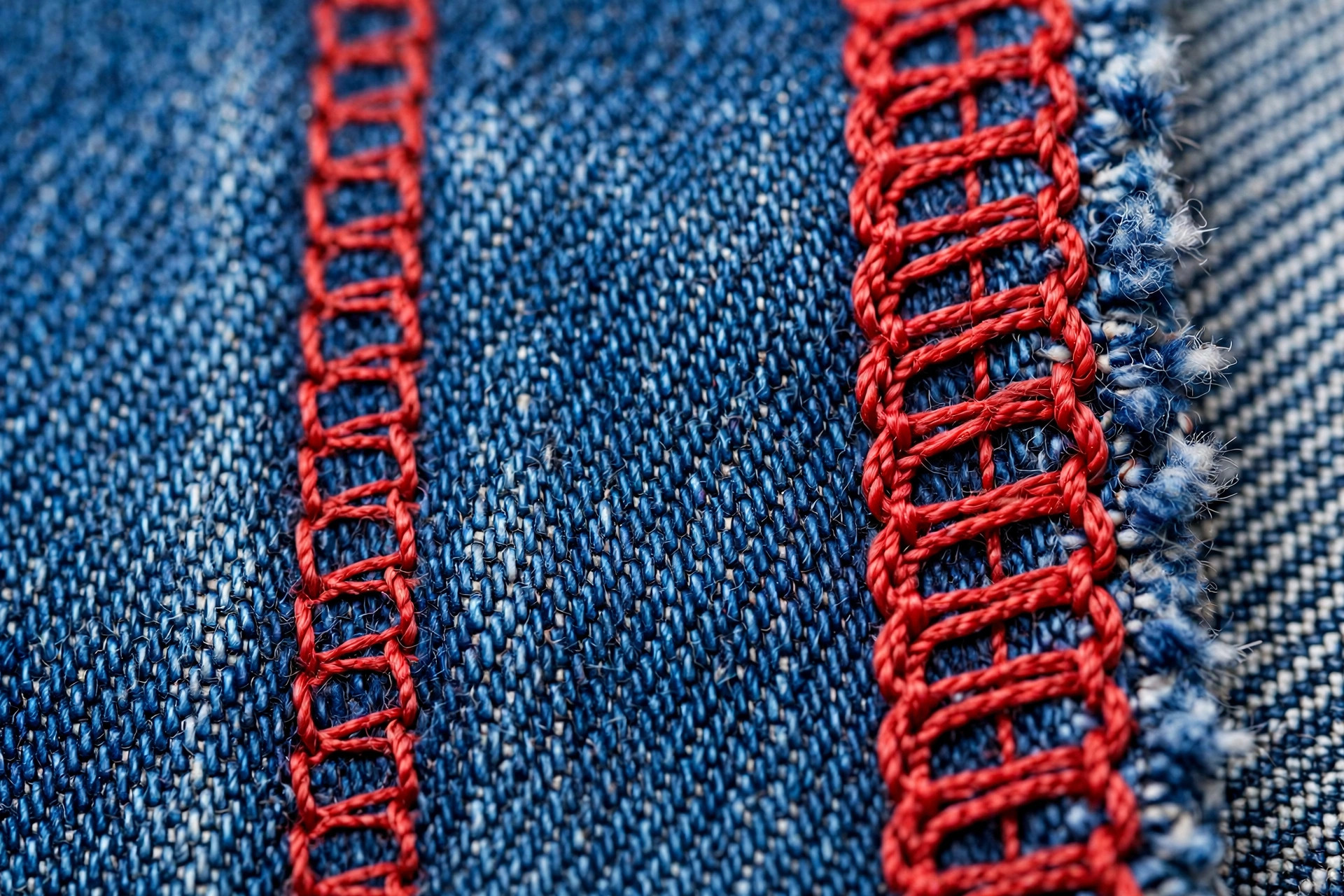 Stitch 516 — Five-Thread Safety StitchA 401 chainstitch row plus a 504 overedge row, sewn together.
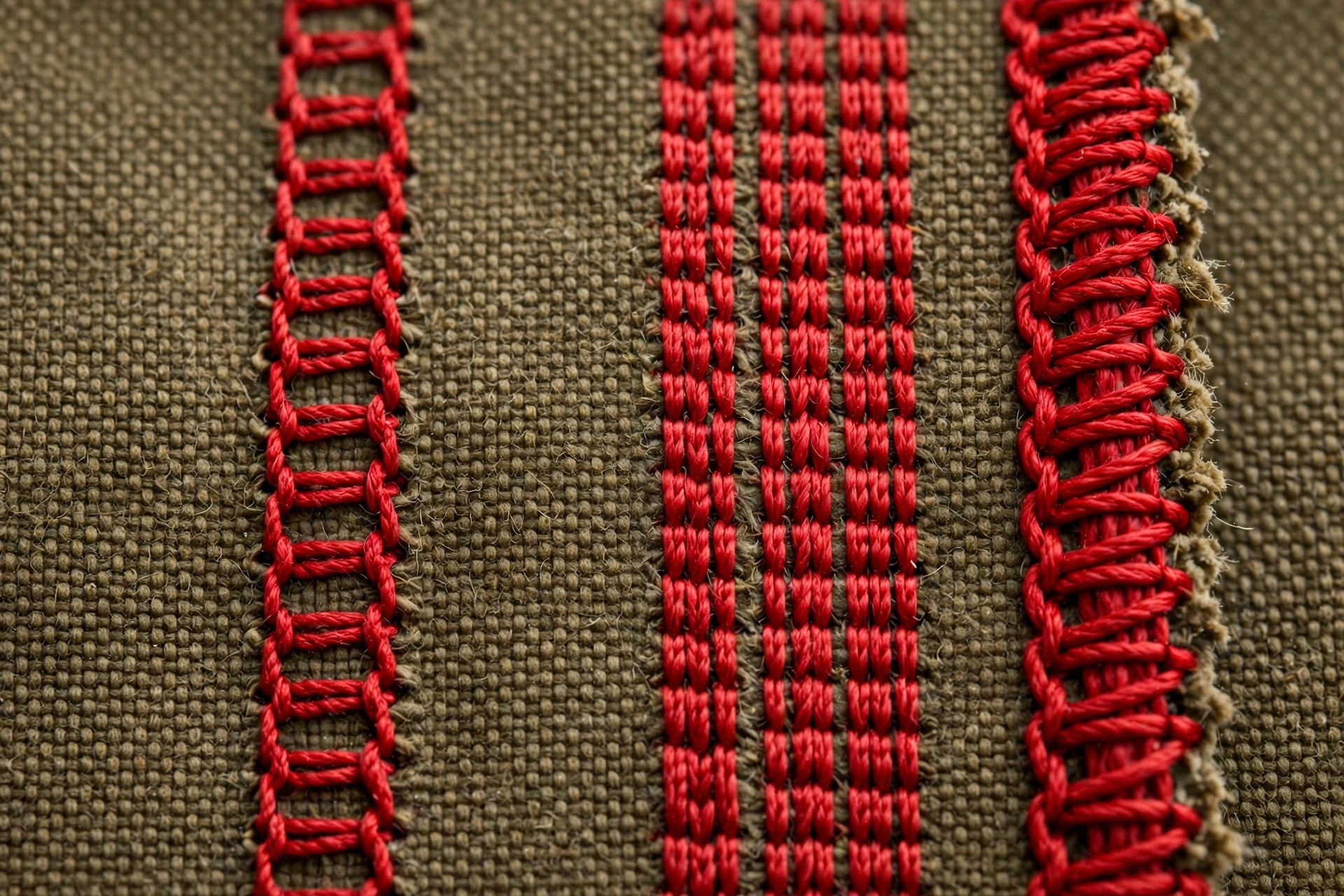 Stitch 519 — Six-Thread Safety StitchA 401 chainstitch row plus a wide 514 overedge row.
 Stitch Class 500 — OveredgeThe whole class: how overedge stitches form, and how all eight types compare.
More to Explore
Search Apparel Search
Stitch and seam classifications follow ASTM D-6193, Standard Practice for Stitches and Seams. Diagrams on these pages are original Apparel Search drawings.