Stitch 519 · Class 500 Overedge
Stitch 519 — Six-Thread Safety Stitch
Stitch 519 is the six-thread safety stitch — the widest and heaviest of the family: a 401 chainstitch seam row combined with a two-needle 514 overedge finishing row, sewn independently in one pass. Three needles and six threads in all.
What Stitch 519 Is
Stitch 519 completes the safety-stitch ladder. The pattern of the family is a chainstitch seam row paired with an overedge finishing row of increasing substance: 515 pairs the 401 with the light 503, 516 with the standard 504 — and 519 pairs it with the two-needle, four-thread 514 overedge, the widest finishing row in the class. Two threads of chainstitch plus four of overedge make the six-thread total.
Why finish an edge with a two-needle overedge? Width and grip. The 514 row covers a broader band of the allowance, anchors itself with two needle lines, and stretches further than any single-needle finish — valuable on heavy fabrics, on stretch wovens, and wherever the allowance edge takes real mechanical punishment. The seam row remains what it is in every true safety stitch: a separate 401 system, untouched by the finish, holding the garment on its own if the finish is ever destroyed.
How Stitch 519 Forms
- The work feeds under three needles in two systems; the knives trim the edge to the overedge line.
- The chainstitch needle descends set in from the edge; the chain looper interloops beneath, forming the independent 401 seam row.
- The two overedge needles descend together nearer the edge, and their shared upper and lower loopers wrap the trimmed edge — the 514 finishing row forms, both needle threads entering the upper looper loop.
- As in every true safety stitch, the rows share no threads: the seam system and the finishing system run side by side, each complete.
- The feed advances all three needle lines in register — the widest stitch band in Class 500 moving as one.
Formation diagram for stitch 519, shown in cross-section at the fabric edge. Red is the needle thread; dark blue is the looper thread. Illustration by Apparel Search.
The Threads
| Element | Detail |
|---|---|
| Thread count | 6 — two for the 401 row (needle + chain looper), four for the 514 row (two needles + two loopers). |
| Chainstitch threads | The seam system, identical to the seam row of 515 and 516: straight line on top, chain beneath, carrying the structural load. |
| Overedge needle threads (×2) | Two parallel rows anchoring the wide 514 finish; both enter the upper looper loop at every stitch. |
| Overedge looper threads | Upper and lower loopers wrap the edge across the full width of the 514 row — the broadest edge cover in the class. |
| Typical threads | Strong spun or core-spun polyester throughout; the stitch is specified for duty, and the threads are chosen accordingly. |
| Thread use | The highest in Class 500 — six cones feeding two formations across a wide band. |
What It Looks Like
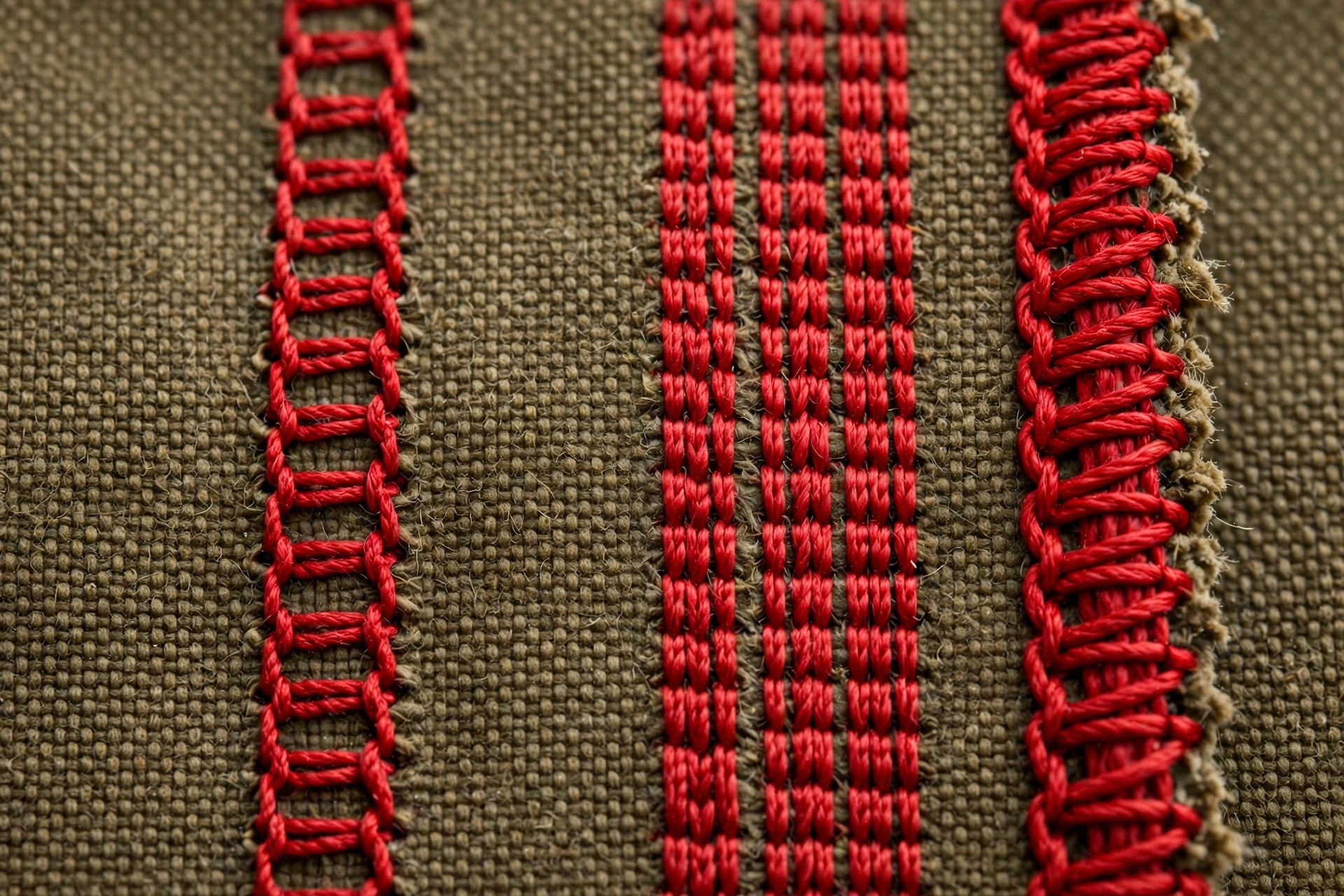
On the top, stitch 519 is unmistakable: a chainstitch seam line, a band of fabric, then a broad overedge zone with two needle rows and a dense wrap covering the edge — the widest stitch band on any common garment seam.
On the underside, chain loops beneath the seam row and the 514's regular looper pattern beneath the wide finish: two systems, separate as always. Open a 519 seam out and the allowance looks almost upholstered — that breadth is the stitch's character and its cost.
Strengths and Limits
Strengths
- True safety construction with the widest, strongest finishing row available in the class.
- The 514 finish stretches — the safety stitch for heavy stretch wovens and demanding knit-woven hybrids.
- Two needle rows anchor the finish, so the edge survives abrasion that strips lighter finishes.
- Seam row fully independent, as in 515 and 516: finish failure never means seam failure.
Limits
- The most thread, the widest band, the bulkiest seam in Class 500 — overkill for ordinary garments.
- Needs a specialised wide safety-stitch machine; far fewer factories run 519 than 516.
- Slowest and costliest of the safety family to produce.
Where Stitch 519 Is Used
Stitch 519 is a specialist's safety stitch: heavy workwear and protective clothing, upholstery-adjacent sewn goods, heavy stretch garments, and woven products whose edges are punished in service — gear, covers and industrial textile assemblies as well as clothing. It appears where a specification writer has weighed 516 and asked for more finish than the standard provides.
Typical fabrics: heavy canvas and duck, denim, heavy stretch twills, coated and technical wovens. For ordinary woven garments 516 remains the rational default; 519 is the deliberate step beyond it, taken for width, grip and stretch in the finishing row.
Common Questions
Which stitches combine to make stitch 519?
A type 401 chainstitch forms the seam row (two threads) and a type 514 four-thread overedge — two needles and two loopers — forms the finishing row. Two plus four gives the six-thread total, the most of any Class 500 type.
Why would a finish need two needle rows?
Width and anchorage. The 514 row covers a broader band of the seam allowance, grips it at two needle lines instead of one, and stretches further — protection for edges on heavy fabrics and hard-used goods that a single-needle finish cannot match.
Is stitch 519 common in clothing?
No — it is the specialist of the family. Most woven clothing is sewn with 516; 519 appears in heavy workwear, protective and industrial sewn goods, and other work where the widest safety construction is deliberately specified.
Sources & the photographic reference
The stitch and seam classifications on this page follow ASTM D-6193, Standard Practice for Stitches and Seams, explained here in Apparel Search's own words with original diagrams. For photographs of these stitches and seams, see the Garmenco guide's Class 500 page — Professor Bernard Kahn's photographic guide, which Apparel Search has recommended for years and continues to link as the photo reference for this classification. Our guide is the permanent on-site companion to it.
Related Stitches
 Stitch 503 — Two-Thread OveredgeOne needle, one looper: the lightest edge finish in the class.
 Stitch 504 — Three-Thread OveredgeThe standard serger stitch — one needle, two loopers.
 Stitch 505 — Double-Purl OveredgeThree threads building a doubled purl cord on the edge.
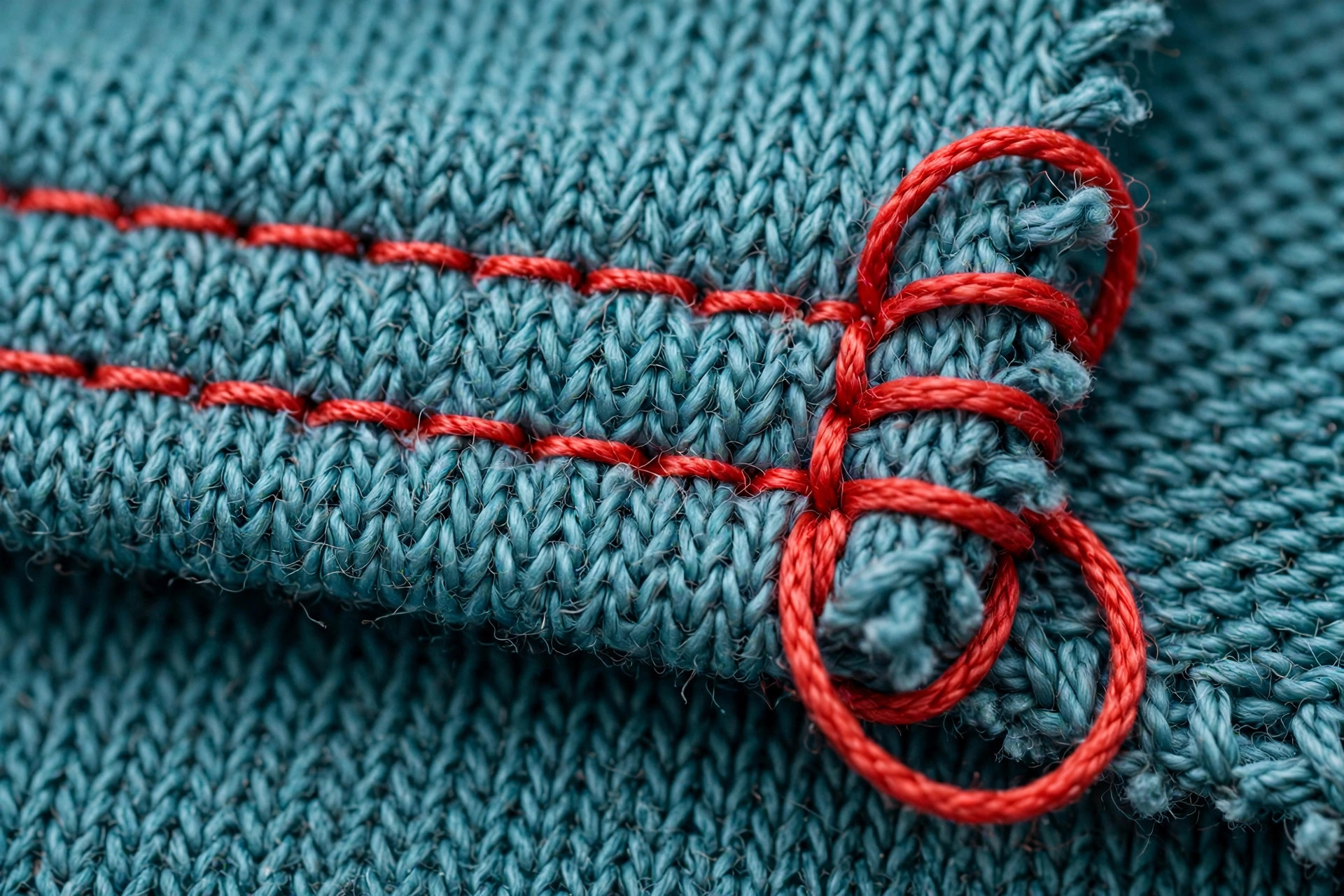 Stitch 512 — Mock Safety StitchFour threads imitating a safety stitch in one pass.
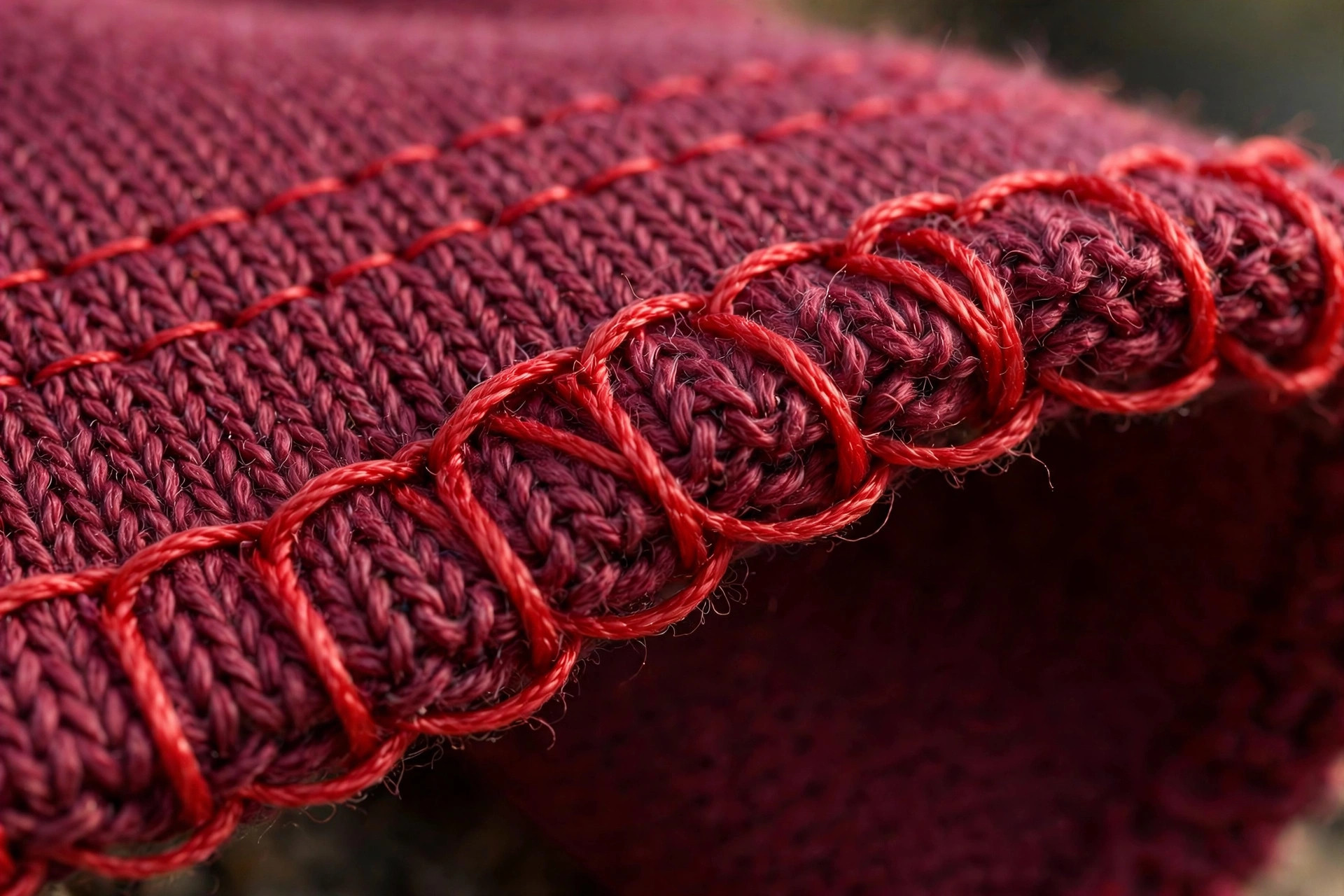 Stitch 514 — Four-Thread OveredgeTwo needles, two loopers: the strong knitwear seam stitch.
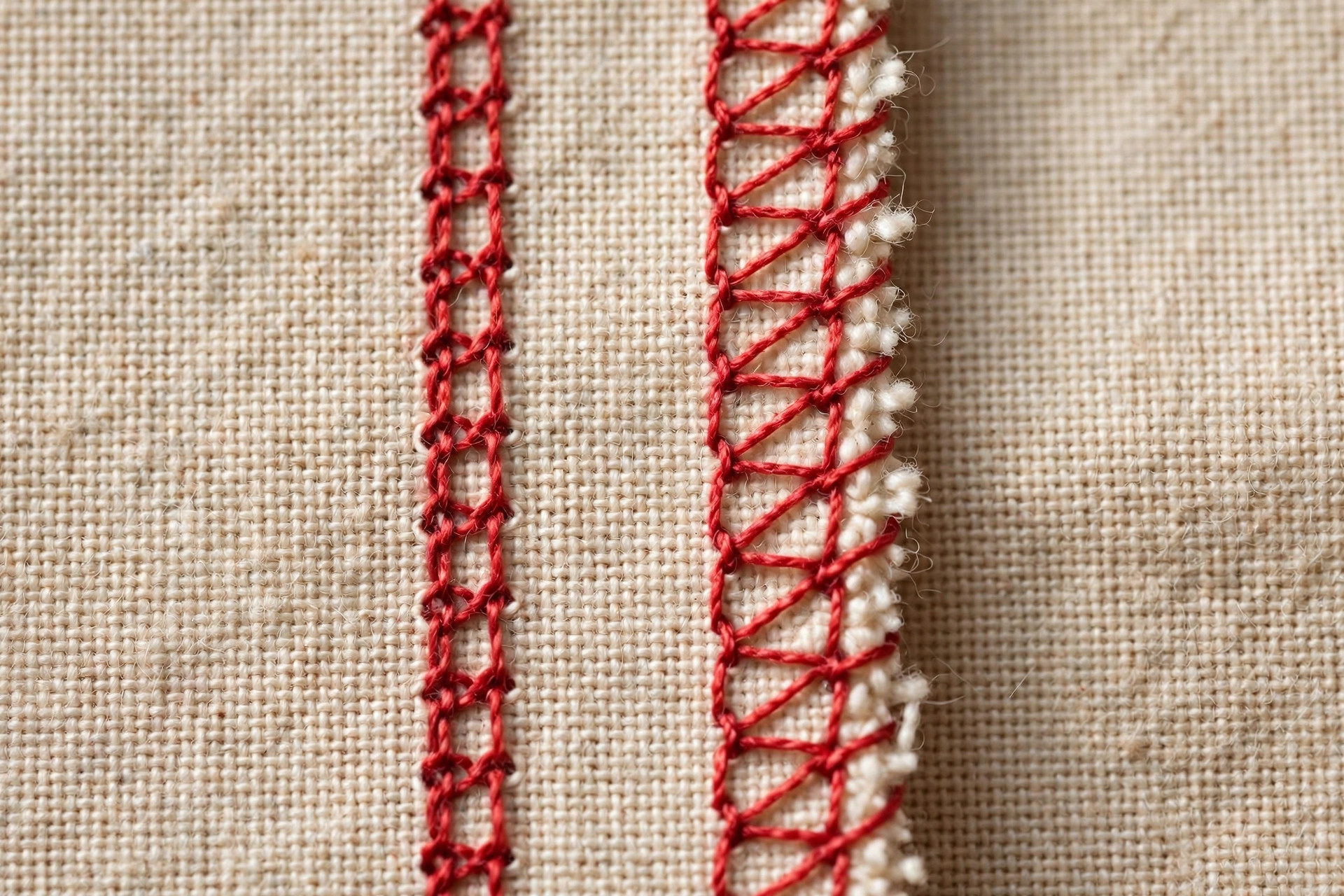 Stitch 515 — Four-Thread Safety StitchA 401 chainstitch row plus a 503 overedge row, sewn together.
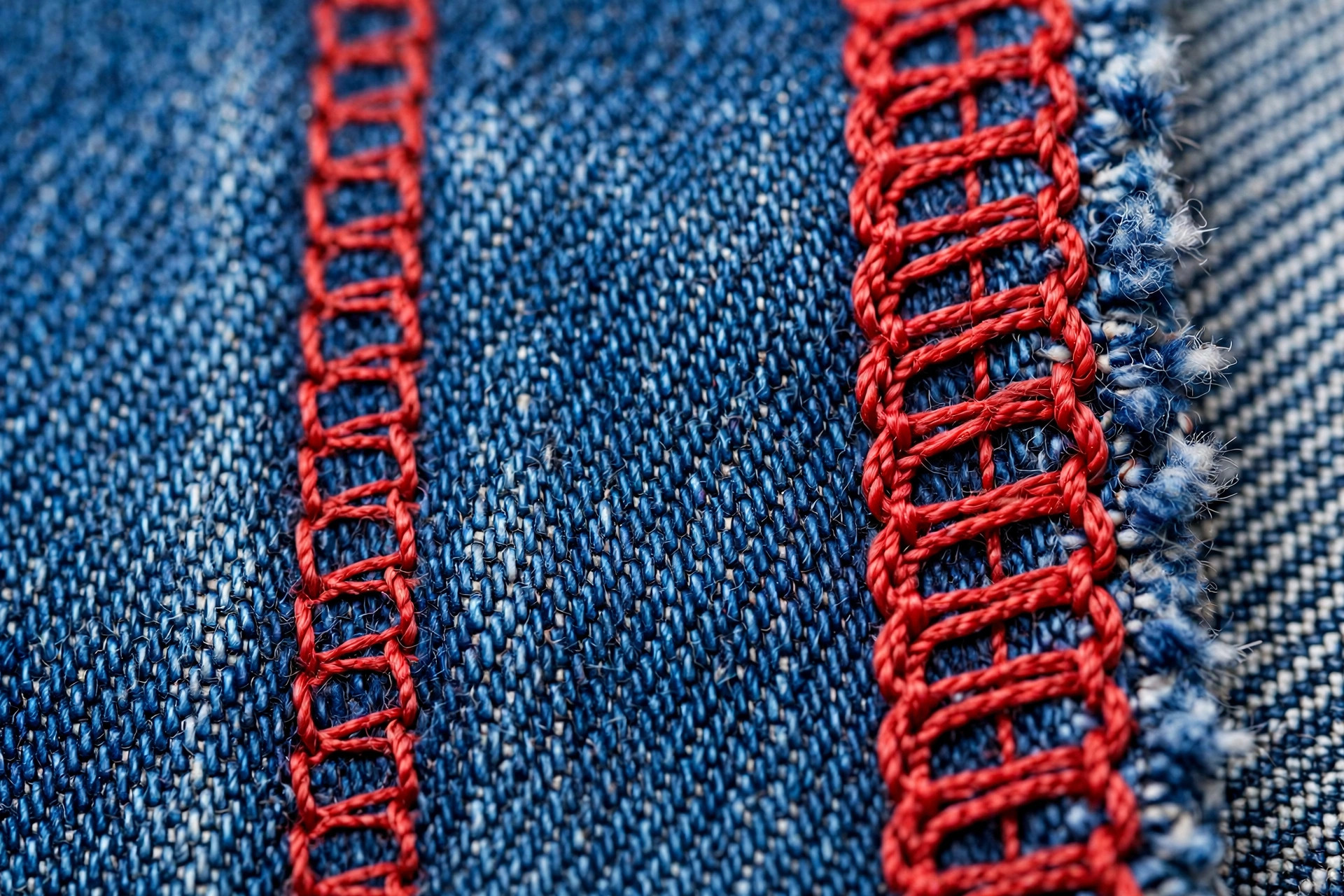 Stitch 516 — Five-Thread Safety StitchA 401 chainstitch row plus a 504 overedge row, sewn together.
 Stitch Class 500 — OveredgeThe whole class: how overedge stitches form, and how all eight types compare.
More to Explore
Search Apparel Search
Stitch and seam classifications follow ASTM D-6193, Standard Practice for Stitches and Seams. Diagrams on these pages are original Apparel Search drawings.