Stitch 512 · Class 500 Overedge
Stitch 512 — Mock Safety Stitch
Stitch 512 is the four-thread mock safety stitch: two needle threads and two looper threads formed as a single overedge formation whose left needle row imitates the separate seam line of a true safety stitch. It seams with a wide bite and great stretch — but the imitation is only skin deep, and that difference matters.
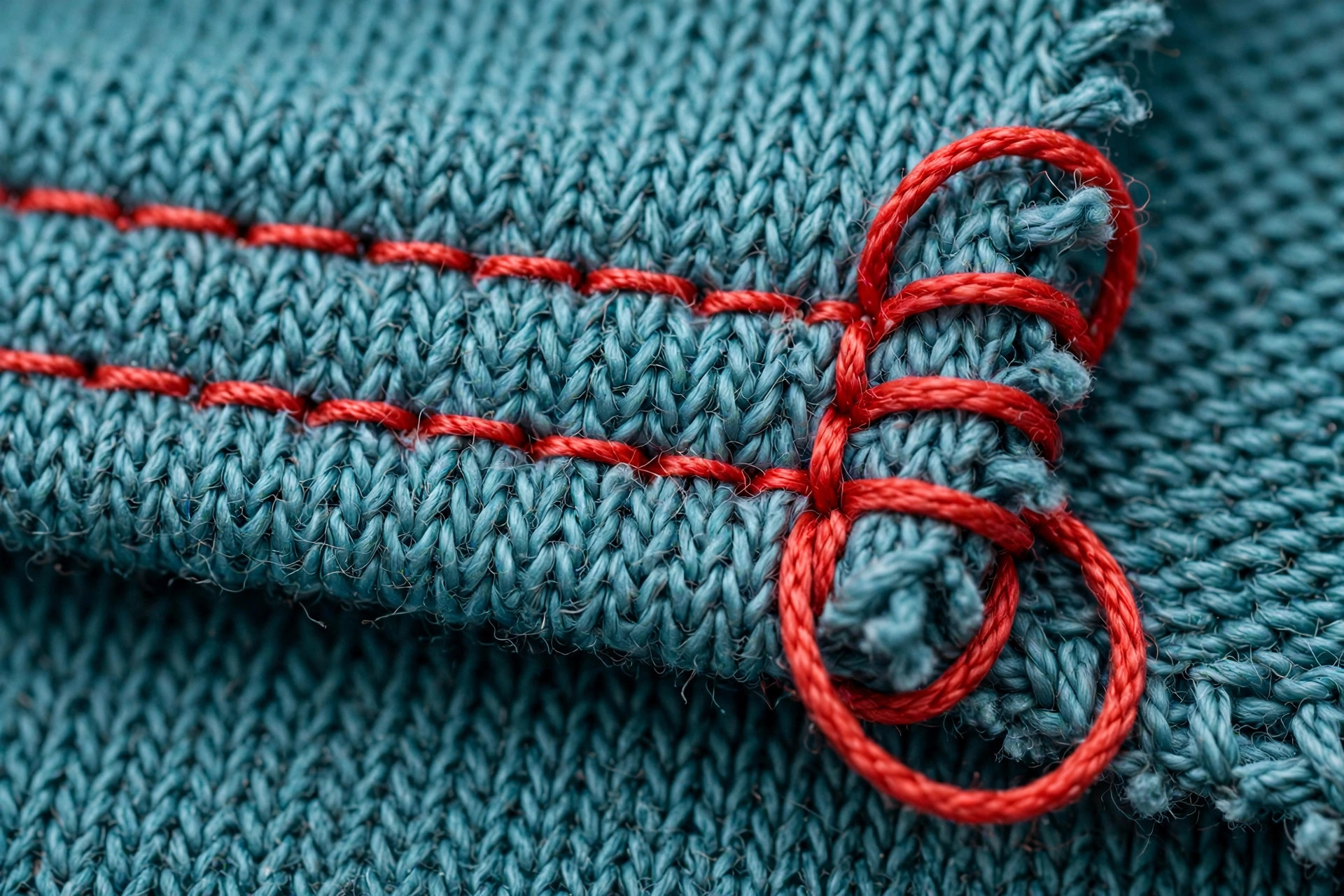
What Stitch 512 Is
Stitch 512 exists to answer a production question: how do you get the look and much of the performance of a safety stitch from one overedge formation, without a second stitch system? The machine runs two needles side by side within one wide bite. The right-hand needle works at the edge with the two loopers in the usual overedge wrap; the left-hand needle, set further from the edge, lays a row that reads — from the top — like the independent seam line of a safety stitch.
The catch is underneath. In a true safety stitch (515, 516) the seam row is a separate chainstitch with its own looper thread: cut the overedge away and the seam still stands. In 512, both needle rows interloop with the same looper threads. The rows are partners in one formation, not independent systems — which is why the trade calls 512 a mock safety stitch, and why its failure behaviour, described below, differs from the real thing.
How Stitch 512 Forms
- The knives trim the edge, and both needles descend together: the right needle near the edge, the left needle a needle-gauge further in, each carrying its own thread through the material.
- The lower looper passes beneath, taking up both needle-thread loops in turn and carrying its thread out to the edge.
- The upper looper crosses the top from the edge back across both needle lines, interlooping with the lower looper at the edge to form the purl.
- Both needle threads interloop with the shared looper threads — the left needle's interlooping gives its row the straight, seam-like appearance on the top.
- The formation draws up: one wide stitch with two needle rows and a wrapped edge. The feed advances and the cycle repeats.
Formation diagram for stitch 512, shown in cross-section at the fabric edge. Red is the needle thread; dark blue is the looper thread. Illustration by Apparel Search.
The Threads
| Element | Detail |
|---|---|
| Thread count | 4 — two needle threads, two looper threads (upper and lower). |
| Left needle thread | Forms the seam-like row set in from the edge — the row that imitates a safety stitch's seam line. |
| Right needle thread | Works at the edge as the overedge needle, anchoring the wrap. |
| Upper & lower looper threads | Shared by both needle rows: they wrap the edge and interloop with each needle thread. This sharing is exactly what makes the stitch a mock safety. |
| Typical threads | Spun polyester needle threads; texturized looper threads for soft, stretchy knit seaming. |
| Thread use | High — a wide, dense formation; comparable to 514 and well above 504. |
What It Looks Like
On the top, stitch 512 shows two parallel needle rows with the upper looper thread filling the ground between the right-hand row and the edge, where the purl sits. The left row looks for all the world like a separate seam — that resemblance is the stitch's selling point.
On the underside the truth appears: the lower looper thread runs in long diagonals that serve both needle rows, tying them into one formation. A true safety stitch's underside shows two separate systems — a chain under the seam row and a wrap at the edge. Learn to read the underside and you can tell a mock safety from a real one at a glance.
Strengths and Limits
Strengths
- Seams and finishes in one pass, with the reassuring two-row look of a safety stitch.
- Wide bite and long looper paths give it the greatest stretch of the two-needle overedge types — prized for knits.
- Stronger and more secure than single-needle 504 for seaming duty.
- One machine, one formation: simpler and cheaper to run than a true safety-stitch machine.
Limits
- Not a true safety stitch: the rows share looper threads, so if the formation is ruptured it can unravel in a way a 515 or 516 seam cannot.
- If the seam row is damaged, there is no independent second system to hold the garment.
- Wide and thread-hungry; the broad wrap is bulkier inside the garment than a 514 seam.
Where Stitch 512 Is Used
Stitch 512 is a knitwear seaming stitch: T-shirts, sweatshirts, underwear, swimwear and activewear are seamed with it where a wide, forgiving, highly extensible seam is wanted, and its broad bite tolerates the uneven edges of lofty and textured knits better than narrower formations. It also seams light wovens in casual garments where its stretch does no harm.
Typical fabrics: jersey, rib and interlock knits, fleece, stretch wovens and other extensible goods. Choose stitch 514 when the same four threads should form the tighter, cleaner overedge seam; choose a true safety stitch — 515 or 516 — whenever the seam must survive the failure of its edge finish.
Common Questions
Why is stitch 512 called a mock safety stitch?
Because it imitates one. Its left needle row looks like the independent seam line of a safety stitch, but both needle rows interloop with the same looper threads — there is only one formation. In a true safety stitch the seam row (401) and the overedge row are separate systems that can each stand alone.
How can I tell stitch 512 from a true safety stitch?
Turn the seam over. Under a 512, one looper thread pattern serves both needle rows. Under a 515 or 516 you will see two distinct systems: chain loops beneath the seam row and a separate wrapped edge.
Is stitch 512 weaker than stitch 514?
They use the same four threads differently. 514 puts both needle threads into the upper looper loop for a compact, balanced seam; 512 spreads its bite wider for stretch and the safety look. 514 is generally preferred for clean production seaming — it also chains off better — while 512 is chosen for width and extensibility.
Sources & the photographic reference
The stitch and seam classifications on this page follow ASTM D-6193, Standard Practice for Stitches and Seams, explained here in Apparel Search's own words with original diagrams. For photographs of these stitches and seams, see the Garmenco guide's Class 500 page — Professor Bernard Kahn's photographic guide, which Apparel Search has recommended for years and continues to link as the photo reference for this classification. Our guide is the permanent on-site companion to it.
Related Stitches
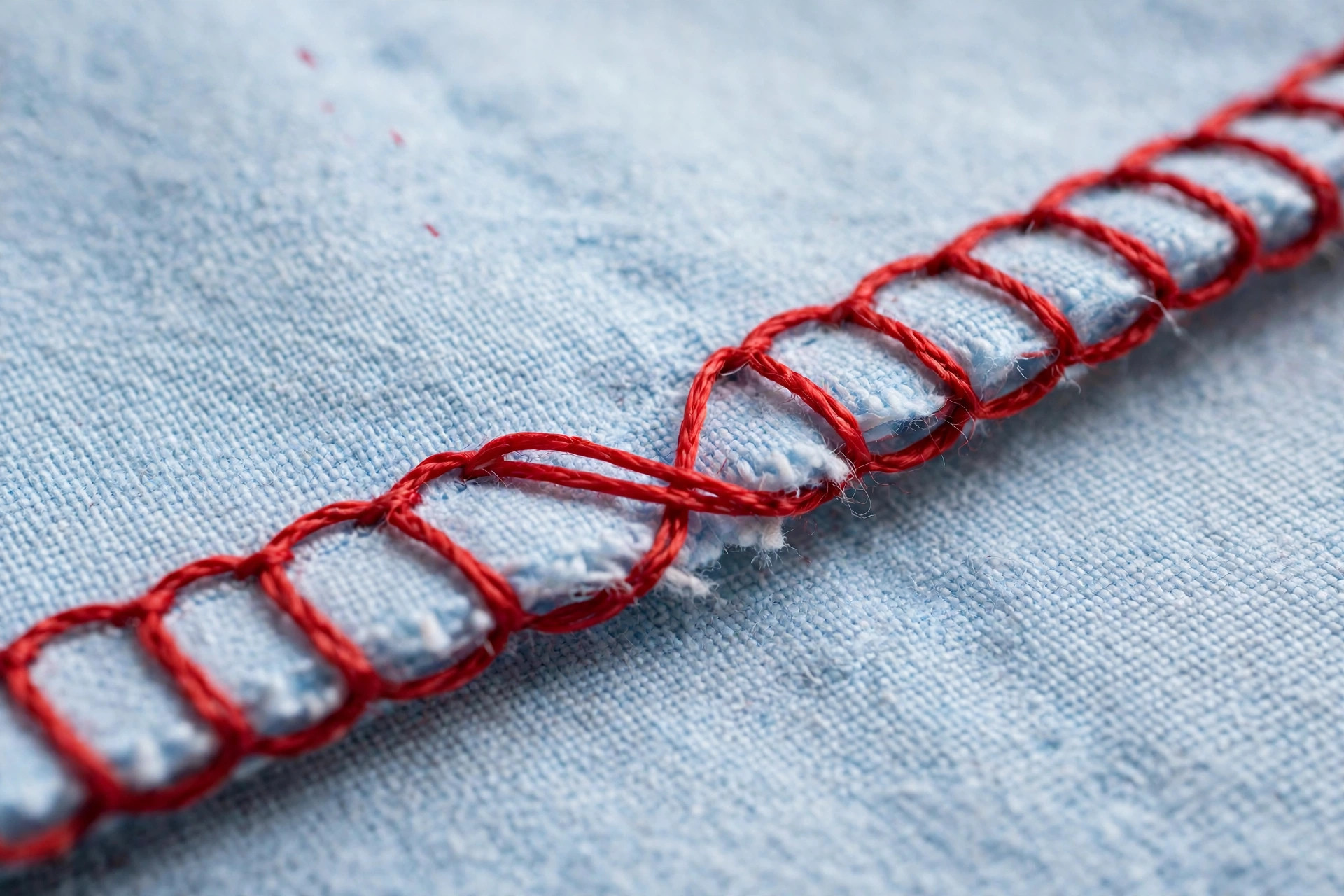 Stitch 503 — Two-Thread OveredgeOne needle, one looper: the lightest edge finish in the class.
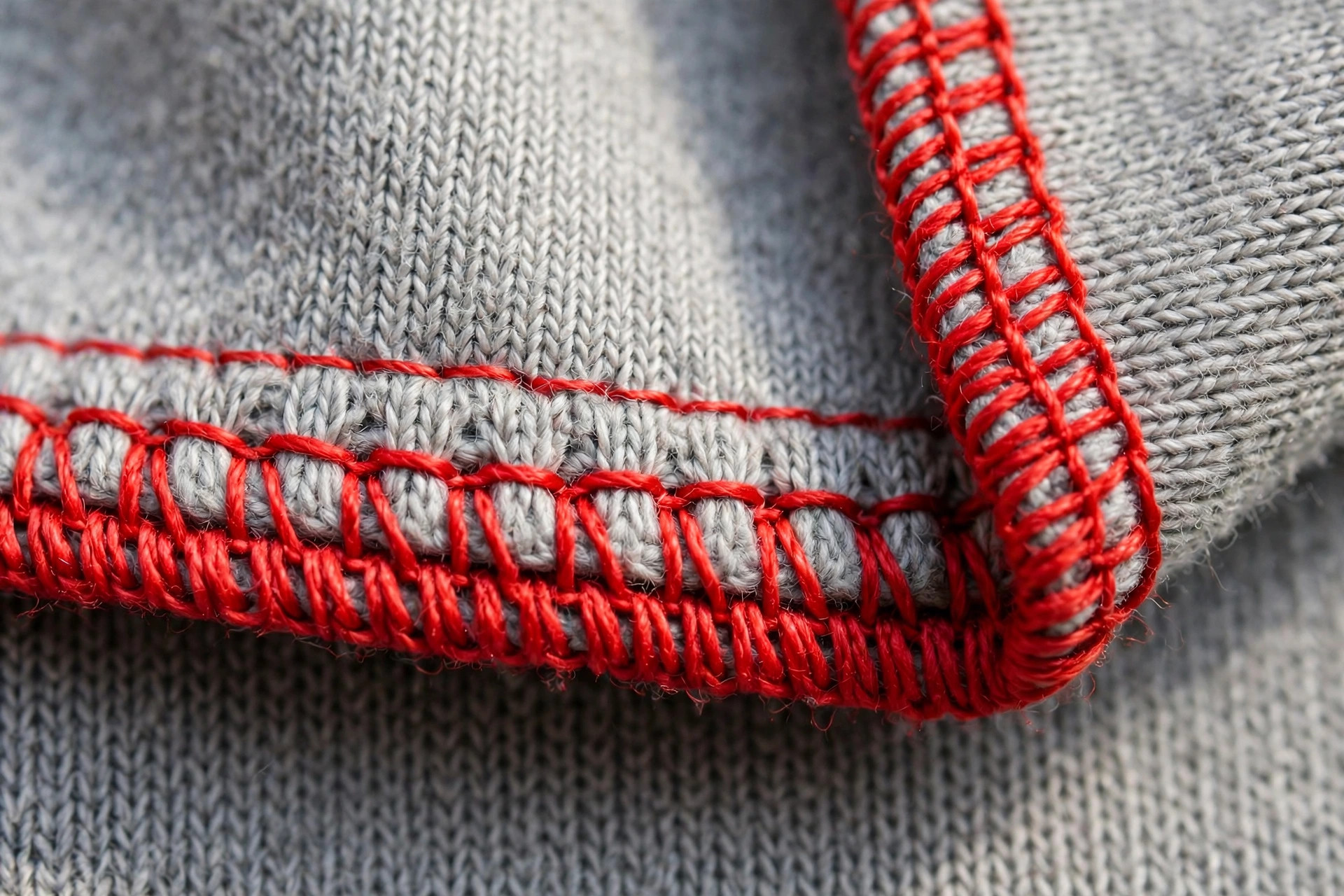 Stitch 504 — Three-Thread OveredgeThe standard serger stitch — one needle, two loopers.
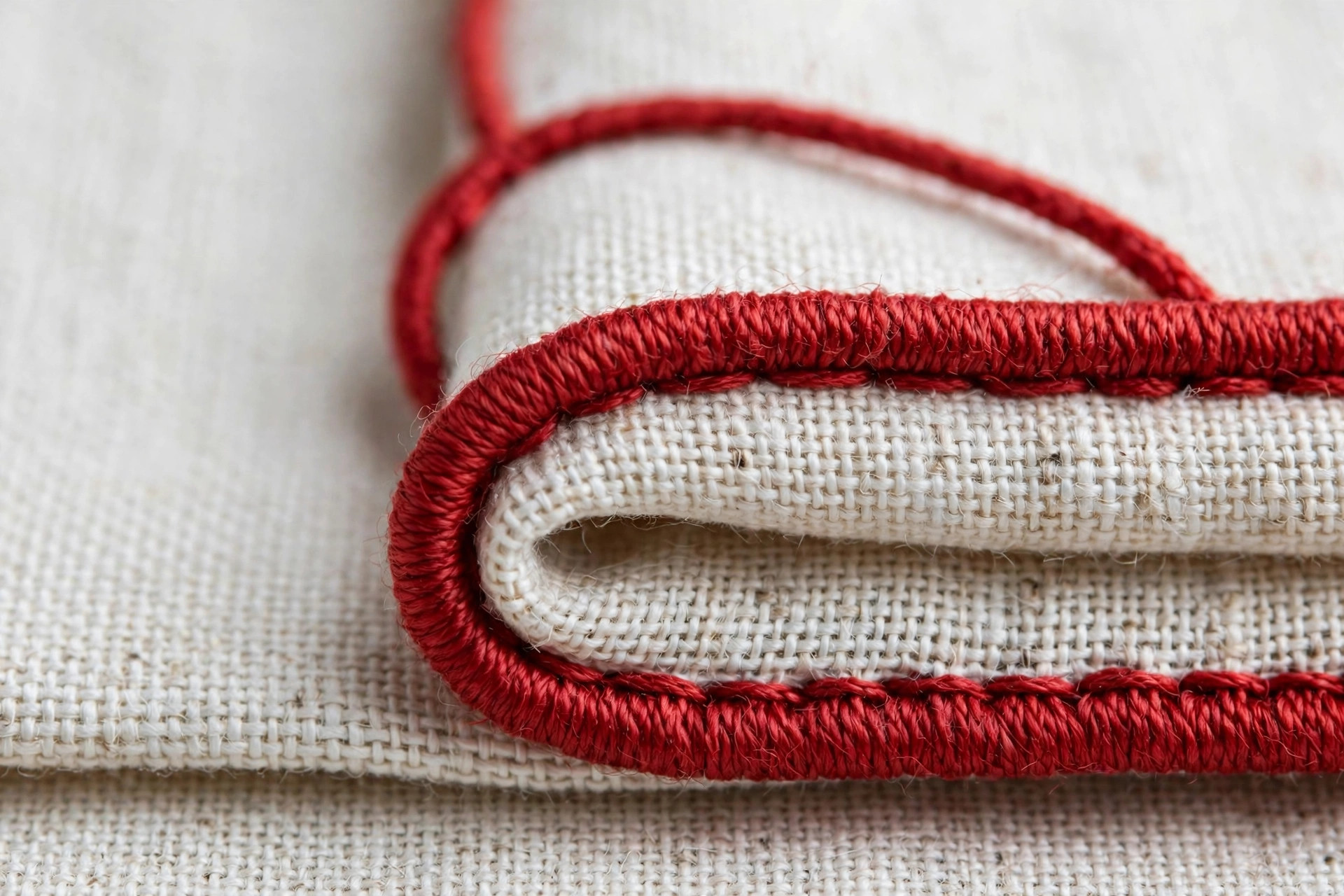 Stitch 505 — Double-Purl OveredgeThree threads building a doubled purl cord on the edge.
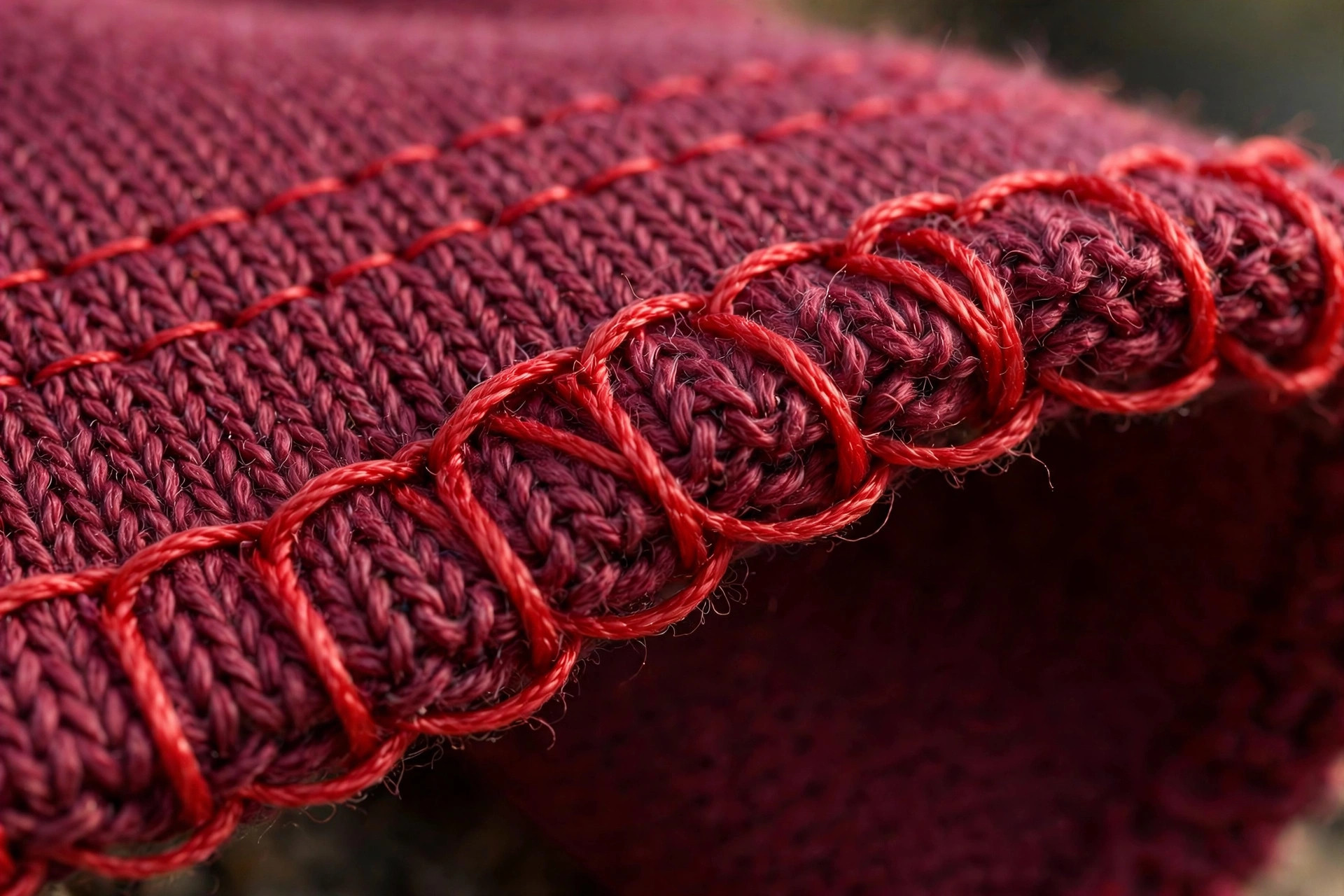 Stitch 514 — Four-Thread OveredgeTwo needles, two loopers: the strong knitwear seam stitch.
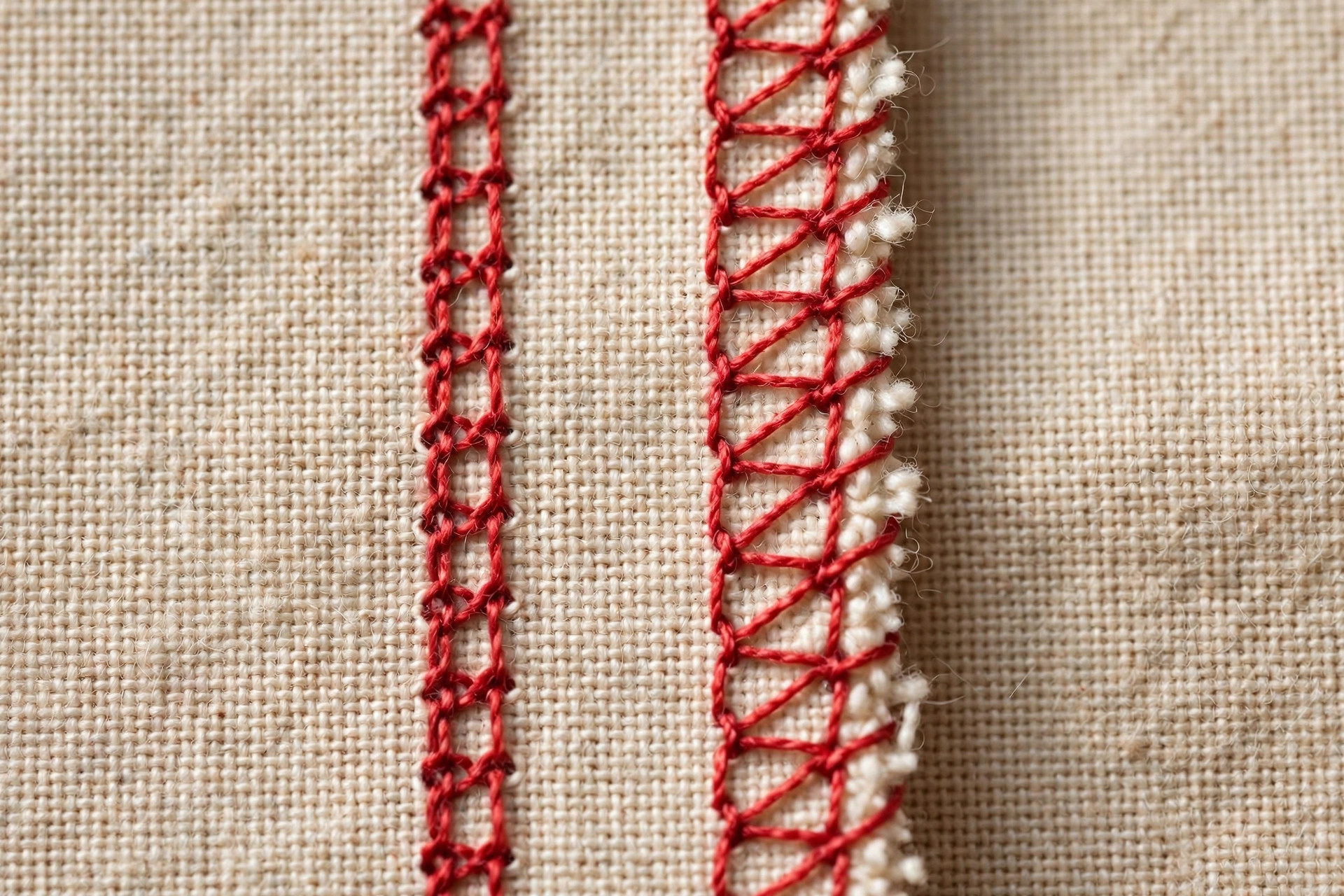 Stitch 515 — Four-Thread Safety StitchA 401 chainstitch row plus a 503 overedge row, sewn together.
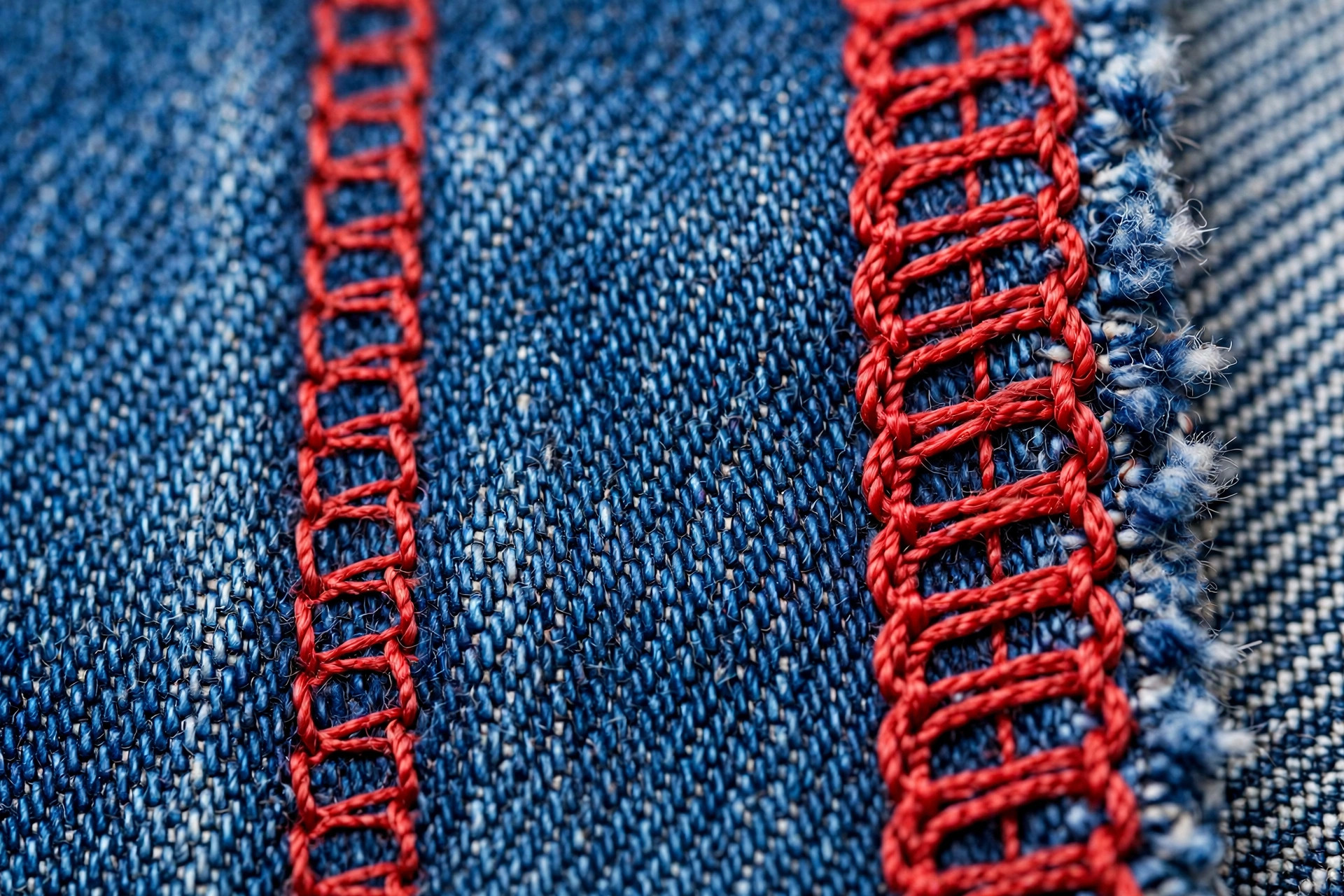 Stitch 516 — Five-Thread Safety StitchA 401 chainstitch row plus a 504 overedge row, sewn together.
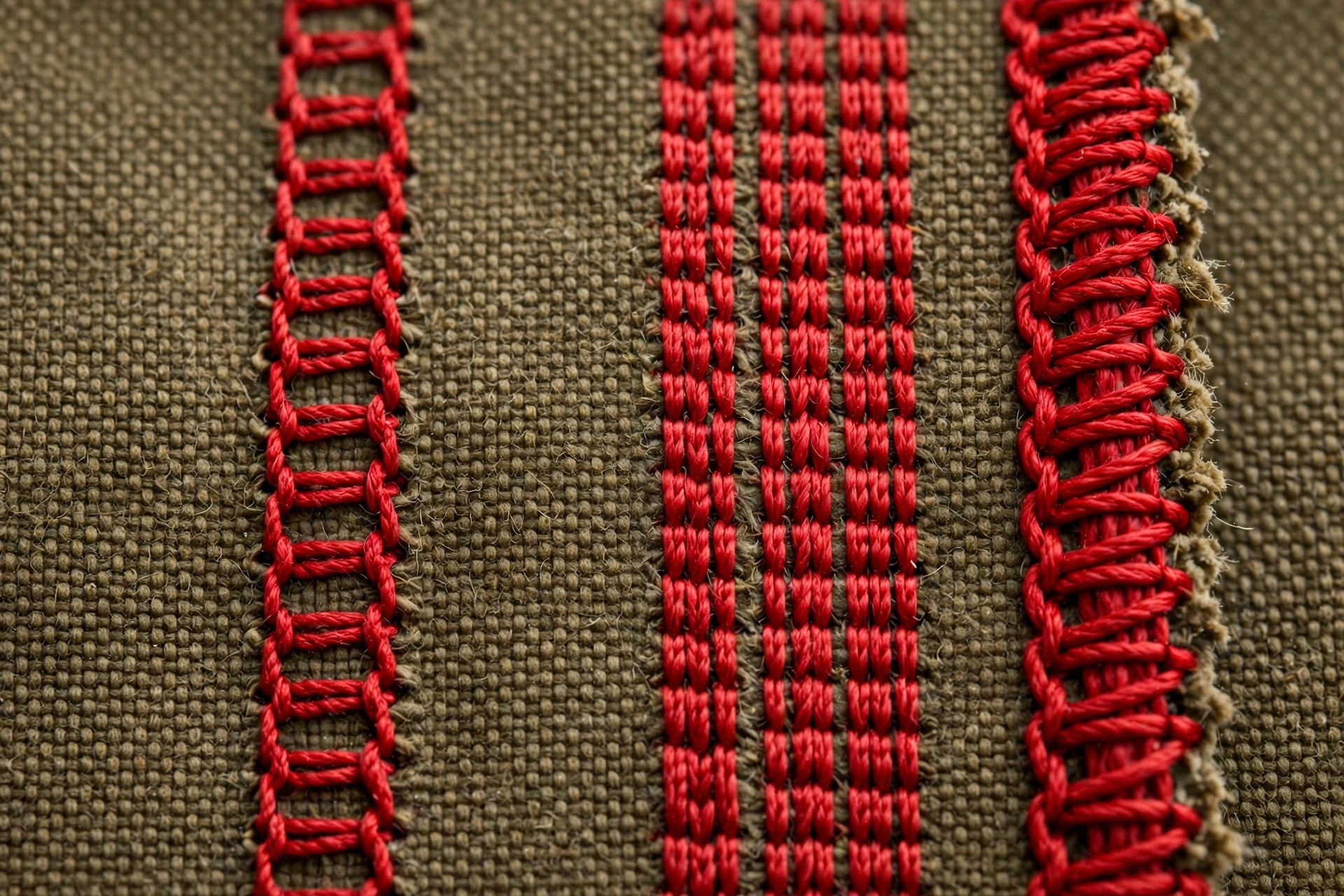 Stitch 519 — Six-Thread Safety StitchA 401 chainstitch row plus a wide 514 overedge row.
 Stitch Class 500 — OveredgeThe whole class: how overedge stitches form, and how all eight types compare.
More to Explore
Search Apparel Search
Stitch and seam classifications follow ASTM D-6193, Standard Practice for Stitches and Seams. Diagrams on these pages are original Apparel Search drawings.