Stitch 505 · Class 500 Overedge
Stitch 505 — Double-Purl Overedge
Stitch 505 is the three-thread overedge stitch with a double purl: formed with the same one needle and two loopers as stitch 504, but the looper threads interloop twice at the edge, building a doubled, raised cord of thread that covers and protects the raw edge. It is the merrow-style edging stitch.
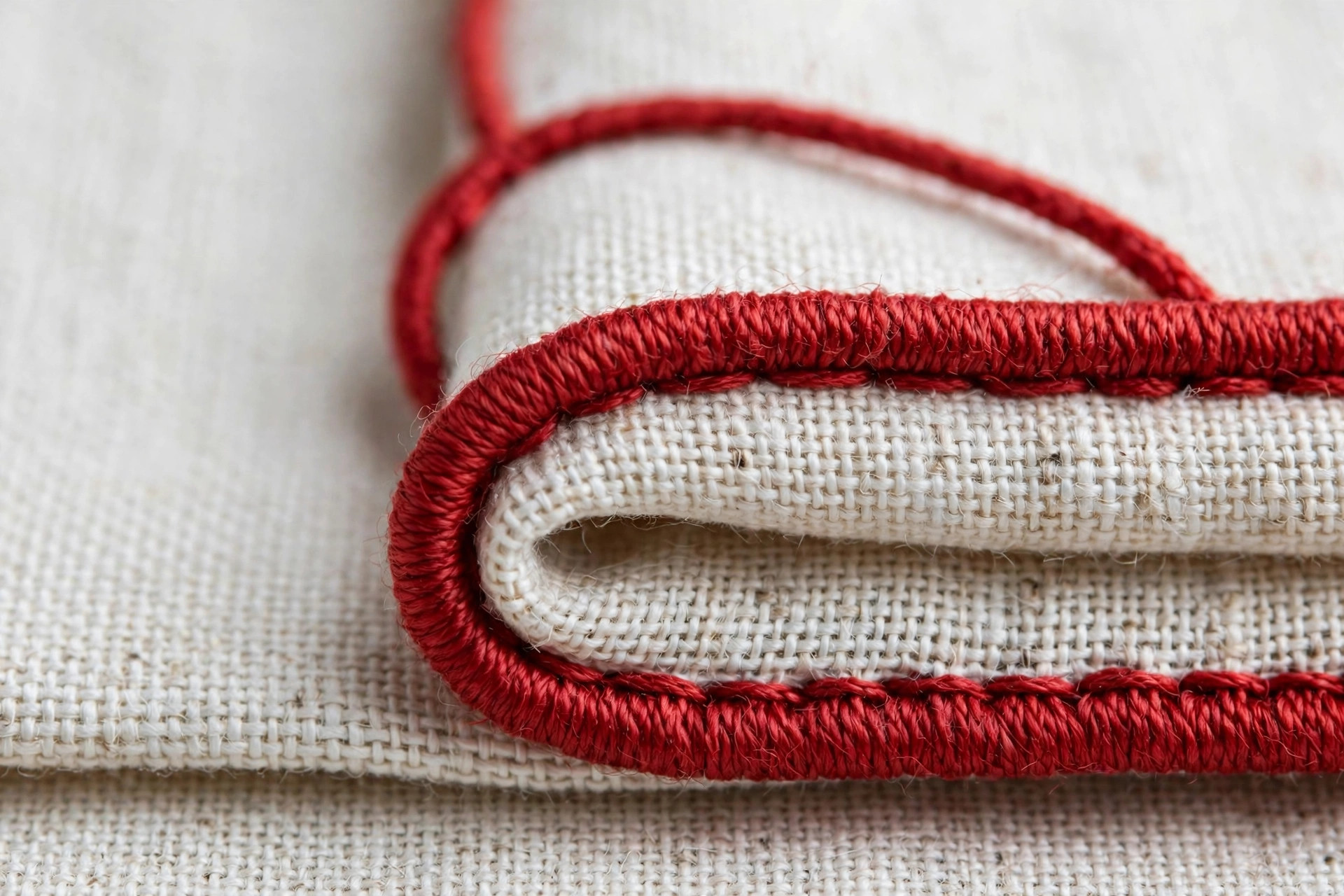
What Stitch 505 Is
Stitch 505 is 504's decorative, protective sibling. The thread set is identical — one needle thread, an upper looper and a lower looper — but the timing and tension of the formation are arranged so the looper threads meet and interloop twice at the edge instead of once. Each stitch therefore lays a doubled loop — a double purl — along the edge, and the purls accumulate into a continuous raised cord.
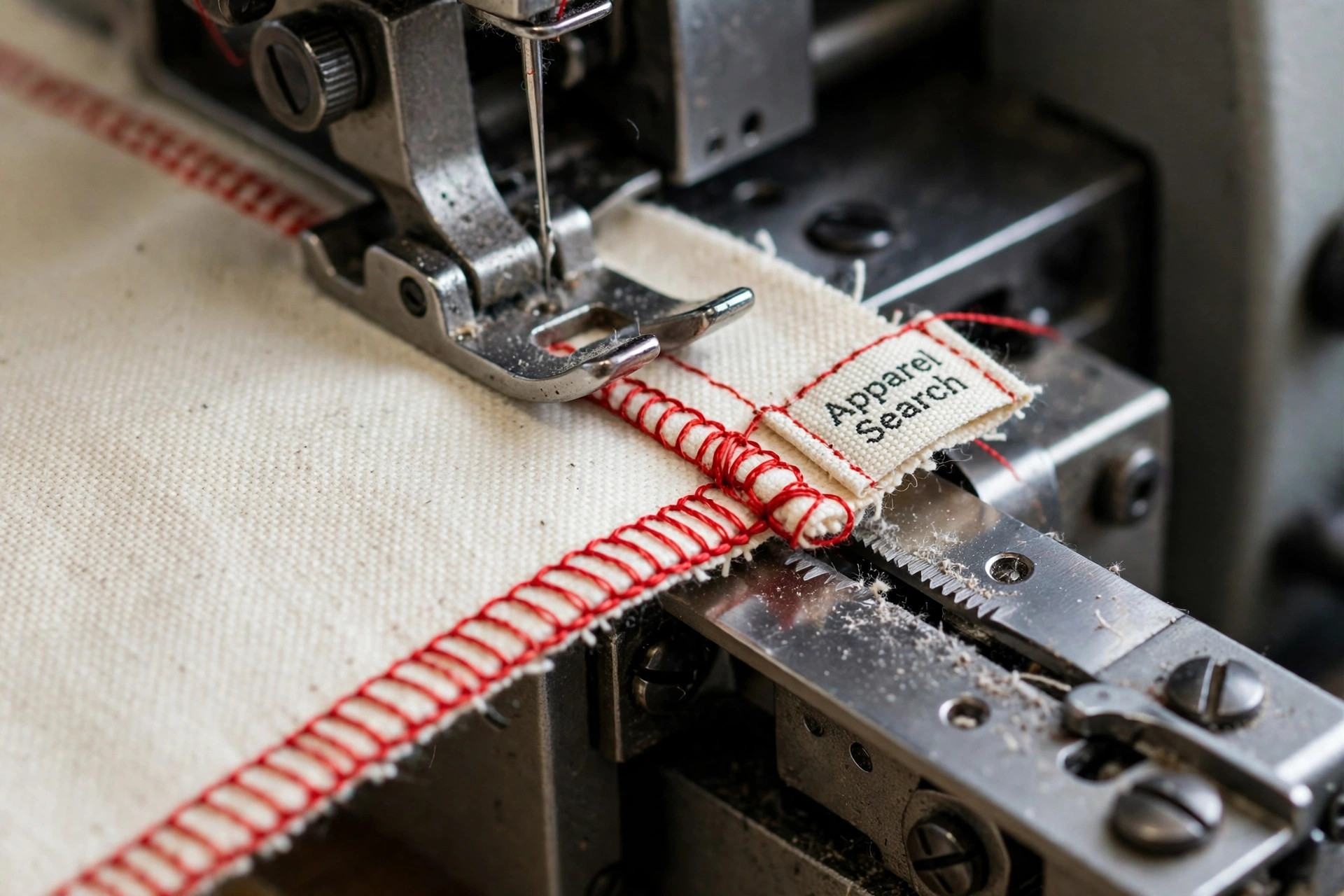
That cord is the point of the stitch. It stands proud of the fabric, takes abrasion that would otherwise strike the edge itself, and gives a crisp, deliberate outline — which is why 505 is the stitch of embroidered badges and patches, table linen and blanket edges, where the edging is meant to be seen and to last. It is a serging stitch, not a seaming one: its work is all at the edge.
How Stitch 505 Forms
- The knives trim the edge, and the needle carries its thread down through the material at the set bite, as in stitch 504.
- The lower looper takes the needle-thread loop beneath the material and carries its thread out to the edge.
- The upper looper meets the lower looper at the edge and the two interloop — then, instead of separating, they interloop a second time, doubling the purl before the formation closes.
- The needle descends through the upper looper's thread and the cycle's interloopings are drawn up, seating the doubled purl snugly on the edge as a raised cord.
- The feed advances and the next double purl forms beside the first; together they build the continuous protective cord.
Formation diagram for stitch 505, shown in cross-section at the fabric edge. Red is the needle thread; dark blue is the looper thread. Illustration by Apparel Search.
The Threads
| Element | Detail |
|---|---|
| Thread count | 3 — one needle thread, two looper threads (upper and lower). |
| Needle thread | Anchors the formation in the material and forms the line of segments on the top, exactly as in 504. |
| Upper looper thread | Crosses the top and supplies one half of the doubled interlooping at the edge. |
| Lower looper thread | Crosses the underside and completes the double purl; the two looper threads together build the cord. |
| Typical threads | Slightly heavier or lustrous threads are common — rayon and decorative threads for visible edging, sturdy spun threads for protective work; the cord shows the thread, so thread choice is a design choice. |
| Thread use | The highest of the single-needle types: the doubled purl consumes noticeably more looper thread than 504. |
What It Looks Like
On the top, stitch 505 resembles 504 until your eye reaches the edge — where instead of a slim purl there is a rounded, cord-like ridge, visibly doubled, standing proud of the surface. On the underside the same cord wraps the edge, so the fabric's raw edge is nowhere visible at all: it lives inside the cord.
The effect is deliberate and finished — an outlined edge, like piping without a filler. On a badge or a napkin corner the cord turns neatly and evenly, which is precisely the work this stitch was developed to do.
Strengths and Limits
Strengths
- The most protective edge finish in the class: the doubled cord absorbs abrasion before the fabric edge can.
- A clean, decorative outline — the edging is a design feature, not just a finish.
- Complete coverage: no raw yarn can escape the cord, even on coarse, fray-prone goods.
- Holds a crisp edge on goods that are handled and laundered hard.
Limits
- Not a seaming stitch: like the other single-needle types it finishes edges rather than carrying structural seams.
- The raised cord is bulky — wrong inside a garment where a flat finish is needed.
- Uses the most thread of the single-needle types, and asks more of machine setup and tension balance.
Where Stitch 505 Is Used
Stitch 505 is the merrow-style edging stitch: embroidered patches and badges are finished with it all over the world, and the same corded edge finishes table napkins, placemats and tablecloths, blankets and throws, washcloths and towels, and the edges of flags and banners. Anywhere a free edge must be both protected and presented, 505 is the candidate.
Typical fabrics: medium wovens — linen, cotton duck and canvas, blanket wools and fleeces — firm enough to carry the cord. For an invisible inside finish choose 503 or 504 instead; 505 belongs where the edge is on show.
Common Questions
What is a double purl?
The purl is the row of looper-thread interloopings along the very edge of an overedge stitch. In stitch 505 the two looper threads interloop twice at each stitch instead of once, so every purl is doubled — building the raised, corded edge that distinguishes 505 from 504.
Is stitch 505 the same as a merrow stitch?
In character, yes: the dense, corded edge produced by machines of the Merrow type is the classic application of this formation, and 'merrowing' is the trade name most often attached to 505-style edging on badges, linen and blankets.
Why is stitch 505 not on every serger?
It needs a machine timed and tensioned for the doubled interlooping — historically a dedicated edging machine rather than a general serger setting. General-purpose overlock machines concentrate on 503, 504, 512 and 514.
Sources & the photographic reference
The stitch and seam classifications on this page follow ASTM D-6193, Standard Practice for Stitches and Seams, explained here in Apparel Search's own words with original diagrams. For photographs of these stitches and seams, see the Garmenco guide's Class 500 page — Professor Bernard Kahn's photographic guide, which Apparel Search has recommended for years and continues to link as the photo reference for this classification. Our guide is the permanent on-site companion to it.
Related Stitches
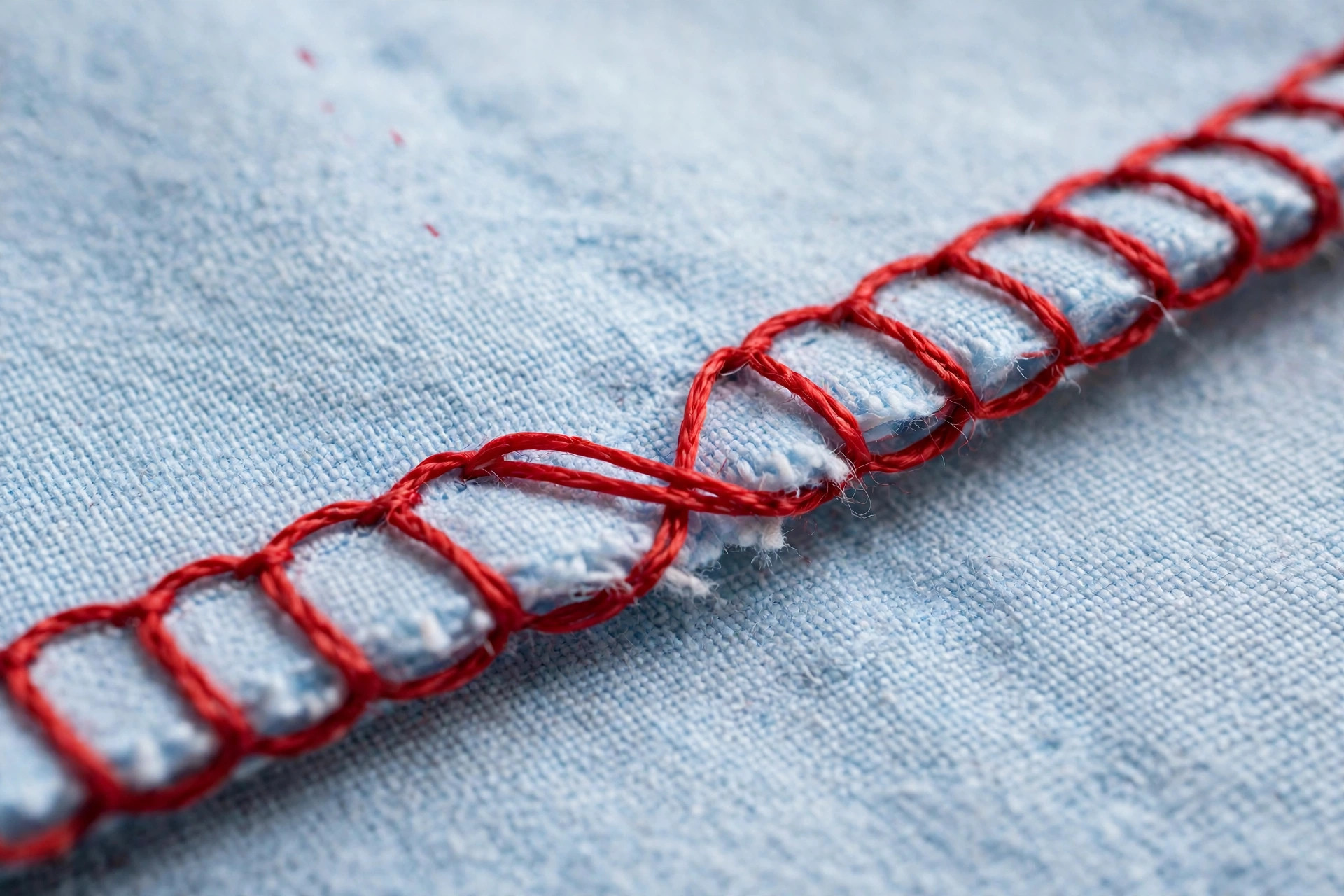 Stitch 503 — Two-Thread OveredgeOne needle, one looper: the lightest edge finish in the class.
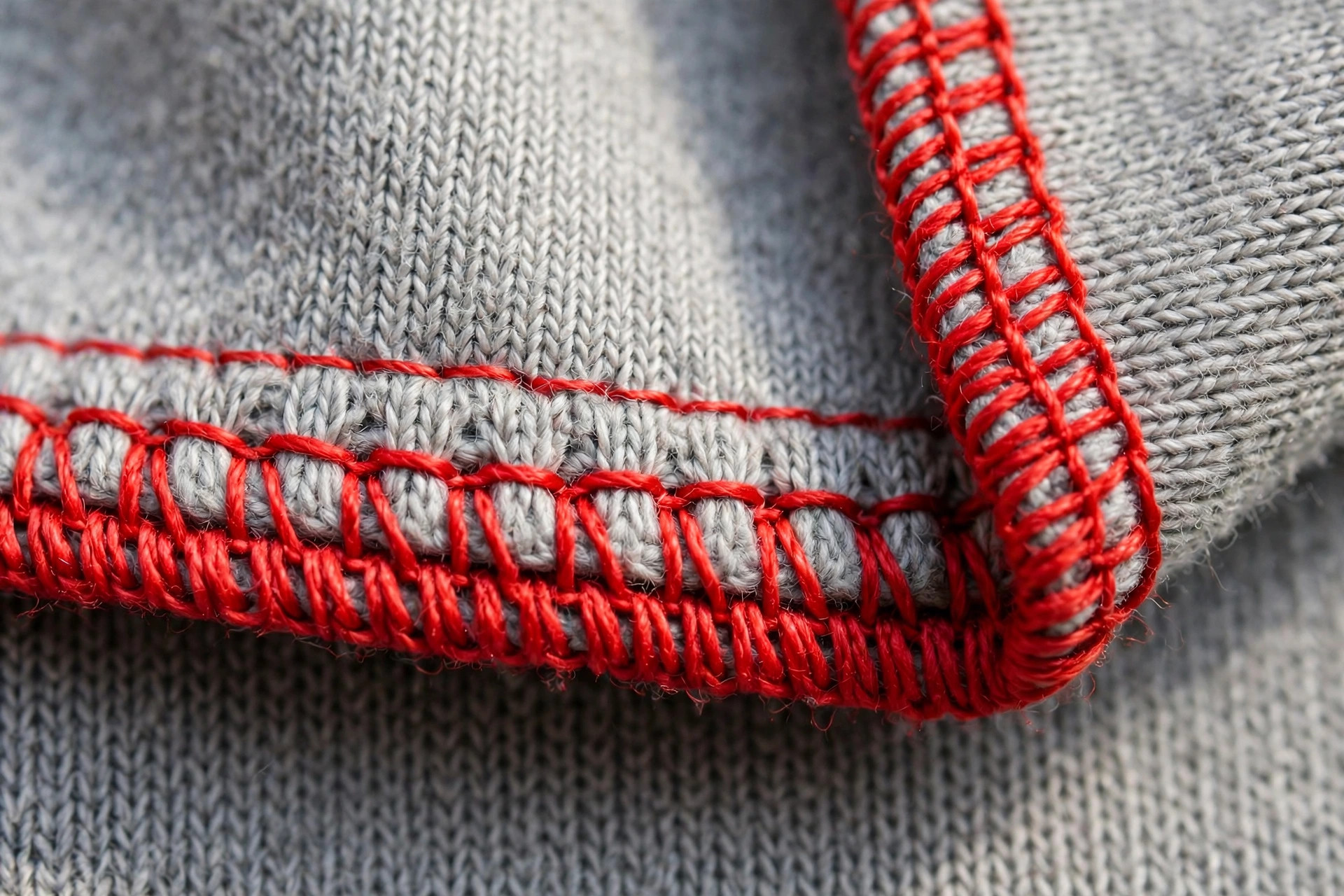 Stitch 504 — Three-Thread OveredgeThe standard serger stitch — one needle, two loopers.
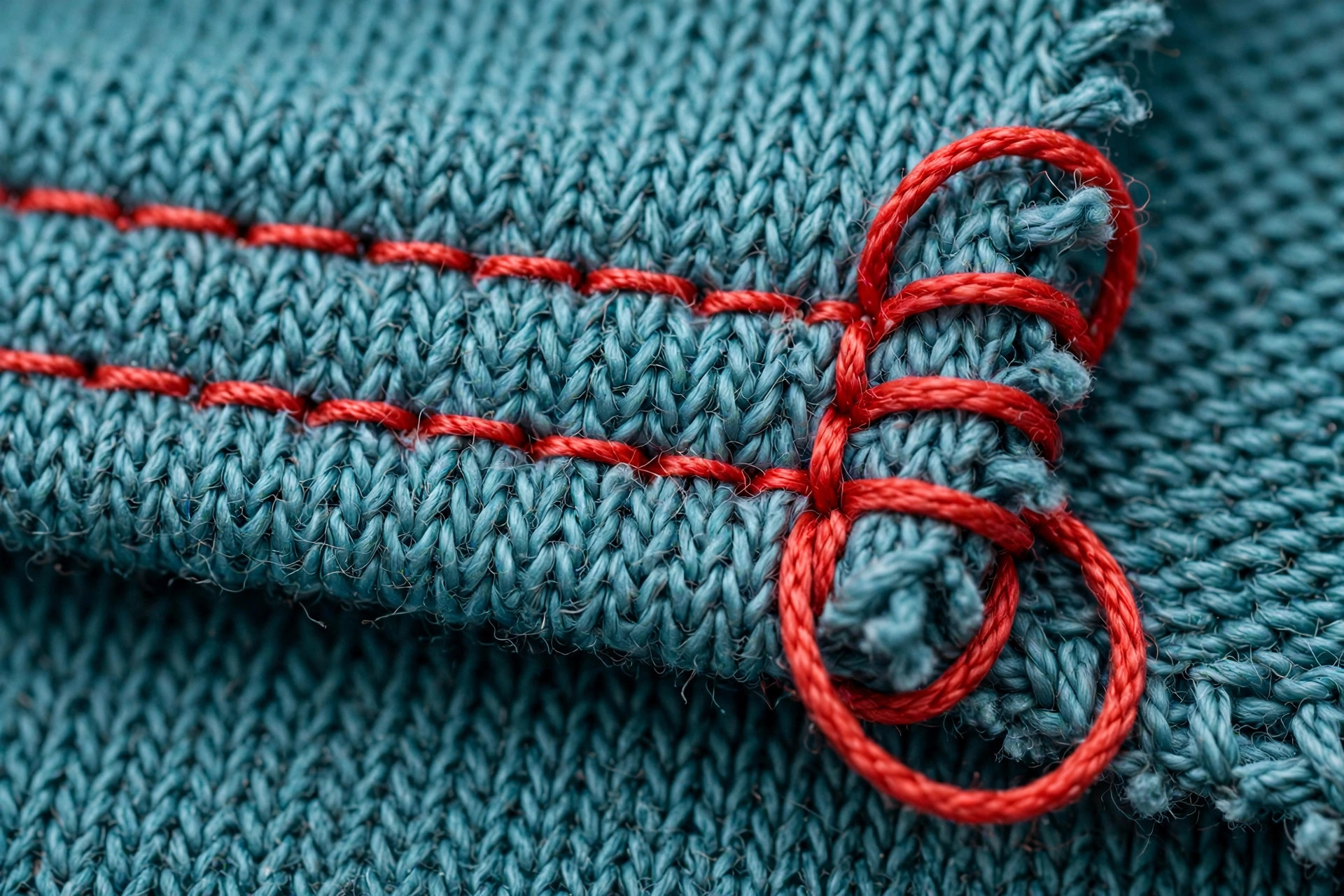 Stitch 512 — Mock Safety StitchFour threads imitating a safety stitch in one pass.
 Stitch 514 — Four-Thread OveredgeTwo needles, two loopers: the strong knitwear seam stitch.
 Stitch 515 — Four-Thread Safety StitchA 401 chainstitch row plus a 503 overedge row, sewn together.
 Stitch 516 — Five-Thread Safety StitchA 401 chainstitch row plus a 504 overedge row, sewn together.
 Stitch 519 — Six-Thread Safety StitchA 401 chainstitch row plus a wide 514 overedge row.
 Stitch Class 500 — OveredgeThe whole class: how overedge stitches form, and how all eight types compare.
More to Explore
Search Apparel Search
Stitch and seam classifications follow ASTM D-6193, Standard Practice for Stitches and Seams. Diagrams on these pages are original Apparel Search drawings.