Stitch Class 400 · Multi-Thread Chain Stitch
Stitch Class 400 — Multi-Thread Chain Stitches
Class 400 is the multi-thread chain stitch family of ASTM D-6193: one or more needle threads work with a looper thread underneath the material, their loops interlaced and interlooped against the underside. There is no bobbin in this class — and that one change buys stretch, speed and very long uninterrupted seams. This guide illustrates three types: 401, the two-thread chain stitch; 406, the two-needle bottom cover stitch; and 407, its three-needle counterpart.
Search Apparel Search
What Makes a Class 400 Stitch a Class 400 Stitch
Every stitch in Class 400 is formed from two groups of thread. The first group — one, two or three needle threads — is carried down through the material by the needles. The second group is a single looper thread, worked by a looper beneath the needle plate; there is no bobbin anywhere in the class. Underneath the material, the loops of the needle threads are interlaced and interlooped with loops of the looper thread, and the interloopings are drawn up against the underside of the material. That underside looping is the class signature: turn any Class 400 seam over and you will find a chain of loops, or — in the cover stitches — a woven web of looper thread.
Because the threads meet underneath rather than inside the material, a Class 400 seam keeps more thread in reserve than a lock stitch seam. That reserve is the class's character in one fact. It lets the seam stretch — modestly in the single-row 401, generously in the cover stitches 406 and 407, whose looper webs can extend like a net. It lets the machine run without stopping, since needle and looper threads alike feed from large cones instead of a small bobbin. And it carries the class's one real weakness: a chain of loops can be pulled out from the end. Break or free the looper thread at the finishing end of a 401 seam and the whole seam can run back, stitch by stitch — which is why chain-stitched seams are secured at their ends by bartacks, by a crossing seam, or by sewing the tail back into the work.
How every Class 400 stitch forms: needle loops and looper loops interlaced and interlooped on the underside of the material. Illustration by Apparel Search.
The three types in this guide span the class's working range. Stitch 401 is the plain seaming stitch — one needle, one looper, a straight row that looks like a lock stitch from above and a chain from below. Stitches 406 and 407 add needles and turn the looper into a covering thread: their parallel needle rows show on the face of the garment while the looper weaves a flat web across the underside, covering raw edges and hems. Between the three of them they sew most of the world's jeans and most of its knitwear.
The Three Multi-Thread Chain Stitch Types
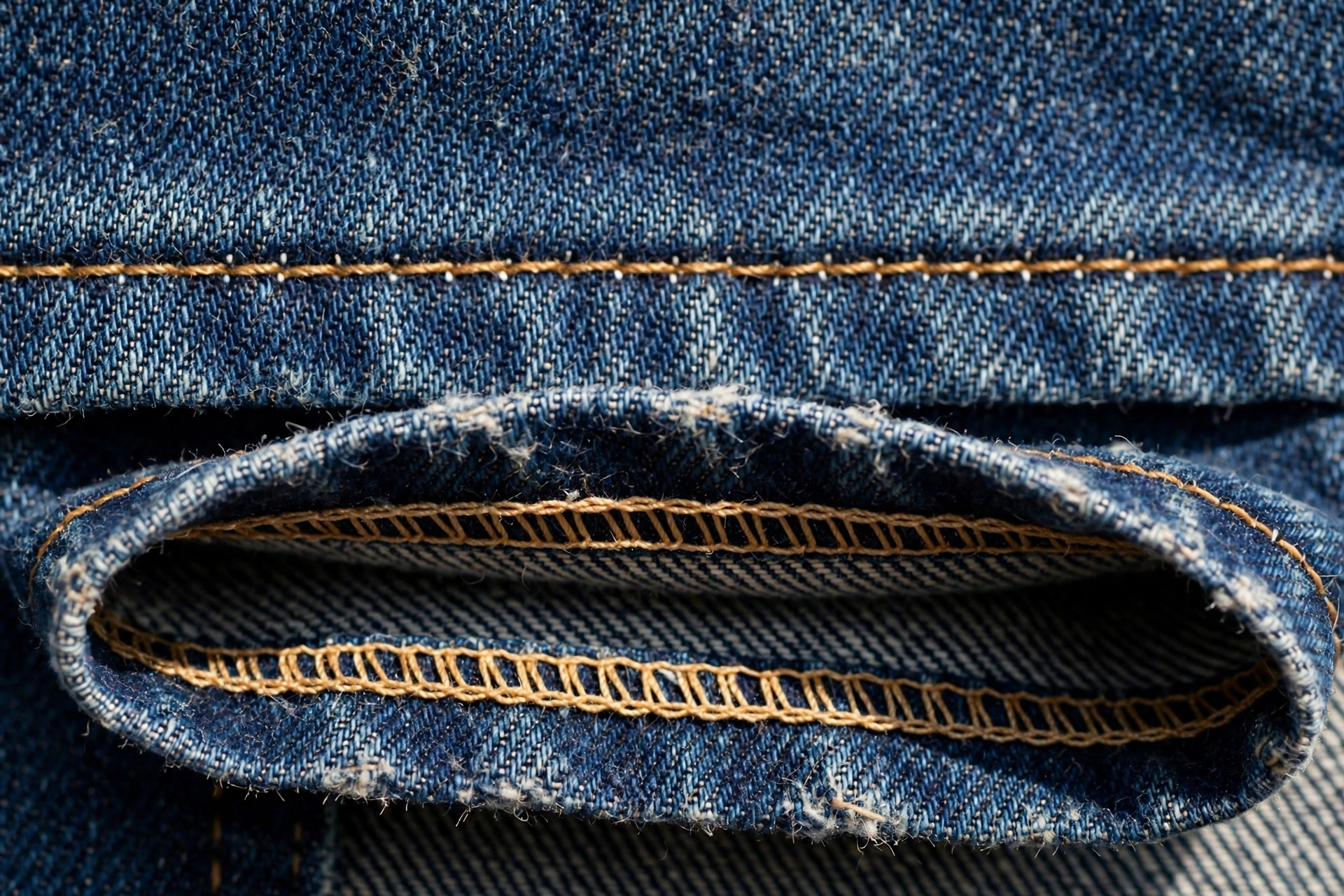 Stitch 401 — Chain StitchThe two-thread workhorse: one needle thread, one looper thread, a straight seam with a chain underneath. Jeans inseams are its home ground.
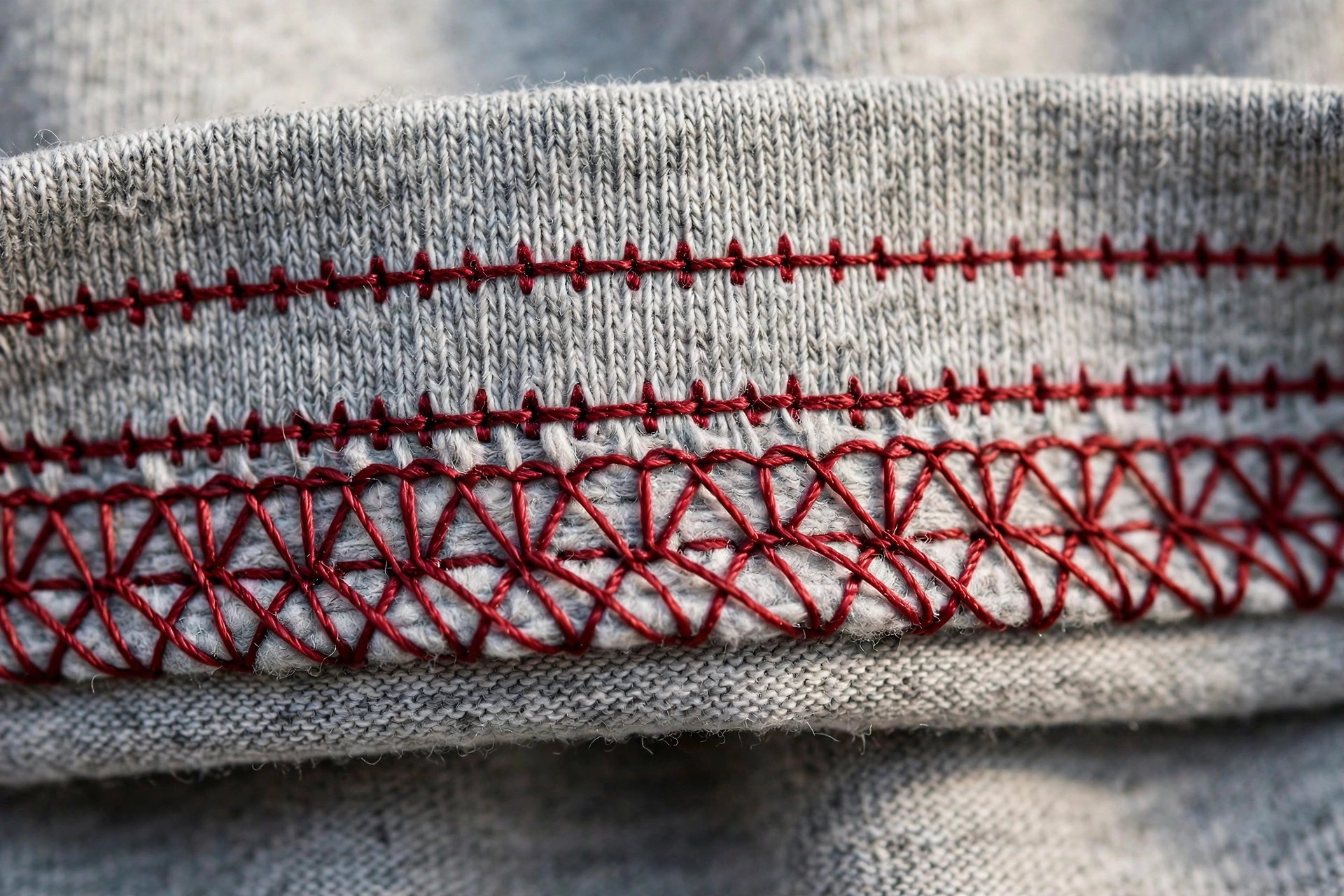 Stitch 406 — Bottom Cover StitchTwo needle threads and a looper that covers the underside between them. The standard T-shirt hem stitch.
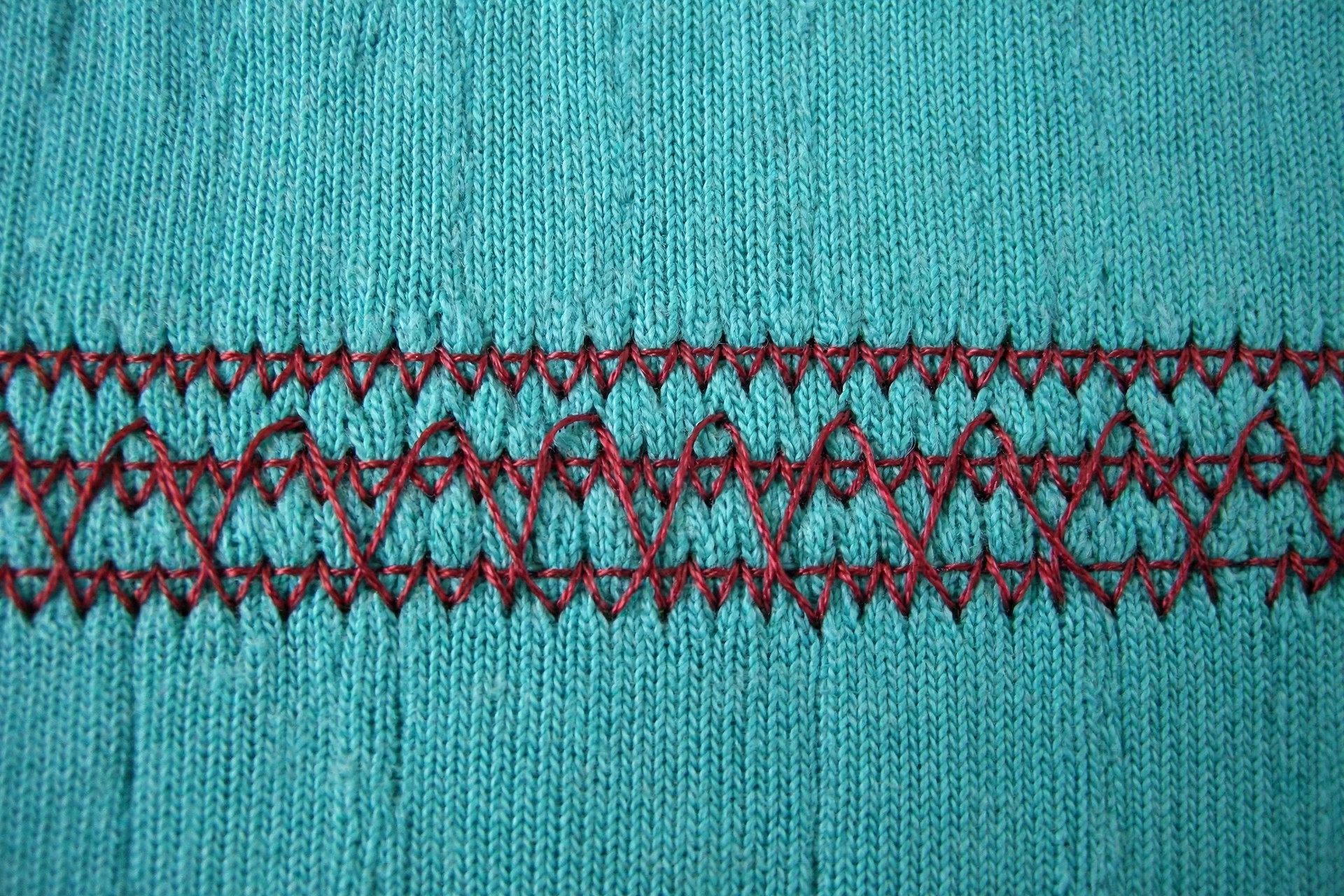 Stitch 407 — Bottom Cover StitchThe three-needle bottom cover stitch: a wider looper web, a wider covered band, for elastic, bindings and wide hems.
Prefer to browse by picture? The Explore Stitches gallery shows every stitch type in this guide as a thumbnail card, grouped by class.
The Class at a Glance
| Type | Threads | Face | Underside | Stretch | Typical work |
|---|---|---|---|---|---|
| 401 | 2 (1 needle + looper) | One straight row | A chain of loops | Moderate | Jeans inseams and lap seams, knit seaming, long woven seams |
| 406 | 3 (2 needles + looper) | Two parallel rows | Looper web covering between the rows | High | T-shirt and knitwear hems, bindings, elastic, belt loops |
| 407 | 4 (3 needles + looper) | Three parallel rows | Wider looper web across all three rows | High | Wide hems, elastic on underwear and sportswear, wide bindings |
All three types are sewn on chainstitch or coverstitch machines whose loopers work beneath the needle plate. Single-needle chainstitch machines sew 401; coverstitch machines, fitted with two or three needles, sew 406 and 407 — and many industrial coverstitch machines can be set up either way, which is why the two cover stitches are so often discussed together.
Choosing between them
Choose 401 when the job is a seam — two plies to be joined along one line — and the seam wants a little give, a long uninterrupted run, or both. Choose 406 when the job is an edge: a hem to hold flat, a raw edge to cover, a binding or elastic strip to attach, on fabric that stretches. Choose 407 when that same edge work needs to cover more ground — a wide hem allowance, a wide elastic, a broad band — because its third needle row widens both the grip and the covered band. If the seam must never unravel and need not stretch at all, the answer is not in this class at all: it is the lock stitch, Class 300.
Common Questions
What is a multi-thread chain stitch?
It is a stitch formed from two groups of thread — one or more needle threads and a looper thread — whose loops are both interlaced and interlooped on the underside of the material. The looping underneath is what gives Class 400 stitches their chain-like underside, their stretch, and their ability to unravel from the end if the looper thread is pulled.
How is a Class 400 stitch different from a lock stitch?
A lock stitch (Class 300) interlaces a needle thread with a bobbin thread inside the material, so it looks the same on both faces and cannot unravel. A Class 400 stitch has no bobbin: a looper works underneath instead, the interlooping sits against the underside, the seam stretches more, and both threads feed from large cones so production never stops for bobbin changes.
Why do jeans use chain stitching?
Stitch 401, the two-thread chain stitch, tolerates the thick, layered seams of denim, gives a little under the stresses a jeans seam takes, and — on the outseam of vintage-style jeans — its slight thread excess relaxes into the wavy, puckered finish called the roping effect. It is also fast: no bobbin means no stops on long seams.
What is a bottom cover stitch?
It is the cover-stitch branch of Class 400: two or three needle threads sew parallel rows on the face while a single looper thread weaves between their loops on the underside, covering the underside only. Types 406 (two needles) and 407 (three needles) are the bottom cover stitches — the hemming stitches of T-shirts and knitwear.
Sources & the photographic reference
The stitch and seam classifications on this page follow ASTM D-6193, Standard Practice for Stitches and Seams, explained here in Apparel Search's own words with original diagrams. For photographs of these stitches and seams, see the Garmenco guide's Class 400 page — Professor Bernard Kahn's photographic guide, which Apparel Search has recommended for years and continues to link as the photo reference for this classification. Our guide is the permanent on-site companion to it.
More to Explore
Stitch and seam classifications follow ASTM D-6193, Standard Practice for Stitches and Seams. Diagrams on these pages are original Apparel Search drawings.