Stitch 605 · Class 600 Flat / Cover Stitch
Stitch 605 — Three-Needle Top-and-Bottom Cover Stitch
Stitch 605 is the three-needle cover stitch of Class 600: five threads — three needle threads, a looper thread beneath and a cover thread across the top. It is stitch 602 widened by a needle: the cover threads span all three rows, so the seam is covered, flat and elastic across a broad band on both faces — hence its full name, the top-and-bottom cover stitch.
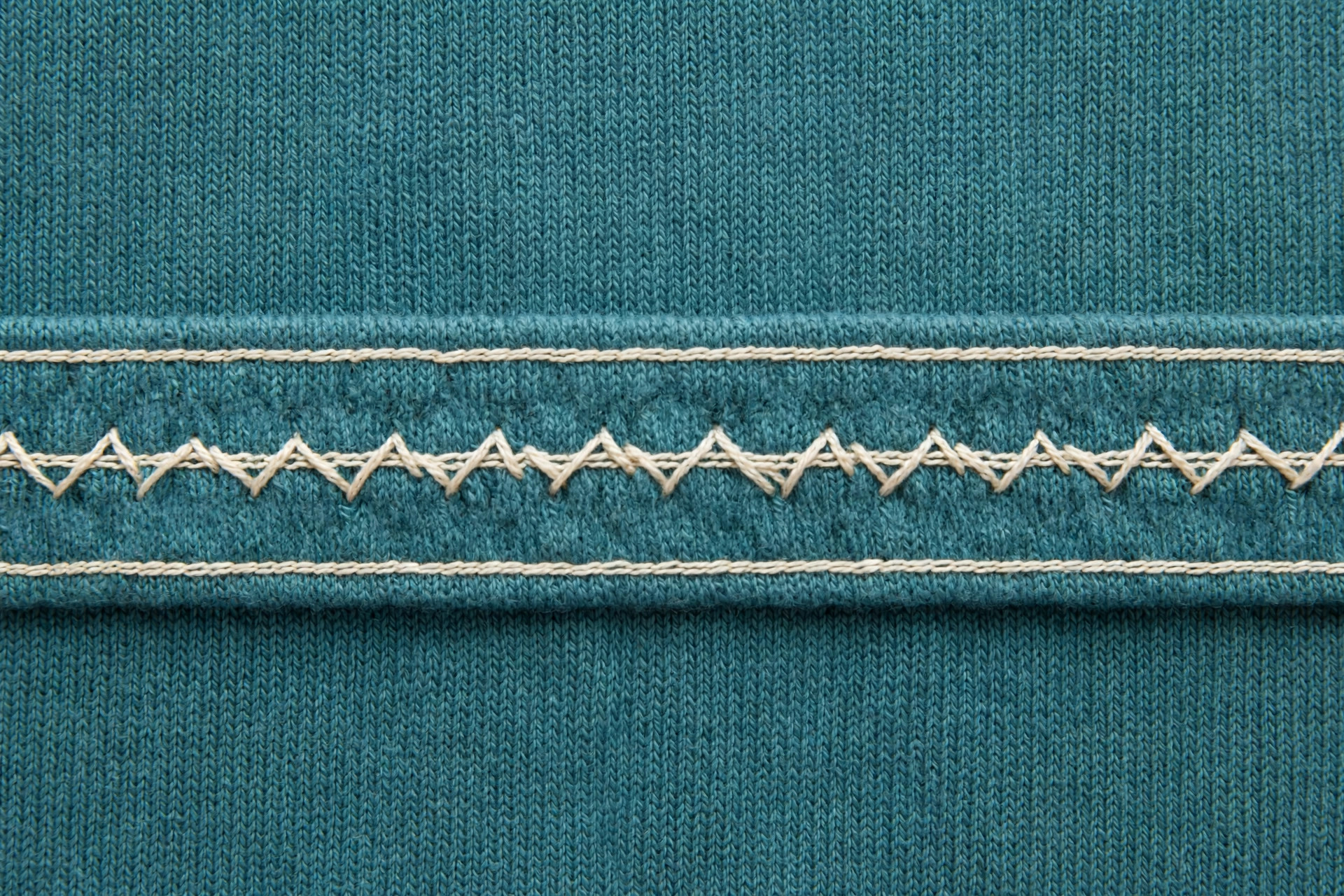
How Stitch 605 Forms
- Three needles descend in a row, carrying needle threads A1, A2 and A3 through the material. As they rise, each leaves a loop of its thread beneath the material.
- The looper travels the full width beneath the needle plate and passes its thread B through all three needle loops in turn, laying a wide zigzag cover across the underside that interloops with every row.
- On the top face, the spreader lays cover thread C across all three rows. The needles catch it under their penetrations as they descend, lacing it from the first row to the third and back — a zigzag that spans the whole width of the stitch.
- The cycle repeats as the work advances. With five threads interlooped and none of them locked into the fabric, the wide band of stitching can extend substantially and recover, which is why the standard's users specify it where high elongation is needed.
Formation diagram for stitch 605. Threads A are the needle threads, B is the looper thread and C is the top cover thread. Illustration by Apparel Search.
The Threads
| Element | Detail |
|---|---|
| Thread count | 5 — three needle threads, one looper thread, one top cover thread. (Kahn's table: 'three needle and two looper threads', counting the cover thread with the loopers.) |
| Needle threads (A1–A3) | Form three straight parallel rows on the top face and interloop with the looper beneath. The middle row adds strength and keeps wide covers flat. |
| Looper thread (B) | Zigzags across the full width on the underside, covering the bottom of the seam from outer row to outer row. |
| Cover thread (C) | Laces across the top face between the outer rows, caught by every needle penetration it crosses. |
| Typical threads | Textured polyester or woolly nylon in looper and cover positions for skin comfort; core-spun polyester needle threads. Foundation-garment work often uses soft, fine threads throughout so the wide seam stays supple. |
| Thread use | The second-highest in the class — on the order of seven metres of thread per metre of seam — the price of covering a wide band on both faces. |
What It Looks Like
On the top, stitch 605 is unmistakable: three straight parallel rows, with the cover thread zigzagging boldly across the whole width between the outer rows — a broad, flat lattice of thread. On the underside the looper thread makes the same wide zigzag journey in reverse, so the seam presents a covered band of the same width on both faces. Few stitches announce themselves as clearly; if a knit garment shows a wide, flat, three-row covered seam, it is 605 (or its flatlock relative 607, which joins butted edges rather than overlapping ones).
The width is functional, not decorative excess. Spread across three rows, the stitch grips a lapped panel along two lines of penetrations with a covered bridge between them, so the join cannot curl or roll; spread across a hem, it holds a deep fold flat; spread across a binding, it secures both edges of the binding strip at once. The middle needle row is doing quiet work in all three cases: it pins the centre of the band so the wide cover cannot balloon or tunnel.
In foundation garments — bras, girdles, support wear — the wide covered band is also a comfort feature: load is spread over a broad, soft lattice of textured thread instead of a single hard seam line, and the stitch's high elongation lets the seam work with the garment's elastic panels instead of fighting them.
Strengths and Limits
Strengths
- Covers a wide band completely on both faces — the broadest flat finish short of the flatlock.
- High elongation: specified for foundation garments whose seams must stretch in every direction.
- Holds lapped panels and bindings flat along multiple rows, so edges cannot curl.
- Soft and ridge-free on both sides, even at full width.
Limits
- Needs a three-needle coverstitch machine with top cover — specialised factory equipment.
- Thread-hungry and slower than 602; the extra row is wasted on narrow work.
- Five tensions to balance; a wide stitch shows tunnelling or loose cover loops at once if they drift.
- Like all chain formations, it can run back from an unsecured finishing end.
Where Stitch 605 Is Used
Stitch 605 is the wide-work cover stitch. Its classic home is the lap seam: one knit panel lapped over another — underwear, T-shirts and fleece — joined and finished in a single pass that leaves the seam flat and covered on both faces (see Seam Class LS — Lapped Seams). It binds necklines, armholes and blanket edges where the binding is too wide for a two-needle stitch to secure both edges. Kahn's table also lists it for butt seams — joining raw edges brought together — and for overstitching seams flat, the coverseaming role it shares with 602 at a wider gauge.
Its second home is foundation garments and swimwear, where its high elongation is the specification point: seams between elastic panels must extend as far as the panels do, and a 605 seam, built entirely of interlooped thread, comes closer than any sewn seam except the flatlock. It is also the practical choice for hemming heavier knits — sweatshirting, fleece and double-knit dresses — where a two-needle hem looks skimpy and the fold needs holding across a broader band, and for attaching wide elastic in a single pass, the three rows pinning the elastic flat so it cannot roll inside its casing. Specifying 605 on a work ticket means stating the needle spacing as well as the stitch number, because the same five threads can be set narrow or wide, and the width decides how much of the garment the seam will cover and control. Typical fabrics: interlock and jersey knits, powernet and elastane blends, fleece, and knit binding strips. For narrower hems and bindings, stitch 602 is the economical choice; for a seam with no overlap and no ridge at all, the class offers stitch 607. Browse every type side by side in the Explore Stitches gallery.
Common Questions
What is the difference between stitch 605 and stitch 602?
One needle and one thread: 605 adds a third needle row (and its thread) to 602's formation, widening the covered band. Choose 602 for hems, narrow bindings and ordinary coverseaming; choose 605 when the cover must span a lap, a wide binding or a hard-working foundation seam.
Can stitch 605 really sew a butt seam?
Yes — Kahn's table lists butt seams among its typical uses. The two edges are brought together (butted, not overlapped) and the wide three-row cover bridges and holds them. For butted joins as the main construction, though, the trade more often reaches for the four-needle flatlock, stitch 607, whose rows sit two in each panel.
Why do foundation garments need stitch 605?
Because their seams must stretch as much as the elastic fabrics they join, in every direction, thousands of times. A 605 seam is all interlooped thread with no locked knot, so it elongates freely — and its wide, soft cover spreads pressure comfortably against the body.
Sources & the photographic reference
The stitch and seam classifications on this page follow ASTM D-6193, Standard Practice for Stitches and Seams, explained here in Apparel Search's own words with original diagrams. For photographs of these stitches and seams, see the Garmenco guide's Class 600 page — Professor Bernard Kahn's photographic guide, which Apparel Search has recommended for years and continues to link as the photo reference for this classification. Our guide is the permanent on-site companion to it.
Related Stitches
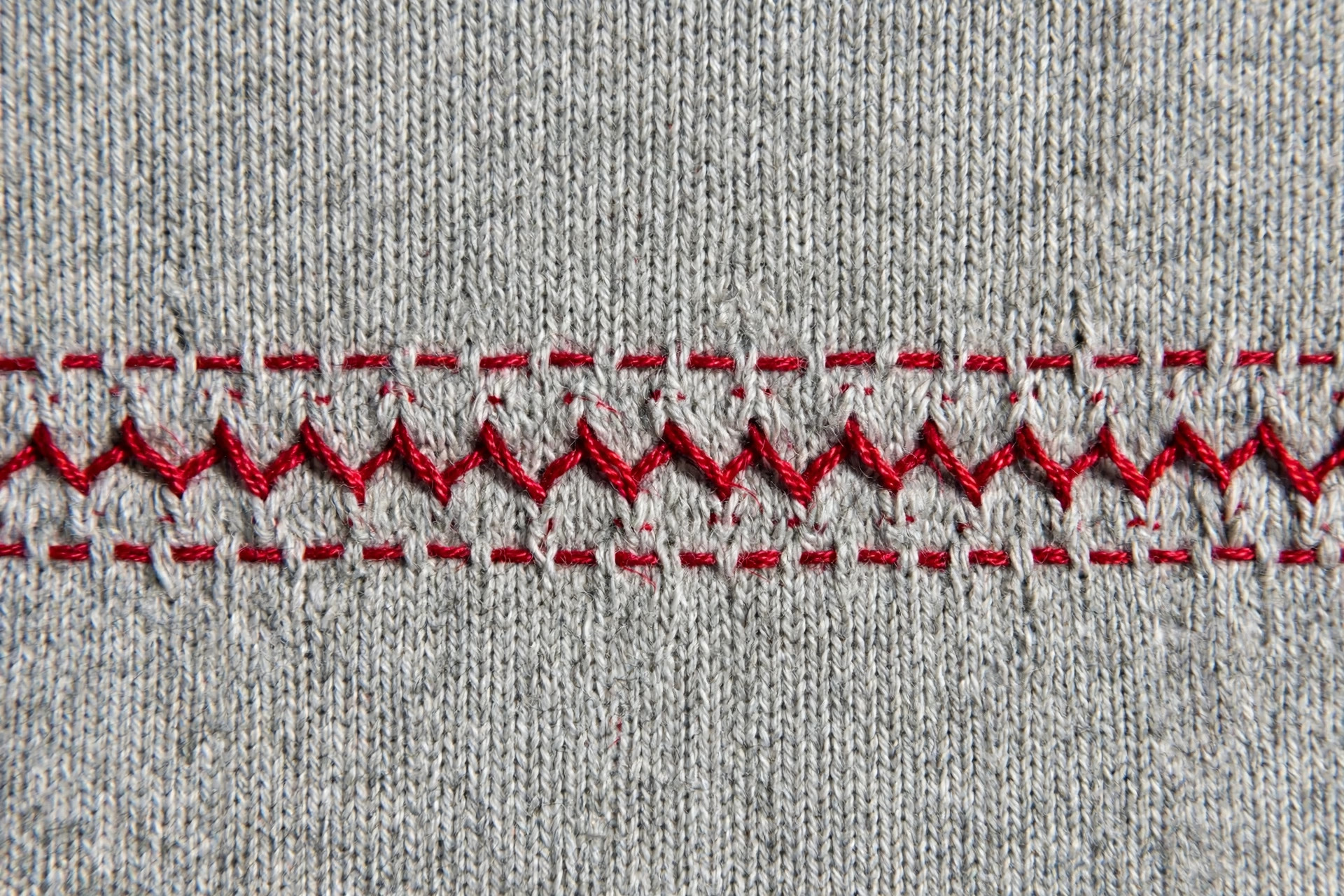 Stitch 602 — Bottom Cover Stitch
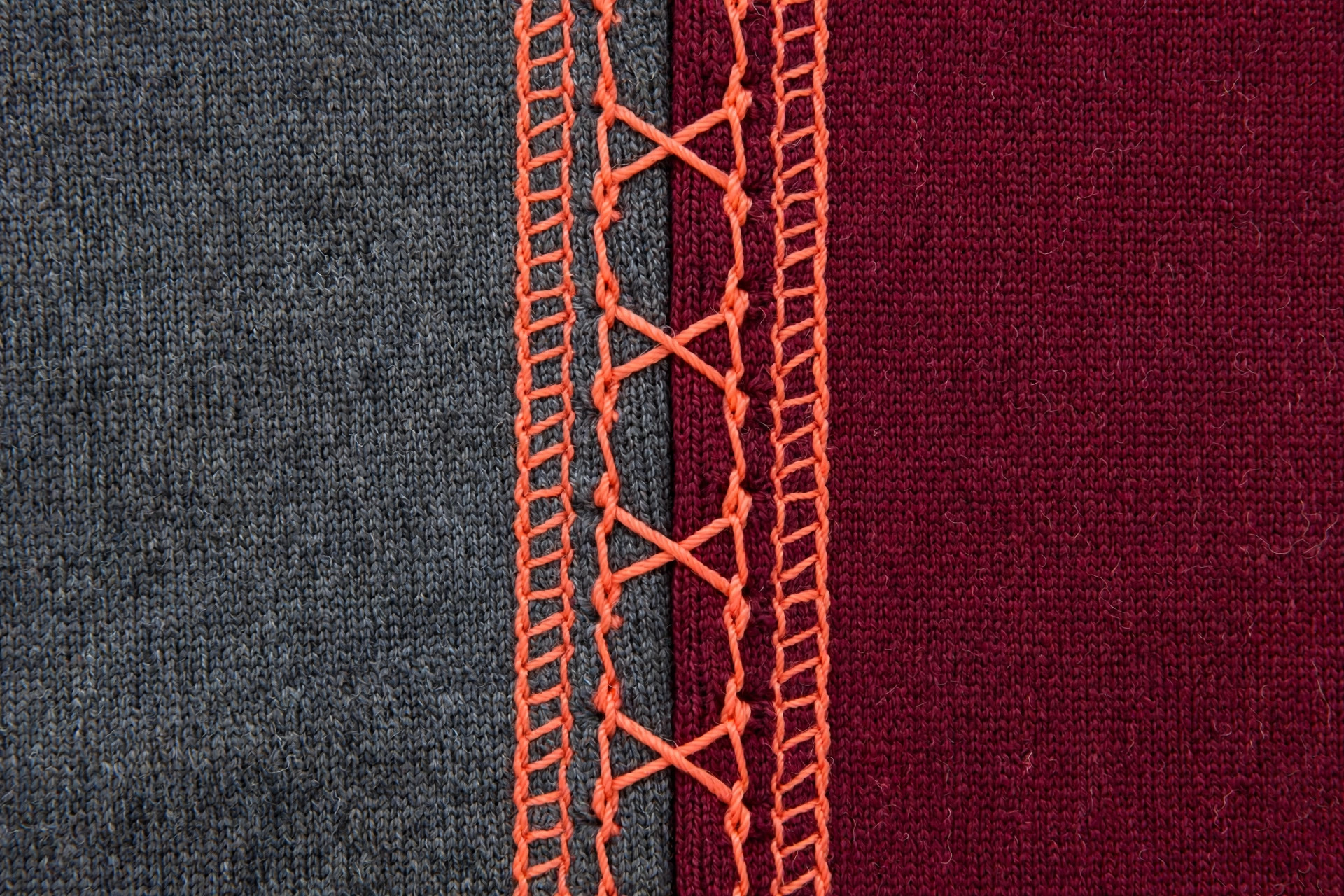 Stitch 607 — Flatlock Stitch
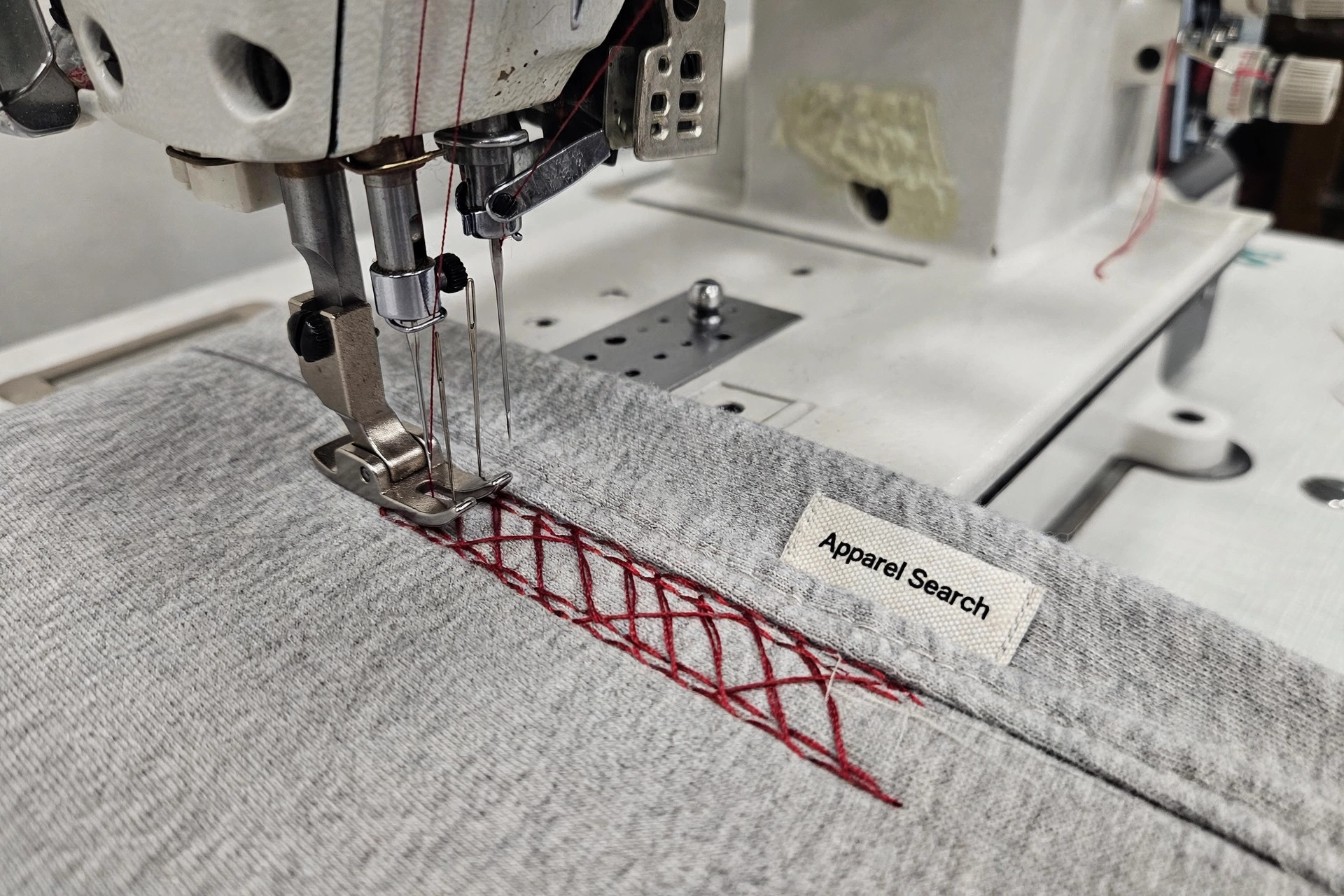 Stitch Class 600 — Flat Stitch
More to Explore
Search Apparel Search
Stitch and seam classifications follow ASTM D-6193, Standard Practice for Stitches and Seams. Diagrams on these pages are original Apparel Search drawings.