Stitch Class 600 · Flat / Cover Stitch
Stitch Class 600 — Flat Stitch
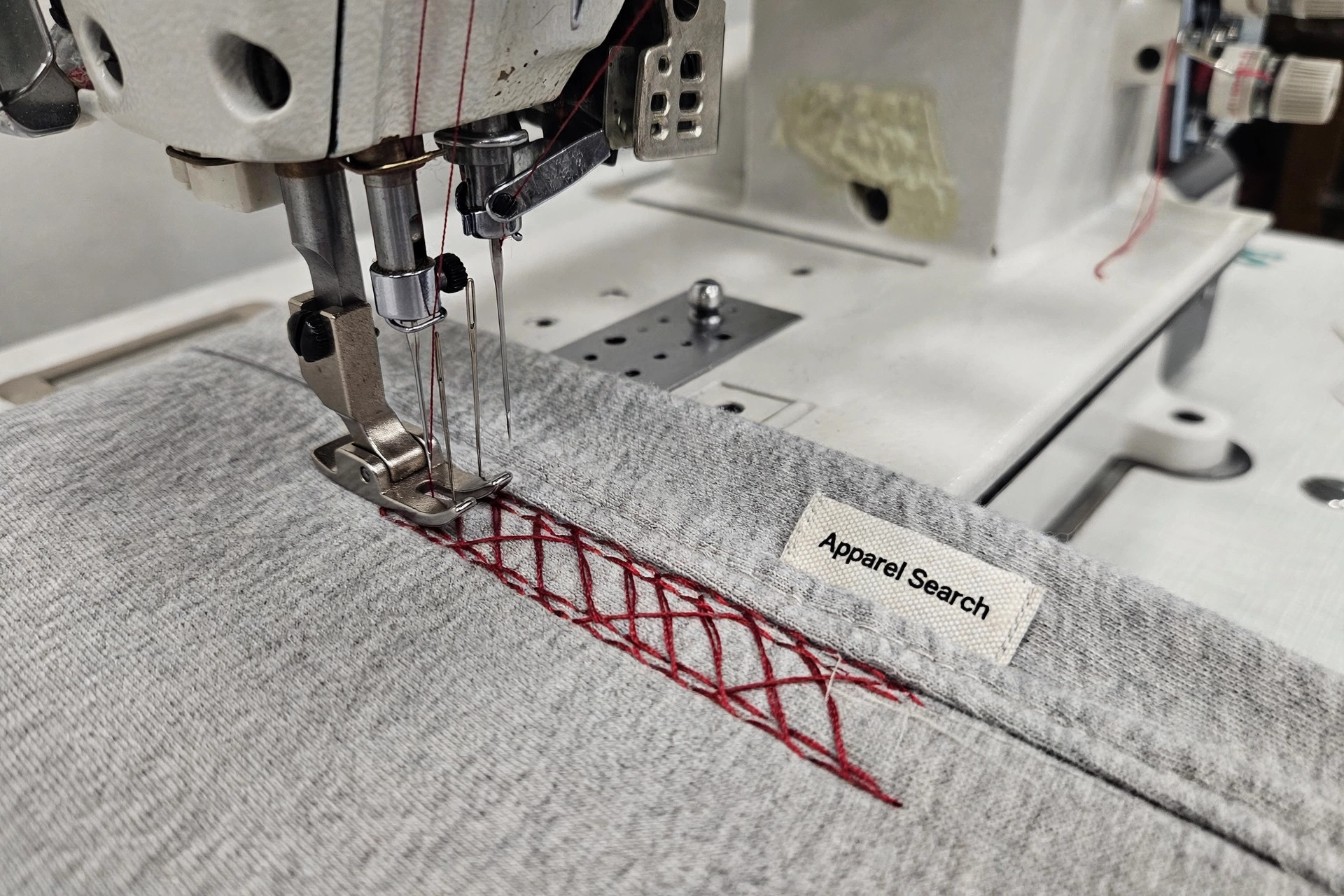
Class 600 is the covering chain stitch family of ASTM D-6193 — the flat, stretchy stitches that cover a seam on both faces at once. Three types are classified and illustrated in this class: 602, 605 and 607. Between them they hem, bind and join the world's knit underwear, T-shirts, swimwear and sportswear.
Search Apparel Search
What Makes a Class 600 Stitch
Every stitch in Class 600 is built from three working parts. Two or more needle threads pass straight through the material in parallel rows. Beneath the material, a looper thread travels from row to row, interlooping with every needle thread and laying a zigzag cover across the underside. On top of the material, a cover thread is laid across the needle rows by a spreader and caught under each needle penetration, so the top face is covered too. The standard's own class description puts it in one line: in Class 600, threads cover both surfaces of the material.
That top cover thread is the class's signature. The Class 400 cover stitches (406 and 407) do the same work with the looper alone and leave the top face as plain parallel rows; Class 600 adds the cover thread and finishes the top as well. The result is a seam that is flat, soft and highly elastic — the looped threads carry spare length that lets the seam stretch with a knit and recover — and finished-looking from either side, which is why these stitches dominate garments that are seen, and felt, from both sides: underwear, swimwear, athletic wear and T-shirt hems.
The three types differ by needle count and by the job the width is doing. Stitch 602 works with two needles, 605 with three, and 607 — the flatlock — with four needles across two butted edges. All three are sewn on specialised coverstitch or flatseam machines, most of them in factories; simplified two- and three-needle versions are the coverstitch machines sold for home sewing.
The Three Class 600 Types
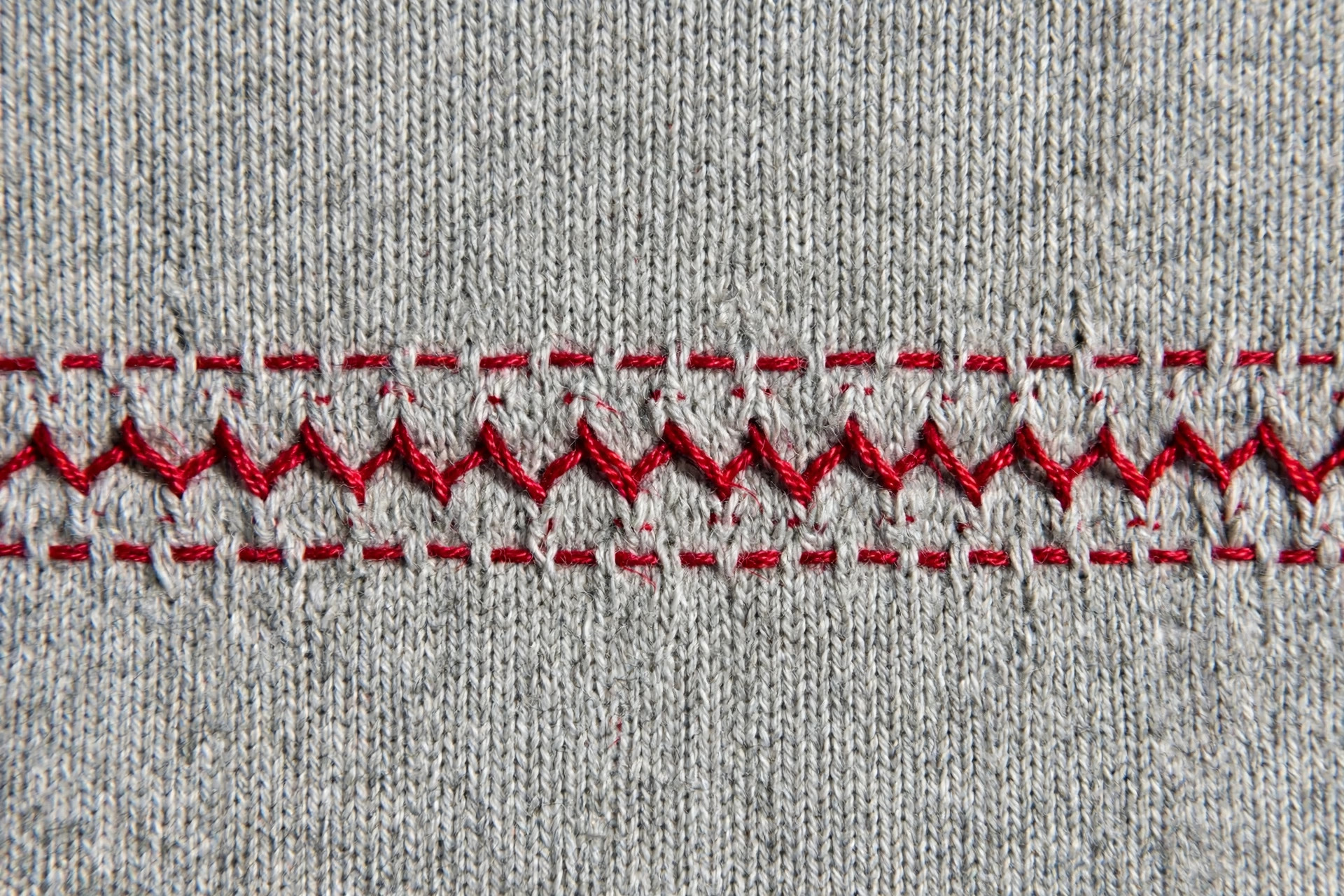 Stitch 602 — Two-Needle Bottom Cover StitchFour threads, two needles: the compact cover stitch for hems, bindings and coverseaming on knits.
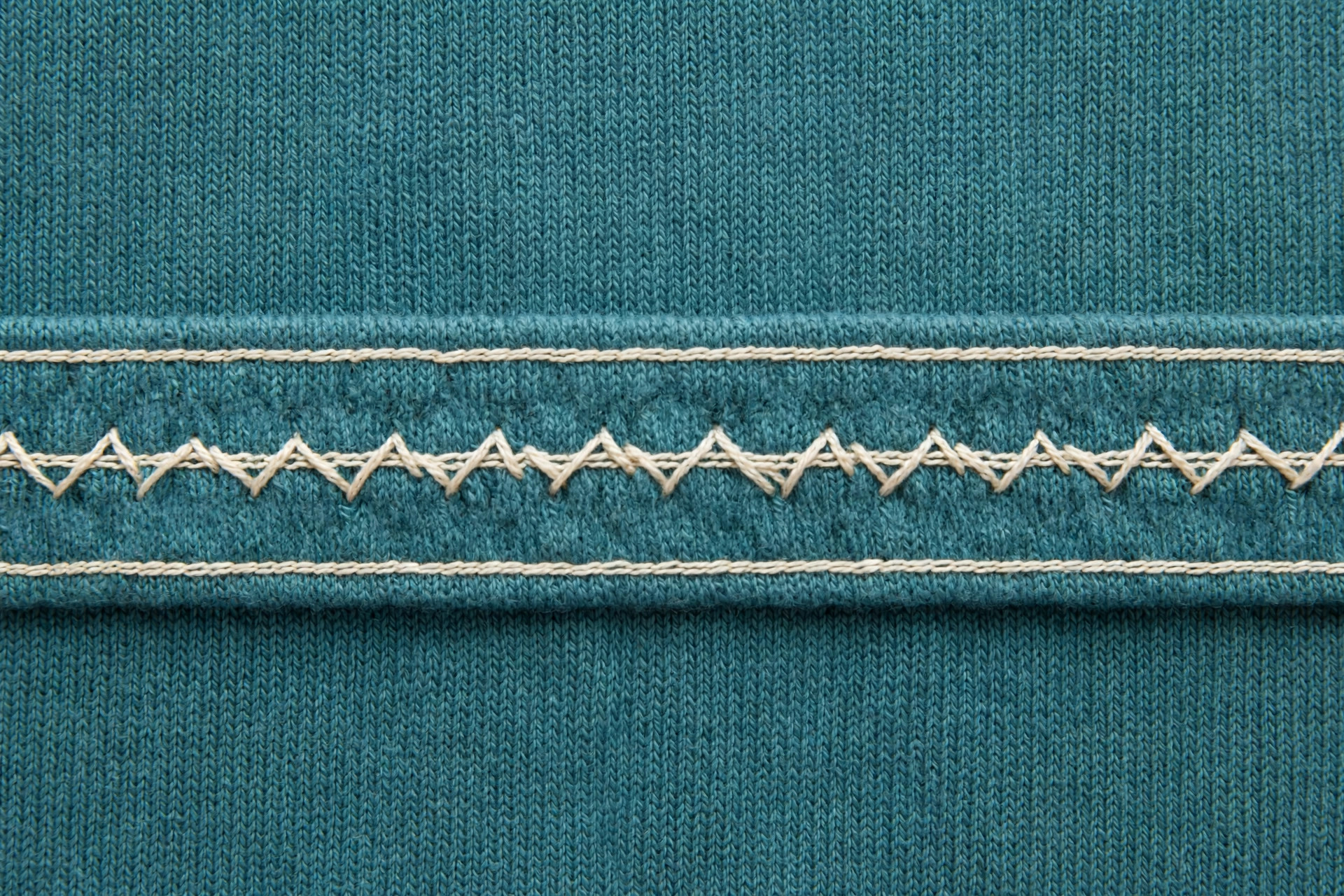 Stitch 605 — Three-Needle Top-and-Bottom Cover StitchFive threads, three needles: a wider cover for lap seams, binding and foundation garments.
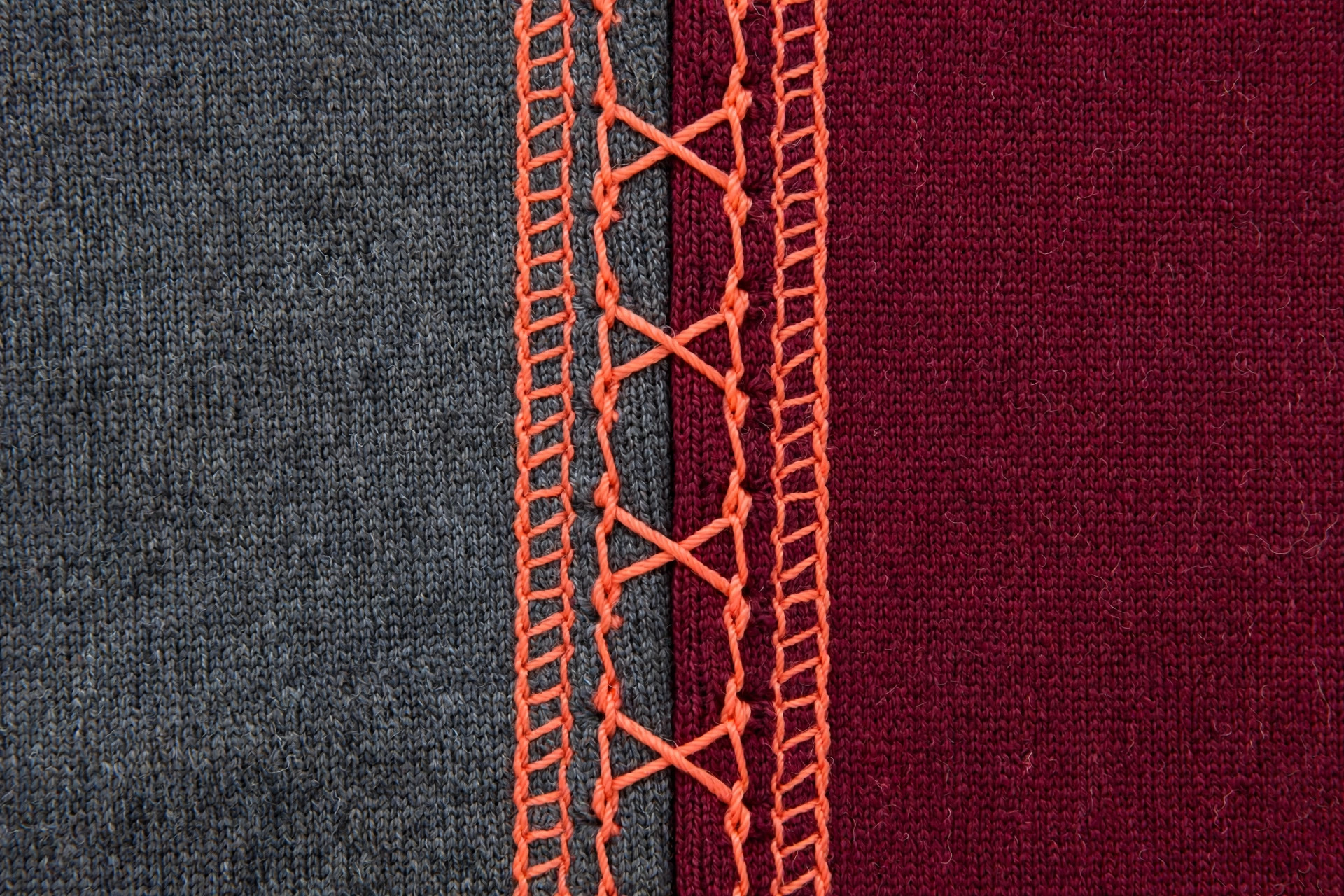 Stitch 607 — Flatlock StitchSix threads, four needles: butts two edges together and covers the join flat — the comfort seam of sportswear.
Every stitch type in this guide also appears in the Explore Stitches gallery, where all twenty-three stitch types and the button pages are shown together as thumbnail cards grouped by class.
The Class at a Glance
| Type | Needles | Threads | Cover | Typical work |
|---|---|---|---|---|
| 602 | 2 | 4 — 2 needle, looper, top cover | Both faces, narrow | Hemming knits, binding necklines, coverseaming, decorative seams |
| 605 | 3 | 5 — 3 needle, looper, top cover | Both faces, wide | Lap seams, binding, foundation garments, butt seams |
| 607 | 4 | 6 — 4 needle, looper, top cover | Both faces, widest | Flat seams joining butted edges: underwear, sportswear, fleece |
Choosing between them
Choose 602 when the job is a hem, a binding or a seam cover of ordinary width — it is the economical, everyday cover stitch of the class. Choose 605 when the cover must span wider ground: lapping one panel over another, binding a thick edge, or sewing foundation garments whose seams are worked hard in every direction. Choose 607 when there must be no ridge at all — when two panels are to be joined edge to edge so nothing raised touches the wearer's skin. The seam constructions these stitches most often sew are the flat seams of Seam Class FS and the lapped seams of Seam Class LS.
Common Questions
What is a Class 600 stitch?
A Class 600 stitch is a covering chain stitch: two or more groups of thread form it, and the construction covers both surfaces of the material — a looper thread covers the underside while a cover thread is laid across the top face and caught by the needle threads. That two-faced cover is what separates Class 600 from the Class 400 cover stitches, which cover the underside only.
What is the difference between stitch 602 and stitch 406?
Both use two needles and cover a seam or hem on knits. Stitch 406 (Class 400) has three threads — two needle threads and one looper — and covers the underside only, leaving two plain rows on top. Stitch 602 adds a fourth thread, the top cover thread, which laces across the top face between the needle rows, so a 602 seam looks finished from both sides.
Why is stitch 607 called flatlock?
Because of what it does to the seam: it joins two panels whose edges are trimmed and butted together with no overlap, and its threads cover the join on both faces, so the finished seam has almost no thickness — it lies flat, with no ridge to rub the skin. 'Flatlock' is the trade name; the classified name is stitch type 607.
Are Class 600 stitches only for knit fabrics?
Almost always, in practice. Their looped construction stretches with the fabric and their cover threads finish edges without folding, which is exactly what knit garments need. Stable wovens are normally sewn with lock stitches (Class 300) or chain stitches (Class 400) instead, though 602 and 605 are sometimes used decoratively on wovens.
Sources & the photographic reference
The stitch and seam classifications on this page follow ASTM D-6193, Standard Practice for Stitches and Seams, explained here in Apparel Search's own words with original diagrams. For photographs of these stitches and seams, see the Garmenco guide's Class 600 page — Professor Bernard Kahn's photographic guide, which Apparel Search has recommended for years and continues to link as the photo reference for this classification. Our guide is the permanent on-site companion to it.
More to Explore
Stitch and seam classifications follow ASTM D-6193, Standard Practice for Stitches and Seams. Diagrams on these pages are original Apparel Search drawings.