Stitch 607 · Class 600 Flat / Cover Stitch
Stitch 607 — Flatlock Stitch
Stitch 607 is the flatlock stitch: six threads — four needle threads, a looper thread and a top cover thread — joining two panels whose edges have been trimmed and butted together with no overlap. The needle rows sit two in each panel, the cover threads close over the join on both faces, and the finished seam has almost no thickness at all. It is the comfort seam of modern sportswear.
How Stitch 607 Forms
- The two panels are trimmed to clean edges and guided into the machine butted exactly together — edge against edge, neither overlapping nor gapping. A trimmer on the flatseam machine cuts both edges true as they enter, so the butt is exact.
- Four needles descend in a row across the join, carrying threads A1 to A4: two needles pierce one panel and two pierce the other, so the join is straddled symmetrically.
- Beneath the material, the looper passes its thread B through all four needle loops, zigzagging across the full width and drawing the two edges snugly together as the stitch is set. On the top face, the spreader lays cover thread C across all four rows, and the needles catch it under their penetrations, lacing it over the join.
- The cycle repeats as the butted edges feed through. Because nothing is folded and nothing overlaps, the finished seam is exactly one fabric thickness — the threads sit on the surfaces, not between layers — and it can be pressed, worn and sat on without ever making a ridge.
Formation diagram for stitch 607. Threads A are the needle threads, B is the looper thread and C is the top cover thread. Illustration by Apparel Search.
The Threads
| Element | Detail |
|---|---|
| Thread count | 6 — four needle threads, one looper thread, one top cover thread. (Kahn's table: 'four needle and two looper threads'.) The most threads of any stitch in this guide. |
| Needle threads (A1–A4) | Four parallel rows: the two inner rows flank the join, the two outer rows anchor the cover. Every row interloops with the looper beneath. |
| Looper thread (B) | Crosses the whole width on the underside, interlooping with all four needle threads and pulling the butted edges together — the thread that actually holds the join closed from beneath. |
| Cover thread (C) | Laces across the top face over the join, caught by all four needle rows; it armours the join line and gives flatlock its familiar laddered look. |
| Typical threads | Textured polyester or woolly nylon in the looper and cover positions — these are the threads against the skin — with core-spun or textured needle threads. Contrast cover threads are a sportswear design signature. |
| Thread use | The highest in Class 600 — on the order of nine metres of thread per metre of seam — because six threads cover a wide band on both faces. |
What It Looks Like
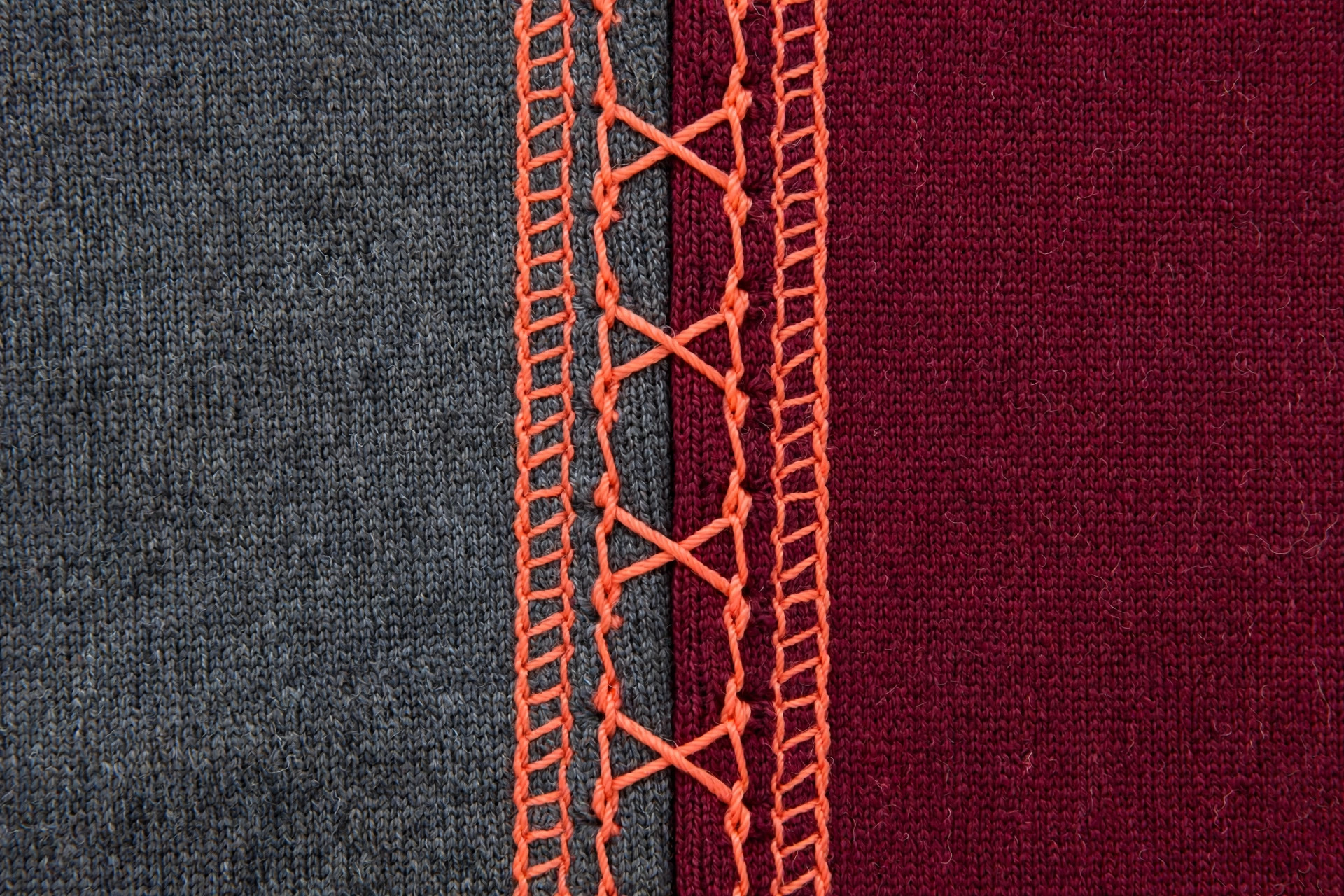
On the top, stitch 607 shows four parallel needle rows with the cover thread lacing across them in a bold zigzag lattice, centred exactly on the join between the two panels — the wide, flat, slightly sporty band familiar from the side seams of training leggings and the raglan seams of sports shirts. On the underside the looper thread covers the same span in the same lattice, so the seam looks — and feels — almost identical from both sides. Run a finger across it and the point of the stitch makes itself: there is no step, no ridge and no buried allowance, only thread lying on two flat surfaces.
That flatness is a construction, not a pressing trick. Every other common seam stacks fabric — allowances folded to one side, panels lapped, edges enclosed — and the stack is what rubs. The 607 seam stacks nothing: the machine trims both edges and the threads bridge them. Worn inside-out, as some athletes deliberately wear flatlocked garments, the seam is just as comfortable, because both faces are covered the same way.
Two faults give a badly made 607 away. If the edges are fed with a gap, the cover threads bridge air and the seam grins open under strain, showing the ladder of looper thread across a slit. If they are fed overlapped, a hard ridge forms along the overlap and the whole point of the stitch is lost. Good flatlock is therefore as much about the trimming and guiding as about the stitch itself — which is why it is sewn on dedicated flatseam machines (feed-off-the-arm 'flatseamers') rather than adapted coverstitch machines.
Strengths and Limits
Strengths
- No ridge at all: the flattest, most comfortable seam in garment making — nothing raised touches the skin.
- Joins and finishes in one pass: no separate overlocking, no allowances to manage.
- Stretches with the fabric in every direction; the six-thread lattice recovers with the knit.
- Looks deliberate from both faces — the contrast-thread flatlock is a design feature of modern sportswear.
Limits
- The edges must be trimmed and butted exactly; gapping or overlapping ruins the seam, so it demands dedicated machines and skilled setting.
- Seam strength lives in the threads alone — there is no fabric overlap to share the load — so it is not the choice for high-stress structural seams in wovens.
- The slowest and most thread-hungry stitch in the class, and the hardest to unpick or repair invisibly.
- A broken looper thread can let a chain formation run; ends must be secured.
Where Stitch 607 Is Used
Stitch 607 is the seam of knit underwear and sportswear. It joins the panels of training leggings, compression tops, cycling wear and rash guards where any ridge would chafe through a workout; it seams swimwear and dancewear for the same reason; it joins fleece panels, where a lapped seam would make a bulky shelf; and it is the standard seam of quality knit underwear, whose wearers feel every ridge its absence removes. Kahn's table summarises its work as wide cover stitch and butt seams for foundation garments — the high-elongation trades again.
Typical fabrics: elastane-blend jerseys, performance mesh, powernet, fleece and interlock — any knit whose panels benefit from lying in one plane. The seam it builds is the defining member of Seam Class FS — Flat Seams. Where panels can lap instead of butt, stitch 605 sews the wider lapped cover; where only a hem or binding needs covering, stitch 602 does it with two needles. Every stitch type in the guide is pictured together in the Explore Stitches gallery.
Common Questions
Is flatlock the same as stitch 607?
Yes — 'flatlock' (and 'flatseam') is the trade name for stitch type 607 in ASTM D-6193 and ISO 4915: four needle threads, a looper thread and a top cover thread joining butted edges. Home machines offer a decorative 'flatlock' setting that imitates the look with a ladder stitch, but the true 607 is an industrial flatseam-machine formation.
Why don't all knit garments use flatlock seams?
Cost and forgiveness. Flatseam machines are specialised, the edges must be trimmed and butted precisely, and the seam is slower to sew and harder to repair than an overlocked seam. For most seams on most garments, an overedge join covered by 602 or 605 is flat enough; 607 is reserved for seams that sit against skin under movement.
Can stitch 607 sew woven fabrics?
It is not designed to. Its strength comes from threads bridging two butted edges, which suits stable knit edges; woven edges would fray out of the bridge. Woven panels are joined with lock or chain stitches and finished separately.
Sources & the photographic reference
The stitch and seam classifications on this page follow ASTM D-6193, Standard Practice for Stitches and Seams, explained here in Apparel Search's own words with original diagrams. For photographs of these stitches and seams, see the Garmenco guide's Class 600 page — Professor Bernard Kahn's photographic guide, which Apparel Search has recommended for years and continues to link as the photo reference for this classification. Our guide is the permanent on-site companion to it.
Related Stitches
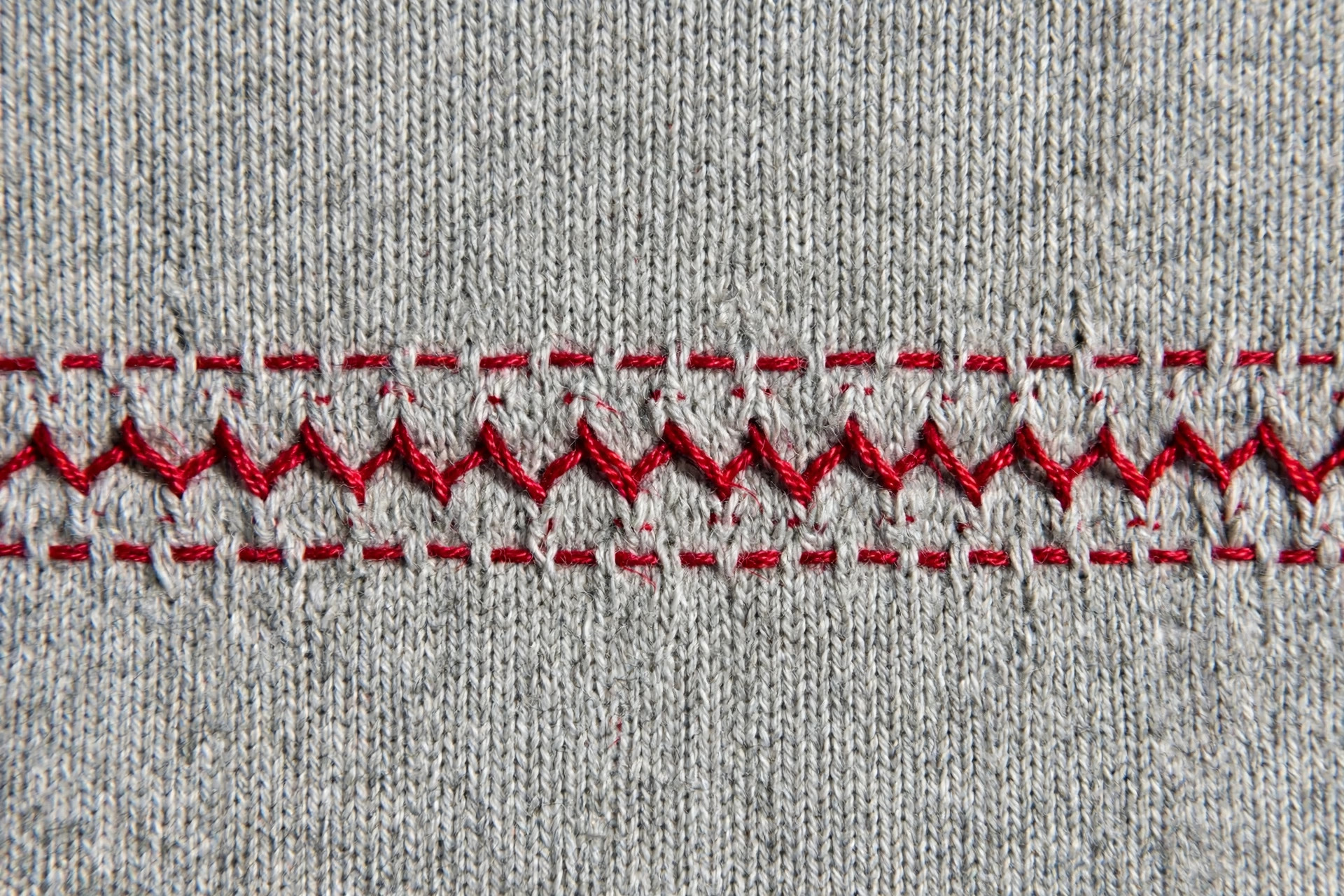 Stitch 602 — Bottom Cover Stitch
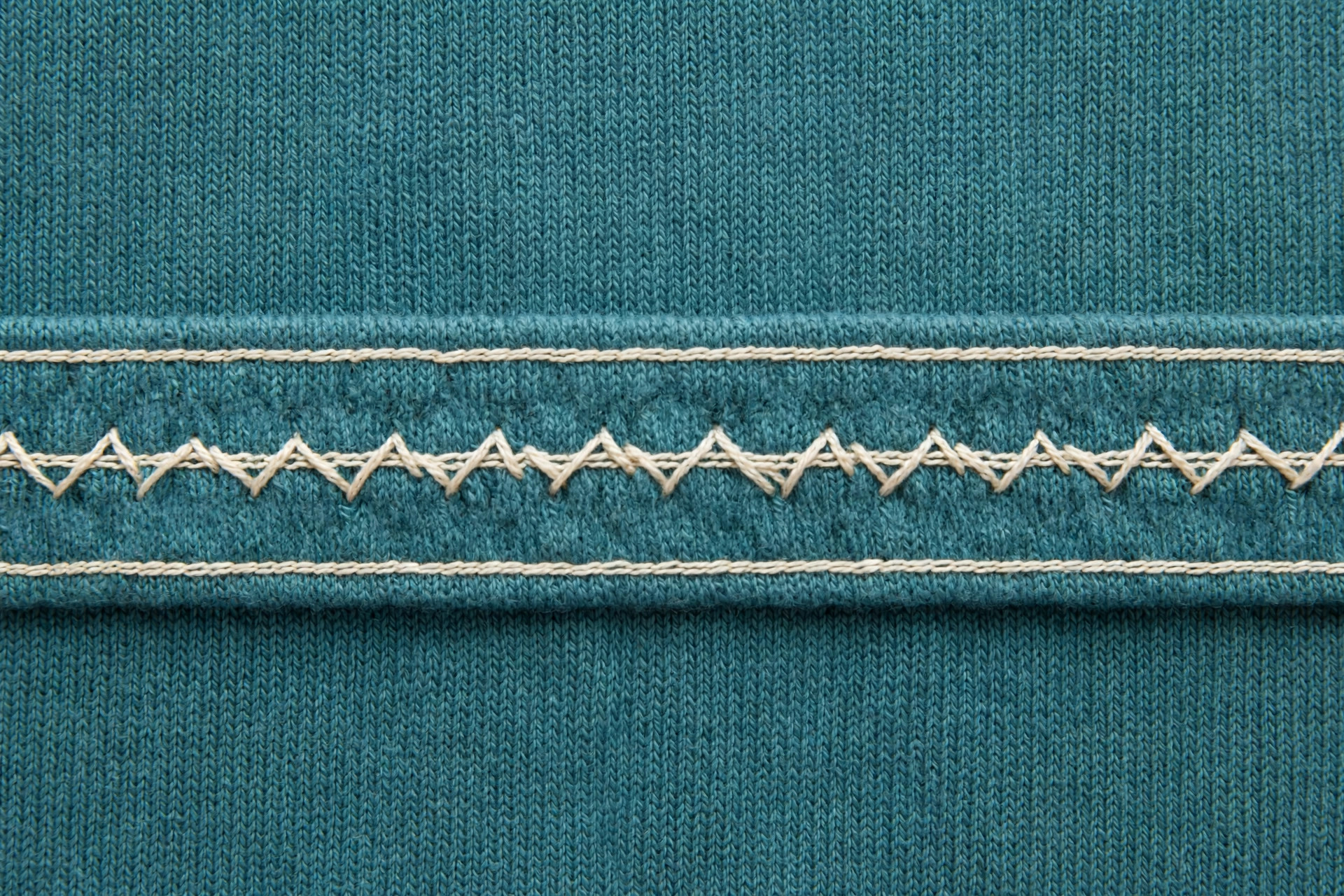 Stitch 605 — Top-and-Bottom Cover Stitch
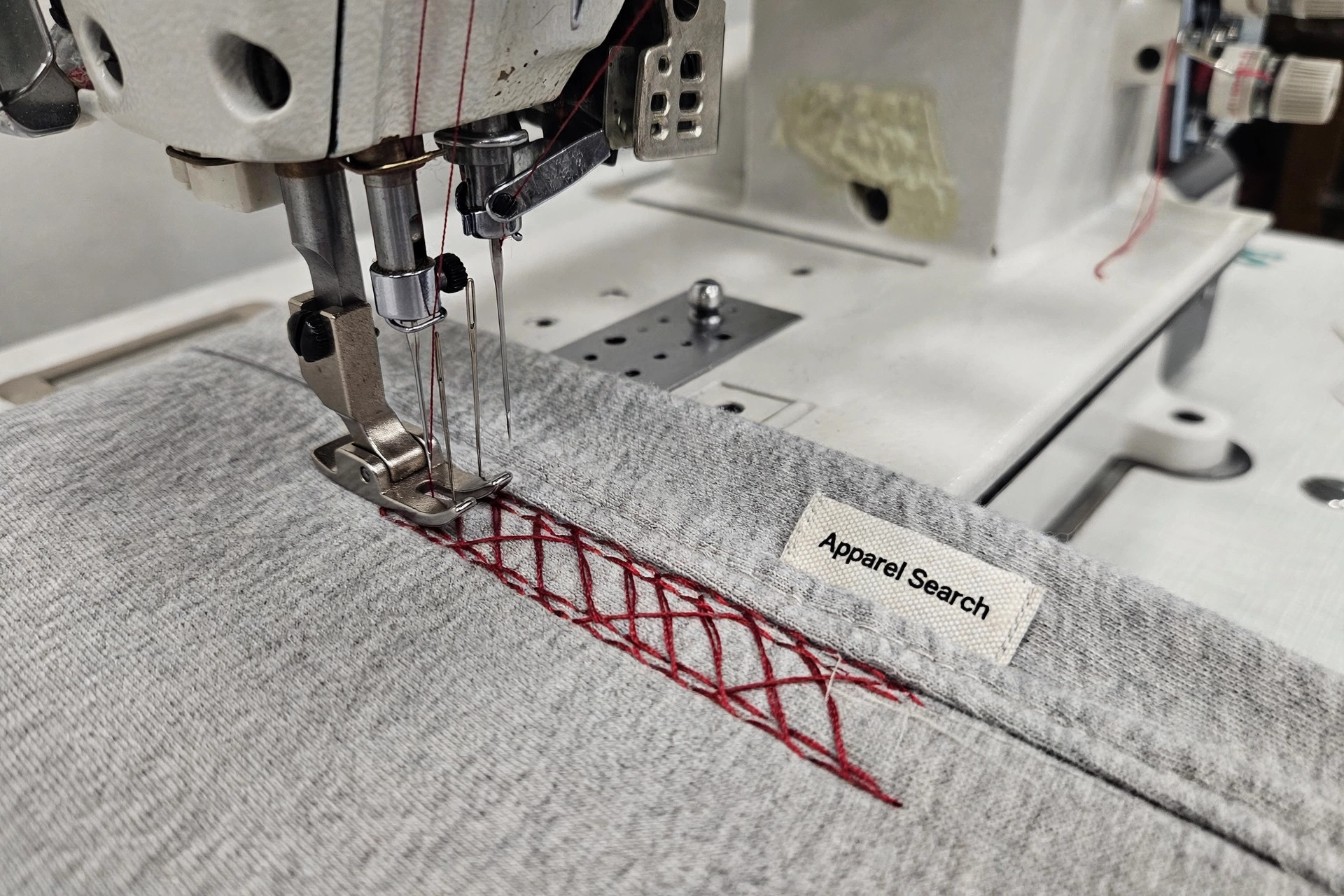 Stitch Class 600 — Flat Stitch
More to Explore
Search Apparel Search
Stitch and seam classifications follow ASTM D-6193, Standard Practice for Stitches and Seams. Diagrams on these pages are original Apparel Search drawings.