Buttonholes · The Stitch & Seams Guide
Machine Buttonholes — Chain Stitch, Lock Stitch & Keyhole
A machine buttonhole is a finished slot in the fabric, stitched densely around its cut edges so a button can pass through thousands of times without the hole fraying or stretching. Buttonhole machines are automatic-cycle machines: clamp the work, and the machine stitches the two sides, bartacks the ends and — on many models — cuts the slot, all in seconds. This page covers the five examples in Professor Kahn's inventory: the chain stitch and lock stitch straight buttonholes, and the three keyhole forms sewn for suits and outerwear.
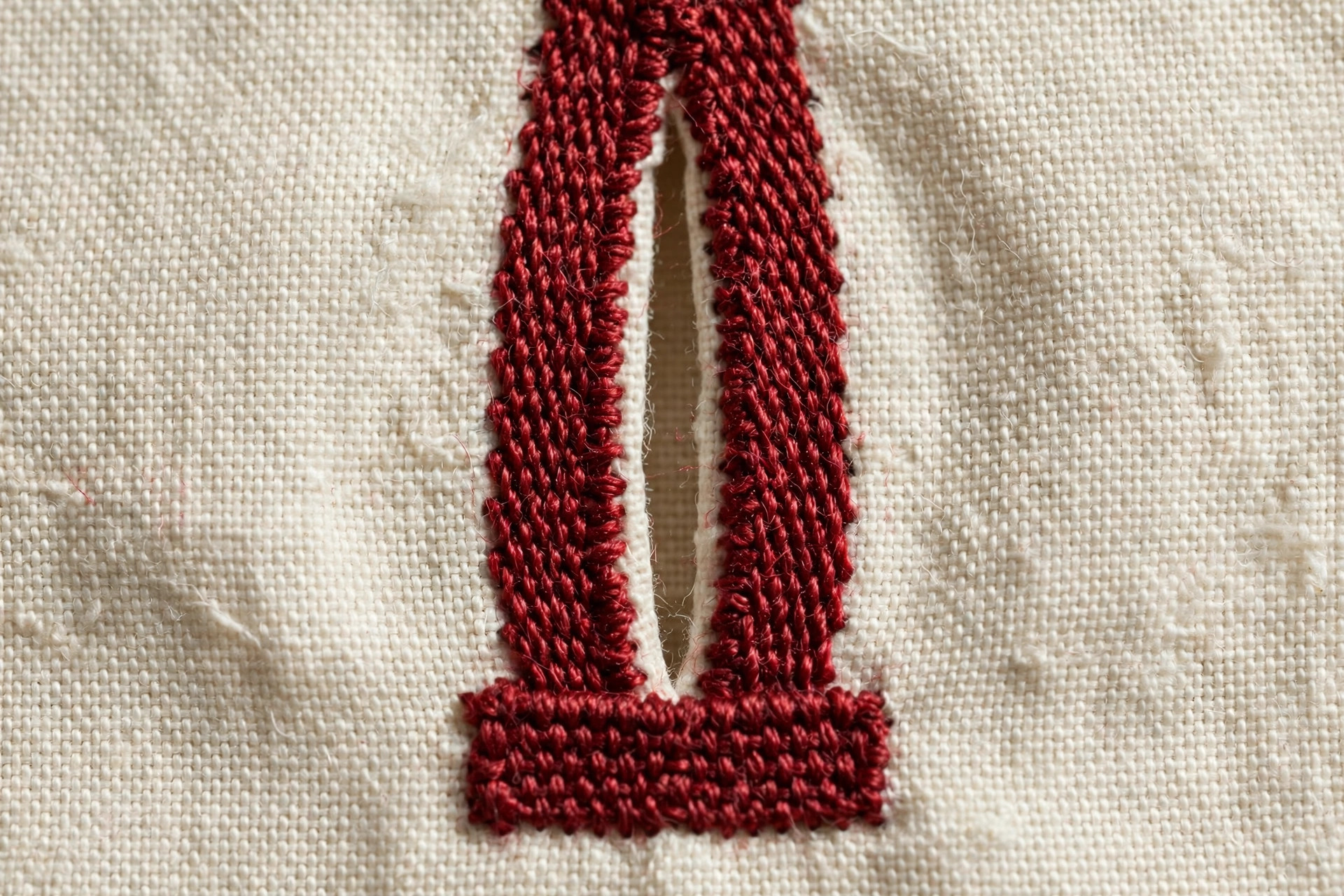
Anatomy of a Machine Buttonhole
Every machine buttonhole on this page is built from the same parts. Two dense columns of stitching run along the sides of the slot, covering the cut edges so completely that no raw fabric shows. At the ends, bartacks — short, dense bars of stitching laid across the width — lock the columns together and take the strain of the button pulling against the end. On tailored buttonholes a gimp cord is laid under the stitching first, giving the finished hole a firm, raised edge that holds its shape. The slot itself is cut either before stitching (the eyelet method, used with a gimp) or after (the machine knives the slit open inside the completed stitching).
The straight buttonhole: columns, slit and bartacks. Illustration by Apparel Search.
Two stitch formations do the work, and they divide this page between them. The single-thread chain stitch (101) interloops one thread with itself; worked around a buttonhole it throws a raised, corded edge — the purl — to the face, and it is fast. The two-thread lock stitch (301) interlaces needle and bobbin threads inside the fabric; it lies flatter, covers densely, and cannot unravel if a thread breaks. Kahn's inventory shows the straight buttonhole in both formations, then the keyhole family — buttonholes with a round eye at one end — in three versions.
The five buttonhole examples
The Five Examples
101Chain Stitch Buttonhole
Construction. A single thread forms the whole buttonhole. The needle carries it around the slot in a dense zigzag path, and beneath the fabric each pass interloops with the previous one — the chain stitch formation of Class 100 — so the stitching is a continuous chain worked around the hole. The slot is commonly cut after stitching, inside the completed columns.
Appearance. From the front, the interlooping throws a raised, corded edge — the purl — along both columns: a neat, slightly ropey border that stands proud of the fabric. From the back, the chain loops show as a softer, flatter line of loops. Kahn's inventory photographs both faces, because on this stitch the two sides genuinely differ.
Typical use and garments. The fast, economical buttonhole for light to medium weight fabrics: shirts, blouses, dresses, children's wear and light trousers. Its one weakness is the chain's nature — snip the finishing end and the stitching can run back — so ends are bartacked and locked by the machine cycle.
301Lock Stitch Buttonhole
Construction. The same buttonhole shape, worked in the two-thread lock stitch: the needle thread zigzags densely along each column while the bobbin thread interlaces with it inside the fabric at every pass — hundreds of tiny lock stitches packed along the slot. The columns are typically a little wider and denser than the chain version.
Appearance. Flatter and smoother than the chain stitch buttonhole, and essentially the same on both faces, because the interlacing is buried in the fabric. The finish reads as quality: even, dense, and crisp at the bartacks.
Typical use and garments. Kahn's inventory specifies it for medium weight goods, or where higher quality is required — better shirts, tailored trousers, skirts, uniforms and workwear that will be laundered hard. The lock formation cannot run if a thread breaks, which is the quality being paid for: a chain buttonhole fails progressively, a lock stitch buttonhole does not.
101Chainstitch Keyhole Buttonhole — Square Bartack
Construction. The keyhole shape replaces the straight top end of the slot with a round eye: the stitching fans out around a circular hole, worked over a gimp cord so the eye keeps its shape, then runs down the two columns to a square bartack — a broad, full-width bar of dense stitching — closing the straight end. The hole is cut before stitching on eyelet machines, so the stitching can be worked right around the open eye.
Appearance. A round eye at the garment-edge end, two corded chain-stitched columns, and a solid square block of stitching at the inner end. The square bar is the robust, traditional tailor's finish — it spreads the button's pull across the full width of the hole.
Typical use and garments. Suits and outerwear, in Kahn's words: jacket and coat fronts, where the buttons are sewn with a thread shank and the shank beds into the eye when the coat is fastened. The eye takes the strain that would tear a slit end apart.
101Chainstitch Keyhole Buttonhole — Fly-Bar Bartack
Construction. The same chain-stitched keyhole — round eye, gimp, two columns — closed at the straight end by a fly bar: a narrow bartack, laid as a slim bar across the centre of the buttonhole rather than a full-width square block. The machine cycle differs only in the tacking programme.
Appearance. Neater and lighter at the closed end than the square-bar version: the eye and columns carry the visual weight, and the little central bar reads as a fine tailor's detail rather than a structural block.
Typical use and garments. Again suits and outerwear, where a narrower finish is wanted — finer jacket fronts, waistcoats, and the fly fronts the bar is named for. The choice between square bar and fly bar is a house style and fabric-weight decision: the heavier the cloth and the harder the wear, the stronger the argument for the full square bar.
301Lockstitch Keyhole Buttonhole
The keyhole buttonhole: the eye gives the button's shank a socket to sit in. Illustration by Apparel Search.
Construction. The keyhole form worked in the two-thread lock stitch: needle and bobbin threads interlaced densely around the eye — over a gimp, on tailored work — and down both columns. Kahn's inventory notes that a variety of bartack options is available on this version: square bars, fly bars and tapered bars can all close the straight end, programmed into the machine cycle.
Appearance. The crispest keyhole of the five: flat, dense, identical in character on both faces, with the eye cleanly rounded and the chosen bartack finishing the end. On a heavy coat it reads as a piece of engineering, which is what it is.
Typical use and garments. Suits and heavy weight goods where higher quality is required — overcoats, tailored jackets, heavy uniforms. The lock formation's security matters most exactly here, where a buttonhole is large, expensive to repair, and pulled hard every time the garment is fastened.
The Five Examples Compared
| Example | Stitch | Threads | Shape / finish | Typical work |
|---|---|---|---|---|
| Chain stitch buttonhole | 101 | 1 | Straight, corded purl edge | Light to medium fabrics: shirts, blouses, dresses |
| Lock stitch buttonhole | 301 | 2 | Straight, flat and dense | Medium goods; higher quality shirts and tailoring |
| Keyhole, square bartack | 101 | 1 | Round eye, full-width square bar | Suits and outerwear |
| Keyhole, fly-bar bartack | 101 | 1 | Round eye, narrow central bar | Suits and outerwear, finer finishes |
| Lockstitch keyhole | 301 | 2 | Round eye, choice of bartacks | Suits and heavy goods; highest quality |
The button is the other half of every one of these fastenings — see the companion page on machine button sewing for how the buttons themselves are attached, including the thread shank that the keyhole's eye is shaped to receive.
Common Questions
What is the difference between a chain stitch and a lock stitch buttonhole?
The stitching formation. A chain stitch buttonhole (type 101) is worked with a single thread that interloops with itself, giving a raised, corded purl edge and the fastest cycle. A lock stitch buttonhole (type 301) interlaces a needle thread with a bobbin thread, lies flatter, and cannot run out if a thread breaks — which is why it is specified where higher quality is required. The buttonhole shapes — straight or keyhole — are available in both formations.
What is a gimp, and does every buttonhole have one?
A gimp is a cord laid along the buttonhole under the stitching before it is worked, so the stitches form over it. It gives tailored and eyelet buttonholes their firm, raised, rounded edge and stops the buttonhole stretching out of shape. Light shirt buttonholes are usually worked without a gimp; suit and coat buttonholes very often have one.
Should a buttonhole be cut before or after stitching?
Both methods are used. Cut-after machines stitch the buttonhole closed and then knife the slit open inside the stitching — the common method for straight buttonholes, since the uncut fabric supports the dense stitching. Cut-before (eyelet) machines cut first and stitch around the open hole, which suits keyhole buttonholes with a gimp. Either way, every end must be bartacked so the stitching cannot pull out.
Why do coat buttons need a keyhole buttonhole?
Because of the shank. Coat and suit buttons are sewn on with a thread shank (or have a shank of their own), and when the garment is fastened the shank sits at the closed end of the buttonhole under strain. The round eye gives it a socket to sit in, spreading the load around the eye instead of tearing at a slit end.
Sources & the photographic reference
The stitch and seam classifications on this page follow ASTM D-6193, Standard Practice for Stitches and Seams, explained here in Apparel Search's own words with original diagrams. For photographs of these stitches and seams, see the Garmenco guide's buttonhole page — Professor Bernard Kahn's photographic guide, which Apparel Search has recommended for years and continues to link as the photo reference for this classification. Our guide is the permanent on-site companion to it.
Related Pages
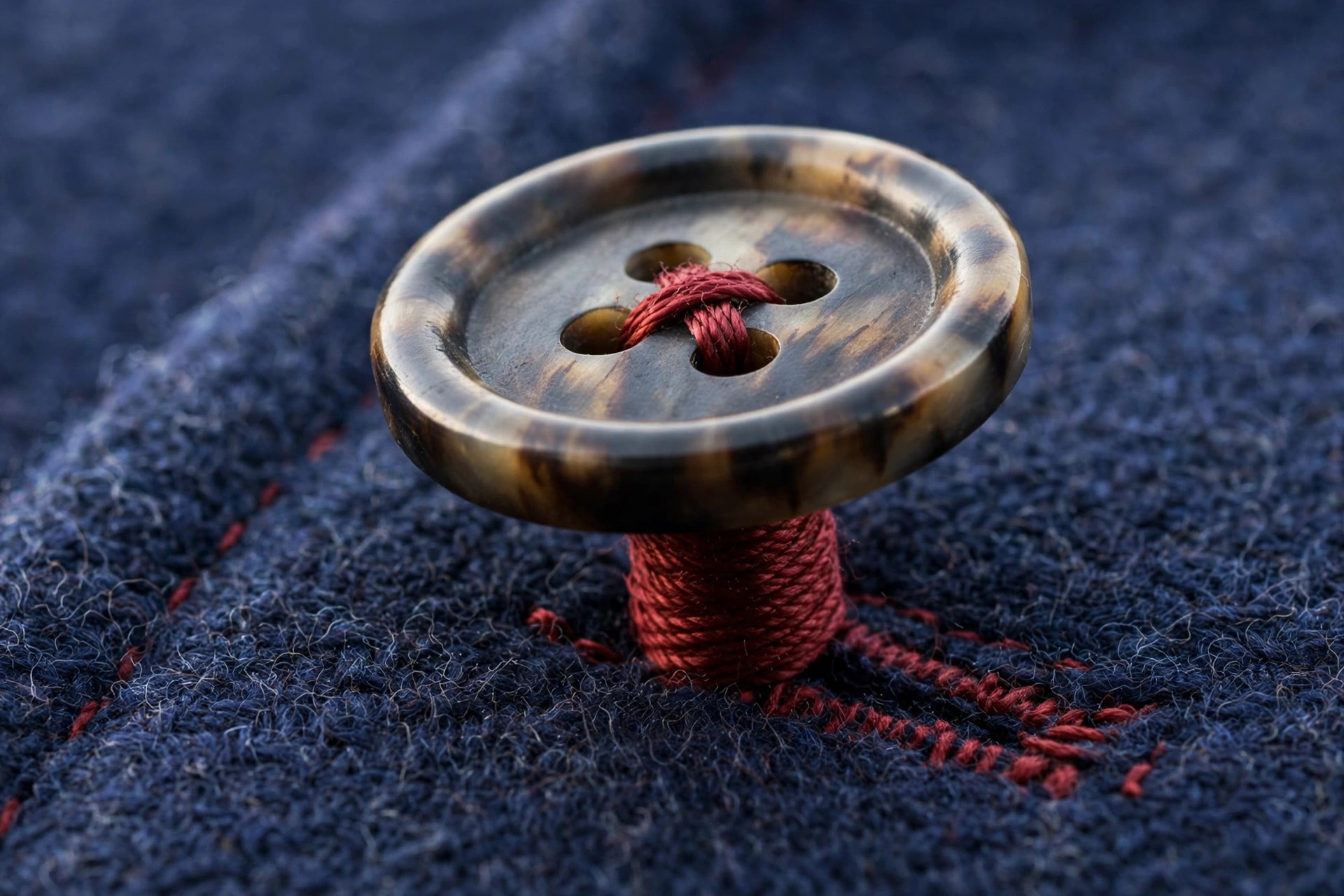 Machine Button Sewing
 Stitch Class 300 — Lock Stitch
 Stitch Class 100 — Chain Stitch
More to Explore
Search Apparel Search
Stitch and seam classifications follow ASTM D-6193, Standard Practice for Stitches and Seams. Diagrams on these pages are original Apparel Search drawings.