Stitch 107 · Class 100 Chain Stitch
Stitch 107 — Zigzag Single-Thread Chain Stitch
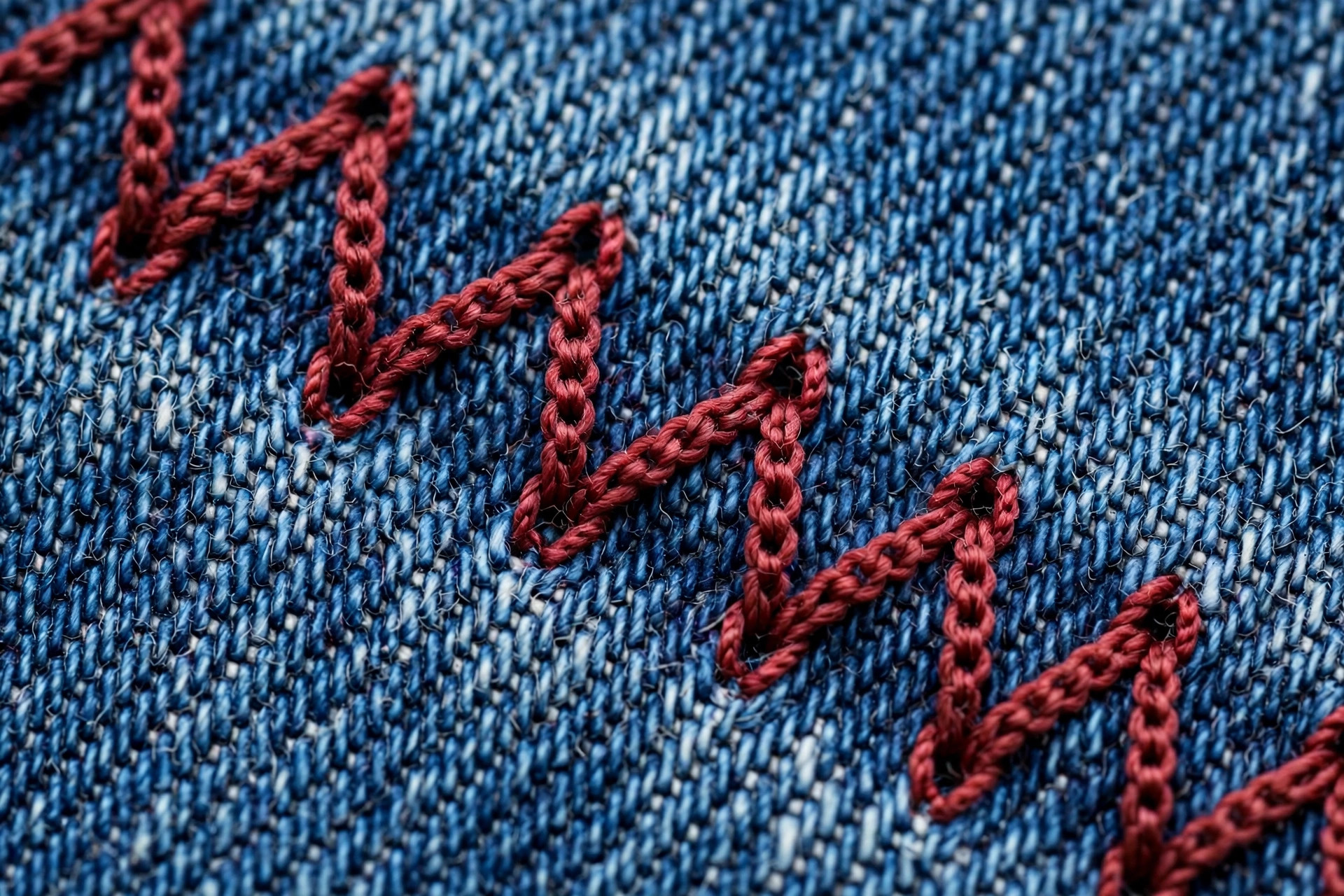
Stitch 107 is the zigzag member of the chain stitch class: formed exactly as stitch 101 — one needle thread interlooped with itself on the underside — except that successive single stitches are placed side to side so they build a symmetrical zigzag. The zigzag path puts spare thread into the seam, so a 107 seam can give in a way a straight 101 seam cannot.
How Stitch 107 Forms
- The needle descends at one side of the stitch width and its loop interloops with itself on the underside — precisely the stitch 101 formation.
- Before the next penetration, the needle (on most machines the needle bar swings; on some, the work is shifted) moves across to the opposite side of the width.
- The second stitch interloops at the far side. Alternating penetrations build the symmetrical zigzag, one stitch per leg, each loop secured by the loop that follows it.
- Width and length are independently adjustable: narrow and long for a discreet stretch seam, wide and short for bold decorative work.
Formation diagram for stitch 107. Illustration by Apparel Search.
The Threads
| Element | Detail |
|---|---|
| Thread count | 1 — a single needle thread, interlooped with itself. |
| Needle thread (A) | Forms the visible zigzag on the top face and the chain of loops that follows the same zigzag path on the underside. |
| Looper | Blind, as throughout Class 100: it handles the loops but supplies no thread. |
| Typical threads | Standard sewing threads for functional work; heavier or contrasting threads where the zigzag is meant to be seen. |
| Thread use | Higher than 101 and rising with width — a wide zigzag lays down far more thread per metre of seam than a straight chain. |
What It Looks Like
On the top, stitch 107 is a clean, even zigzag of single thread segments, meeting at sharp points on each side of the width. On the underside, the chain of loops follows the same zigzag path — the tell-tale that this is a chain stitch and not its lock stitch lookalike.
That lookalike matters. Stitch 304, the zigzag lock stitch, produces a nearly identical top face, and the two are confused constantly. Flip the work over: loops chained through each other mean 107 (one thread, can unravel); a second thread interlaced at every penetration, with the same zigzag on both faces, means 304 (two threads, secure). The underside never lies.
Stitch 107 in Detail
A note on the number, because spec sheets disagree about it. ASTM D-6193's Class 100 runs from 101 to 105, and Professor Kahn's photographic guide illustrates 101, 103 and 104 for this class — the straight and blind forms. The zigzag form of the single-thread chain is classified as 107 in the international stitch-type numbering (ISO 4915), whose written description matches this formation exactly: the same stitch as 101, with successive single stitches forming a symmetrical zigzag pattern. This guide uses the 107 number for the zigzag form so that every illustrated formation has its own page, and files the straight form under 101 where both systems agree.
Why does a zigzag chain stitch exist at all? The straight chain already has a little give from its loops. The zigzag adds geometry: under sideways or lengthways strain the legs can straighten slightly before the thread itself is stressed, so the seam tolerates movement that would pop a straight seam's thread. One pass also covers a width of material, which suits attaching elastic and lace and finishing edges — jobs the lock stitch world gives to 304, but which a single-thread machine can do without a bobbin, at chain-stitch speed, where the seam's security demands are modest.
Modest is the operative word. Everything said about 101's unravelling applies here with interest: a zigzag presents more thread to snag, and a run that starts at one end of a zigzag seam travels just as happily as in a straight one. Ends must be secured, and stressed seams belong to other stitches.
Strengths and Limits
Strengths
- Stretches more than any straight Class 100 stitch: the zigzag geometry and the chain loops both give.
- One thread only — no bobbin, continuous supply, chain-stitch sewing speed.
- Covers a width in one pass: elastic, lace and edge work without a second thread system.
- Decorative as well as functional when sewn wide in a contrasting thread.
Limits
- Unravels from the end like every Class 100 stitch — ends must be secured, always.
- Less secure than the zigzag lock stitch 304, which it resembles from the top.
- Uses more thread than 101, and sews more slowly across a seam's length.
- Uncommon in modern spec sheets, so factories may substitute 304 or a Class 400 zigzag unless 107 is specified clearly.
Where Stitch 107 Is Used
Stitch 107 appears where a zigzag is wanted and a single-thread chain is acceptable: decorative zigzag rows on casual garments and home furnishings, applying elastic and lace on light garments, light seaming of knits where the seam must give a little, and edge work on items whose seams are later trapped or overedged by another operation. It is a supporting stitch rather than a structural one.
Typical fabrics: light and medium knits, lace and elastic trims, and casual wovens for decorative work. Where the zigzag must be secure against unravelling, the guide's answer is stitch 304; where it must stretch hard, multi-thread chain and overedge stitches take over. Compare all three chain stitch types in the Explore Stitches gallery.
Common Questions
What is the difference between stitch 107 and stitch 304?
From the top they look almost the same — a symmetrical zigzag. Underneath, 107 is a one-thread chain of loops that can unravel from the end; 304 is a two-thread lock stitch, interlaced at every penetration and identical on both faces. The underside is the way to tell them apart.
Why is stitch 107 not in some stitch charts?
Numbering differs between systems. ASTM D-6193 lists Class 100 as types 101 to 105, while the international ISO 4915 numbering gives the zigzag form of the single-thread chain its own number, 107. The formation itself is the same wherever it is sewn.
Does stitch 107 stretch?
Moderately. The zigzag legs can straighten under strain and the underside chain adds a little more give, so a 107 seam tolerates movement that would stress a straight 101 seam. For seams that must stretch a lot, overedge and cover stitches are stronger choices.
How are the ends of a 107 seam secured?
The same way as any chain stitch: a few condensed stitches, a short run back over the seam's own path, a knot, or ends trapped inside a later seam or hem. An unsecured 107 end will run out if the thread is pulled.
Sources & the photographic reference
The stitch and seam classifications on this page follow ASTM D-6193, Standard Practice for Stitches and Seams, explained here in Apparel Search's own words with original diagrams. For photographs of these stitches and seams, see the Garmenco guide's Class 100 page — Professor Bernard Kahn's photographic guide, which Apparel Search has recommended for years and continues to link as the photo reference for this classification. Our guide is the permanent on-site companion to it.
Related Stitches
 Stitch 101 — Single-Thread Chain Stitch
 Stitch 103 — Blind Chain Stitch
 Stitch Class 100 — Chain Stitch
More to Explore
Search Apparel Search
Stitch and seam classifications follow ASTM D-6193, Standard Practice for Stitches and Seams. Diagrams on these pages are original Apparel Search drawings.