Women's Suits Store on Amazon
Pant suits, skirt suits and blazers for business and special occasions
When the occasion calls for getting dressed up for business or a special event, the women's suits store on Amazon gathers the tailored answer: full suits, dress suits, pantsuits, skirt suits, blazers and suit jackets, and special occasion skirts. The range runs from boardroom suiting to wedding-guest formality, and its depth lies in separates — jackets, trousers and skirts sold to mix — as much as in matched sets.
Buying a suit online succeeds on fit and fabric information rather than photographs. This guide explains how the main suit forms differ, what suiting fabrics and linings do, and how to use garment measurements, dress shirts and tailoring to get a finished result. A good suit is the longest-serving garment in a working wardrobe, so the extra few minutes spent on measurements repay themselves for years.
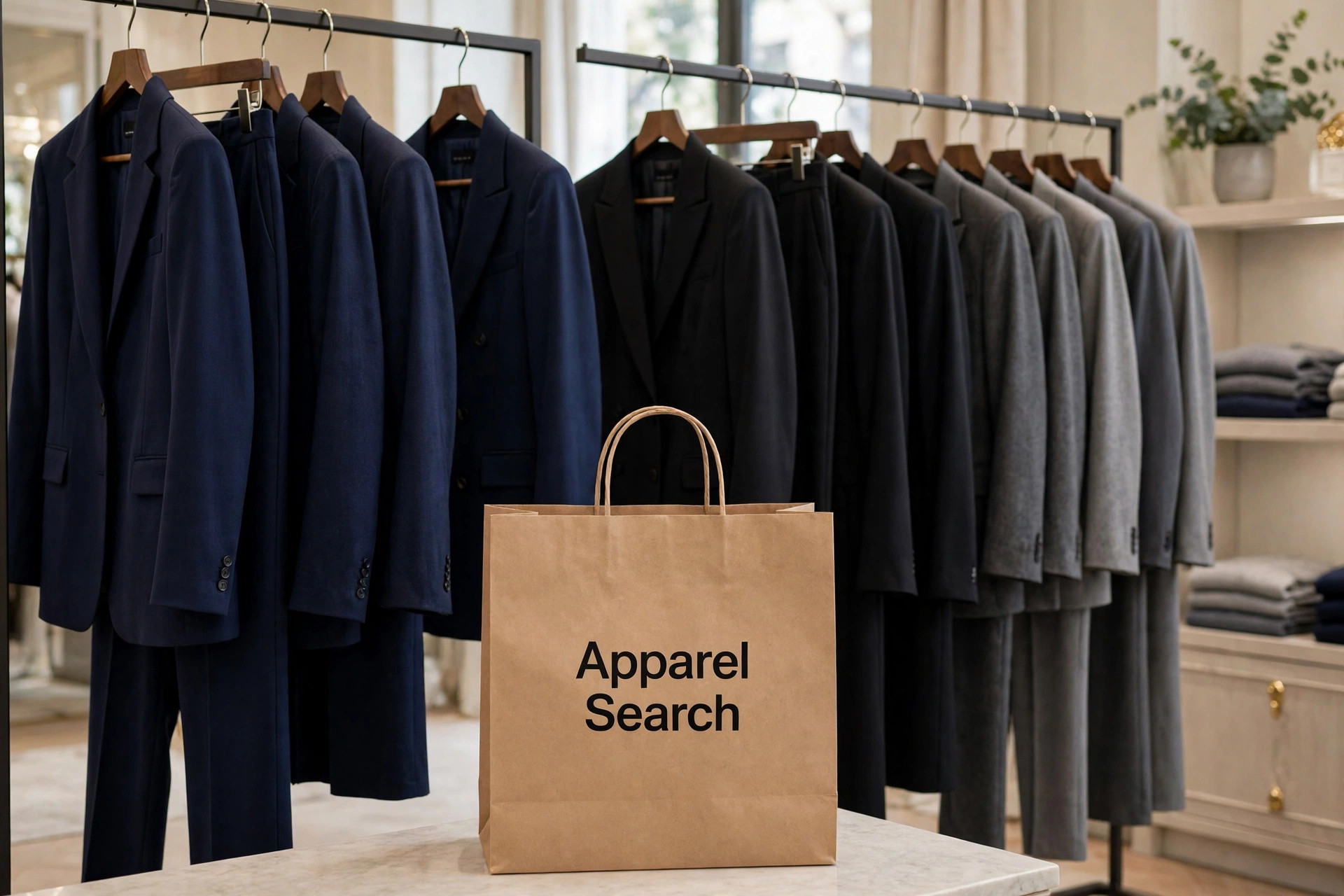
A suit is the tailored heart of the work wardrobe, and the Apparel Search Amazon clothing guide places it beside the shirts, shoes and handbags that complete it.
Pant Suits, Skirt Suits and Dress Suits
The pantsuit pairs a jacket with matching trousers and is the most versatile business form: the trousers move easily through a working day, and the jacket separates onto dresses and skirts. Trouser cuts vary from straight and slim to wide-leg, and the jacket choice — single or double breasted, one button or three — sets the formality. A navy or charcoal pantsuit is the usual foundation purchase.
Skirt suits pair the jacket with a matching skirt, pencil or A-line, and read slightly more formal and traditional, a strength for conservative offices, courts and ceremonies. Dress suits coordinate a jacket with a dress rather than separates, solving the whole outfit in two pieces for weddings and formal daytime events. Special occasion skirts extend the idea, pairing dressy skirts with jackets or blouses already owned.
Blazers, Separates and Suiting Fabrics
Blazers and suit jackets sold as separates are how a suit wardrobe grows efficiently: one blazer refreshes trousers, skirts and dresses across a week, and separates allow a different size above and below the waist, which matched sets cannot. Check that a separate's fabric name, color and weave truly match an existing piece before counting on them as a suit — near-black is not black under office light.
Suiting fabrics trade polish against practicality. Wool and wool blends drape best, resist wrinkles through a day and span seasons in mid-weights; crepe suits formal occasions with a fluid, matte finish; linen suits suit summer but crease by design; and polyester-rich suiting keeps prices low and care easy at some cost in breathability. A lined jacket sits smoother and lasts longer than an unlined one, and lining fabric is listed in the product details.
Fit, Dress Shirts and Finishing the Suit
Fit points decide whether a suit looks tailored: shoulder seams at the shoulder's edge, a jacket that buttons without pulling, sleeves ending at the wrist bone, and trousers or a skirt hemmed to the shoes they will wear. Compare the garment measurements on the product page with a suit that already fits, and budget for simple alterations — hems and waist adjustments are inexpensive and transform an almost-right suit.
The suit is worn with a dress shirt or blouse, and shirt fabric knowledge helps: smooth cotton poplin sits flat under jackets, while textured weaves add interest where the jacket opens. Learn the shirt pairing before ordering both in the same basket. Shoes, a structured handbag and restrained jewelry finish the picture, and rotating two suits with varied shirts stretches a work wardrobe further than a third suit would.
Common Questions
Should I buy a matched suit or separates?
Separates, if your top and bottom sizes differ or you want maximum mixing. A matched set guarantees fabric and color match, while separates trade that certainty for fit flexibility and a wardrobe that multiplies.
What is the most versatile women's suit color?
Navy or charcoal in a mid-weight wool blend. Both pair with white, pale blue and patterned shirts, work across seasons, and read as formal without the starkness black can bring to daytime.
Can a suit from Amazon be tailored?
Yes — standard alterations such as hemming trousers and skirts, adjusting a waist and shortening sleeves are routine for any tailor. Order the size that fits shoulders and bust, then tailor the rest.
More to Explore
- Amazon Fashion Stores
- Women's Suits Guide
- Fashion Stores
- Women's Fashion
- Fashion Stores by Name
- Fashion Retail by Stores Location
- Fashion Retail by Category
- Fashion Stores in the USA
- Fashion
- Apparel
- Clothing
- Apparel Search Shopper
- Amazon Widgets
- Women's Apparel
- about suits
- women's shoe store
- handbag store
- women's shirts store
- women's sleepwear store
- maternity fashion store
- women's fashion hoodies
- women's underwear store
- Women's Fashion on Amazon
- Women's Clothing Stores
- Women's Clothes Guide
- Women's Fashion Brands
- Women's Fashion Shopper
- Jewelry Store