Men's Pants on eBay
Dress trousers, chinos, cords and jeans — buying bottoms by waist, inseam and rise measurements instead of the label
Pants are the most measurement-sensitive purchase in menswear, which makes them ideal auction buying for anyone willing to work by the tape: waist, inseam, rise and leg opening decide the fit, and every one of them can be read from a listing. This guide covers the trouser families eBay sellers list — dress trousers, chinos, cords, casual pants and jeans sold as pants rather than denim collectibles — and the checks that matter: hem state, seat wear, and the difference between a labeled waist and a measured one.
Nothing in an auction category is a fixed range, so the value sits in the checking. Work through what the listings usually hold, the measurements and materials to verify, and the seasonal pattern that decides whether to bid this week or wait for the next wave.
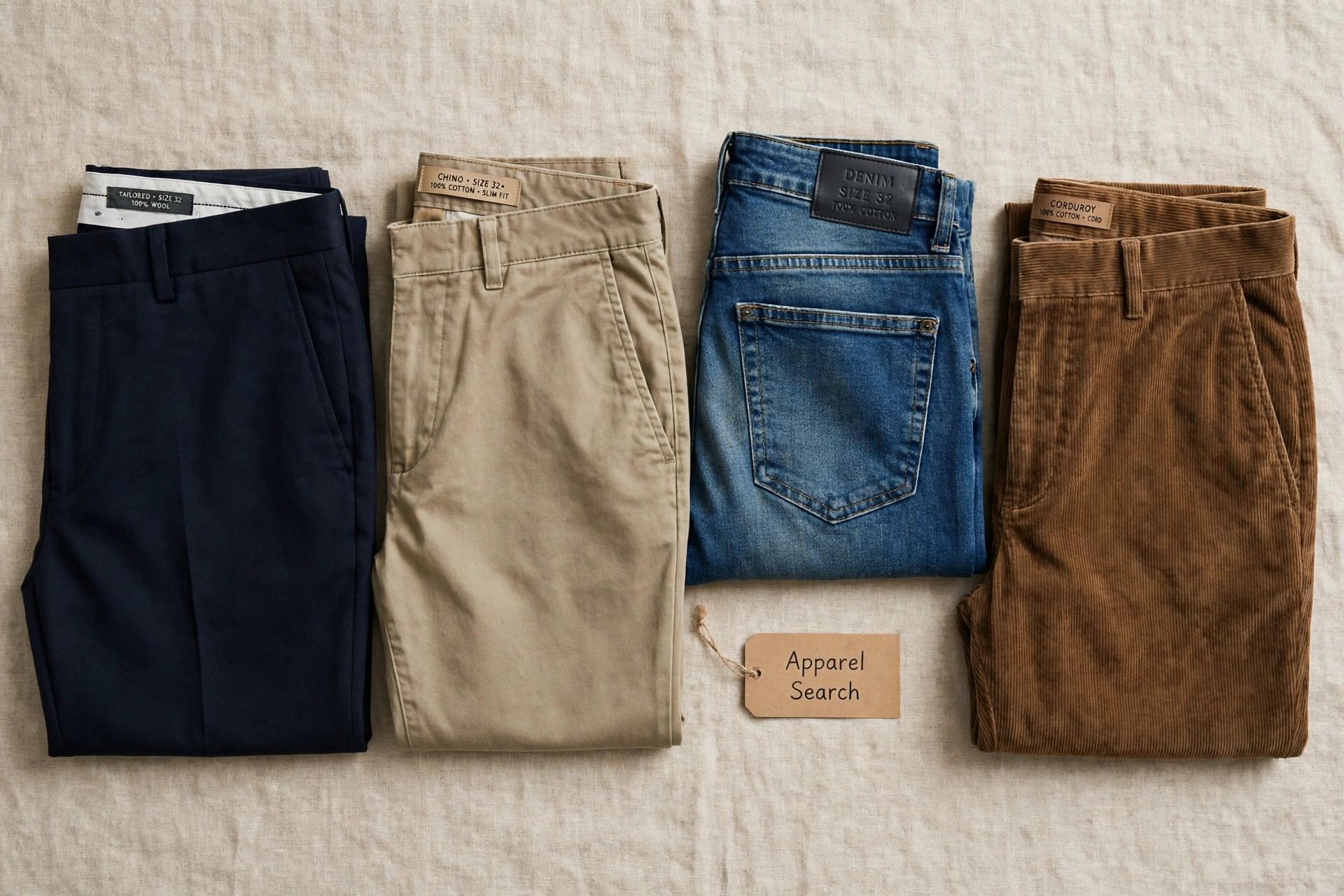
Everyday trousers in standard sizes are also an easy set-price buy. The Apparel Search Amazon clothing guide gathers the Amazon men's pants departments — compare its fixed prices with the auction pairs below before bidding.
Trouser Families in the Listings
Listings for men's pants on eBay typically cover dress and suit trousers, chinos and casual cotton pants, corduroy trousers, jeans listed by waist and leg, work and cargo pants and shorts in the summer listings. The sellers behind them range from individuals clearing a wardrobe to specialist dealers and outlet accounts, so photography, description depth and condition grading vary widely from one listing to the next. Suit separates and retail overstock supply the new-with-tags seam, while wardrobe clear-outs supply broken-in casual pairs in every waist size. Begin broad, then narrow with the size, color and condition filters; a saved search with alerts catches the short listings that end before a casual browser ever sees them.
Because seller wording is inconsistent, run several searches rather than one: "mens trousers 34 32"; "mens chinos"; "mens corduroy pants"; "mens dress pants wool". Vaguely titled and misspelled listings are where quiet bargains hide, since fewer bidders ever find them. Search your waist and inseam as numbers together — '34 32' phrasing matches how careful sellers title measured pants. Sort by ending soonest to catch neglected auctions, and compare price plus postage together — a low bid with heavy shipping is seldom the cheapest way to own the garment.
Waist, Inseam and Rise by Tape
Fit comes first: the labeled waist often differs from the measured waist by an inch or more, especially on worn pairs, so the listing's tape-measured waist and inseam are the figures to buy on; rise decides comfort as much as waist does. Auction garments cannot be tried on, so the flat measurements in the description are the only dependable evidence, and a seller who lists none is worth a message before bidding. On materials, expect wool and wool-blend suiting, cotton twill and chino cloth, corduroy and denim in the casual listings. A photographed inside label gives fiber and care in one frame — wool trousers that have been machine washed against advice lose their finish in a way photographs of the cloth reveal.
In this category condition moves value more than age does. Wear concentrates at the seat, the inner thigh and the hems: ask for those areas in close-up, and check whether hems have been taken up, since let-down hems leave a permanent crease line. Study the photographs at full size, read the returns policy, and judge the seller's feedback by the pattern that matters — description accuracy — rather than the headline score alone. A garment described as new with tags should show those tags in a photograph; if it does not, ask before bidding.
Where the Measured Buyer Wins
Timing shapes the price. Dress trousers list steadily all year; cords and heavy pants cheapen in spring, and shorts invert — dearest in early summer, cheapest by autumn. Measured buying turns the category's risk into its discount: pairs other buyers skip for want of a tape measure sell cheap to buyers who own one. Fix a maximum that includes postage, bid it once, and let the automatic bidding do the work — chasing an auction past your ceiling is how a bargain turns into an overpayment. Never assume your high-street size in a vintage or foreign-market pair — older cuts run higher in the rise and smaller in the waist than modern equivalents.
Common Questions
What should I check first when buying men's pants on eBay?
Measurements and condition. the labeled waist often differs from the measured waist by an inch or more, especially on worn pairs, so the listing's tape-measured waist and inseam are the figures to buy on; rise decides comfort as much as waist does. Then confirm the fabric content and read the seller's returns policy before bidding.
Which search phrases find the best men's pants listings?
Try several seller wordings — mens trousers 34 32, mens chinos, mens corduroy pants — and save the searches so short or mis-titled auctions are caught before they end.
When is the cheapest time to buy men's pants at auction?
Dress trousers list steadily all year; cords and heavy pants cheapen in spring, and shorts invert — dearest in early summer, cheapest by autumn. Bidding on off-peak endings and setting a firm maximum that includes postage keeps the delivered price down.