Women's Other Clothing on eBay
Specialty, uniform, costume, traditional and one-off garments — shopping the category where categorization itself is the skill
Every marketplace has a drawer marked other, and in women's clothing it is one of the most interesting: uniforms and work-specific garments, costumes and period pieces, traditional and cultural dress, adaptive clothing, and one-off handmade or altered garments that fit no standard category. This guide is about shopping that drawer well — searching by garment description rather than category name, judging unique pieces on their own evidence, and recognizing that in this corner of eBay the unusual listing is often unusual because it is genuinely rare, not because it is unwanted.
The appeal here is breadth at every price point: current pieces, discontinued lines and one-off vintage finds listed side by side. The item notes, garment checks and bidding tactics below are written as a single pre-bid routine for exactly that mix.
Standard garments at set prices live in the standard departments. The Apparel Search Amazon clothing guide collects them in one Amazon guide — start there for the ordinary pieces, and bring the one-offs and specialties back here.
What Lands in the Other Drawer
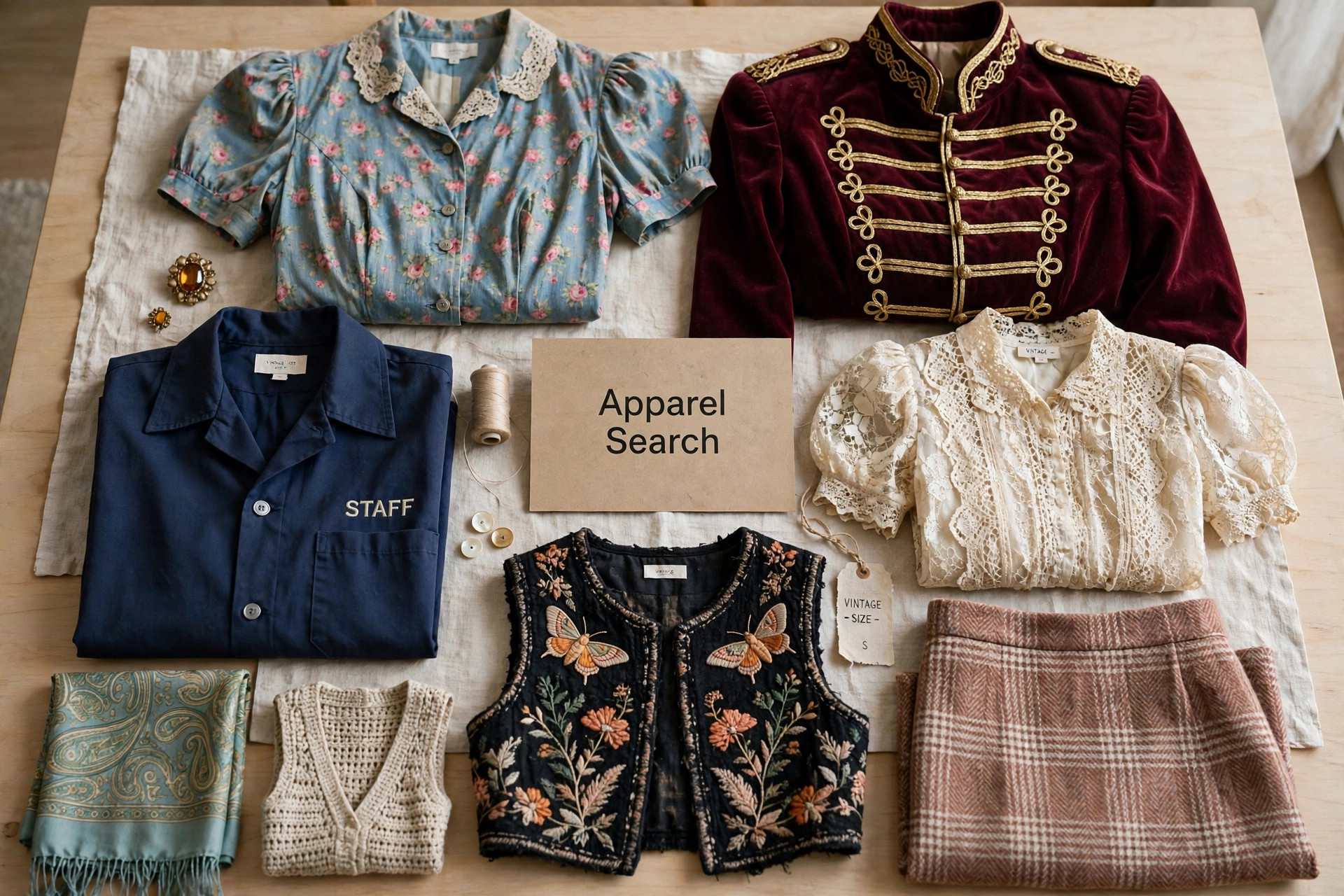
Listings for women's other and specialty clothing on eBay typically cover uniforms and work-specific garments, costumes and period-style clothing, traditional and cultural dress, adaptive and specially designed clothing, handmade and one-off garments and altered and upcycled pieces in the same listings. The sellers behind them range from individuals clearing a wardrobe to specialist dealers and outlet accounts, so photography, description depth and condition grading vary widely from one listing to the next. Supply is one-off by nature: a closed production's costumes, a workplace's uniform stock, a maker's samples — listings that appear once and do not repeat. Begin broad, then narrow with the size, color and condition filters; a saved search with alerts catches the short listings that end before a casual browser ever sees them.
Because seller wording is inconsistent, run several searches rather than one: "womens uniform clothing"; "period costume women"; "traditional dress women"; "handmade clothing women". Vaguely titled and misspelled listings are where quiet bargains hide, since fewer bidders ever find them. Describe the garment, not the category — sellers of specialty pieces title by use and occasion ('nurse uniform', 'Victorian style blouse'), because no category word covers their stock. Sort by ending soonest to catch neglected auctions, and compare price plus postage together — a low bid with heavy shipping is seldom the cheapest way to own the garment.
Other Worlds, Other Sizings
Fit comes first: specialty garments follow the sizing of their own world — uniform sizes, costume sizes, a maker's own chart — none of which match high-street scales, so the listing's measurements are the only safe basis, and unmeasured one-offs deserve a message before bidding. Auction garments cannot be tried on, so the flat measurements in the description are the only dependable evidence, and a seller who lists none is worth a message before bidding. On materials, expect workwear twills and uniform fabrics, costume satins and theatrical fabrics, traditional natural-fiber cloth and mixed handmade materials. Costume and theatrical garments are built for appearance at distance, with lighter construction than everyday clothing; price them for their purpose and they are bargains, price them as daywear and they disappoint.
In this category condition moves value more than age does. One-off pieces have no comparison stock, so condition evidence carries the whole judgment: full-length photographs front and back, close work on fastenings, and honest notes on alterations or repairs. Study the photographs at full size, read the returns policy, and judge the seller's feedback by the pattern that matters — description accuracy — rather than the headline score alone. A garment described as new with tags should show those tags in a photograph; if it does not, ask before bidding.
One-Off Pieces and Certain Needs
Timing shapes the price. Costume stock surges toward festival and Halloween seasons and clears after them; uniform and traditional clothing move steadily all year. Rarity is real value here when the need is specific — the exact uniform, period piece or traditional garment, found once, is worth its price because it will not list again on schedule. Fix a maximum that includes postage, bid it once, and let the automatic bidding do the work — chasing an auction past your ceiling is how a bargain turns into an overpayment. Do not dismiss an oddly titled listing unread: in this category the best pieces are routinely hidden under vague titles by sellers who had no category for them.
Common Questions
What should I check first when buying women's other and specialty clothing on eBay?
Measurements and condition. specialty garments follow the sizing of their own world — uniform sizes, costume sizes, a maker's own chart — none of which match high-street scales, so the listing's measurements are the only safe basis, and unmeasured one-offs deserve a message before bidding. Then confirm the fabric content and read the seller's returns policy before bidding.
Which search phrases find the best women's other and specialty clothing listings?
Try several seller wordings — womens uniform clothing, period costume women, traditional dress women — and save the searches so short or mis-titled auctions are caught before they end.
When is the cheapest time to buy women's other and specialty clothing at auction?
Costume stock surges toward festival and Halloween seasons and clears after them; uniform and traditional clothing move steadily all year. Bidding on off-peak endings and setting a firm maximum that includes postage keeps the delivered price down.
More eBay Fashion Guides
More to Explore
- Women's Fashion on eBay
- Women's Clothing on eBay
- Apparel Auctions
- Clothing at eBay
- Shop Clothing
- Designer Fashion Brands
- Women's Fashion
- Women's Clothes
- Miscellaneous Fashion
- Women's Apparel
- Clothing Auctions eBay
- Shopping Women's Clothing
- Women's Clothing Stores
- Fashion accessories
- Jewelry
- Necklaces
- Bracelets
- Earrings
- Rings
- Bodysuits
- Jumpsuits
- Kimonos
- Rompers
- Shapewear
- Fashion
- Apparel
- Clothing directory