CAM Software for the Apparel Industry
Computer-aided manufacturing in the cutting room: markers, spreaders and cutters run by software
Computer-aided manufacturing — CAM, also called computer-aided modeling or computer-aided machining — is the use of software to control machine tools and related equipment in the making of work pieces. Its primary purpose is a faster production process and components and tooling with more precise dimensions and material consistency, in some cases using only the required amount of raw material, minimizing waste while reducing energy consumption.
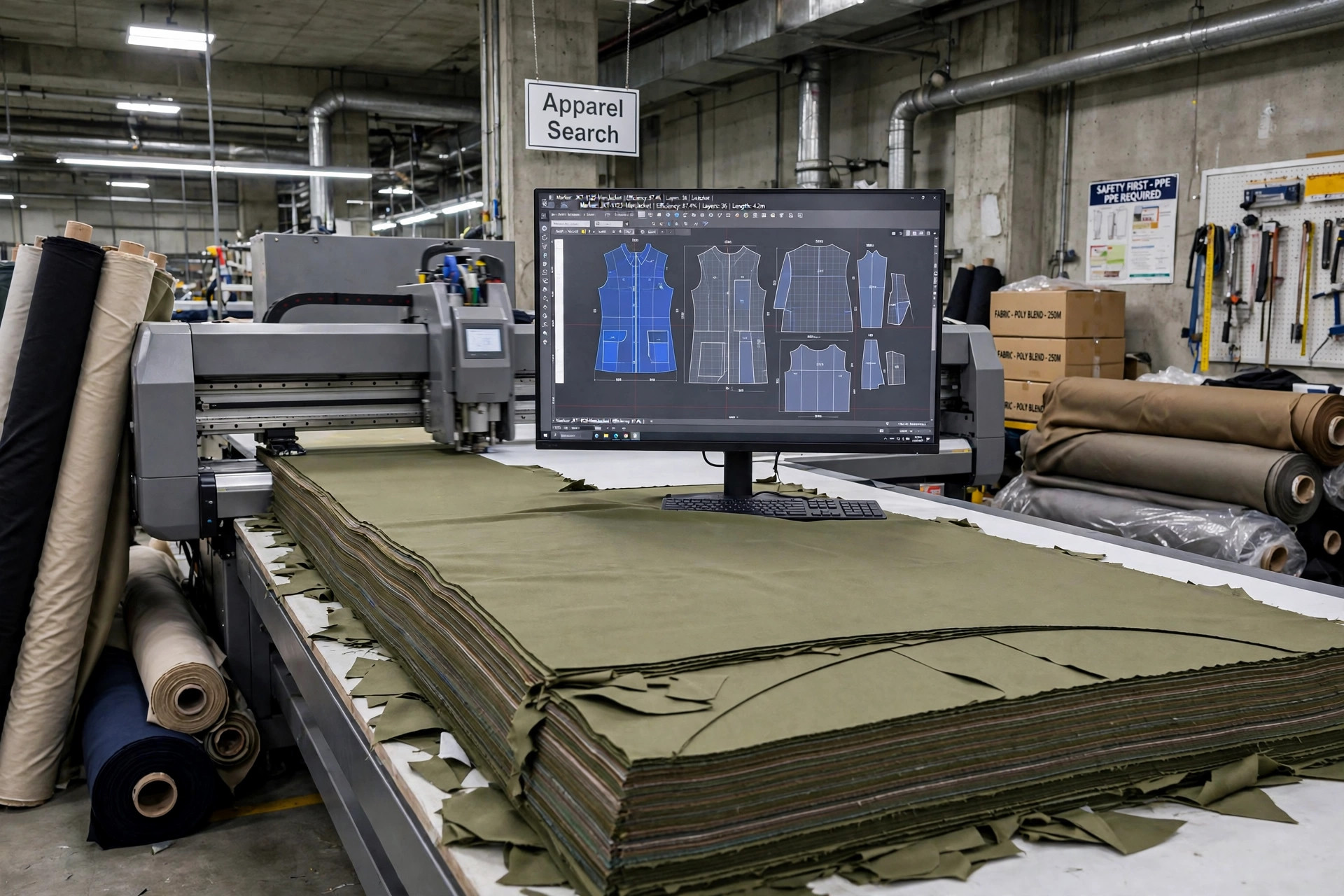
CAM matters a great deal to the apparel and textile industries. In a clothing factory the most expensive input is fabric, and the cutting room is where fabric becomes garments — or waste. CAM software plans how pattern pieces are laid out, drives the spreaders that lay the cloth and the cutters that cut it, and helps factories improve costing accuracy, reduce waste and improve production methods across every order.
Related Software Guides
What CAM Software Controls in a Clothing Factory
Apparel CAM begins where CAD ends. The pattern data created in a CAD system — styles, sizes and graded pattern pieces — passes to CAM software, which prepares it for the physical cutting room. The software builds the marker, the optimized layout of every pattern piece across the width of the fabric, nesting pieces tightly so the least possible cloth is left between them. On striped, plaid or printed fabrics the marker also has to respect matches and repeats, which the software handles as constraints rather than guesswork.
From the marker, CAM generates the instructions the machines follow. Spreading machines lay the fabric in even plies to the length of the marker; automated cutters — reciprocating knife, laser, water jet or ultrasonic, depending on the material — then cut through the stack following the digital path. CAM also handles the supporting jobs around the cut: digitizers and plotters for input and checking, bundling and ticketing so cut parts stay organized by size and shade, and reporting that records exactly how much fabric each order consumed.
Costing, Waste and Material Consistency
Because the marker is computed before a single yard is cut, CAM gives a factory its most reliable fabric consumption figure — the number costing and purchasing are built on. A marker that saves even two percent of fabric across a season of orders is a direct saving on the largest cost in the garment, and the saving is repeatable: the same marker produces the same yield every time it is run, for reorders as well as first runs.
Consistency is the second dividend. Machine-cut parts match the pattern dimensions precisely, bundle after bundle, which removes a whole class of sewing-room problems caused by hand-cut variation. CAM records also make waste visible — end losses, splice losses, defective sections cut around — so managers can see where material actually goes instead of estimating it at the end of the month.
CAM Software and Equipment Suppliers
assyst-bullmer develops and deploys CAD/CAM/PDM software, systems, machinery, solutions and services for the industries that process textiles — the soft goods industries, including apparel, upholstery, transportation interiors, luggage and technical textiles. The company is listed at 5000 Aerial Ctr. Pkwy, phone 919 467 2211, contact Jim Hurley, and its Apparel Search profile is linked below. QUEST CAD/cam distributes computer-assisted cutting technologies, both fully automatic and manual: product development systems and CAD-CAM software, digitizers, plotters, KURIS CNC cutters and spreader systems, hand cutting machines, servo cutters, cross cutters, band knife machines, spreading tables and slitting machines; QUEST is the exclusive North America distributor for KURIS, which is ISO 9001:2008 certified.
Rich Peace Technology Limited was founded in Hong Kong in 1992 by six individual shareholders to provide textile and garment CAD/CAM total solutions, starting from embroidery products and expanding into four major product series: embroidery, garment, quilting and flat knitting. Shen Zhen Triumph, a Chinese manufacturer of apparel plotters and digitizers compatible with PAD, Optitex and other CAD software, founded the Shenzhen Docad service center in 2003 and pioneered pattern making directly from a customer size table in the computer. Tukatech and Viable Systems (ViaCAD) complete this directory; their company sites are in the references below.
More Software Guides
- Fashion Software
- Fashion
- Assyst-Bullmer Profile on Apparel Search
- Tukatech Profile on Apparel Search
- Embroidery Software
- Costing Software
- Knitting and Weaving Software
- ERP Enterprise Resource Planning
- PDM Product Development Management
- CRM Software
- Supply Chain Management Software
- Import & Export Software
- Inventory Control Software
- Warehouse Software
- fashion acronyms
Common Questions
What is CAM in the apparel industry?
CAM — computer-aided manufacturing — is software that controls the machines which turn fabric into cut garment parts. In a clothing factory it builds the marker layout of pattern pieces, drives spreading machines that lay the cloth and automated cutters that cut the stack, and records the fabric each order consumes.
How does CAM software reduce fabric waste?
The marker is optimized on screen before any cloth is cut, nesting pattern pieces tightly across the fabric width and respecting stripe or print matches. Precise machine cutting then repeats that yield exactly on every run, and CAM reporting shows end losses and defective sections so remaining waste can be managed down.
What is the difference between CAD and CAM in clothing?
CAD creates the digital product — patterns, grading and design files. CAM takes those files into production: marker making, spreading and cutting instructions, and the data the cutting room machines run on. Most apparel technology suppliers offer both, linked so pattern changes flow straight through to the cutter.