Airline Uniforms by Airline · Germany
The Lufthansa Uniform: Six Generations in Navy and Yellow
Lufthansa is changing its uniform for the first time in over two decades — slowly, and on purpose. The Strenesse wardrobe of 2002 is still what most crew wear; the BOSS collection unveiled for the airline's centenary in April 2026 begins its phased rollout in the fourth quarter of 2026, piece by mix-and-match piece. This guide covers both: the uniform as flown today, and the one arriving.
The Design
Two Wardrobes, One Transition
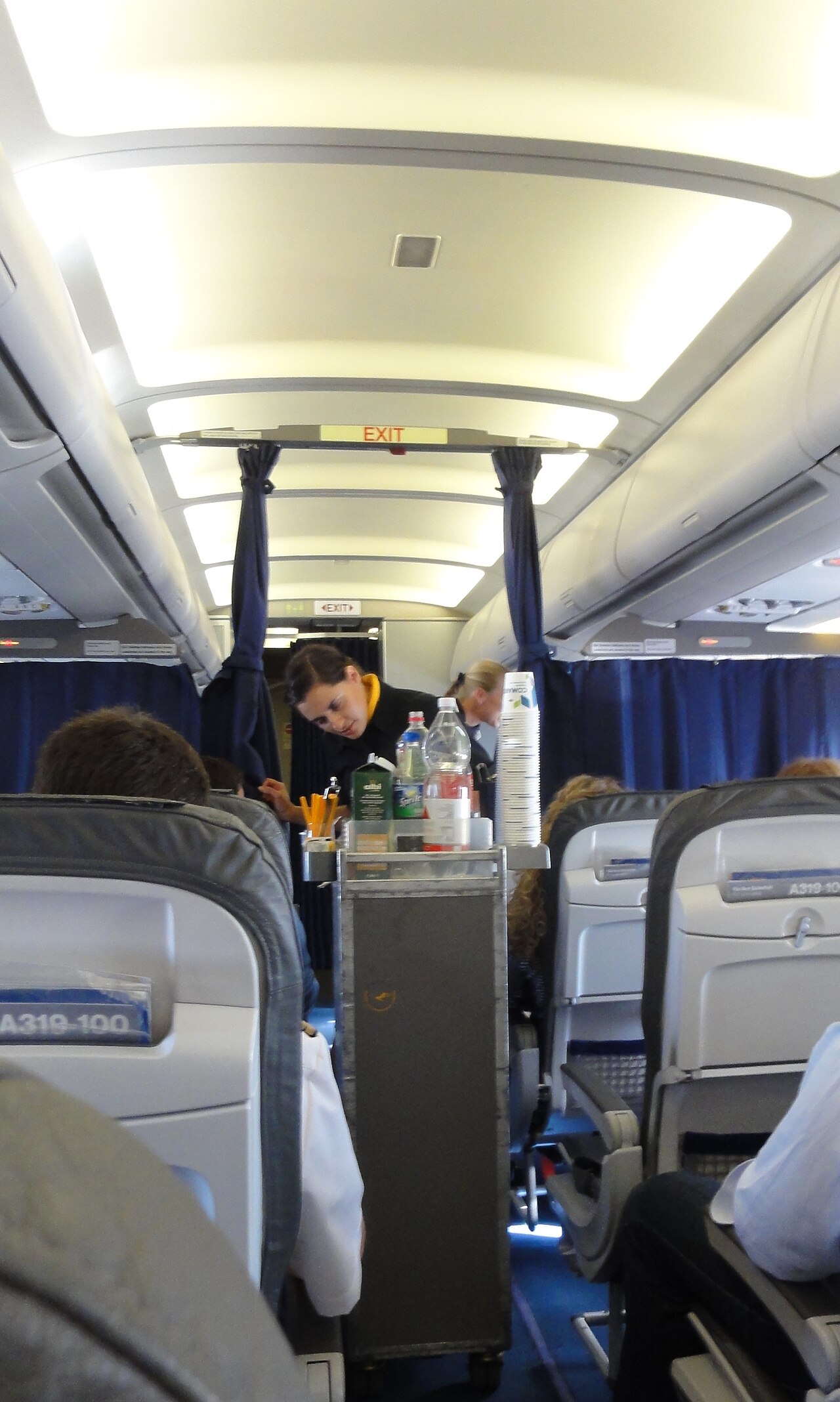
This guide has to tell two stories at once, because Lufthansa is mid-change for the first time in more than two decades. The uniform most passengers still see — and the one most crew still wear as this guide is written — is the sixth generation of Lufthansa uniforms since the airline resumed operations in 1955, introduced in 2002 and designed by the German fashion house Strenesse, under its founder and lead designer Gabriele Strehle. Lufthansa describes the Strenesse approach as a kind of retro-futurism: dynamic, approachable and elegant — a slim, clean-lined navy wardrobe with yellow accents and a pillbox hat.
The 2002 commission itself came out of a broader brand refresh, as the carrier set out to present itself as a modern, premium global airline rather than a purely functional flag carrier. Unlike the internally developed uniforms of the 1980s, the redesign was shaped by external fashion and tailoring expertise: the women's designs are associated with Strenesse, while the men's wear was developed with several specialist menswear partners. Through the 2010s Lufthansa largely kept the 2002 concept, working with textile experts on incremental refinements — improved fabrics, expanded fit and sizing options, minor tailoring updates — rather than wholesale change, which is how a uniform designed for the new millennium remained credible well into its third decade.
The seventh generation is now arriving. In April 2026, for the airline's centenary, Lufthansa unveiled a new uniform created in collaboration with BOSS at Hangar One, its visitor and conference centre in Frankfurt. Around 40 new and reimagined pieces for cockpit, cabin and ground staff were developed with employees from every uniformed department, who tested the styles for comfort, functionality and sustainability before the designs were finalised. The phased rollout begins in the fourth quarter of 2026, and — deliberately — new pieces can be mixed and matched with the existing wardrobe, so the two generations will fly side by side during the changeover. The sections below describe the 2002 uniform as the working wardrobe it still is, and the BOSS collection as what is coming.

The Components
The 2002 Wardrobe, Piece by Piece
- Women's Tailoring
- A modular navy wardrobe: structured blazer, skirt or trousers, dresses and vests, combined as the wearer and the season require. The 2002 redesign slimmed the cut and lightened the fabrics against the heavier silhouettes of the 1980s and 1990s, keeping the lines clean and contemporary.
- The Blouse & Shirt
- A white or light blouse worn open-necked under the blazer in the Strenesse look — the structured blazer and open-neck shirt are the combination coverage of the uniform consistently picks out.
- The Pillbox Hat
- The signature headwear since 2002. Headwear in some form is one of the uniform's three constants since 1955; the pillbox is, in the words of Lufthansa's uniform management, optional — but it "reflects the timeless chic of the Lufthansa uniform".
- Yellow Accents
- Lufthansa yellow does the identifying: scarves and the tie-like neck slip, ties and pocket squares carry the brand colour against the navy, as do subtle trims. Accessories, the airline notes, are what make the uniform recognisable — and allow a slightly more playful approach to it.
- The Men's Suit
- Men wear the same system in suit form: navy jacket and trousers, shirt, and a tie with yellow accents, with a pocket square among the accessories. The men's wardrobe was developed with specialist menswear partners alongside the women's Strenesse designs.
- Wings & Insignia
- The wings pin is worn by cabin crew, and since 1987 both female and male flight attendants have worn rank insignia — covered in the rank section below.
- Footwear
- Shoes are not part of Lufthansa's issued kit, but the rule is precise: no casual shoes — classic shoes of black or navy smooth leather, to maintain the professional business look.
- Fabrics
- Uniform fabrics must meet complex requirements for performance, freedom of movement and durability — crew must be able to stretch and reach the overhead bins — and all fabrics comply with the OEKO-TEX Standard 100.
Reading the Uniform
Three Constants, and the Insignia
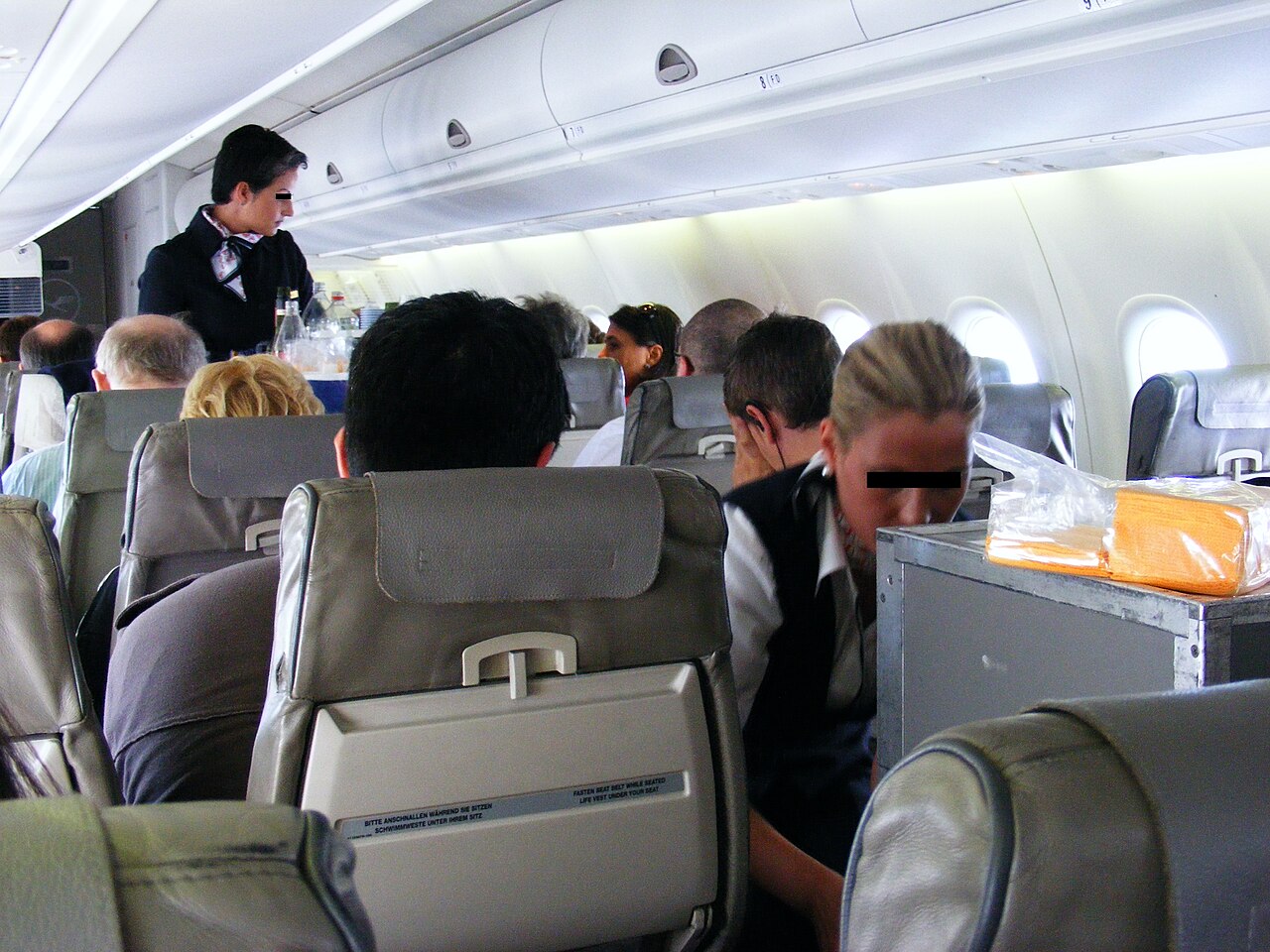
Lufthansa's uniform management names three constants that have survived every generation since 1955: the colour navy blue, which travellers naturally associate with the airline and which conveys security in the air and on the ground; yellow, the brand's signature colour; and some form of headwear, which has changed style with the decades and survives today as the pillbox. Rank, by contrast, is read the conventional way — in metal and braid, not in the colour of the clothes.
| Who | What you see | What it tells you |
|---|---|---|
| Captain | Four stripes on the epaulettes | Command of the aircraft, in the silver-toned stripe system of the flight deck. |
| First Officer | Fewer stripes — three for a senior first officer, two for a first officer | The flight-deck ladder below the captain. |
| Cabin crew | Wings pin, with rank insignia worn since 1987 | Seniority in the cabin — the purser leads the crew — is shown by insignia on the same navy wardrobe, not by a different outfit. |
| All crew | Navy, yellow accents, optional pillbox for women | The three constants: airline first, rank second. |
Our epaulette definition traces the stripe system to its military origins. The BOSS generation keeps the reading exactly as it is — navy, yellow and the pillbox all carry over, which is why the airline expects passengers to notice the change gradually, detail by detail, rather than all at once.
The Incoming Wardrobe
What BOSS Is Adding From Late 2026
The seventh generation is a tailoring exercise rather than a rebrand. For women, Business Traveller's account of the collection lists cropped, collared jackets with A-line skirts or high-waisted pencil trousers; for men, straight-cut suits and V-neck sweater vests. A knee-length puffer coat joins the outerwear, neck scarves return among the accessories, and the signature pillbox hat is retained. The standout piece is a short cape for cabin and ground crew — a deliberate homage, as the darkband below explains, to the most flamboyant garment in Lufthansa's uniform history.
Men are full partners in the new system: the straight-cut suit refreshes the 2002 silhouette without breaking it, and because new and existing pieces combine freely, a crew member's wardrobe will evolve item by item through the rollout — a resource-efficient transition the airline presents as a sustainability measure as much as a style one. BOSS, Lufthansa notes, brings the tailoring expertise; the co-design process with uniformed staff brought the aviation knowledge.
The Yellow Cape
Every uniform system has one garment that escapes into folklore. Lufthansa's is the bright yellow cape with a blue lining from Werner Machnik's 1970 generation, worn with a matching yellow jacket and hat in the years when the gangway briefly became a catwalk and mini-skirts were uniform issue. It was impractical, unforgettable, and pure brand colour worn as clothing. When BOSS and Lufthansa needed one heritage piece to carry into the centenary wardrobe, they chose the cape — reimagined, shortened, and in the new collection's navy register rather than 1970s yellow. Few airlines can quote themselves across fifty-six years; Lufthansa just did.
The Rules
Grooming: Specific Where It Counts
Lufthansa does not publish a grooming manual, but its candidate information for cabin crew is unusually specific on the points where airlines usually stay vague — above all, tattoos. As summarised from the airline's recruitment guidance: no tattoo may be visible on duty. Tattoos on the head, neck, hands or upper chest are not accepted at any size; elsewhere, a tattoo must stay fully covered by the uniform at all times — a small one (the guidance uses around 2 cm as its scale) may be acceptable only if another uniform part, such as trousers instead of a skirt, keeps it hidden — and plasters and makeup do not count as cover. Tongue piercings and tooth jewellery are ruled out, and piercings generally stay hidden apart from small, plain earrings.
Hair is kept in natural colours and neatly styled. The overall standard is the one the uniform itself sets: a professional business look, maintained down to the smooth-leather shoes. It is worth noting the contrast inside the same group — Lufthansa's leisure subsidiaries Eurowings and Discover have adopted a markedly more liberal policy, permitting visible tattoos — which makes the mainline standard a deliberate choice rather than a German industry default.
There is also a practical reason the rules read the way they do. A Lufthansa crew member works a network that runs from Hamburg fog to Singapore humidity, in a wardrobe that must look identical at both ends of it; the grooming standard is what keeps a hundred different faces reading as one airline. The BOSS transition changes none of it — the appearance rules carry across the changeover unchanged, because they were never about a particular jacket. They are about the presentation the jacket was designed to frame.
Evolution
Seven Generations Since 1955
1938–1955. Women first joined Lufthansa crews in 1938, wearing a navy skirt, white blouse with a dark tie or bow, and a light linen jacket with gold buttons; the crane emblem appeared in gold on the navy cap. When operations resumed in 1955, Berlin couturier Uli Richter designed the first post-war uniform under the influence of Dior: a navy suit with a jockey-style cap, and a petrol-blue "tropical suit" dress for summer.
1960s–1970s. Former chief stewardess Ursula Tautz balanced formal correctness with relaxed elegance in the 1960s. In 1970 Werner Machnik brought dynamism — geometric cuts, mini-skirts and the famous yellow cape — for nine years. Toward the decade's end the look turned conservative, and from 1979 women could choose trousers: the era's basic uniform set ran to 33 items, consuming some 33,000 metres of navy fabric for coats, jackets, skirts and trousers alone.
1987–2002. Accessories took the lead from 1987 — the neck slip, scarves, ties, pocket squares — and rank insignia arrived for all cabin crew. Tweaks to scarves and blouses carried the wardrobe through the 1990s until the full 2002 redesign: Strenesse's sixth generation, which then served, with incremental fabric and fit refinements through the 2010s, for over two decades.
2026– . The centenary seventh generation, created with BOSS, was unveiled in April 2026 at Hangar One in Frankfurt; its phased rollout begins in the fourth quarter of 2026. Because old and new pieces mix, the "evolution" this time will happen on board, garment by garment — the most gradual uniform change in the airline's history.
The Icon
Continuity as a Design Policy
Lufthansa's uniform story is the opposite of the fashion story: seven generations in seventy years, three constants held throughout, and a centenary redesign whose proudest boast is that passengers may not notice it all at once. That restraint is itself the brand — navy for security, yellow for recognition, tailoring for trust — and the BOSS transition, phased and mix-and-match, treats the existing wardrobe as an asset rather than an embarrassment. It is a very German answer to the uniform question, and a persuasive one. For the country behind both fashion houses involved, see our Germany fashion industry directory.
Airlines refresh their uniforms from time to time, so the details here describe the uniform as documented for this guide — the airline’s own site always carries the latest version.
Common Questions
Common Questions
Who designed the Lufthansa uniform?
The uniform worn since 2002 — the sixth generation since 1955 — was designed by the German fashion house Strenesse, under its founder and lead designer Gabriele Strehle. Its successor, the seventh generation created in collaboration with BOSS, was unveiled in April 2026 for the airline's centenary.
When does the new Lufthansa BOSS uniform arrive?
The phased rollout begins in the fourth quarter of 2026, according to the Lufthansa Group newsroom. Because new and existing pieces can be mixed and matched, crew will transition gradually — the 2002 Strenesse uniform and the BOSS pieces will be seen side by side during the changeover.
What are the constants of the Lufthansa uniform?
Three, by the airline's own account: the colour navy blue, the signature colour yellow, and some form of headwear. Since 2002 the headwear has been a pillbox hat — optional to wear, but kept as the emblem of the uniform's timeless chic. The BOSS collection retains all three constants.
What is the cape in the new Lufthansa uniform?
A short cape for cabin and ground crew, designed as a homage to the most famous garment in Lufthansa's uniform history: the bright yellow cape with a blue lining from Werner Machnik's 1970 generation, worn then with a matching yellow jacket and hat.
Can Lufthansa cabin crew have visible tattoos?
No. Lufthansa's candidate guidance requires tattoos to stay fully covered by the uniform at all times; tattoos on the head, neck, hands or upper chest are not accepted at any size, and plasters or makeup do not count as cover. The group's leisure subsidiaries Eurowings and Discover apply a more liberal policy.
Keep Exploring
More to Explore
In This Series
Airline Uniforms by Airline
The series hub — every airline’s guide, the designers behind them, and the ones in preparation.
Read ↑Germany Fashion Industry Directory
The airline's home country in the World Clothing Industry directory — home to both Strenesse and BOSS.
Read ↑Go Deeper
Uniforms — Definition
What a uniform is, and why organisations dress their people alike.
Read ↑Epaulette — Definition
The shoulder-stripe system that reads rank on the flight deck, defined.
Read ↑Scarf — Definition
The yellow accent piece of the Lufthansa wardrobe, defined.
Read ↑Tie & Necktie — Definition
The men's yellow-accented finishing piece, defined.
Read ↑Keep Exploring
Explore Fashion for Travel
The crew are only half the fashion on a flight — the other half is what the passengers are wearing. Our travel guides cover the traveller’s side of the same subject, and they link back here.
Outfits for Flying
Travel Outfits
What to wear when you are going somewhere — outfit systems built for transit days.
Read ↑Airport Outfits
Security-friendly shoes, cabin layers and the full airport dressing system.
Read ↑What to Wear on a Long Flight
Dressing for the overnight haul — comfort, warmth and arriving presentable.
Read ↑What to Wear When Traveling
The destination-rules guide to building a travel wardrobe that works on arrival.
Read ↑Business Travel Wardrobe Guide
A working wardrobe that travels — suits, wrinkle strategy and boardroom-ready arrivals.
Read ↑Packing & Capsule Wardrobes
Travel Capsule Wardrobe Guide
A small set of pieces that combine into a trip’s worth of outfits.
Read ↑Travel Packing Guide
The complete packing method — lists, order and wrinkle control.
Read ↑How to Pack a Suit
Getting a tailored jacket and trousers across the world without the creases.
Read ↑Carry-On Packing Guide
Everything in one bag — the carry-on-only system, piece by piece.
Read ↑Travel Comfort & Accessories
Search Apparel Search