Women's Denim Washes & Finishes Guide
Fit is only half a jean. This guide covers the surface of denim — whiskering, bleach washes and overdyeing — the finishes that decide a pair's character.
Shop Women's Finished Denim Jeans Now
Shop Women's Finished Denim Jeans on Amazon Shop Women's Finished Denim Jeans on eBayThe Amazon and eBay links on this page are affiliate links. If you make a purchase through them, Apparel Search may earn a commission.
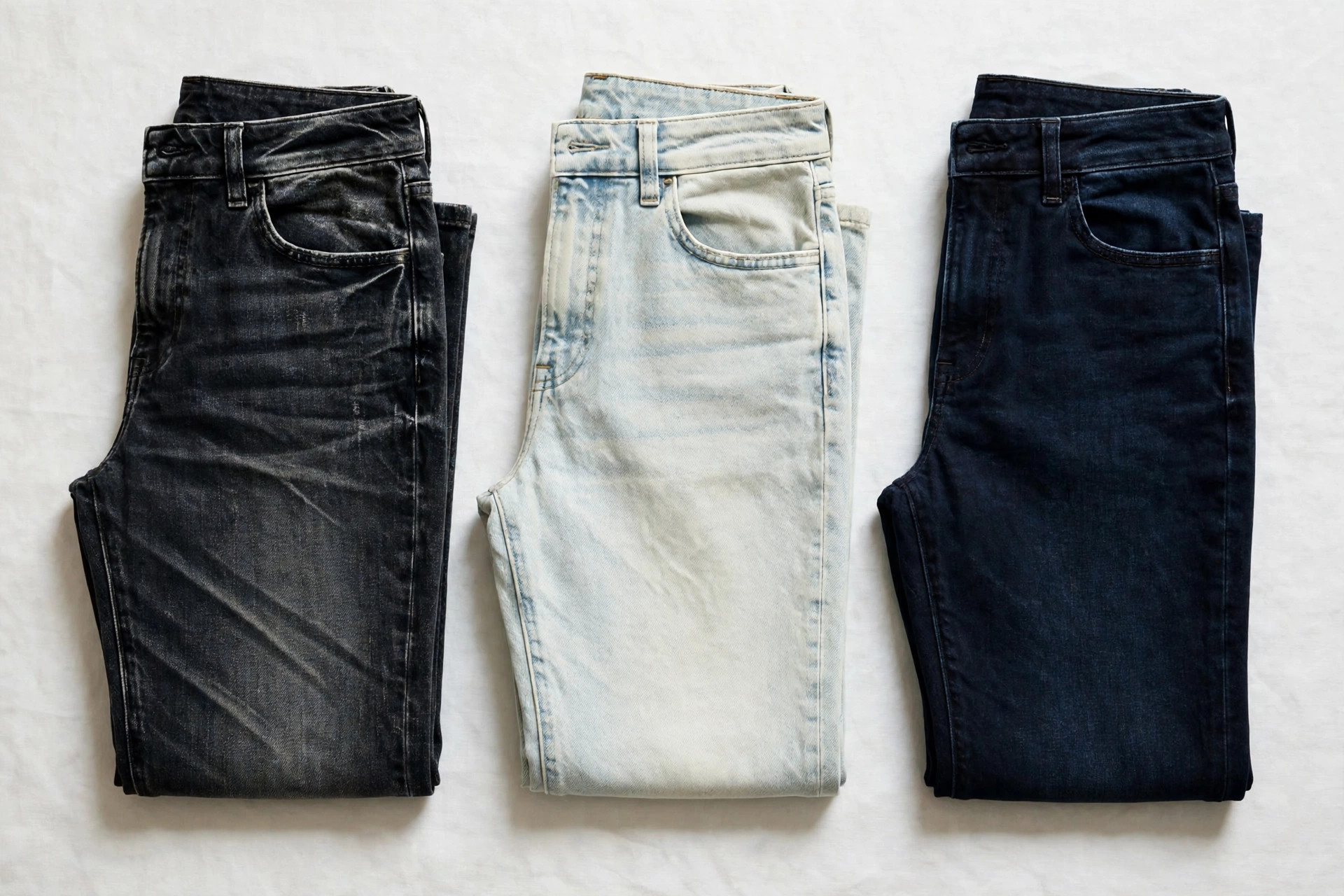
Two pairs of jeans can share a fit, a fabric and a maker, and still be entirely different garments because of what was done to their surface after sewing. This guide — filed under W for washes, and linked from our women's denim fits guide — covers the three finishes shoppers ask about most and understand least: whiskering, the crease-fade pattern at the front of the hip; bleach wash, the chemical lightening that produces pale denim; and overdyed denim, jeans dyed a second time for depth and saturated colour.
Finishes matter beyond looks. Each process changes how a jean ages, how it should be washed, and how long its colour will hold. A whiskered jean is pre-faded where your own jeans would fade in a year; a bleached jean has already given up dye that can never be put back; an overdyed jean carries extra dye that behaves differently in the wash. Knowing which finish you are buying is knowing how the pair will look in year three, not just in the fitting room.
Whiskering: The Fades Your Body Would Make
Whiskers are the fan of fine crease lines radiating from the front fly and hip, named for a cat's whiskers, and they form naturally wherever denim folds repeatedly as you sit and bend. On finished jeans they are added before you ever wear them — traditionally by hand-sanding or scraping the creases, also with lasers or resin-set creases that are baked in and then washed. Hand and laser methods fade the dye along the crease; resin methods set the crease itself so your own wear keeps re-forming it.
Good whiskering follows anatomy: fine lines, soft edges, placed where your hip actually creases, matched on both sides without being perfectly symmetrical. Bad whiskering is obvious — thick, evenly spaced, bright white stripes in implausible places — and it cheapens an otherwise good jean instantly. Because whiskering is removed dye, those lines will keep lightening with wear and washing. If you prefer your fades entirely earned, choose a clean dark rinse and let a year of sitting do the work instead.
Bleach Wash: Pale Denim and Its Trade-Offs
A bleach wash lightens denim with a bleaching agent — historically sodium hypochlorite, now often potassium permanganate or enzyme-and-ozone systems — applied all over for an even pale wash, or locally for faded thighs and seats. It produces the ice-blue, stone-bleached and nearly white denims that darker washes cannot reach, and it softens the fabric considerably in the process. The palest retro washes, and most white-adjacent summer denim, start here.
The trade-off is fibre strength and colour permanence. Bleaching attacks cotton as well as dye, so heavily bleached jeans are more prone to thinning and tearing, especially where they are also distressed — a bleached knee with added rips is the shortest-lived combination in denim. The colour, at least, is stable: what has been removed cannot fade much further. Wash bleach-washed jeans with similar pale colours, keep them out of a hot dryer, and never spot-bleach a stain — you will simply print a lighter halo around it.
Overdyed Denim: Colour Over Colour
Overdyeing takes a finished jean — usually classic indigo — and dyes it again, most often black, but also deep green, burgundy, brown or a second coat of indigo. The top dye tints everything, including stitching, pockets and labels, which is why overdyed jeans have that saturated, tonal, almost inky depth no single-dye jean matches. Indigo-over-indigo, sometimes called double-dyed, fades with unusual richness as the top layer wears first.
Expect overdyed denim to behave like a new dye job, because it is one. The first washes can release surplus dye, so wash the pair alone or with dark colours, inside out and cold, and be careful with pale upholstery and trainers until the rinse water runs clear. Fading, when it comes, is two-stage and beautiful: high-wear areas lose the top colour first and reveal the indigo beneath. Choose overdye when you want black jeans with more life than flat black, or coloured denim with denim's texture still showing through.
Common Questions
What is whiskering on jeans?
Whiskering is the pattern of fine crease-fades radiating from the front of the hip and fly, resembling a cat's whiskers. It forms naturally where denim folds as you sit, and on finished jeans it is added in production by hand-sanding, laser fading, or resin-set creases, so the jean arrives looking honestly worn-in.
Is bleach-washed denim weaker?
It can be. Bleaching removes colour by a chemical process that also weakens cotton fibres, so heavily bleached jeans — especially pale ones with added distressing or rips — tend to thin and tear sooner than dark-rinse jeans. Gentle washing and avoiding tumble-dryer heat help bleach-washed denim last longer.
What does overdyed denim mean?
Overdyed denim is a finished jean dyed a second time, commonly black over indigo, or a colour such as green or burgundy over blue. The second dye tints the stitching and trims too, giving a deep, tonal colour. As it fades, the top colour wears first and reveals the original indigo beneath in high-wear areas.
More Women's Denim Fit & Finish Guides
Every other fit in the denim cluster plus this completion set, in alphabetical order:
- Women's Baggy Jeans
- Women's Barrel Jeans
- Women's Bootcut Jeans
- Women's Boyfriend Jeans
- Women's Cargo Jeans
- Women's Cigarette Jeans
- Women's Cropped Jeans
- Women's Flare Jeans
- Women's High-Rise Jeans
- Women's Horseshoe Jeans
- Women's Kick-Flare Jeans
- Women's Mid-Rise Jeans
- Women's Mom Jeans
- Women's Relaxed Fit Jeans
- Women's Skinny Jeans
- Women's Slim Fit Jeans
- Women's Straight-Leg Jeans
- Women's Tapered Jeans
- Women's Wide-Leg Jeans
More to Explore on Apparel Search
Looking for Women's Clothing Stores?
This guide helps you choose women's denim in the wash and finish you want. To browse where to buy, visit our womens clothing store directory, where you can find retailers that carry them.