Women's High-Rise Jeans Guide
Ten inches and up: the high rise sits at the natural waist, holds a tuck like it means it, and adds visual inches to the leg — if the waistband truly fits.
Shop Women's High-Rise Jeans Now
Shop Women's High-Rise Jeans on Amazon Shop Women's High-Rise Jeans on eBayThe Amazon and eBay links on this page are affiliate links. If you make a purchase through them, Apparel Search may earn a commission.
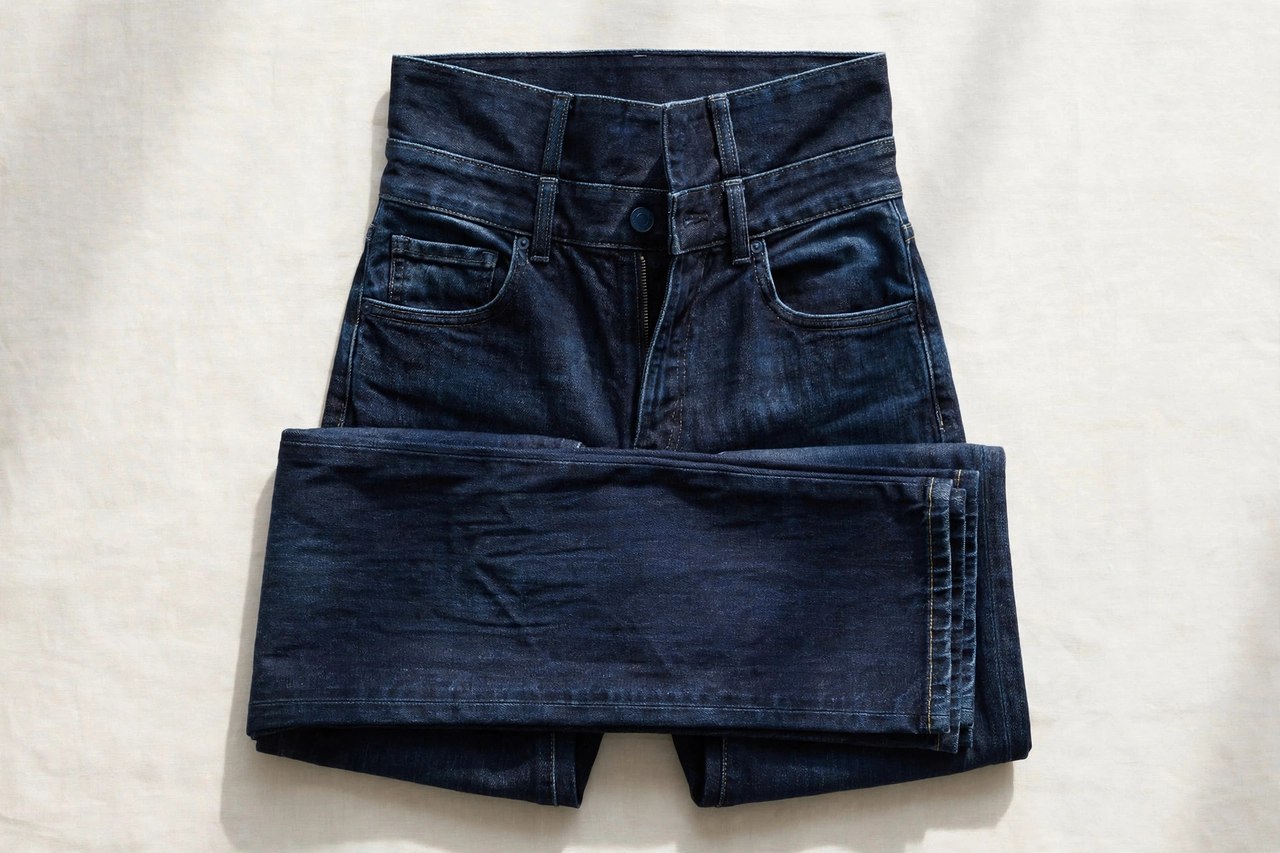
A high-rise jean puts its waistband at or above the natural waist — a front rise of ten inches and upward, with 'super' or 'ultra' high styles reaching eleven and a half or more. It is the rise that rebuilt the modern jean wardrobe: the partner of the tucked top, the cropped sweater and the blazer, and the reason the leg shapes in our women's denim fits guide read as long as they do. When a high rise fits, it feels like support; when it does not, it feels like a corset with pockets, and the difference is fitting, not the rise itself.
The high rise has history: it was the standard waist of jeans' workwear origins, the waist of 1950s denim, and the waist the mom jean carried through the 1980s and 1990s. Its modern return paired that tall waistband with contemporary leg shapes — skinny first, then straight, wide and tapered — which is why 'high-rise' now describes half the jeans on any rail.
Fit at the Waist: Where High Rise Succeeds or Fails
Everything about a high rise depends on the waistband meeting your actual waist. Measure at the narrowest point of your torso and compare with the garment, not with your mid-rise size — many women take a different size in a tall rise, because the band sits on a different part of the body. The band should close without strain and stay when you sit: a high waistband that is too tight digs exactly where you bend, and one that is loose slides until it becomes an uncomfortable mid rise.
Back construction matters as much as front height. A higher back rise and a shaped yoke keep the band seated when you sit and bend; a tall front with a shallow back is the pattern behind the classic high-rise complaint of the waistband folding or diving. Curvier waist-to-hip ratios should look for contoured bands and a little stretch — one percent is enough to let a tall band follow a curve without losing its hold.
Which Leg Shapes Want a High Rise
Almost all of them — but for different reasons. On a wide leg, the high waist is structural: it anchors the volume and defines the silhouette's top. On a tapered jean it completes the geometry, narrow waist to narrow ankle. On straights and slims it delivers the lengthening line, one unbroken column from waist to shoe. On skinnies it was transformative, replacing the low-rise original with a version that stays put and smooths the waist — the pairing that made the fit an everyday staple for a decade.
The lengthening effect is real but conditional: it works when the waistband is visible. A high rise under a long, untucked top just adds hidden fabric and can shorten the torso visually instead. Wear the rise you paid for — tuck fully, tuck at the front, or choose tops that end at the band. Cropped tops and high-rise jeans are designed for each other; the small gap of torso between them is the proportion the whole pairing exists to create.
Comfort, Sitting and Care
Judge a high rise seated. Sit for a full minute in the fitting room: the band should press evenly, not fold into a hard roll at the front. Rigid high-rise denim softens and moulds over the first weeks — the initially firm waist is the fit breaking in, and a pair that starts sloppy at the waist never improves. If the front band consistently digs when seated, the rise may simply be taller than your torso wants; a ten-inch version will give you the same look with a kinder sit than an eleven-and-a-half-inch one.
Wash high-rise jeans inside out and cold, and hang them by the waistband, which is also their heaviest, slowest-drying part — make sure it dries fully before folding away. Because the band carries more of the fit than on any other rise, retire pairs whose waistband elastic has gone slack even if the legs still look fine; a tailor can sometimes save the band, but a stretched-out high waist cannot be styled back into place.
Common Questions
What rise is considered high-rise in women's jeans?
A front rise of about ten inches or more, placing the waistband at or above the natural waist. Styles at eleven to eleven and a half inches and beyond are often labelled super-high or ultra-high. The right height depends on torso length — the band should reach your natural waist without overshooting it.
Do high-rise jeans lengthen your legs?
Visually, yes, when the waistband is visible: starting the leg at the natural waist rather than the hip makes the leg portion of your silhouette longer. The effect disappears under a long untucked top, so tuck, half-tuck or choose tops that end at the waistband to actually get the lengthening you bought.
Why do my high-rise jeans dig in when I sit down?
Usually one of three causes: the band is a size too small at the waist, the front rise is taller than your torso, or the back rise and yoke are too shallow, so the band folds forward when you bend. Try a slightly lower high rise — around ten inches — with a shaped yoke and a touch of stretch before giving up on the rise.
More Women's Denim Fit Guides
The other fits and rises in this cluster, in alphabetical order:
More to Explore on Apparel Search
Looking for Women's Clothing Stores?
This guide helps you choose women's high-rise jeans. To browse where to buy, visit our womens clothing store directory, where you can find retailers that carry them.