Women's Mid-Rise Jeans Guide
Sitting just below the natural waist, the mid rise is denim's middle ground — no tucking drama, no holding-up worries, just a waistband where most bodies expect it.
Shop Women's Mid-Rise Jeans Now
Shop Women's Mid-Rise Jeans on Amazon Shop Women's Mid-Rise Jeans on eBayThe Amazon and eBay links on this page are affiliate links. If you make a purchase through them, Apparel Search may earn a commission.
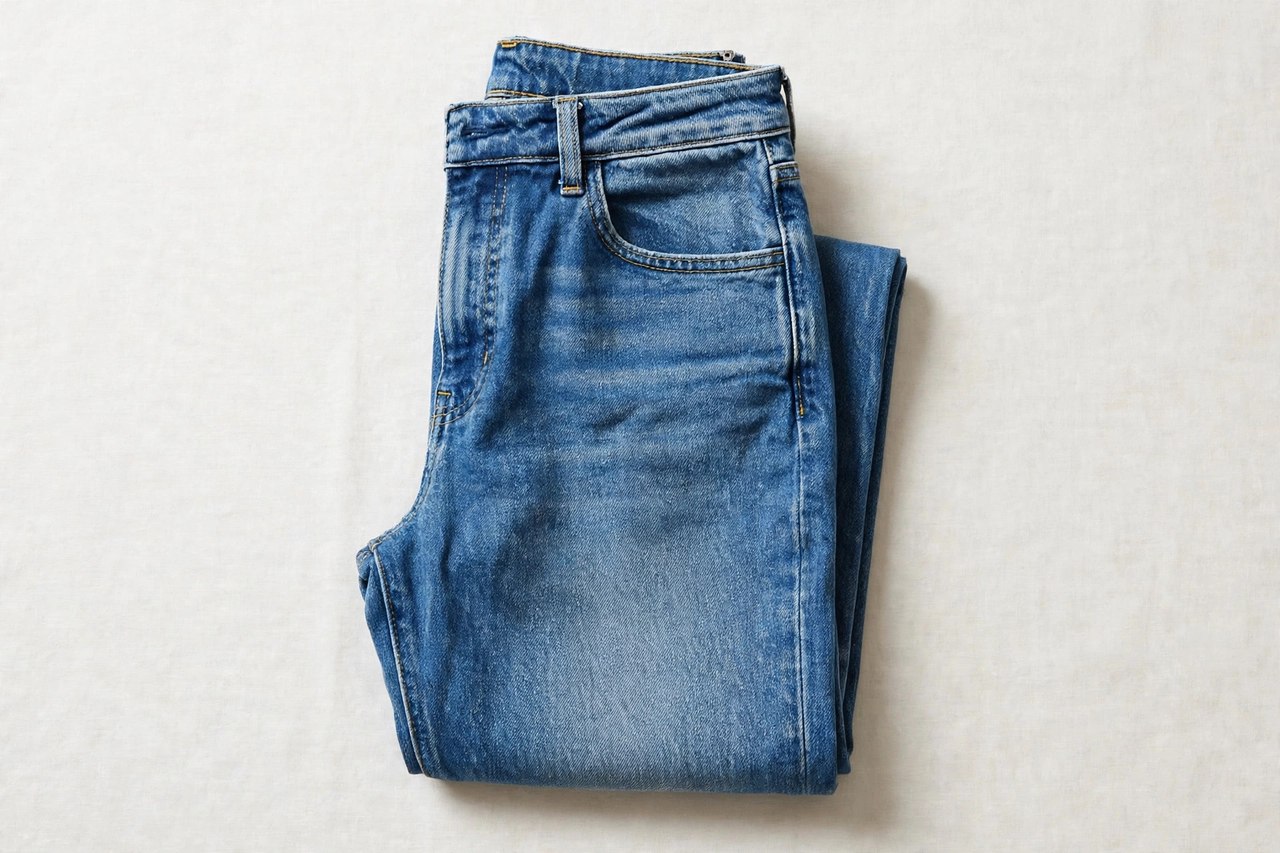
Rise is the measurement shoppers feel most and check least. It decides where a jean grips, whether tops tuck smoothly, and how long your legs read — and the mid rise, a front rise of roughly eight to nine and a half inches, is the setting most jeans were designed around for decades. This page sits alongside the fit guides in our women's denim fits guide because rise is the second decision, after leg shape, in every pair.
A mid-rise waistband lands just below the natural waist, usually around or slightly under the navel depending on your torso. It holds without the compression some women dislike in a high rise, and it supports without the constant adjustments of a low rise. For wardrobes built on tees, knits and shirts worn untucked or half-tucked, it is the least demanding rise to live in.
Measuring Rise — and Why Labels Disagree
Front rise is measured from the front waistband, down through the crotch seam, to where the front and back seams meet. Back rise is measured the same way at the rear and is always longer — a well-shaped jean has a back rise one and a half to two inches greater than the front, which is what lets you sit without the waistband diving. When a brand prints one number, it is the front rise; when your own favourite pair feels right, measure both numbers and shop by them.
Labels disagree because bodies do: the same nine-inch rise sits higher on a short torso and lower on a long one. 'Mid' is a range, not a point, and makers place its edges differently — one brand's high-mid is another's low-high. This is why the honest comparison is your own tape measure against a pair you love, not the word on the ticket. The high-rise guide in this cluster covers the taller end of the same scale.
Mid Rise With Every Leg Shape
Mid rise is the most leg-neutral of the rises. With straight and slim legs it produces the classic, unstudied jean — the one in decades of photographs. With a bootcut it balances the flare without the lengthening ambition of a high rise. With relaxed and boyfriend cuts it keeps the ease casual and stops the fit drifting toward pyjama territory. Only the wide leg usually asks for more rise, since its volume needs a higher anchor point to read as deliberate.
Where mid rise can struggle is the full tuck: a tucked top over a mid-rise band shows a shorter torso division than a high rise does, and very long tops half-tuck less cleanly. If your wardrobe is built on full tucks and cropped tops, high rise will serve you better; if it is built on regular-length tops worn in and out, mid rise is the easier daily geometry. Neither is a trend verdict — they are different settings for different closets.
The Waistband Gap and Other Mid-Rise Fixes
The classic mid-rise complaint is the back waistband gap, worst when the hip-to-waist difference is large. The causes are pattern, not size: a straight-cut band on a curved body. Fixes in order of honesty: choose a contoured or curved-yoke waistband, which is cut higher at the back and shaped to the waist; size for the hip and have the waist taken in; or wear a belt as a genuine fastening, not a hope. Stretch denim masks a small gap but does not cure a large one.
Buy mid-rise jeans snug at the waist from the start — denim eases most exactly there — and judge them after a sit, a bend and a stair climb in the fitting room, since a mid waistband has less torso to grip than a high one and reveals sliding sooner. Wash cold and skip the dryer: heat-cycled elastane loses recovery first at the waistband, which is where this rise can least afford it.
Common Questions
What is considered mid-rise for women's jeans?
A front rise of about eight to nine and a half inches, sitting just below the natural waist, around or slightly below the navel on most torsos. Back rise runs one and a half to two inches longer. Because torsos differ, the same measurement sits a little higher or lower from person to person.
How do I stop mid-rise jeans gaping at the back waistband?
Choose a contoured waistband or curved yoke, which is shaped to follow the waist rather than cut straight. If the gap is large, size for your hips and have a tailor take in the waist — a straightforward alteration. A belt helps a small gap; stretch denim masks a small one but will not fix a pattern that does not match your hip-to-waist ratio.
Are mid-rise jeans out of style?
No — mid-rise is the permanent middle setting of denim, worn in every era regardless of which extreme is trending. High-rise dominates recent fashion cycles and low-rise recurs in revival cycles, but mid-rise straights and slims remain the default in most ranges because they work with the widest range of tops and bodies.
More Women's Denim Fit Guides
The other fits and rises in this cluster, in alphabetical order:
More to Explore on Apparel Search
Looking for Women's Clothing Stores?
This guide helps you choose women's mid-rise jeans. To browse where to buy, visit our womens clothing store directory, where you can find retailers that carry them.