Women's Distressed Denim Guide
Ripped, faded and beautifully worn-in — how distressing is made, how much is just right, and how to style destroyed denim so it looks intentional.
Shop Women's Distressed Denim Now
Shop Women's Distressed Denim on Amazon Shop Women's Distressed Denim on eBayThe Amazon and eBay links on this page are affiliate links. If you make a purchase through them, Apparel Search may earn a commission.
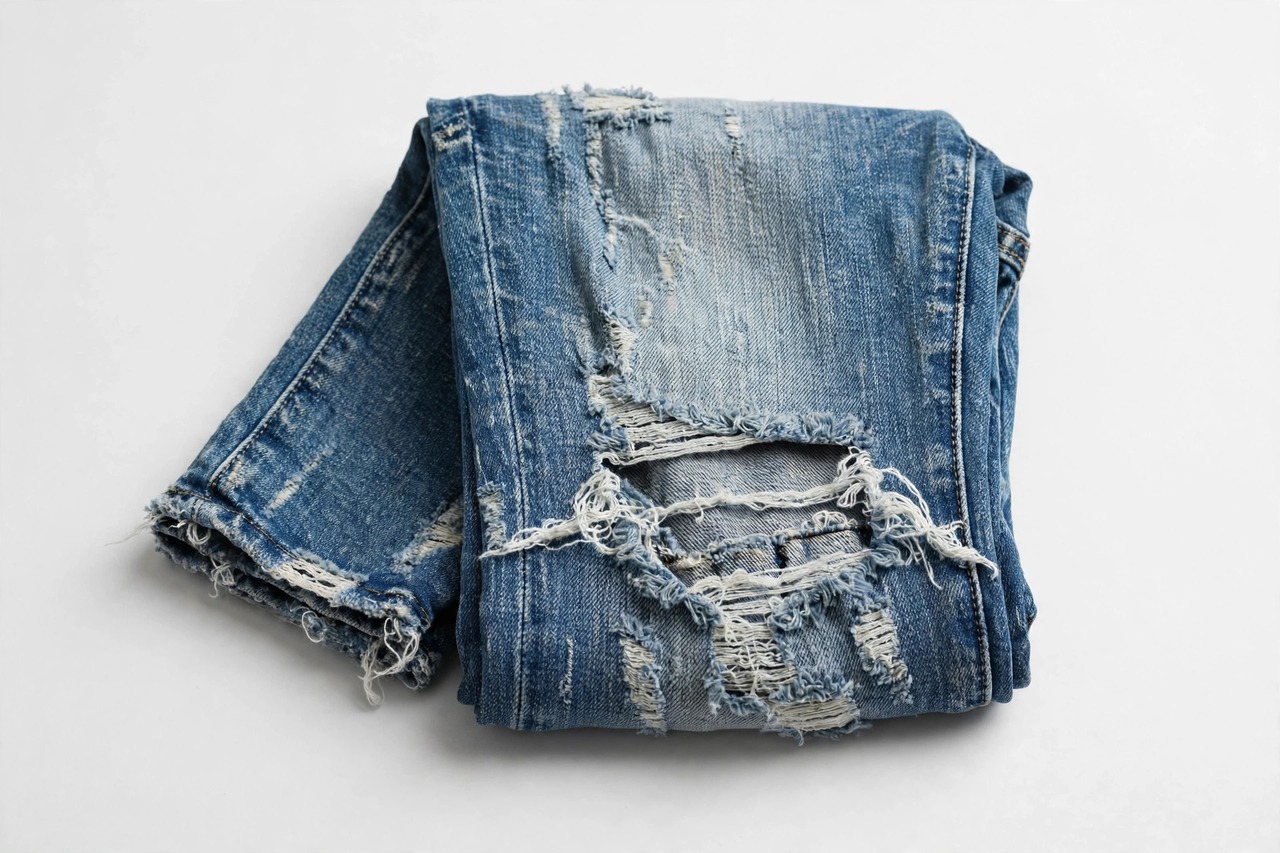
Distressed denim is denim deliberately aged, worn and sometimes torn before you ever put it on — jeans, shorts, jackets and skirts given the character that honest wear takes years to create. Done well, the fading, whiskering and rips land exactly where real wear would happen: across the lap, at the knees, along pocket edges and hems. Done carelessly, the damage looks random and the garment falls apart. Learning to tell the difference is the whole skill this guide teaches.
Distressing exists on a spectrum, from a whisper of fading on an otherwise pristine jean to fully destroyed styles held together by patches and threads. Where you land on that spectrum decides where the piece can go and what it pairs with. Below you will find how the main techniques work, how to read the levels of destruction, how raw hems and patches fit in, and how to style and preserve distressed pieces so they read as fashion, not damage.
How Distressing Is Done
Most distressing imitates natural wear with abrasion and light. Whiskering creates the fine crease lines that radiate from the front hip, usually pressed and then hand-sanded or laser-etched. Fading lightens the thigh, seat and knee through washing, stone or enzyme treatments and careful hand sanding. Ripping and shredding cut or abrade the yarns at knees and pockets; quality rips cut the blue warp threads while leaving white weft threads strung across the opening, which is what keeps a ripped knee looking textured instead of gaping.
Older industrial methods are being replaced for good reasons. Traditional sandblasting, which blasted garments with sand to fade them, has been widely banned or abandoned because of worker health risks; modern brands use laser finishing, ozone washing and hand sanding to achieve the same faded effects more safely and with far less water. When you shop, brands that name their methods — laser whiskers, ozone fade — are usually signalling both better quality and more responsible production, and the results tend to look more natural as well.
Levels of Destruction, Raw Hems and Patches
Think in levels. Light distressing means fading, whiskers and perhaps a small abraded patch or a raw hem, with no skin showing — the most versatile level, welcome almost anywhere jeans are. Moderate distressing adds open rips at one or both knees, a worn pocket edge or a chewed hem. Heavy destruction stacks multiple large rips, thigh slashes, heavy fading and fraying throughout; it is a statement level that belongs to weekends, concerts and casual settings only.
Two style families round out the category. Raw-hem denim skips the stitched hem entirely, letting the cut edge fringe softly; it suits cropped and ankle styles and can be trimmed at home to the perfect length. Patched styles back rips with fabric — plaid, bandana print, contrasting denim or lace — or sew decorative patches over worn areas, which adds color, covers the opening and actually strengthens the garment. Patched distressing is the friendliest entry point if you like the look but prefer more coverage.
Styling Distressed Denim Tastefully
The golden rule is one statement piece at a time. If the jeans are heavily ripped, keep everything else clean and polished: a crisp white shirt, a structured blazer, a fine knit, neat loafers or heels. That contrast is what makes distressed denim read as a deliberate style choice. Pairing destroyed jeans with a torn tee, heavy boots and layered grunge pieces pushes the whole outfit toward costume, unless that is exactly the look you intend.
Proportion helps too. Skin showing at the knee balances best with a covered top — longer sleeves, a higher neckline or a tucked-in blouse — while a small, lightly distressed jean can carry almost any top, including dressier camisoles for evenings. Reserve moderate rips for casual Fridays only where your workplace already welcomes jeans, and choose light distressing with dark, clean washes when you want the texture without the edge. Festivals, weekends and creative settings are where heavy destruction earns its keep.
Repair, Preservation and Knowing When to Skip It
Distressed denim is pre-weakened by design, so preservation is active work. Wash it inside out in cold water on a gentle cycle, ideally in a mesh bag so rips do not catch and stretch, and air dry rather than tumbling — heat and agitation enlarge rips quickly. Reinforce a rip you love before it grows: a few hand stitches across the white threads, or an iron-on patch applied behind the opening, will hold the exact level of destruction you bought.
Repairs can become part of the style. Visible mending with contrasting thread, sashiko-style stitching over worn thighs, and fabric patches behind knees all extend a favorite pair's life while adding character. What distressing cannot survive is the wrong occasion: skip rips entirely for formal events, job interviews, conservative or traditional offices, houses of worship and somber occasions like funerals, where even dark, lightly faded denim may be too casual. Read the setting first — the best-styled distressed denim is the pair that never has to apologize for being there.
Related Women's Guides
How Denim Earns Its Fades
Distressing starts with the fabric itself. The most common denim is indigo denim, in which the warp thread is dyed while the weft is left white; because of the warp-faced twill weave, one side of the cloth is dominated by blue warp threads and the other by white weft — which is why jeans are white on the inside. The indigo dye leaves the core of each warp thread white, and that is what creates denim's signature fading. During wear, fading happens where the garment receives the most stress: on jeans, the upper thighs, the ankles and the areas behind the knees.
Fans of raw denim (also called dry denim) skip the factory wash entirely and let their own bodies and daily activities do the distressing — some abstain from washing their jeans for more than six months so the fade patterns personalize the garment. Most denim, by contrast, is washed after making to soften it and reduce shrinkage, and much of it is artificially distressed to imitate that earned, faded look. The finishing toolbox includes acid washing, enzyme washing, stone washing fabric with pumice, bleaching and sandblasting — see our guides to textile finishes, vintage distress finishes and the garment washing contractors directory. Vintage jeans can be naturally distressed by age and wear — in our opinion, the authentic distressed denim deserves more respect: it was earned. Ripped styles cycle in and out of fashion; read our ripped jeans guide and the ripped jeans history for more.
Photos


More to Explore on Apparel Search
Looking for Women's Clothing Stores?
This guide helps you choose women's distressed denim by level, style and wash. To browse where to buy, visit our women's clothing store directory, where you can find retailers that carry them.