French Knickers
Clothing Definitions — definitions of garments and clothing terms from Apparel Search
Search Apparel Search
At a Glance
Definition: French knickers are loose-fitting women's underwear with open, unelasticated legs, worn from the hip and cut like short, soft tap pants.
Also known as: Tap pants
Category: Clothing Definitions
Word Origin
The name is an English coinage, not a French one — the French do not use the term. It grew from the English association of loose, visible knickers with Parisian dance-hall dress, above all the can-can of Montmartre: the garment was named for the idea of Paris, then kept the name long after its real ancestry in Victorian bloomers was forgotten.
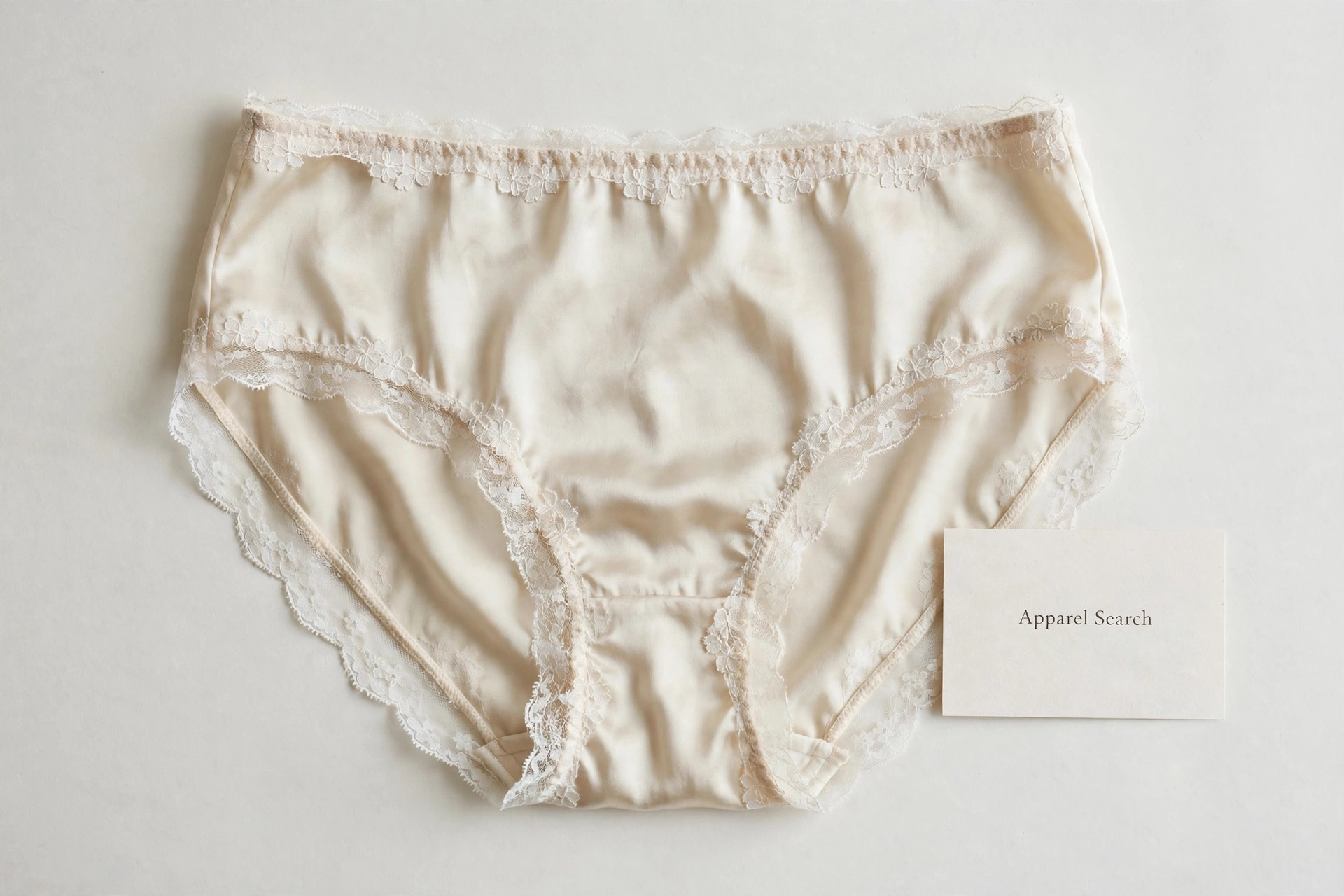
French knickers are a style of women's lingerie and underwear, also called tap pants. The term is used predominantly in the United Kingdom. They are worn from the hip, cover the hip, most of the upper thigh and all of the buttocks, and are defined by their legs: open and loose-fitting, with no elasticated cuffs, so the garment hangs like a very short, soft pair of shorts rather than gripping the thigh. This page explains the cut and its variations, how French knickers differ from the fitted styles they are confused with, and where the style came from.
The Cut
A French knicker is built like miniature shorts. The waist sits at the hip or natural waist, the body of the garment covers the hip and buttocks fully, and each leg ends in an open hem partway down the upper thigh. Because there is no elastic in the leg, the fit comes from the cut of the cloth itself: straight-cut legs give a clean, tailored line, while bias-cut legs flare slightly and move more freely against the skin. Lace or other trim often finishes the leg and waist, and the pleated ease through the seat is part of the design, not excess fabric.
Fabrics follow the garment's position between everyday underwear and lingerie. Cotton and modern synthetics make the practical versions; silk, satin and fine nylon with lace make the decorative ones. In every material the test of the style is the same — the leg must hang open. A short leg that ends in an elastic band has crossed into a different garment family, however similar the silhouette looks on the hanger.

Wearing French Knickers
The loose leg decides what French knickers can be worn under. They belong with A-line skirts and free-flowing dresses, where there is room for the fabric to move and where the soft, unbanded edge lies smoothly without the ridge an elastic opening can print through a skirt. Under those clothes they give freedom of movement and a smooth appearance at once, which is why the style has long been recommended for day and evening wear with fuller skirts.
Under close-fitting trousers, pencil skirts or leggings the same looseness works against the garment: spare fabric can bunch or ride up where a fitted brief stays put. The choice is therefore a wardrobe decision, not a quality judgement — French knickers are the right underwear for loose clothes and the wrong underwear for tight ones, and most drawers that contain them also contain fitted styles for the other half of the wardrobe. Our women's underwear guide sets the style among its alternatives.
From Bloomers to Nylon
The style descends from bloomers, the long-legged, loose undergarments of the Victorian era. As hemlines and undergarments shortened through the early twentieth century, the bloomer's leg shrank with them, and the short, open-legged knicker that remained kept the bloomer's essential character: coverage without constriction. By the 1950s French knickers were close to standard wear for British women, and in the 1960s they were mass-produced in nylon and other new synthetic fabrics, which made them light, quick to wash and widely affordable.
Designers of the 1970s, Janet Reger prominent among them, restyled the garment as decorative lingerie, and major manufacturers followed through the 1980s. Since the 1990s the style has yielded shelf space to briefer, more body-conscious cuts, and it is produced less universally than it once was — but it has never disappeared, because the need it answers, a smooth and comfortable layer under loose skirts and dresses, has not disappeared either. It remains a standard member of the wider family of undergarments.
Choosing and Caring for Them
Fit is judged at the waist and the leg together. The waistband should sit without digging in, and the legs should hang clear of the thigh all round — a French knicker that clings at the leg is simply the wrong size or cut. Straight legs read as neat and tailored; bias-cut legs give more movement and a softer flare. Lace at the leg should lie flat, since raised trim is what shows through an outer skirt.
Care follows the fabric. Cotton and synthetic versions wash with ordinary lingerie; silk and lace versions want a gentle cycle or hand washing and to be dried away from direct heat, which hardens elastic and dulls silk. Stored flat or loosely folded, the open leg keeps its shape without the stretched elastic that ends the life of most fitted underwear — one practical reason the style, properly looked after, outlasts many of the garments worn over it.
Not to Be Confused With
French knickers have open, loose legs with no elastic at the opening. Boyshorts, briefs, hipsters and bikini briefs all close the leg with elastic and fit snugly to the body. If the leg opening grips, the garment belongs to that fitted family, however short it is; if the leg hangs free like a tiny pair of shorts, it is a French knicker or tap pant.
Common Questions
What are French knickers?
French knickers are loose-fitting women's underwear, also called tap pants. Worn from the hip, they cover the hip, most of the upper thigh and the buttocks, and their legs are open and loose, with no elasticated cuffs.
How do French knickers differ from briefs and boyshorts?
French knickers have open, loose-fitting legs without elastic. Briefs, hipsters, bikini briefs and boyshorts all have elasticated leg openings and fit much more snugly to the body.
What should French knickers be worn under?
They suit loose, free-flowing clothes such as A-line skirts and full dresses, where the soft, unelasticated leg lies smoothly and moves freely. Under close-fitting trousers or skirts the extra fabric can bunch, so fitted styles are usually chosen instead.