Flip-Flops
Footwear Definitions — the flat thong sandal held on by a three-point V-strap from Apparel Search
Search Apparel Search
At a Glance
Definition: Flip-flops are flat, backless sandals consisting of a simple sole held on the foot by a V-shaped strap that passes between the toes and around either side of the foot, attached to the sole at three points.
Also known as: Thongs (American English); slippers (in Hawaii)
Category: Footwear Definitions
Word Origin
The name copies the sound the sandal makes: flip-flop derives from the rhythmic slapping noise of the loose sole slapping against the wearer's heels as he or she walks — the sole flips up and flops down with every step.
In footwear, flip-flops are a kind of flat, backless sandal that consists of a simple sole held on the foot by a V-shaped strap passing between the toes and around either side of the foot, attached to the sole at three points: between the toes and on either side. In American English they are also known as thongs, and in Hawaii they are known as slippers. Originally cheaply made of rubber, they have become a fashion staple, immensely popular as everyday casual shoes especially with teenagers and young adults, and are now made in materials from leather and transparent plastic to wood. This page explains the three-point construction, what it can and cannot do, and how the cheapest sandal ever made became a fashion item.
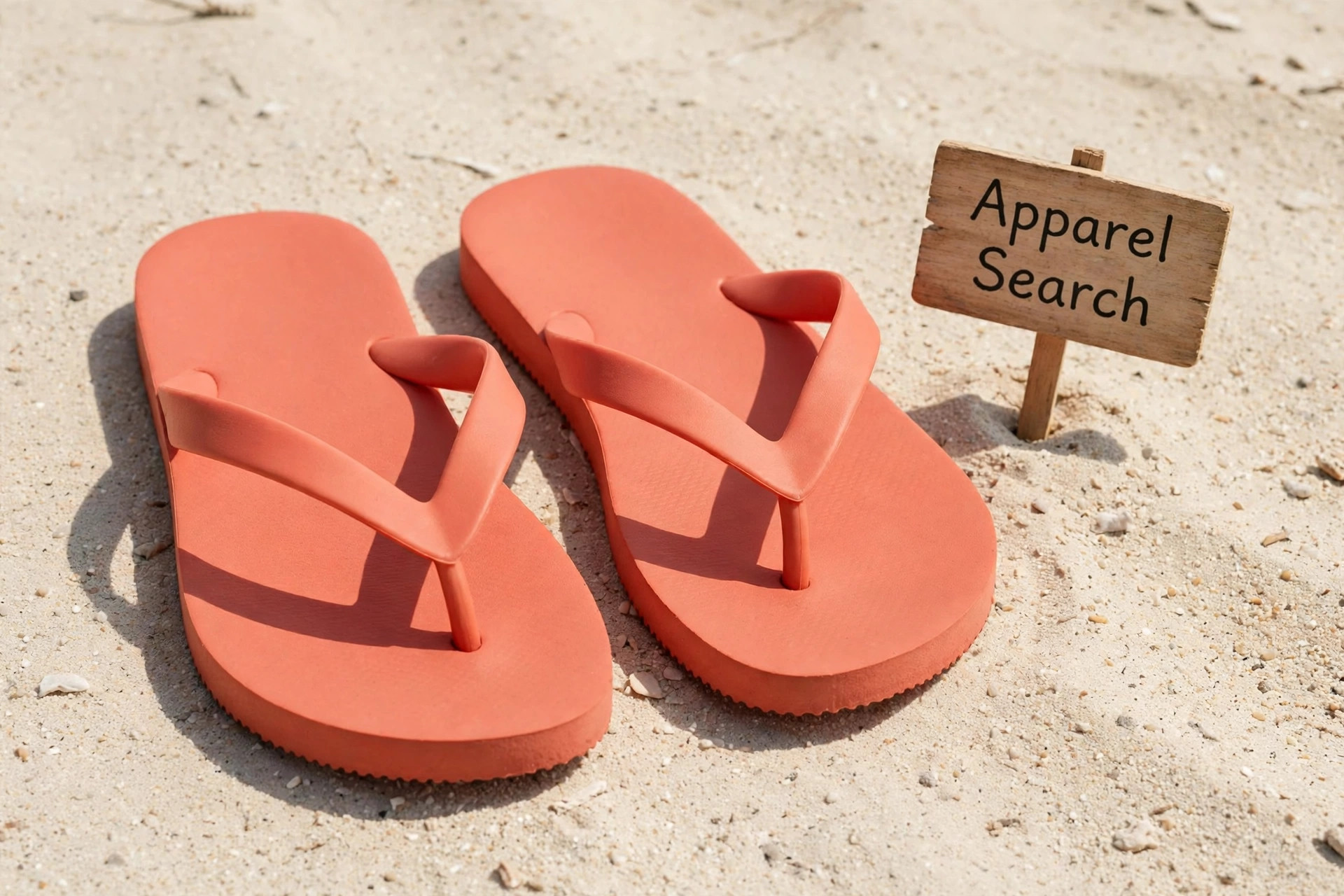
Three Points of Attachment, Nothing Else
The flip-flop is footwear reduced to its minimum: a flat sole and one strap. The V-shaped strap does all the holding, passing between the big toe and the second toe and spreading to anchor on either side of the foot, so the sole is attached at exactly three points. There is no heel cup, no lacing, no buckle and nothing across the instep. The sandal therefore stays on only while the toes grip lightly with each step, and the loose back of the sole slaps against the heel in the rhythm that gave the design its name.
That minimalism is also the design's limit. A flip-flop gives no ankle support, no protection to the top of the foot and no grip beyond the flat sole's own tread, so it suits short, easy walking on flat ground: the beach, the pool deck, the garden and the shower room, where its open construction sheds water and sand instead of trapping them. Asked to do the work of a shoe — on long walks, rough ground or a full day on hard pavement — a flat, unsupportive sole leaves the feet and legs to absorb everything, and problems start.
From Cheap Rubber to Fashion Staple
For most of their history, flip-flops were the cheapest footwear that could be manufactured, stamped out of rubber and sold as disposable summer wear. The turn came when the same shape was reissued in better materials and colours: leather straps, transparent plastic, wood and decorated soles moved the sandal from beach utility to a fashion item, popular as everyday casual footwear especially with teenagers and young adults, across a wide range of prices. The shape did not change at all, which is the point — the fashion version sells the ease and informality of the beach sandal, not any improvement in function.
Care is as simple as the design. Rubber and plastic pairs rinse clean and dry in minutes; leather straps want the same occasional conditioning as any leather shoe. A worn toe post or a sole worn smooth is the signal to retire a pair, since both failures arrive suddenly and can strand the wearer barefoot. Kept to warm weather, short distances and wet places, the three-point sandal remains the simplest successful design in the whole footwear family.
Common Questions
Why are they called flip-flops?
The term flip-flop derives from the rhythmic slapping noise the sandals make while slapping against the wearer's heels as he or she walks. The loose, backless sole flips up and flops down with every step.
What are flip-flops called in other places?
In American English these sandals are also known as thongs. In Hawaii, flip-flops are known as slippers, a local usage that can confuse visitors, since slipper elsewhere means an indoor shoe.
What are flip-flops made of?
Flip-flops were originally cheaply made of rubber, and they are now available in a wide variety of materials including leather, transparent plastic, rubber and wood, at price ranges from disposable to designer.