Footwear Buyer Job Description
Buying shoes where fit, size runs and construction quality decide returns and reputation
A footwear buyer selects the shoes a store will sell — across women's, men's or children's footwear, or a specialist mix — and manages one of retail's most unforgiving stock problems: every style must be bought as a run of sizes, and it sells only in the sizes customers' feet actually are. A clothing style bought slightly wrong still sells at a markdown; a shoe bought in the wrong size curve becomes stranded stock in unpopular sizes while the popular sizes sell out and disappoint. Add construction quality that determines comfort and returns, and footwear buying emerges as a distinct discipline with its own knowledge base. This page explains the footwear buyer's duties, specialist skills, and career routes.
More Buying Job Descriptions by Letter:
What a Footwear Buyer Does
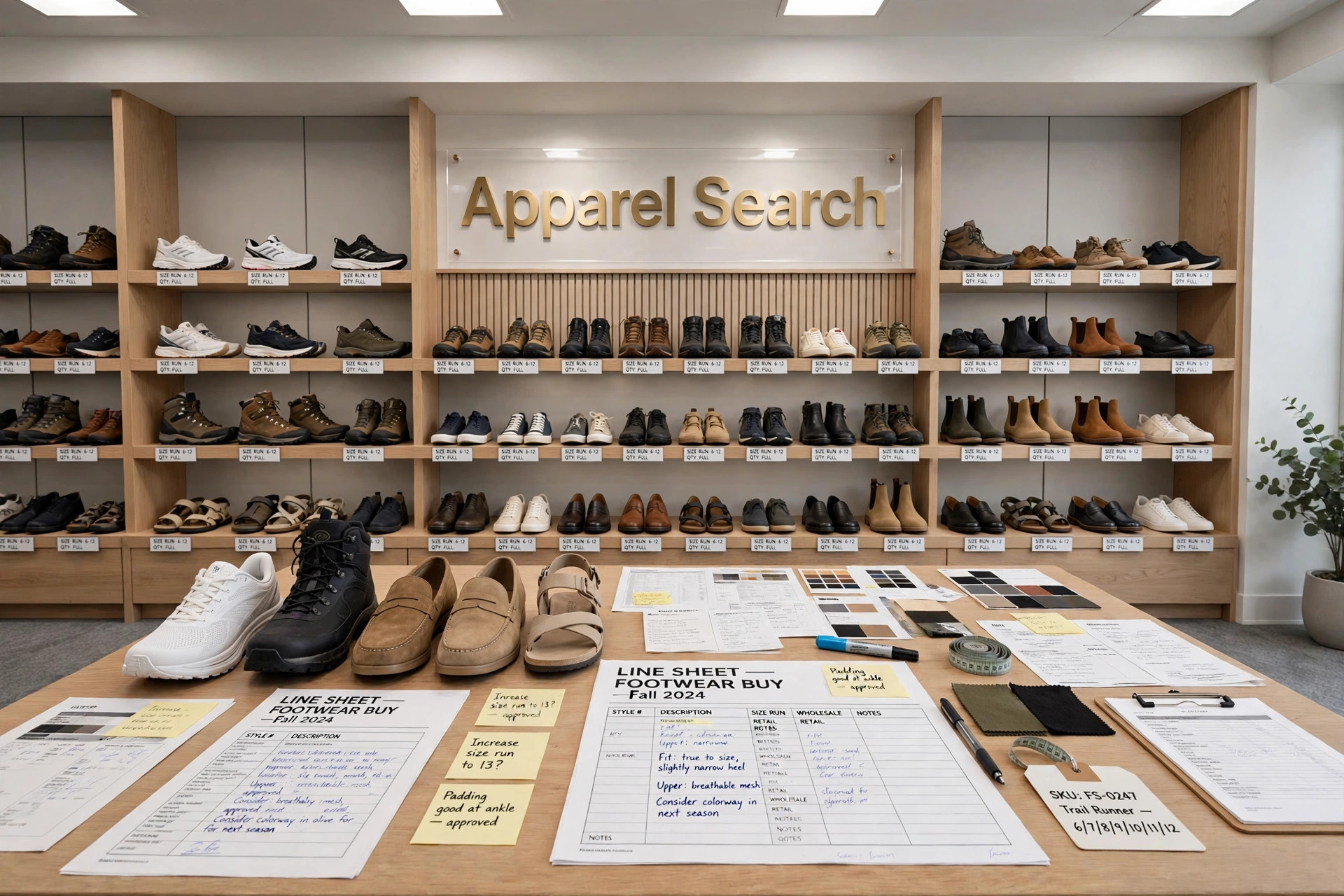
The footwear buyer plans the department by category — for example dress shoes, casual, boots, sandals, trainers-adjacent fashion styles or children's school shoes, depending on the store — setting budget and price architecture for each, then selecting styles at vendor appointments and footwear trade shows. Samples are assessed on the foot and in construction: last shape, upper materials, lining, insole cushioning, sole unit and heel attachment all affect whether the shoe will be comfortable at hour eight, not just attractive at minute one. Orders are then placed not by total quantity alone but by size curve — the proportion of the order placed in each size — drawn from the department's own size-level sales history.
In season, the buyer reads performance size by size. A style can be a success and a stock problem simultaneously: sold out in mid sizes, overstocked at the extremes. The buyer manages repeats where factories can remake in the sizes needed, balances stock between stores with different size profiles, and plans markdowns knowing that broken size runs lose value quickly — a shoe available only in two unpopular sizes is effectively clearance stock whatever its ticket says. Fit feedback and returns reasons are reviewed constantly, because a last that runs narrow or a heel that slips will return at rates that erase the style's margin.
Size Runs, Fit and Construction: The Footwear Specialisms
Size-curve planning is the role's mathematical core. Footwear demand concentrates in the middle sizes with category-specific patterns — children's sizes turn over with growth, women's and men's curves differ, and wider or narrower fittings add further dimensions for some ranges. The buyer sets and continually corrects these curves from data, and defends depth in the highest-demand sizes even though they look disproportionate, because availability in a customer's size is the entire sale in footwear: there is no close-enough substitute on the rail.
Construction literacy is the second specialism. The buyer must judge how a shoe is made — cemented, stitched or moulded construction; leather grades and synthetic alternatives; sole materials and their grip and wear; heel stability and attachment — and what each means for durability, comfort and the price the shoe can honestly carry. Fit is judged on real feet across the size range, since a style graded badly may fit acceptably in a sample size and poorly at the extremes. These judgements, made before orders are placed, determine return rates months later.
Skills and Abilities the Role Requires
Analytical strength at size level is essential, alongside the standard buying disciplines of range planning, margin management and vendor negotiation. Footwear sourcing involves long factory lead times and size-specific remaking constraints, so the buyer plans further ahead than most apparel buyers and keeps closer control of order phasing. Vendor knowledge matters deeply: which factories execute which constructions well, and which can be trusted with a fast, size-selective repeat, is intelligence built over seasons.
Product passion in footwear is practical rather than decorative: the buyer should wear-test, understand fit complaints in detail, and follow how materials and constructions are evolving, including comfort technologies moving between athletic and fashion footwear. Communication with store teams is unusually valuable here, because fitters and sales staff hear fit truth from customers daily — the buyer who systematically collects that evidence buys measurably better ranges.
Qualifications, Training and Career Path
Footwear buyers usually develop from assistant buyer roles within footwear departments, or move across from apparel buying with a deliberate apprenticeship in footwear's size and construction disciplines. Fashion buying or business qualifications open the assistant-level door as elsewhere in retail, but employers hiring footwear buyers weigh category track record — size-curve judgement and construction knowledge demonstrated on live ranges — above general credentials.
Progression runs to senior footwear buyer, buying management over a whole footwear division, and divisional merchandise management, particularly in department stores and footwear specialists. The expertise is also valued by footwear brands and wholesalers, who employ product and range managers to build the collections retail buyers select from — a move that suits buyers who want to work on the creation side of the size-and-construction problems they know so well.
Common Questions
What is a size curve in footwear buying?
The proportion of an order placed in each shoe size, based on the department's size-level sales history. Demand concentrates in middle sizes, so the curve weights those sizes heaviest; getting it wrong strands stock in unpopular sizes while popular sizes sell out.
Why do footwear buyers assess construction so carefully?
Construction decides comfort, durability and returns. Last shape, materials, sole units and heel attachment cannot be judged from appearance alone, and a style that fits or wears badly returns at rates that can erase its entire margin.
Can an apparel buyer move into footwear buying?
Yes, but with an apprenticeship mindset: range planning and negotiation transfer directly, while size-curve planning, fit assessment and construction knowledge are footwear-specific and must be learned on live footwear ranges.