Fashion Design Director Job Description
Setting the collection's direction and leading the design team — the senior creative role in a fashion business
A fashion design director is the senior creative leader of a clothing business: the person who decides what the collection will be about each season and leads the designers who make it real. Where a designer owns styles, the design director owns the whole offer — its direction, its balance across categories and price levels, its fabrics and colours — and answers for how it performs. The role is creative, but it is not only creative: range budgets, factory capacity, delivery dates and sales evidence all sit inside the director's decisions, and the collections that succeed are the ones where that discipline is invisible in the finished clothes. This page explains the duties, skills and career path of the fashion design director.
More Design Job Descriptions by Letter:
What a Fashion Design Director Does
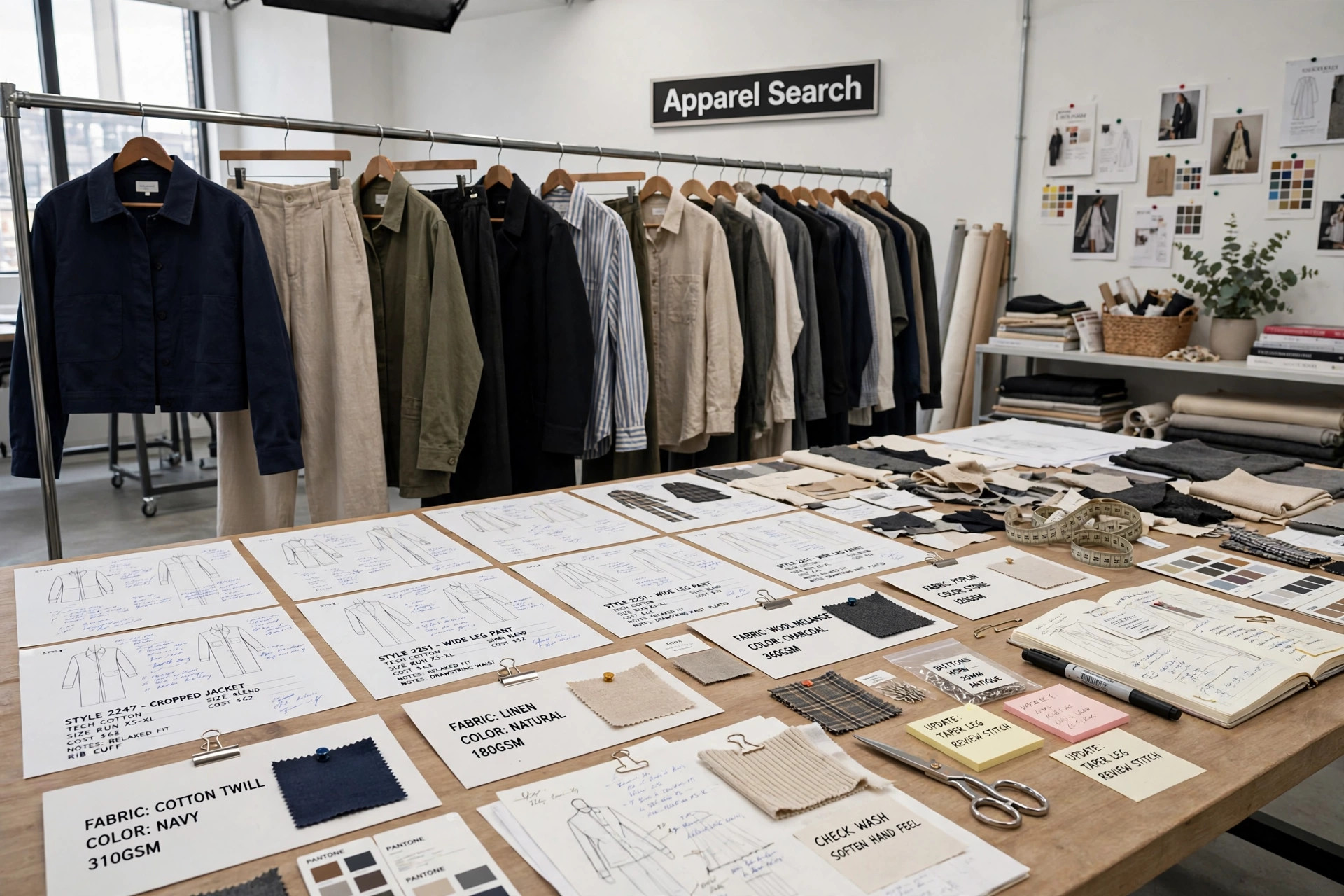
Each season starts with direction. The design director researches the market — fashion weeks, fabric fairs, competitors, customer evidence and the previous season's sales — and sets the collection's themes: the silhouette stories, colour palette, fabric direction and price architecture the team will design into. That direction is presented to senior management and merchandising colleagues and defended with commercial reasoning, not taste alone. Once agreed, the director briefs the designers category by category, reviews their sketches at every stage, and edits the developing range so the parts form one coherent collection rather than several designers' separate ideas.
Through development the director chairs the critical judgements: which fabrics are committed and at what volumes, which samples earn a place in the final range, how fits are corrected, and where the range is over-bought in one story and thin in another. The director approves the final line at range freeze, presents it to sales teams and key accounts, and then reads the season's trading evidence as it lands — sell-through by story and category — carrying those lessons into the next season's direction. Hiring, mentoring and appraising the design team run underneath everything: the director's longest-lasting product is the designers they develop.
Working With Merchandising, Buying and Production
No design director works alone, and the role's effectiveness is measured in its partnerships. With merchandising, the director agrees the range plan — how many options per category, at which prices, with what margin — and trades creative ambition against those numbers openly. With buying and sourcing, the director aligns fabric and garment commitments to factory capability and lead times, so the collection's most important fabrics are secured before competitors take the capacity. With production and technical teams, the director arbitrates the hard calls: when a fabric fails, a fit will not correct, or a cost will not land, the decision about what changes — and what must never change — is the director's.
Those partnerships explain why design directors are appointed from inside the trade rather than hired on portfolio alone. A director who has never sat in a costing meeting or a failed fitting cannot judge which compromises are safe. The credibility to tell a designer their favourite style must be dropped, and to tell a merchandiser a margin target is killing the range's best idea, is earned over seasons of ranges that sold — and is the real qualification the job description assumes.
Skills, Qualifications and Experience
The appointment profile is consistent across the industry: a senior designer with several collections behind them, experience across more than one product category, and a demonstrated record of ranges that met their sales and margin targets. Formal design training underpins it, but the deciding evidence is judgement — about product, about people and about timing. Leadership skills are tested daily: setting a standard a team can aim at, criticising work without crushing its author, delegating whole categories to senior designers while keeping the collection's unity, and representing the design function persuasively at executive level.
Commercial numeracy separates strong directors from strong designers. Range plans, option counts, fabric commitments, costings and sell-through analysis are the director's working documents; a director who cannot read them is dependent on everyone who can. So is stamina: two or more collection calendars overlap at any moment — one season selling, one in production, one being designed — and the director holds all three in view simultaneously, which is why the role is usually the end of a long apprenticeship rather than an early promotion.
Career Path
Design directors are drawn almost exclusively from senior designer ranks, often after leading a major category — womenswear, menswear or a flagship product group — within a team. From the director's chair, progression runs to head of design or creative director responsibility across several brands or divisions, to brand directorships where design sits alongside marketing and retail, and, for some, to founding or leading independent labels where the same seasonal judgement is exercised with the founder's risk attached. The role is also a known route into consultancy and forecasting, where an experienced director's market judgement is the product.
Within this directory, the design director page is the natural companion to the design director and designer pages under D: read together, they show the same studio at three levels — the designer originating styles, the design director leading a category team, and the fashion design director answering for the whole collection and the creative identity of the business.
Common Questions
What is the difference between a fashion design director and a design director?
In most companies the titles describe the same senior job — leading the design team and setting collection direction — and employers use them interchangeably. Where both exist, the fashion design director usually holds the wider brief: the whole collection and its creative identity, while a design director may lead one division or category within it.
How much experience does a fashion design director need?
Typically a decade or more in design, including senior designer responsibility for complete categories across several seasons, with ranges that met their commercial targets. The appointment is based on proven judgement about collections and people, so there is no fast route that skips the senior designer years.
Does a fashion design director still design garments?
Yes, but selectively. Directors sketch direction-setting styles, redraw and correct team work at reviews, and often own a small number of key pieces personally — but most of their creative output is exercised through briefs, edits and approvals rather than a full category of their own styles.