Footwear Merchandising Manager Job Description
Managing the footwear assortment — range balance, buying performance and stock across every shoe category
A footwear merchandising manager owns the commercial shape of a shoe range: which categories it covers, how many styles each carries, at what prices, in what sizes — and how that assortment performs once it reaches stores and screens. The role manages the merchandising work described for fashion generally, but footwear adds its own complications: fit-driven sizing curves that differ by category, long factory lead times, seasonal weather sensitivity, and customers whose loyalty is earned by comfort as much as style. Working between footwear designers, buyers and sales channels, the manager balances the range as a portfolio and trades it through the season. This page sets out that work and the route into it.
More Design Job Descriptions by Letter:
What a Footwear Merchandising Manager Does
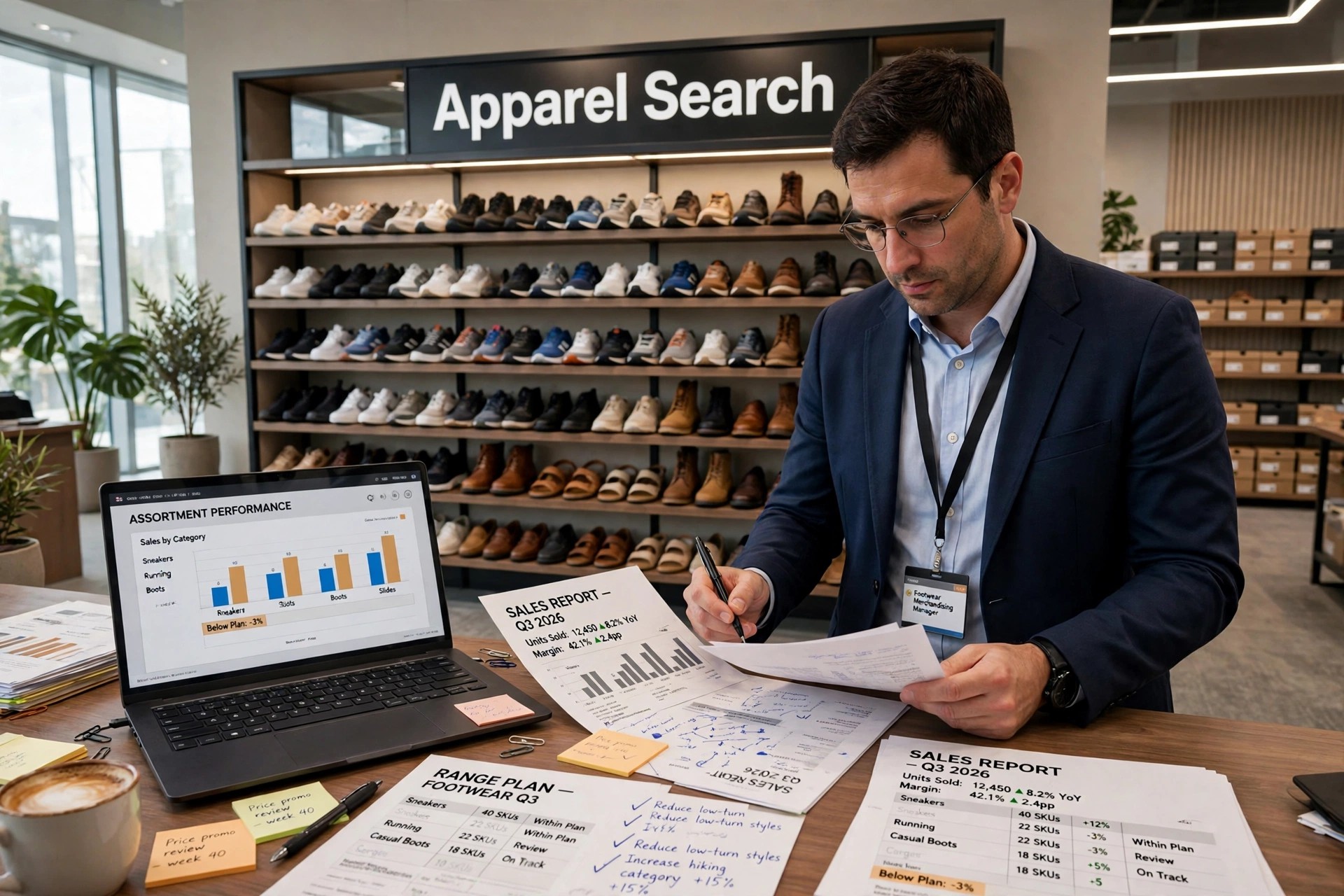
Assortment planning comes first. The manager builds the footwear range plan category by category — boots, shoes, sandals, trainers, formal and comfort lines — setting option counts, price architecture and delivery phasing from sales history, trend direction and channel needs, then works with buyers and designers as styles are selected and developed to keep the plan's balance: not three near-identical black boots while the walking shoe that sells every week goes unrefreshed. The manager also coordinates the range across channels, since stores, online and wholesale customers each need a defensible, slightly different slice of the whole.
Trading management follows through the season. The manager reviews sales and stock by category, style, size and channel, directs repeats of proven sellers — negotiating the factory capacity footwear's longer lead times demand — and takes markdown and exit decisions on slow lines before they clog the new season's space. Managing a small merchandising team, the role owns the reporting rhythm, the open-to-buy budget and the range's margin outcome, and represents the footwear business in company trading meetings where its figures compete for investment with every other department.
Sizing, Fit and Footwear's Special Numbers
Footwear sizes behave differently from garment sizes, and the merchandising manager is where that knowledge lives commercially. Size curves differ by category and customer — a fashion heel, a men's formal shoe and a children's trainer all sell through their size ranges in different shapes — and a style can be simultaneously overstocked and sold out, in aggregate and in the sizes that matter, exactly as in clothing but sharper, because fit tolerance in shoes is narrower. The manager analyses size-level sell-through, sets size ratios for new orders and corrects them on repeats using the evidence each season adds.
Replenishment and continuity management is the other footwear specialism. Core footwear styles — the black court shoe, the white trainer, the waterproof boot — sell across seasons and are reordered against rate of sale and factory lead time, with stock cover managed so the bestsellers never gap while fashion styles come and go around them. Returns evidence feeds the same loop: footwear returns often signal fit or quality problems rather than taste, and the manager who reads them early protects both margin and the designers' next range.
Skills and Abilities the Role Requires
The foundation is merchandising craft at management level: range planning, margin and open-to-buy control, size and stock analysis, and seasoned trading judgement about when to repeat, hold or reduce — now applied across a whole footwear business rather than a single department. Product knowledge is the multiplier: understanding lasts, constructions and materials well enough to know why one boot outsells another, and why a fit complaint is a range problem, not an anecdote.
Management skills complete the profile. The role briefs and develops assistant merchandisers and merchandisers, presents the footwear plan and its results persuasively to senior management, negotiates with buyers and suppliers from evidence, and keeps design, sales and supply colleagues aligned around one version of the numbers. It suits commercially minded managers who genuinely like shoes as products — their construction, their customers and their peculiar economics.
Qualifications, Training and Career Path
Footwear merchandising managers are usually promoted from merchandiser roles, often with footwear department experience, or arrive with senior merchandising experience from adjacent categories and learn footwear's sizing and lead-time specifics in post. Fashion business or numerate qualifications underpin most careers in the field, and employers look for a record of ranges planned and traded successfully, with budgets and outcomes the candidate can discuss in detail.
From here the paths run to head of merchandising roles spanning several departments, footwear division leadership, and general management in footwear brands where the merchandising manager's whole-range view is the natural preparation. The specialism also transfers into buying direction and e-commerce leadership for footwear, where size-curve and returns expertise is at a premium.
Common Questions
What does a footwear merchandising manager manage?
The whole footwear assortment commercially: category balance, option counts, price architecture and delivery phasing at planning stage, then size-level trading, repeats, continuity replenishment and markdowns in season — usually with a small merchandising team.
Why is footwear merchandising different from clothing merchandising?
Fit tolerance is narrower, so size curves are sharper and differ by category; factory lead times are longer, making repeats slower; and returns more often signal fit or quality problems. Core styles also sell across seasons, adding continuity management clothing ranges rarely need.
How do you become a footwear merchandising manager?
By progressing through merchandising — assistant merchandiser to merchandiser — ideally with footwear department experience, building a record of ranges planned and traded to target. Senior hires from other categories are expected to master footwear sizing and lead times quickly.