Footwear Designer Job Description
Designing shoes in three dimensions — last, fit, materials and construction before decoration
A footwear designer designs the object clothing designers rarely think about in three dimensions: a shoe is a small piece of engineering that must fit a foot, flex where the foot flexes, survive pavements and weather, and still carry a brand's look. Where garment design begins with silhouette on a body, footwear design begins with the last — the foot-shaped form every shoe is built around — because a beautiful upper on a bad last is an unwearable shoe. Footwear designers work with last makers, pattern engineers, materials suppliers and specialist factories, in a trade with its own vocabulary and machinery. This page explains how shoes get designed, sampled and approved, and what the specialism demands.
More Design Job Descriptions by Letter:
What a Footwear Designer Does
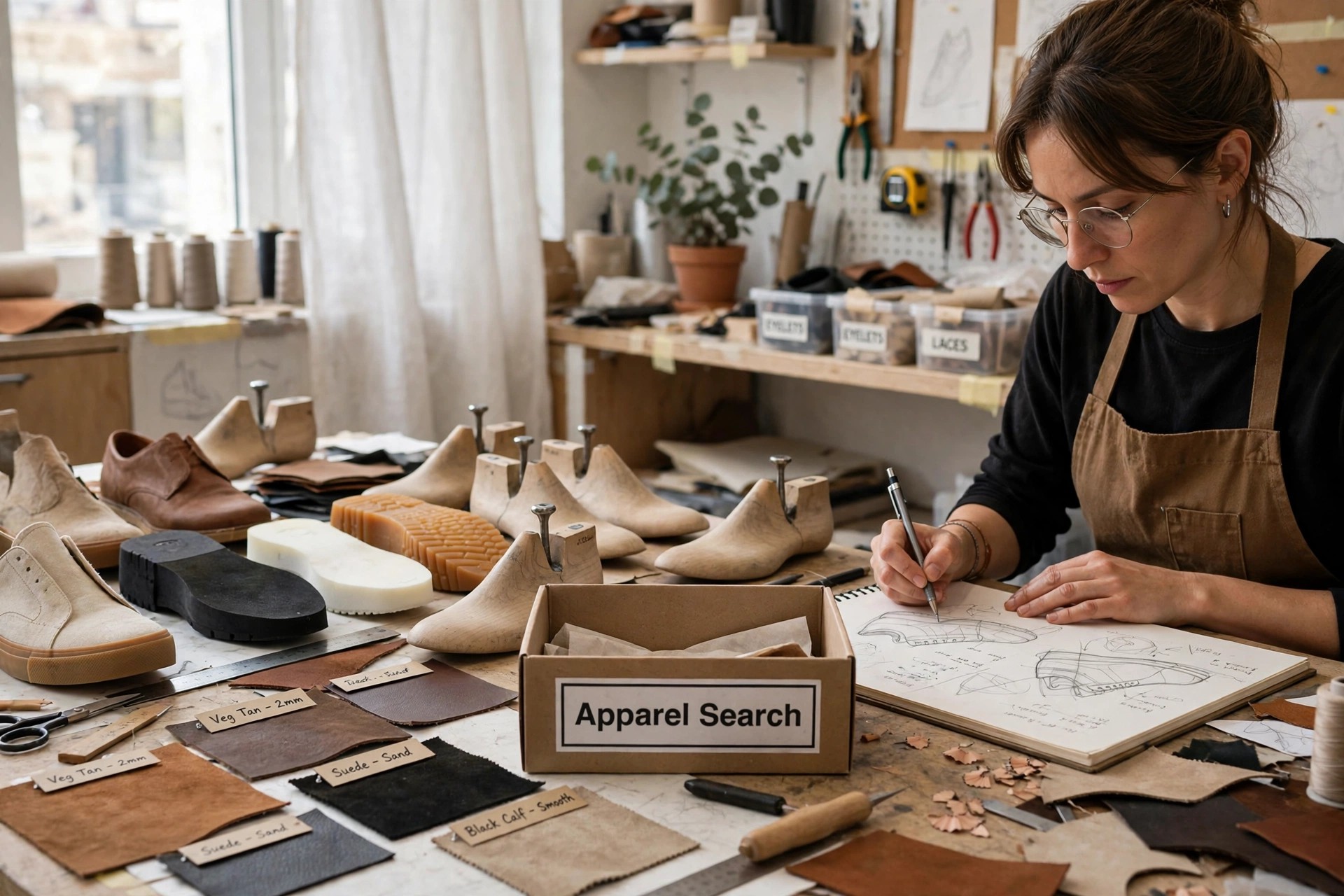
The designer begins each range with research — trend, brand direction, the sales evidence of previous footwear seasons — and sketches concepts for each category the range needs: boots, shoes, sandals, trainers or heels, at their planned price points. Approved concepts are developed against a chosen last: the designer specifies the upper pattern, toe shape, heel height and pitch, materials, colours, linings, trims and the sole unit, in technical drawings and specification sheets that a footwear factory's pattern room can cut from. Every dimension interacts — change the heel and the balance, the pattern and the lasting allowance all change with it.
Sampling is iterative and physical. First prototypes arrive built on the last, and the designer fits them on real feet, walks in them, checks where the upper creases, whether the topline gapes, how the shoe looks from the wearer's and the onlooker's angles. Corrections go back as marked-up samples and revised specs through several rounds until fit, look and cost align; final samples are wear-tested, construction-checked and sealed as the production standard. The designer may travel to the factories — footwear production is concentrated in specialist regions — to work through problems at the bench rather than by photograph.
Materials, Components and Construction
A shoe is an assembly of components most garment designers never meet: uppers in leather, textile, synthetic or knit; linings and reinforcements; insoles and shanks; heel units, soles in leather, rubber, EVA or moulded compounds; laces, eyelets, zips and buckles, each with its own suppliers and minimums. The designer selects and specifies them all, balancing hand-feel, durability, weight and cost — a trainer and a dress shoe at the same retail price spend that money in entirely different places. Material knowledge is learned by handling, testing and failure, and by knowing which tanneries and component suppliers a factory works with well.
Construction methods shape what can be designed. Cemented construction bonds sole to upper and dominates fashion footwear; stitched constructions serve traditional and premium shoes; vulcanised and direct-injection methods build trainers and casual shoes at volume; knitted uppers opened a whole new design language with engineered patterns. The footwear designer thinks in these processes from the first sketch, because construction decides the shoe's profile, price and repairability — and a design that ignores its construction cannot be costed, sampled or honestly sold.
Skills and Abilities the Role Requires
Three-dimensional thinking is the distinguishing gift: the ability to imagine a flat pattern wrapped around a last, to draw a shoe convincingly from several angles, and to judge proportion in millimetres, since two millimetres of toe spring or heel pitch changes both look and comfort. Drawing and CAD skills — including the 3D tools increasingly used for sole and last visualisation — support that thinking, while pattern and making knowledge, gained wherever possible at a bench, keeps designs buildable.
The supporting skills mirror technical design generally: precise specification, patient sample correction, cost awareness, and communication with factories whose expertise deserves respect and whose constraints must be understood rather than wished away. Fit sensitivity is a professional duty in footwear in a way it is not in garments — a garment that fits badly disappoints, a shoe that fits badly injures — and good footwear designers develop an almost clinical interest in feet, gait and wear patterns.
Qualifications, Training and Career Path
Many footwear designers train on dedicated footwear design or footwear technology courses, learning last anatomy, pattern engineering, materials and construction alongside design; others arrive from fashion or product design and specialise, building footwear knowledge through assistant roles in footwear departments. Portfolios should show shoes designed in three dimensions — sketches, technical drawings and, ideally, sampled prototypes — with evidence of category understanding, since a heel designer and a trainer designer are hired from visibly different books.
Careers progress from assistant and junior footwear designer to senior designer owning categories, and to footwear design management across a brand's whole shoe offer; some specialise deeply — performance sport, luxury, orthopaedic and comfort footwear are distinct worlds with their own experts. Because footwear is a smaller, more technical trade than garment design, experienced footwear designers with proven fit and construction judgement are persistently in demand.
Common Questions
What is a last in footwear design?
The last is the foot-shaped form a shoe is built around; it determines the shoe's fit, toe shape and proportions. Designers develop styles against a chosen last, and changing the last changes the whole shoe — which is why footwear design is a three-dimensional discipline.
How is footwear design different from clothing design?
Shoes must fit and protect a moving foot, flex at the right point and survive hard wear, so engineering — lasts, components, construction methods and wear testing — sits beside aesthetics. The sampling is physical and iterative, and fit faults can injure, not just disappoint.
How do you become a footwear designer?
Often through a dedicated footwear design course covering lasts, patterns, materials and construction, or by specialising from fashion or product design into assistant footwear roles. Portfolios need three-dimensional shoe work — technical drawings and sampled prototypes carry real weight.
More to Explore
- Clothing Industry Portal
- CAD Services
- Computer Assisted Design
- Footwear Merchandising Manager
- Best Shoes Guide
- Best Shoes 2015
- Fashion Job Description Directory
- Fashion Employment Agencies
- Employment Search Engines
- Fashion Schools and Education
- Fashion Careers
- Fashion Artists Guide
- Fashion Directory
- Fashion Industry News