Graphic Designer Job Description
The graphics on the garments — print artwork, logos, typography and placement graphics for apparel ranges
In the apparel industry, a graphic designer creates the artwork that goes on clothing: the prints across a T-shirt chest, the logo embroidered on a sweatshirt, the all-over pattern on a dress, the typography on a slogan top. It is graphic design practised on garments instead of pages, which changes everything about the craft — artwork must survive printing on cloth, sit correctly on a moving three-dimensional product, and sell at rail distance. Design houses, high-street brands and print studios all employ graphic designers inside their print and artwork departments. This page explains the apparel graphic designer's work and route in.
More Design Job Descriptions by Letter:
What an Apparel Graphic Designer Does
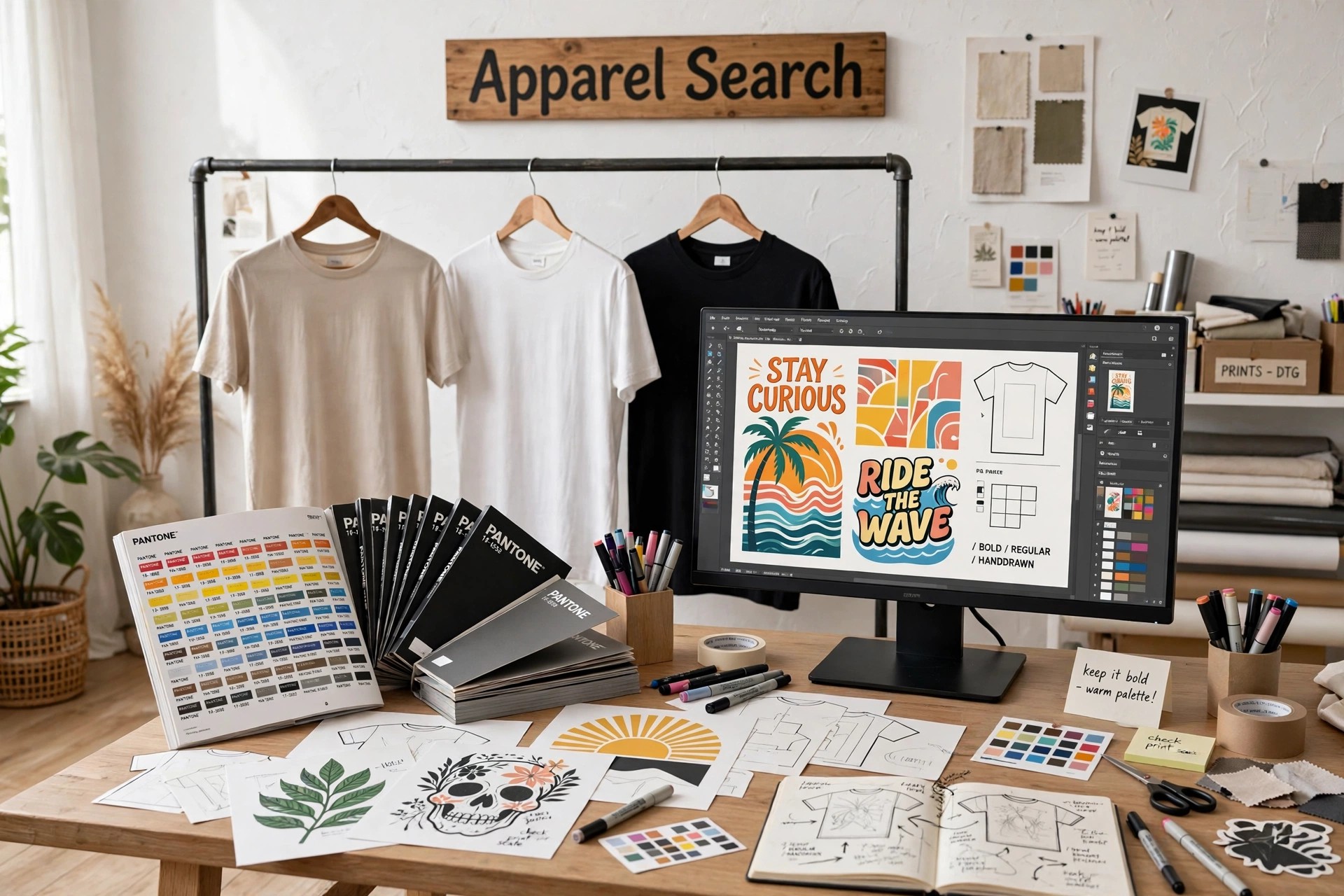
The season's work begins with the range plan. Working from the design team's mood boards and garment shapes, the graphic designer develops artwork concepts for each graphic story in the range: placement prints positioned on specific garments, all-over prints that repeat across fabric, embroidery and appliqué designs, and logo and branding artwork. Concepts are mocked up on garment flats so buyers see the graphic at true scale on the actual style — a print that sings on a screen can die at chest size, and the mock-up stage is where that is caught.
Approved artwork is then made production-ready, which is the larger half of the job. Placement graphics are sized and positioned per garment size, all-over prints are built into seamless repeat, colours are separated for the print method in use, and files are issued to printers and factories with scale, placement and colour references stated exactly. When strike-offs and printed samples return, the graphic designer checks them against the artwork — colour, scale, registration, hand-feel of the print — and corrects files until the garment matches the intention.
Print Methods and Technical Artwork
Print literacy defines the apparel graphic designer. Screen printing needs a clean colour separation per screen and artwork built within a colour-count budget; digital printing allows photographic colour but demands profiled, high-resolution files; sublimation, puff and foil effects, embroidery digitising and flock each impose their own artwork rules. The designer chooses and adapts artwork to the method the garment's price point allows, because a twelve-colour design on a value T-shirt is not creativity — it is an unproducible file that someone else must rescue.
Garment behaviour matters as much as print method. Artwork stretches over bodies, breaks across seams and gathers, fades and cracks with washing if the print specification is wrong, and scales differently across a size range unless each size is set individually. Experienced graphic designers design with the garment in the room: checking prints on worn samples, specifying placement from neckline and armhole landmarks rather than from the page edge, and keeping a library of proven artwork constructions that factories reproduce reliably season after season.
Skills and Abilities the Role Requires
Drawing, typography and layout are the creative foundation — most apparel graphics are built from type, motif and mark rather than from photography, and a strong hand with lettering and simple bold imagery suited to cloth is the portfolio quality employers look for first. Software fluency in raster and vector packages at production speed is assumed, including repeat construction, separations and file preparation to a printer's specification.
The professional skills are accuracy and throughput under range pressure. One season may hold hundreds of graphic styles, each with colourways and sizes; files must be named, versioned and issued immaculately, because the factory prints exactly what the file says. Commercial sense completes the profile: graphic designers who watch which prints sell, who understand the customer the graphic must attract across a shop floor, and who design the wearable version of a trend rather than the loudest one, are the ones whose artwork carries ranges.
Qualifications, Training and Career Path
Graphic designers in apparel usually train in graphic design, illustration or textile design, and are hired on portfolio: garment graphics, print artwork and typography carry more weight than general branding work, and studios commonly set a practical artwork task at interview. Entry comes through junior graphic designer and artwork assistant posts in design houses, high-street head offices, print studios and licensed-apparel companies, where production methods are learned on live ranges.
Progression runs to senior graphic designer, then to leading the graphics function for a brand or division — the graphic design director role described in this section of the directory — or sideways into print design, textile design and branding. Freelance apparel graphics is a well-established parallel career once a designer has speed, a recognisable hand and a client list of brands whose ranges their artwork has carried.
Common Questions
What does a graphic designer do in the apparel industry?
Creates the artwork applied to clothing: placement prints, all-over repeat prints, embroidery and appliqué designs, logos and typography. The designer mocks artwork up on garment flats, prepares print-ready files with separations and sizing per garment size, and checks printed samples until they match the artwork.
How is apparel graphic design different from general graphic design?
The canvas is a garment. Artwork must suit a print method and its colour budget, sit correctly on a three-dimensional product across all sizes, survive washing, and read at rail distance. Print-method knowledge and garment awareness are therefore core skills, not extras.
What should an apparel graphic design portfolio show?
Garment graphics above all: placement prints shown on styles, all-over prints in repeat, typography-led designs and logo work, ideally with evidence of production — separations, colourways and printed samples. Studios usually add a timed practical artwork task at interview.