Jr. Graphic Designer Job Description
The junior artwork desk — owning small graphic jobs end to end, from brief and artwork to print-ready files
A jr. graphic designer — junior graphic designer — is the first full rung of the apparel graphics ladder: past assisting, not yet senior. The distinction that defines the desk is ownership. A graphic design assistant supports other people's artwork — resizing, filing, fetching, preparing — while a jr. graphic designer is handed small artwork jobs whole: a chest print for a t-shirt range, a set of care-label graphics, a logo lockup for a capsule line, and is expected to take each from brief to print-ready file with only review, not rescue, from the senior above. Fashion brands, licensees and print studios all staff this desk because garment graphics are volume work, and volume needs reliable junior hands. This page explains the job, its files and its deadlines.
More Design Job Descriptions by Letter:
What a Jr. Graphic Designer Does
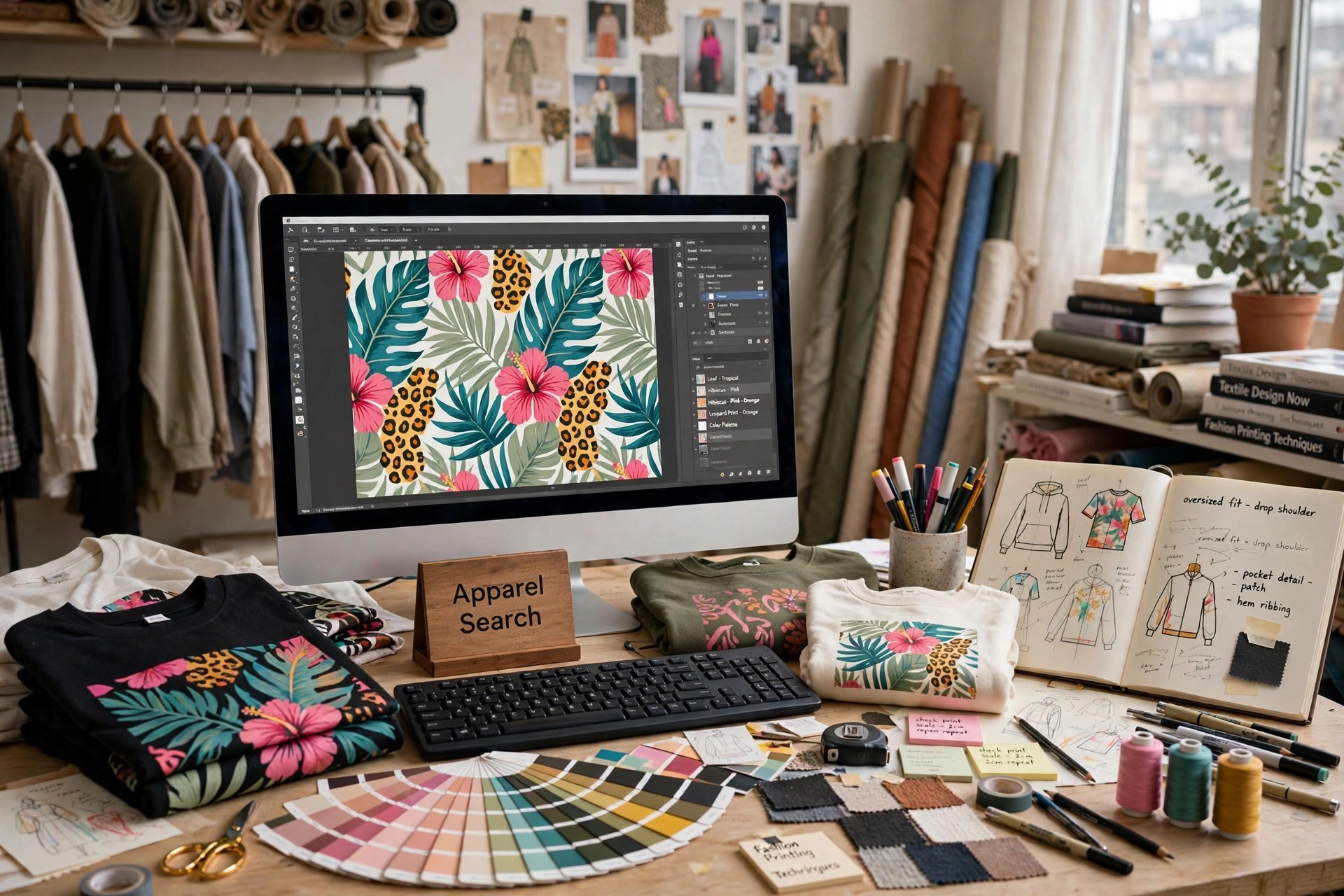
The workload is briefs, most of them small and many of them simultaneous. A typical week brings new artwork to create — a graphic for a jersey top, lettering for a hoodie, a placement print adapted from a bought artwork file — and existing artwork to adapt: last season's successful chest graphic recoloured for the new palette, a logo reworked for embroidery instead of print, a print re-scaled for a smaller garment size range. Each brief names the garment, the technique, the colours and the deadline, and the jr. designer works through the queue in priority order set by the senior designer or studio manager.
Every job ends in production files, and producing them correctly is the unglamorous core of the role. Print-ready artwork means separated colours for screen printing, vector files that a printer can scale without loss, embroidery artwork simplified to what thread can actually render, and placements specified by measurement from neckline or hem so the factory prints the graphic where the designer intended. The jr. designer checks proofs and strike-offs when they return, flags colour or registration problems, and keeps the artwork library filed so any graphic can be found, reopened and reused next season.
Techniques: Screen Print, Embroidery and Placement Graphics
Apparel graphics are constrained by their production techniques in ways paper graphics are not, and the jr. designer's craft knowledge is mostly technique knowledge. Screen printing charges by the colour and punishes fine detail and half-tones at small sizes; embroidery cannot hold thin lines or tiny lettering at all; heat transfers and digital prints each carry their own resolution and colour rules. Learning what each technique forgives and forbids — and designing inside those limits from the first sketch rather than repairing artwork at the factory's complaint — is what turns a general graphic designer into an apparel graphic designer.
Placement is the second craft. A graphic lives on a moving, three-dimensional garment worn by a moving person: a chest print that sits perfectly on a flat sample can dive or twist on the body, lettering across a seam distorts, and a print sized for a medium looks lost on an extra-large unless the range is graded thoughtfully. Jr. designers learn placement by seeing their work on garments — attending sample reviews, studying returns and photographs of the product being worn — and that garment sense, accumulated job by job, is the desk's real training.
Skills and Abilities the Role Requires
Software fluency is assumed and tested: vector drawing for logos and prints, raster editing for photographic and distressed artwork, and clean file habits — layers named, versions controlled, finals exported to the printer's specification without being chased. Speed with accuracy is the commercial skill; graphics desks run on seasonal deadlines, and a jr. designer whose files come back from the printer correct the first time is worth more than a slower perfectionist or a faster error-maker. A genuine feel for lettering, composition and colour, shown in the portfolio, is what gets the hire.
The supporting skills are professional ones. Taking a brief precisely, asking early when a technique or a deadline looks impossible, presenting options instead of a single take-it-or-leave-it design, accepting the senior's redirection of artwork you liked, and communicating with printers and factories about files — these decide whether the junior years run smoothly. Fashion literacy matters too: graphics live on garments, and designers who follow what customers are actually wearing produce prints that sell rather than prints that merely please designers.
Qualifications, Training and Career Path
Most jr. graphic designers arrive with a graphic design, illustration or fashion graphics qualification and a portfolio weighted toward apparel: t-shirt graphics, logos, prints and lettering rather than only web or editorial work. Many first served as graphic design assistants or studio interns, learning file discipline and print technique while supporting senior artwork. Employers hiring juniors look for that combination — evidence of garment-graphic thinking in the portfolio and enough production literacy that the first month is not spent teaching file basics.
Promotion runs to graphic designer and then senior graphic designer, taking larger briefs, whole ranges and eventually the direction of a graphics programme, with side routes into print design, branding and art direction. Freelance and studio careers open in parallel once a designer has a reliable technique base and a client-ready portfolio. The junior desk is deliberately a proving ground: own the small jobs completely, and the big ones follow.
Common Questions
How is a jr. graphic designer different from a graphic design assistant?
Ownership. An assistant supports other people's artwork — resizing, filing and preparing files. A jr. graphic designer is given small artwork jobs whole, from brief through design options to the print-ready file, and answers for their accuracy at the printer.
What software does a jr. graphic designer need?
Vector illustration software for logos and prints and raster editing software for photographic and textured artwork, used to production standard: clean layers, colour separations for screen print, correct scaling and placement specifications for factories and printers.
How do you move up from jr. graphic designer?
By returning printer-correct files on deadline, building technique knowledge across screen print, embroidery and transfer work, and taking progressively larger briefs — from single graphics to whole ranges — toward graphic designer and senior graphic designer roles.