Merchandising Assistant Job Description
The entry desk of fashion merchandising — samples, spreadsheets and the daily systems a range runs on
A merchandising assistant is the entry-level desk of fashion merchandising: the role that keeps a department's samples, spreadsheets, orders and reports moving so the merchandiser can plan and trade. It is genuinely junior work — chasing, checking, filing, updating — and it is also the recognised apprenticeship for the whole merchandising profession, because the assistant touches every system the senior roles depend on: sales data, range plans, purchase orders, deliveries and stock. Assistants are employed by retailers, brands and wholesalers wherever ranges are planned. This page describes the work honestly: what fills the week, what it teaches, and where it leads.
More Design Job Descriptions by Letter:
What a Merchandising Assistant Does
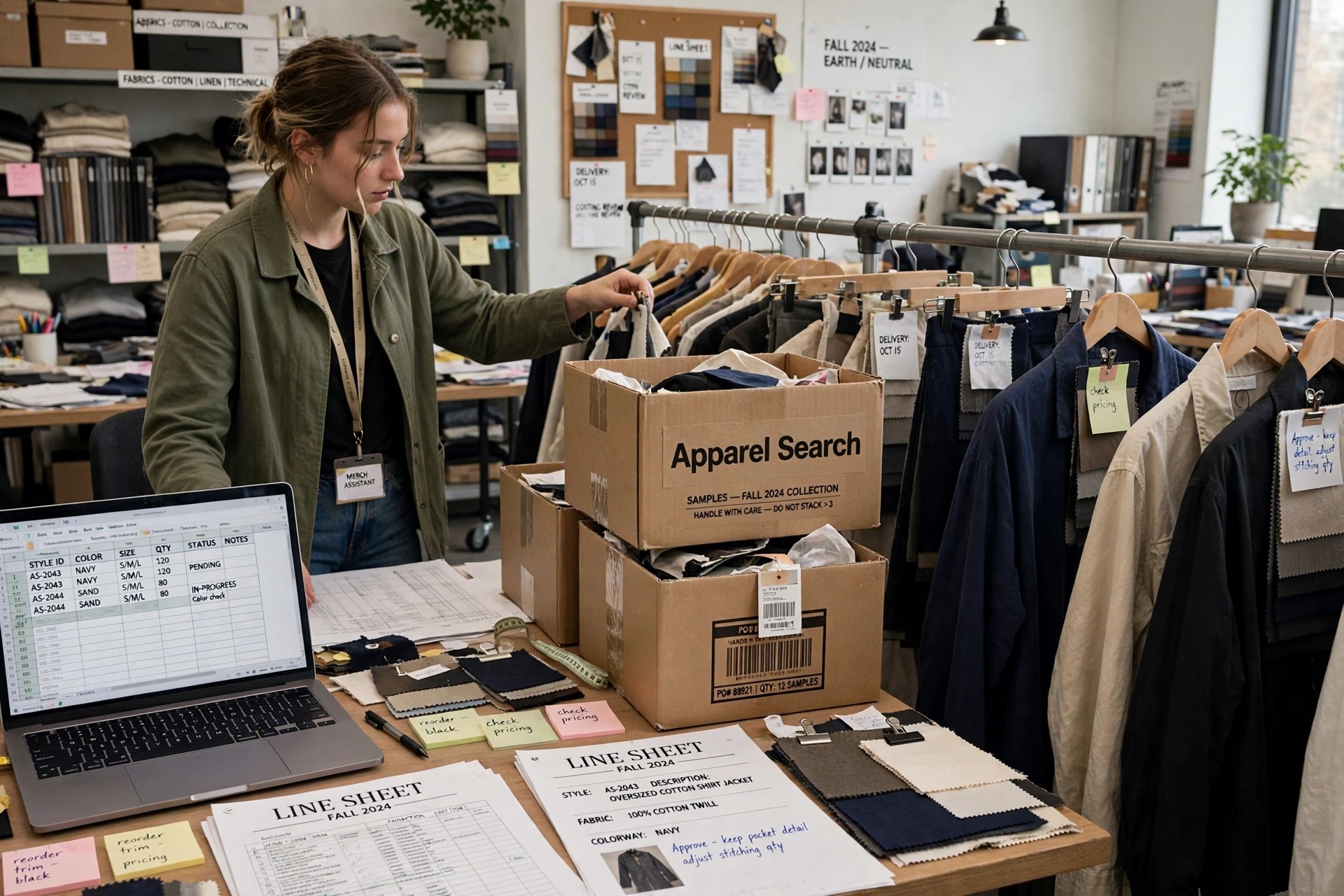
Data and reporting fill much of the week. The assistant produces the department's regular sales and stock reports — weekly sales by style, colour and size, sell-through and cover figures, bestseller and problem lists — pulling figures from the stock system, checking them for obvious errors, and formatting them for the merchandiser's trading meeting. Purchase orders are raised, amended and tracked from this desk; delivery schedules are updated as suppliers confirm or slip; and the range plan document — the department's master record of styles, prices, quantities and delivery months — is kept current as decisions change around it.
Samples and administration fill the rest. The assistant receives, labels, photographs and files range samples, prepares them for range reviews and fit sessions, sends samples out to suppliers, stores and photography, and chases their return. Size-ratio breakdowns for orders are entered and checked; markdown and promotion lists are prepared for the merchandiser's approval; filing — physical and digital — is maintained so any style's history can be found in minutes. None of it is glamorous, and all of it is the department's memory: when the assistant's systems are good, everyone else's judgement improves.
Learning the Merchandising Craft from the Desk
The assistant's education is built into the workload. Preparing the weekly numbers teaches how a range actually trades — which sizes sell first, which colours carry a department, how a delivery delay shows up in the figures weeks later. Handling every sample teaches product knowledge that no course provides: fabrics, constructions, price points and what distinguishes the styles customers reorder from the ones they return. Sitting in on range reviews and trading meetings, even silently, teaches how decisions get made and defended with evidence.
Good departments develop their assistants deliberately: rotating them through reporting, ordering and sample duties, explaining the reasoning behind decisions, and handing over small complete tasks — a category's size ratios, a promotion's stock check — as competence grows. The assistant's part of the bargain is curiosity and reliability: asking why a figure moved, learning the stock system's deeper functions rather than only the screens the job needs, and building the spreadsheet fluency — formulas, pivot tables, clean presentation — that merchandising selection processes test directly.
Skills and Abilities the Role Requires
Numerical confidence is the headline requirement: comfortable mental arithmetic, careful spreadsheet work, and the instinct to question a figure that looks wrong rather than copy it forward. Accuracy under volume is the second: hundreds of order lines, sizes and dates pass through this desk, and a digit transposed in a size breakdown becomes the wrong stock in fifty stores. Employers test both at selection, typically with a timed spreadsheet or data exercise alongside the interview.
Organisation and communication complete the set. The assistant chases suppliers, stores and colleagues for information and samples, and must do it persistently without becoming unpopular; priorities shift daily as trading reacts to weather, deliveries and competitors, and the desk re-sequences calmly. A genuine interest in product and customers matters more than fashion glamour — assistants who watch what sells and ask why are the ones merchandisers fight to keep and promote.
Qualifications, Training and Career Path
Entry typically requires strong school or college mathematics and demonstrable spreadsheet skill; fashion merchandising, business and numerate degrees all feed the role, as does retail floor experience, which employers value because it supplies the customer instincts the data alone cannot. Many assistants are hired from store roles in the same company, and internal knowledge of systems and product is a real advantage at selection.
The path is the profession's main ladder: merchandising assistant to assistant merchandiser, then merchandiser owning a department's plan, and onward to the management roles described elsewhere in this section. The assistant years are deliberately broad — the profession wants its seniors to have raised the orders, chased the samples and built the reports themselves — and the assistants who treat the desk as an education rather than a waiting room move up it fastest.
Common Questions
What does a merchandising assistant actually do all day?
Produces sales and stock reports, raises and tracks purchase orders, maintains the range plan, manages range samples, enters size breakdowns and prepares markdown lists — the administrative and data work a merchandising department runs on.
Do you need a degree to be a merchandising assistant?
Not always: strong mathematics and proven spreadsheet skill are the core requirements, and retail experience is highly valued. Fashion merchandising and business degrees feed the role, but selection usually includes a practical data or spreadsheet test either way.
Is merchandising assistant the route to becoming a merchandiser?
Yes — it is the standard first step of the main ladder: assistant, then assistant merchandiser, then merchandiser owning a department. The desk teaches the systems, data and product knowledge the senior roles are built on.
More to Explore
- Design Job Descriptions
- Merchandising Clothing
- Merchandising Clothing — Part 2
- Merchandising Clothing — Part 3
- Fashion Merchandising — Term
- Fashion Schools and Education
- Fashion Artists Guide
- CAD Services
- Computer Assisted Design
- Fashion Job Description Directory
- Clothing Industry Portal
- Fashion Employment Agencies
- Employment Search Engines
- Fashion Careers