Merchandiser Job Description
The hands-on trading role — building assortments style by style and working them through the season in stores and online
A merchandiser — the working title on this page, filed in the design and merchandising section where this directory has always kept it — is the person who builds a clothing assortment style by style and then works it, week by week, where customers meet it: on rails, shelves, tables and web pages. Where the management roles in this cluster plan frameworks and budgets, the merchandiser's hands are on individual styles: this dress in these sizes for these stores, this knit repeated now or held, this slow line moved, reduced or presented differently. It is the most tactile of the merchandising jobs, and its evidence is visible in any well-run store. This page describes the hands-on role.
More Design Job Descriptions by Letter:
What a Merchandiser Does
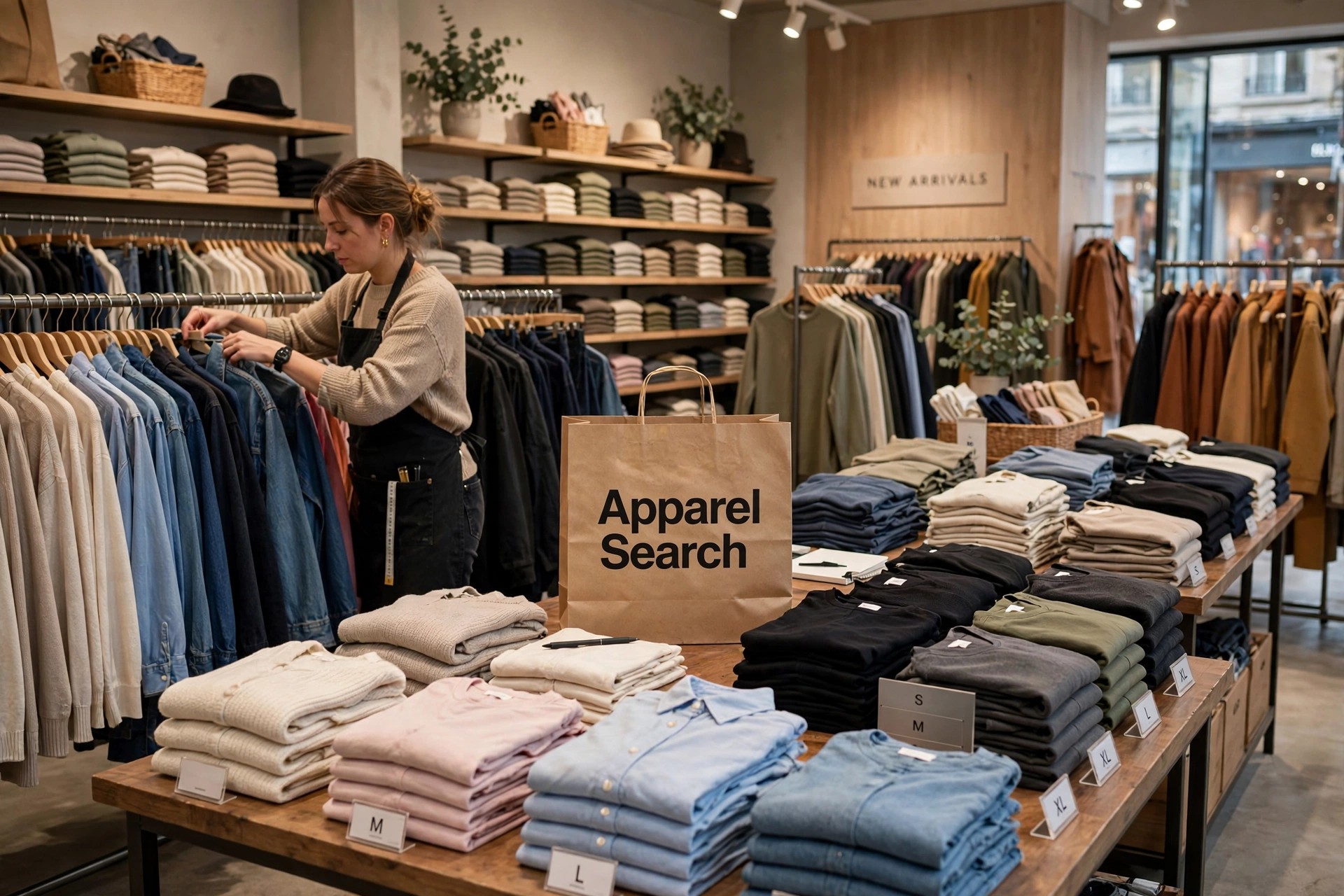
Assortment building is the constructive half. Working from the department's plan, the merchandiser assembles the actual offer: selecting and grouping styles into stories and outfits, deciding depth per style — the fashion pieces bought shallow, the proven sellers bought deep — and building the size and colour offer for each. In wholesale and brand businesses the same craft faces outward: the merchandiser builds the assortments offered to retail accounts, tailored to each account's customer and space, and prepares the line sheets and samples those selling meetings run on.
Allocation and presentation follow. The merchandiser decides how stock divides between stores and online — flagships take the full story, smaller stores an edited version, new styles launch where their customer is — and briefs how the assortment is presented: which styles group together, what leads a table or a web category page, how sizes and colours are sequenced. Store visits are working visits: walking the floor with the store team, seeing what customers handle and ignore, correcting presentation, and carrying floor evidence back to head office where it meets the sales figures.
Trading the Assortment Week by Week
In season, the merchandiser trades at style level. Weekly figures show what is moving, where, and in which sizes; the merchandiser acts on them directly — rebalancing stock between stores, pulling forward a repeat while the style is hot, moving a slow style to better company or a better position before reaching for the markdown pen. The craft is in the sequence: presentation first, placement second, price last, because a style reduced too early teaches the business nothing except that its merchandising was impatient. Repeat decisions balance rate of sale against lead time and remaining season — a bestseller repeated too late is stock for the sale rail, bought with open-to-buy the next winner needed.
Feedback is the role's quiet product. The merchandiser is the business's structured eyes on its own offer: fit complaints recurring on one style, a colour that photographs better than it wears, a size that sells out everywhere by week two. Recorded and reported properly, that evidence changes the next assortment — sizes rebought in corrected ratios, the failing fit fixed at the pattern stage, the winning story extended. Merchandisers who only move stock are useful; merchandisers whose floor knowledge improves what gets bought become indispensable.
Skills and Abilities the Role Requires
Product feel is the distinguishing skill: an eye for how styles sit together, what a rail looks like to a customer, which colour story will carry a department — combined with enough numerical fluency to read style-level sales and act on them without waiting to be told. This balance is why the role recruits from both directions: store staff with commercial instincts, and graduates with product passion, both trained into the other half on the job.
Energy and presence matter more here than at any other merchandising desk. The work is physical and interpersonal — sample rooms, store floors, selling meetings, supplier showrooms — and the merchandiser persuades constantly: store teams to re-present a rail, buyers to back a style, managers to fund a repeat. Organisation underpins it, because dozens of styles at different stages across several channels will not track themselves; and honesty about failures, reported early with a remedy attached, is the habit senior managers learn to trust.
Qualifications, Training and Career Path
There is no single required qualification: employers hire merchandisers from retail floor and visual merchandising backgrounds, from merchandising assistant posts, and from fashion business courses, weighting demonstrated product and trading instinct heavily at selection. Portfolios of evidence — assortments built, store results improved, selling seasons worked — serve candidates better than certificates alone, and interviews commonly include a practical exercise: build an assortment from a style list, or diagnose a rail from its sales figures.
Careers grow toward senior merchandiser roles owning larger assortments and accounts, into the planning and management roles described in this section, or outward into visual merchandising leadership and wholesale account management, where assortment craft is the stock in trade. The role is also the best education in the cluster for anyone aiming at buying: a buyer who has merchandised knows, in their hands, what a good assortment does to a customer.
Common Questions
What does a merchandiser do day to day?
Builds assortments style by style, allocates stock between stores and online, briefs and checks presentation, then trades the assortment weekly — rebalancing, repeating winners, repositioning slow styles and feeding floor evidence back into the next buy.
How is this merchandiser role different from a merchandising manager?
Level and focus. The merchandiser works hands-on at style and store level; the merchandising manager owns budgets, frameworks and the team across departments. This page describes the practitioner role the managers are promoted from.
Do merchandisers need qualifications?
No single qualification is required. Employers hire from store, visual merchandising and assistant backgrounds as well as fashion business courses, and test product and trading instinct directly — often with a practical assortment or sales-diagnosis exercise.
More to Explore
- Design Job Descriptions
- Merchandising Clothing
- Merchandising Clothing — Part 2
- Merchandising Clothing — Part 3
- Fashion Merchandising — Term
- Fashion Schools and Education
- Fashion Artists Guide
- CAD Services
- Computer Assisted Design
- Fashion Job Description Directory
- Clothing Industry Portal
- Fashion Employment Agencies
- Employment Search Engines
- Fashion Careers